
Font size
 Worksheets
Global Connections
Total questions: 100
Worksheet time: 50mins
Which of the following art movements had an important impact on early twentieth-century American artists?
Cubism
Impressionism
Minimalism
Pop Art
Which American artists are mentioned as being influenced by European art movements in the early twentieth century?
Man Ray, Georgia O’Keeffe, and Charles Demuth
Andy Warhol, Jackson Pollock, and Roy Lichtenstein
Frida Kahlo, Diego Rivera, and Jean-Michel Basquiat
Claude Monet, Edgar Degas, and Pierre-Auguste Renoir
After the First World War, what change occurred in the global art world?
It became more globally interconnected and diverse in influences.
It became isolated from European trends.
It focused only on American traditions.
It rejected all forms of modernism.
What was one result of the transatlantic exchange of artistic ideas after World War I?
American musical styles influenced nightlife in European cities.
European artists stopped traveling to America.
American artists only worked in the United States.
Jazz and blues were banned in Paris and Berlin.
According to the text, what was the estimated number of Americans living in Paris in 1924?
Over 32,000
Over 10,000
Over 100,000
Over 5,000
Which of the following is an example of an “American” trend that became popular in Europe during the 1920s?
The Charleston dance
The waltz
The polka
The tango
How did European nations respond to the arrival of American expatriates after World War I?
They often welcomed the energy that American transplants brought.
They discouraged all foreign artists from settling.
They ignored American cultural influences.
They banned American music and art.
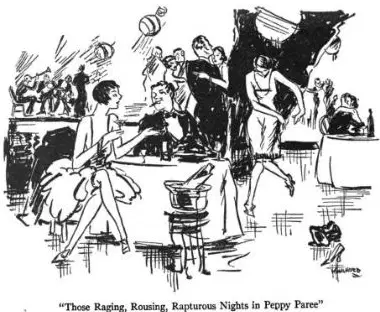
Select the statement that best describes the image related to American expatriates in Paris.
This is a placeholder for an image related to American expatriates in Paris.
This is a placeholder for a map of Europe.
This is a placeholder for a painting by Claude Monet.
This is a placeholder for a photograph of New York City.
Where was Gerald Murphy born?
Boston
New York
Paris
London
Which university did Gerald Murphy graduate from with a degree in literature?
Yale University
Harvard University
Princeton University
Columbia University
What was the profession of Gerald Murphy's family?
Luxury leather store owners
Artists
Writers
Architects
Why were Gerald Murphy and his wife able to live a lavish lifestyle in Europe?
They had family wealth and did not need to rely on income from Murphy’s paintings.
They won the lottery.
They were sponsored by the government.
They sold many paintings.
What is the significance of the term "Lost Generation" as used in the text?
It refers to writers and artists who spent their youth abroad after World War I, searching for meaning in a new society.
It describes people who got lost during the war.
It refers to a group of explorers.
It is a term for a lost art movement.
Which art style is associated with Fernand Léger and influenced Gerald Murphy?
Purism
Cubism
Impressionism
Surrealism
What was the name of the Murphy’s villa on the French Riviera?
Villa America
Villa France
Villa Paris
Villa Jazz
Which of the following artists was NOT mentioned as a guest or associate of the Murphys?
Vincent van Gogh
Pablo Picasso
Fernand Léger
Man Ray
What was the main focus of the Purism art style?
Primary colors, simple shapes, and apparently solid forms
Abstract expression and emotional brushwork
Detailed realism and natural landscapes
Surreal and dreamlike imagery
How many of Gerald Murphy’s paintings are known to still exist today?
Eight
Sixteen
Twenty
Ten
Which of the following works by Murphy features an almost blueprint-like rendering of a watch’s innards?
Watch
Razor
Cocktail
Boat Deck
What is the main visual effect created by Murphy’s painting "Watch"?
A zoomed-in representation of gears, dials, and hands
A landscape of a city street
A portrait of a famous musician
A depiction of a transatlantic passenger steamer
Which term was used to refer to the energetic years of the 1920s, as mentioned in the text?
Machine Age
Industrial Revolution
Gilded Age
Atomic Age
How does Murphy’s painting "Watch" differ from the depiction of technology in works like Fritz Lang’s "Metropolis" or Čapek’s play "R.U.R."?
It appears orderly, balanced, and harmonious rather than threatening or hostile
It shows a dystopian future
It focuses on human figures instead of machines
It uses only black and white colors
According to the text, what did Gerald Murphy do after the decline in demand for luxury goods during the Great Depression?
Returned to New York and ran the family company
Became a full-time artist in Paris
Started painting again
Moved to Venice and opened an art gallery
What does the painting "Watch" symbolize, according to the reading provided?
Modern values of speed and control over time
The decline of American industry
The chaos of urban life
The beauty of nature
Which of the following is NOT one of the works by Murphy mentioned in the text?
Sunrise
Razor
Cocktail
Boat Deck
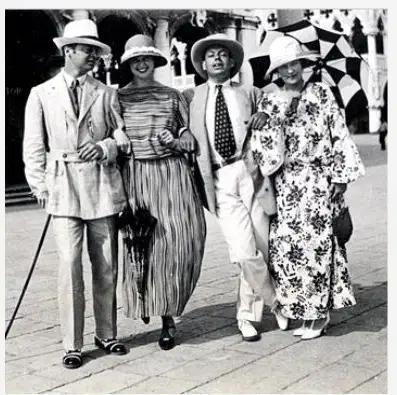
Who is NOT identified in the photograph described in the text?
Pablo Picasso
Gerald Murphy
Genevieve Carpenter
Cole Porter
Which region was one of the earliest non-Western influences on American art, as mentioned in the text?
Africa
Asia
Latin America
Australia
Who was one of the most important Black sculptors active during the 1920s, known for the work "Ethiopia Awakening"?
William Merritt Chase
Lila Cabot Perry
Meta Warrick Fuller
Childe Hassam
Which movement emerged among New Negro artists, emphasizing shared heritage and struggles of African diasporic people?
Impressionism
Pan-African movement
Cubism
Surrealism
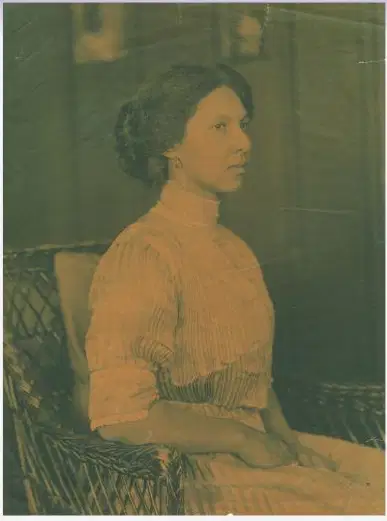
What is the significance of Meta Warrick Fuller's sculpture "Ethiopia Awakening" in the context of Black modernism?
It was the first sculpture made in America.
It symbolized the growing importance of African influences for African-American artists and the Pan-African movement.
It was a representation of European art styles.
It was unrelated to any social or political themes.
How did Meta Warrick Fuller's experience as a resident of a small city outside major artistic centers affect her perspective in the 1920s?
She was less influenced by Black intellectual leaders.
She experienced the 1920s differently from most other New Negro artists.
She became a famous painter instead of a sculptor.
She focused only on European art styles.
Which famous sociologist was a friend of Meta Warrick Fuller and an important leader of the Pan-African movement?
Alfred Stieglitz
W. E. B. Du Bois
Auguste Rodin
James Abbott McNeill Whistler
What was a key goal of the Pan-African movement as described in the text?
To promote only African art in America
To connect people of African descent globally and address shared struggles against racism and colonialism
To encourage only European influences in American art
To focus solely on Caribbean artists
Which of the following artists is NOT mentioned as having incorporated African motifs into their work during the 1920s and 1930s?
Aaron Douglas
Palmer Hayden
Pablo Picasso
Sargent Claude Johnson
What was the main purpose of Black artists incorporating African motifs and visual styles into their art during the Harlem Renaissance?
To imitate European artists
To reclaim and celebrate Pan-African identities
To promote abstract art only
To support colonial rule
What material is NOT mentioned as being used in the creation of the sculpture "Ethiopia Awakening"?
Bronze
Plaster
Marble
Wood
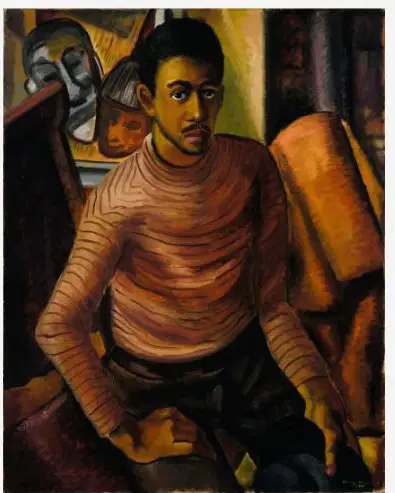
What is depicted in the background of Malvin Gray Johnson’s self-portrait?
A cityscape
Several masks
A group of people
A landscape
Why did the Rosenwald Fund provide funding for Black American artists to visit Haiti?
To study European art
To support the Caribbean nation founded by formerly enslaved people
To promote colonial rule
To learn about Asian art
Which exhibition, held in New York in 1921, was a cultural fair celebrating the contributions of different immigrant groups, including Black Americans?
Harlem Renaissance Fair
America’s Making Exhibit
Pan-African Art Show
Black Artists’ Collective
The sculpture "Ethiopia Awakening" references which ancient practice through its depiction of a Black female figure?
Greek democracy
Egyptian mummification
Roman architecture
Chinese calligraphy
What is a "nemes" as described in the context of "Ethiopia Awakening"?
A type of sculpture material
A folded linen headdress worn by ancient Egyptian pharaohs
A traditional African dance
A musical instrument
How does the use of African motifs and references to ancient Egypt in "Ethiopia Awakening" contribute to the artwork’s message about Black identity and Pan-Africanism?
It connects the figure to a long history of African civilization and pride.
It makes the sculpture more colorful.
It imitates European artistic trends.
It focuses only on modern American culture.
Which historical debate did Fuller's sculpture with Egyptian costume and Black African features intervene in?
The debate about the abolition of slavery in the United States
The debate about the racial identity of ancient Egyptians
The debate about the independence of Ethiopia
The debate about the role of women in art
What evidence did Pan-African scholars use to argue for "the blackness of the Egyptians"?
Ancient Greek texts
Archaeological evidence
Modern novels
European paintings
In her writing about Ethiopia Awakening, what does Fuller describe as "gradually unwinding the bandage of its mummified past"?
The abolition of slavery
The awakening of a group who had once made history
The rise of European historians
The defeat of the Italians in Ethiopia
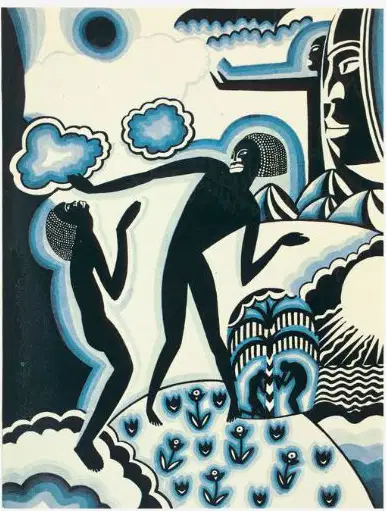
Who was Winold Reiss, as mentioned in the caption of the image?
An African American sculptor
A Swiss artist who did portraits of important New Negro Movement figures
An Ethiopian historian
A European archaeologist
Why did Black preachers in the nineteenth century cite Psalm 68:31 from the Christian Bible?
To support the abolition of slavery and the emancipation of Black people
To argue for the independence of Egypt
To promote European historical narratives
To encourage the study of ancient art
How did the novel Ethiopia Unbound (1911) by Casely Hayford use Ethiopia as a symbol?
As a symbol of European colonial power
As a symbol of Black political awakening and growing power
As a symbol of ancient Greek civilization
As a symbol of religious conversion
How did Ethiopia Awakening position itself in the historical debate about Blackness in the early twentieth century?
As a work supporting European colonial narratives
As a symbol of resistance and challenge to European and American historical narratives
As a religious text
As a scientific treatise on archaeology
Where was Yasuo Kuniyoshi born?
Tokyo, Japan
Osaka, Japan
Okayama, Japan
Kyoto, Japan
Which of the following best describes the composition of Kuniyoshi’s "Boy Stealing Fruit"?
A crowded scene with many figures and objects
A simple composition with a few elements, including a boy and a silver tray
A landscape with animals and trees
An abstract painting with geometric shapes
What is a notable feature of the table in "Boy Stealing Fruit"?
It is covered with flowers
It is painted in bright red
It slants away from the viewer, appearing to balance on one corner
It is made of glass
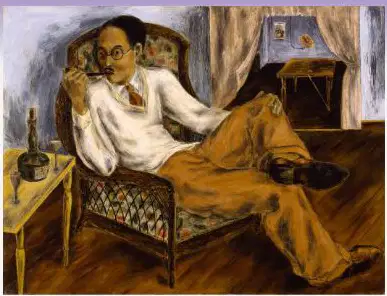
What effect does the exaggerated pitch of the table and tray have in "Boy Stealing Fruit"?
It makes the scene look more realistic
It highlights the viewer’s inability to see the boy’s feet or much of the table’s support
It adds more color to the painting
It shows the artist’s interest in landscapes
Which art movement or style influenced Kuniyoshi’s simplified style in "Boy Stealing Fruit"?
Impressionism
Cubism
American folk art
Surrealism
What is American folk art often characterized by?
Use of expensive materials and formal artistic training
Works of art and objects of everyday use crafted by artists or artisans who lack formal artistic training
Focus on abstract and non-representational forms
Strict adherence to classical European techniques
Why did American folk art gain renewed interest after the Centennial Exposition in Philadelphia in 1876?
It was promoted by the government
It sparked a “colonial revival” and appreciation for self-taught art
It was featured in European museums
It was used in political campaigns
Which of the following artists was NOT mentioned as someone who used folk art for their inspiration?
Marsden Hartley
Alexander Calder
Pablo Picasso
Elie Nadelman
How does Kuniyoshi’s use of simplified forms and stylized figures in "Boy Stealing Fruit" reflect his interest in American folk art?
By copying European classical techniques
By using expensive materials
By echoing the self-taught, simplified, and symbolic qualities found in American folk art
By focusing on realistic anatomy
Why might Kuniyoshi have chosen to crop the picture in "Boy Stealing Fruit" to exclude certain elements, such as the boy’s feet?
To save time while painting
To create ambiguity and a sense of unreality, drawing attention to the composition and the relationship between the figures and space
To focus on the background details
To make the painting smaller
Who was a major collector of folk art and helped fund Colonial Williamsburg?
Abby Aldrich Rockefeller
Pablo Picasso
Paul Gauguin
Jacqueline Francis
What was one reason for the rise of interest in folk art in America during the early 20th century?
Isolationist and nationalist opposition to European artworks
The invention of photography
The popularity of abstract art
The decline of small-town life
Which of the following best describes the concept of "primitivism" in art?
Borrowing from the artistic styles or techniques of a group viewed as "other"
Creating art only with modern technology
Following strict academic rules of composition
Focusing solely on urban landscapes
According to the text, why did some people find folk art appealing as a form of escapism?
It represented a nostalgic retreat into an imagined, utopian American past
It was more expensive than European art
It used advanced technology
It was only created by professional artists
How does art historian Jacqueline Francis describe the motivation behind primitivism?
As the desires of Westerners dissatisfied with their industrialized societies and interested in peoples outside of them
As a way to promote industrialization
As a rejection of all non-Western art forms
As a movement to standardize art education
What is a problematic aspect of primitivism as discussed in the text?
Artists often have little contextual knowledge of the art forms they are appropriating
It always leads to the decline of folk art
It requires artists to travel extensively
It is only practiced by uneducated artists
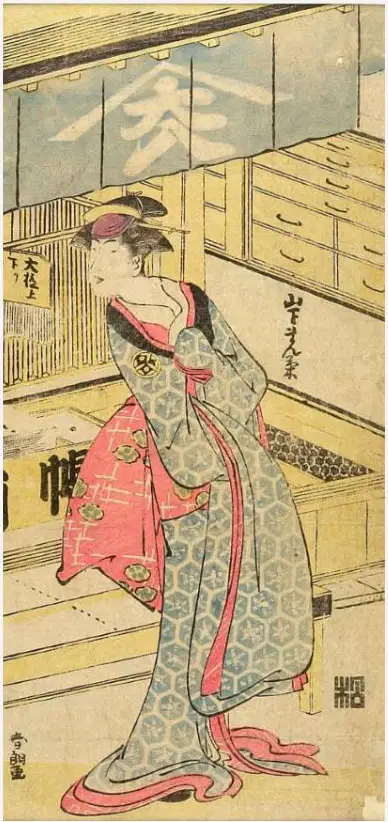
Which artist created the woodblock print titled "Actor Yamashita Kinsaku as a Tea House Waitress"?
Katsushika Hokusai
Pablo Picasso
Abby Aldrich Rockefeller
Paul Gauguin
Which of the following groups is mentioned as being associated with the term "primitivism" in art history?
European aristocrats
Peasants and Indigenous people in North America and Latin America
Renaissance painters
Modern architects
What is one interpretation of the painting "Boy Stealing Fruit" by Kuniyoshi, according to art historian Gail Levin?
It references the scarcity of tropical fruits in Japan during the artist’s childhood.
It depicts a famous Japanese emperor.
It is a tribute to American industrialization.
It is based on a Greek myth.
Which Japanese folk tale is connected to Kuniyoshi’s painting by curator Joan Moser?
The Tale of Genji
Momotarō, the boy born from a peach
Urashima Tarō, the fisherman
The Crane Wife
What style did Kuniyoshi adopt in his painting "Boy Stealing Fruit"?
Abstract Expressionism
A style that takes cues from American self-taught painting by nineteenth-century artists
Cubism
Surrealism
In the context of the painting "Boy Stealing Fruit," what does the fruit still life on the table symbolize?
Wealth and prosperity
Simplified forms that refer to folk art
Religious symbolism
Political power
What challenge did Kuniyoshi face regarding his identity as an artist in the 1929 MoMA exhibition?
His work was considered too modern for the show.
His identity as an “American” was questioned due to his Japanese heritage.
He was not allowed to display any paintings.
He was the only artist to win an award.
After the bombing of Pearl Harbor in 1941, what happened to Kuniyoshi?
He was sent to a labor camp.
He was declared an enemy alien and placed under house arrest.
He moved to Europe.
He became a government official.
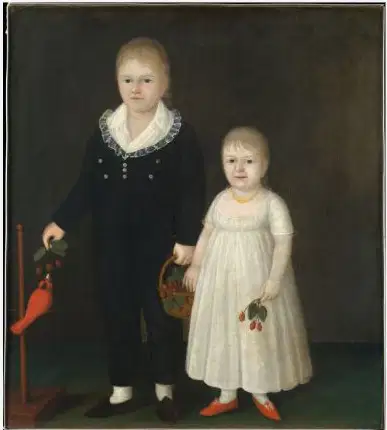
What is the title and medium of the artwork shown in the image?
"Edward and Sarah Rutter," watercolor on paper
"Joshua Johnson, Edward and Sarah Rutter," oil on canvas
"Children at Play," acrylic on board
"Sarah and Edward," pastel on canvas
Who is considered one of the most famous American architects, known for pioneering several different architectural styles from the 1890s to the 1950s?
Frank Lloyd Wright
Le Corbusier
Ludwig Mies van der Rohe
I. M. Pei
What is the name of Frank Lloyd Wright’s first unique personal style, developed around 1900?
Prairie Style
Art Deco
Gothic Revival
International Style
Which material did Frank Lloyd Wright use as the primary material for his Los Angeles houses, including the Ennis House?
Reinforced concrete
Brick
Wood
Steel
What was the purpose of adding wire mesh or metal bars to the concrete used in Wright’s Los Angeles houses?
To give it both flexibility and strength
To make it waterproof
To reduce its weight
To improve its color
Which of the following is NOT mentioned as a source of inspiration for Frank Lloyd Wright’s Los Angeles buildings in the 1920s?
Pre-Columbian architecture
Mesoamerica
Latin America
Ancient Greece
What innovative construction system did Frank Lloyd Wright invent for his Los Angeles house commissions?
Textile blocks
Steel frames
Glass curtain walls
Prefabricated panels
Which of the following best describes the “Prairie Style” developed by Frank Lloyd Wright?
Dedication to local materials, large flattened overhanging roofs, and open floor plans
Use of steel and glass for skyscrapers
Ornate decoration and pointed arches
Heavy use of marble and columns
Why was Frank Lloyd Wright fired from the firm of Adler and Sullivan?
He broke the terms of his employment agreement
He was late to work
He refused to design skyscrapers
He wanted to move to New York
Which famous building was Frank Lloyd Wright’s final project, completed six months after his death?
Solomon R. Guggenheim Museum
Fallingwater
Robie House
Unity Temple
What is the significance of Taliesin in Frank Lloyd Wright’s career?
It was his studio and training facility in Wisconsin
It was his first skyscraper
It was his first house in Los Angeles
It was his only project in New York
What is the primary function of the geometric designs inscribed on the surfaces of the tiles used in the Ennis House?
To create additional designs on the building’s façade
To provide structural support
To improve insulation
To reduce construction costs
Which neighborhood is the Ennis House located in?
Los Feliz
Beverly Hills
Hollywood
Santa Monica
What architectural feature gives the Ennis House the appearance of a stepped pyramid?
A massive retaining wall
A central dome
A tall spire
A glass atrium
Which ancient civilization’s architecture most inspired the design of the Ennis House?
Mayan
Roman
Greek
Persian
What is the main visual effect of the repeating pattern of the textile blocks on the Ennis House?
It gives the wall variety and visual interest, making it appear almost like a natural stone outcropping.
It makes the house look taller.
It increases the amount of natural light inside.
It reduces the need for maintenance.
Why did Frank Lloyd Wright call his California style “Romanza”?
It was an invented word with hints of Spanish that romanticized Mesoamerican ruins.
It was based on Roman architecture.
It was inspired by Italian villas.
It referred to the use of Roman arches.
How did the Mayan city of Chichén Itzá influence the design of the Ennis House?
By inspiring the use of large cubic forms and intricate geometrical carving
By introducing the use of glass windows
By influencing the color palette
By inspiring the use of domes
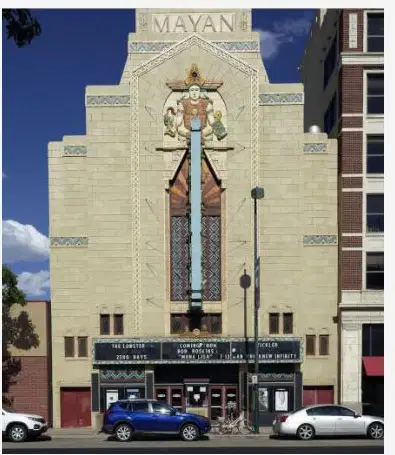
Which architectural style was popularized by inspirations from ancient civilizations such as the Maya, Aztec, and Egypt, as seen in the Mayan Theatre?
Art Deco
Gothic
Baroque
Renaissance
What is meant by a “total work of art” in the context of the Ennis House?
A harmonious combination of materials and design elements throughout the house
A house with only one type of material
A building with no windows
A structure built entirely by one person
Which of the following best describes the driveway leading to the Ennis House?
A private driveway that passes through a gateway and under a wall, feeling like a fortified walkway
A public road lined with shops
A bridge over a river
A tunnel beneath the house
Which ancient civilization's architecture influenced Frank Lloyd Wright's design of the Ennis House, particularly through their use of cubic style and geometric decoration?
Mayan and Aztec
Greek and Roman
Chinese and Japanese
Persian and Egyptian
What is a notable feature of Incan architecture, as seen at sites like Machu Picchu and Ollantaytambo, that may have inspired Wright’s textile block system?
Double-walled construction and mortarless stonework
Use of large glass windows
Wooden beam ceilings
Domed roofs
According to the text, what was a challenge faced by the Ennis House due to its location in Southern California?
Earthquakes and landslides
Flooding from nearby rivers
Extreme cold temperatures
Frequent tornadoes
Which of the following statements best describes the shift in perception of Native American art during the Jazz Age period?
Native works began to be considered as pieces of modern art rather than just historical crafts.
Native art was banned from museums.
Native artists only produced traditional crafts.
Native art was only collected by Native Americans.
How did Frank Lloyd Wright’s grandson, Eric Lloyd Wright, contribute to the preservation of the Ennis House?
He led efforts to repair the crumbling concrete using the same technologies his grandfather developed.
He redesigned the house in a modern style.
He sold the house to a museum.
He replaced all the original materials with new ones.
Why did the royal Incan palace of Machu Picchu stand out architecturally, according to the text?
It was designed to integrate into its natural landscape via materials and construction.
It was the tallest building in the Andes.
It was made entirely of gold.
It was built underwater.

