
 Worksheets
Structural and Functional Organization of the Human Body
Total questions: 91
Worksheet time: 46mins
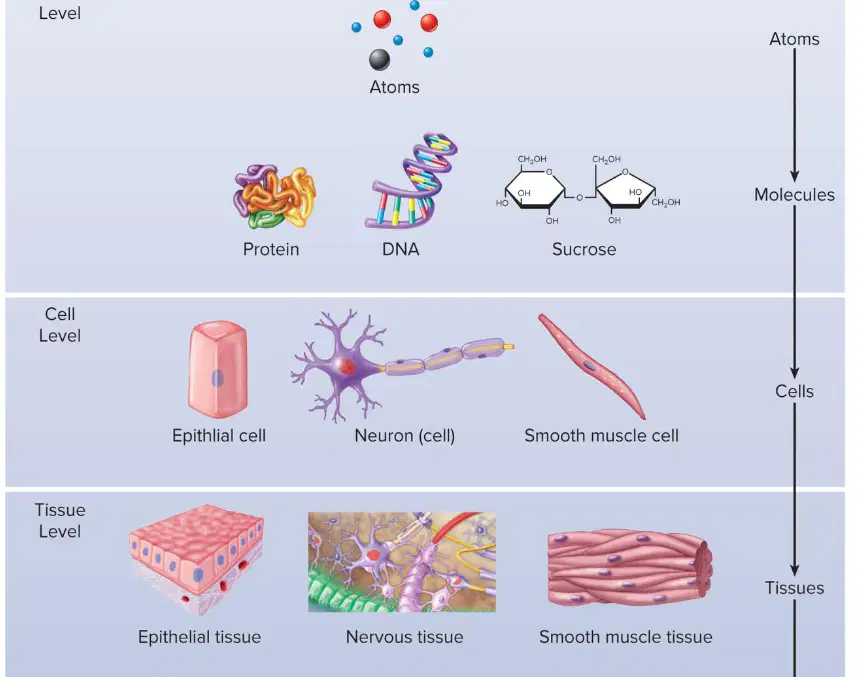
What is the definition of the Chemical level in the structural and functional organization of the human body?
Interaction of atoms and molecules.
Formation of tissues from cells.
Coordination of organ systems.
Movement of muscles and bones.
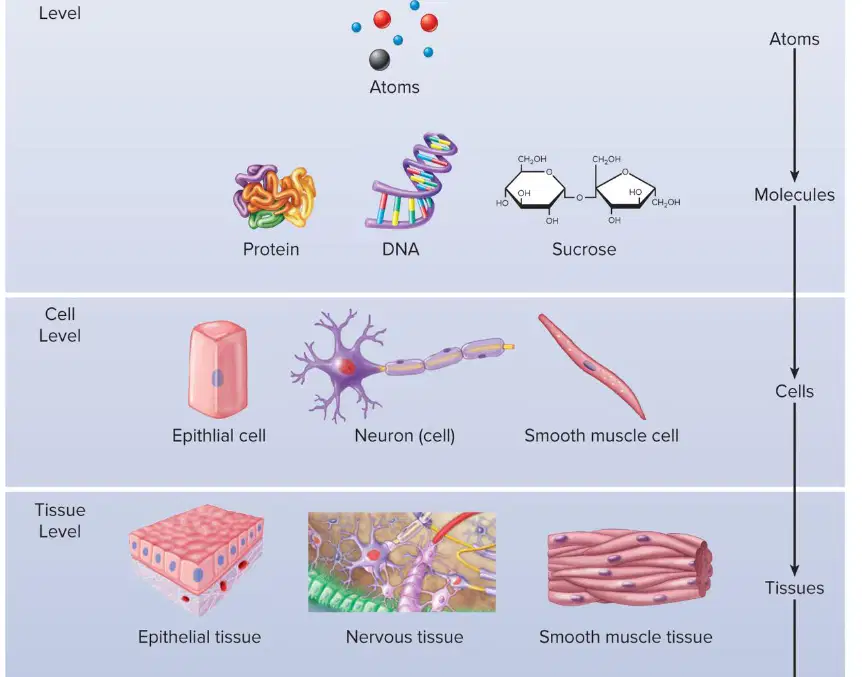
What is the definition of the Cellular level in the structural and functional organization of the human body?
Structural and functional unit of living organisms.
Group of similar cells performing a specific function.
A group of organs working together to perform complex functions.
The basic structural and functional unit of the nervous system.
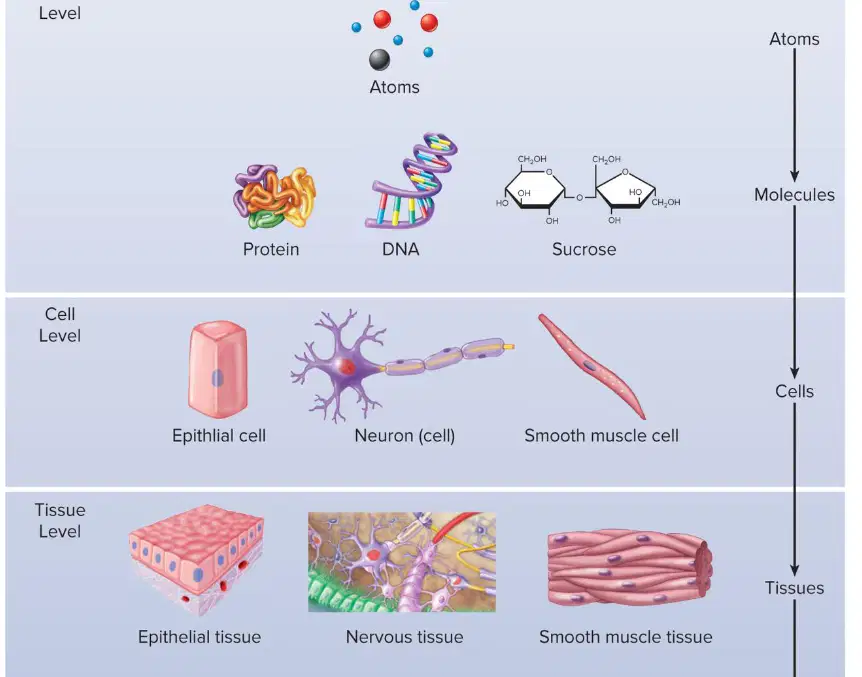
What is the definition of the Tissue level in the structural and functional organization of the human body?
Group of similar cells and the materials surrounding them.
A single cell performing all life functions.
A collection of organs working together for a common function.
The entire living organism as a whole.
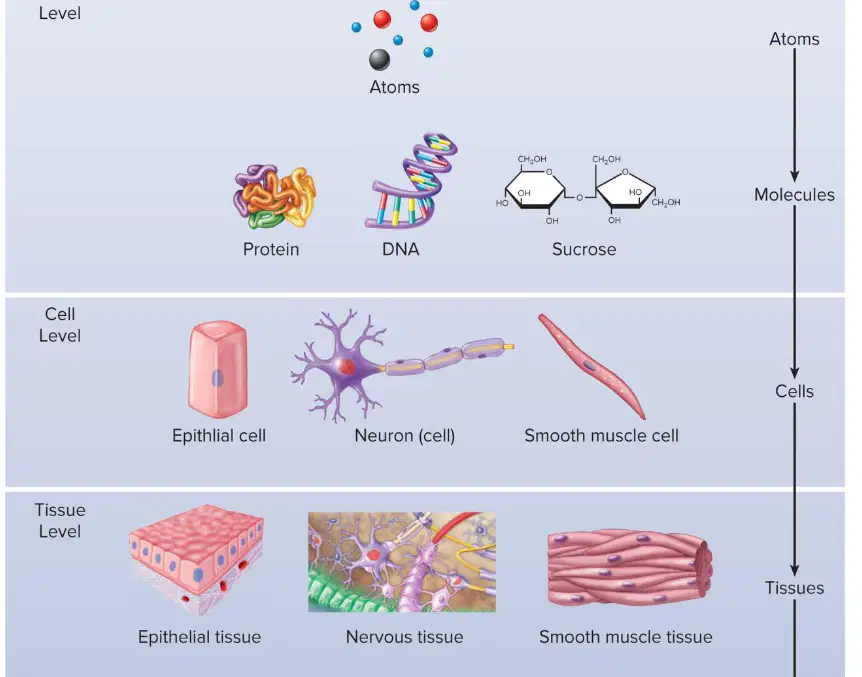
Which of the following is an example of the Chemical level?
Epithelial cell
Protein
Nervous tissue
Smooth muscle cell
Fill in the blank: An ______ is one or more tissues functioning together.
organ
cell
atom
organism
Fill in the blank: An ______ ______ is a group of organs functioning together.
organ system
organ tissue
organ cell
organ structure
Fill in the blank: An ______ is any living thing.
organism
mineral
machine
element
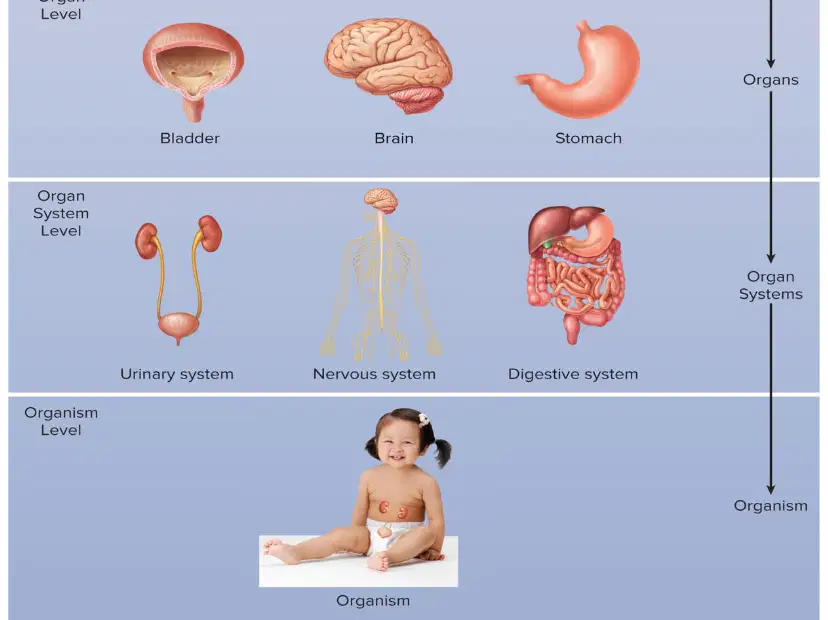
Which of the following is an example of an organ system?
Brain
Stomach
Nervous system
Bladder
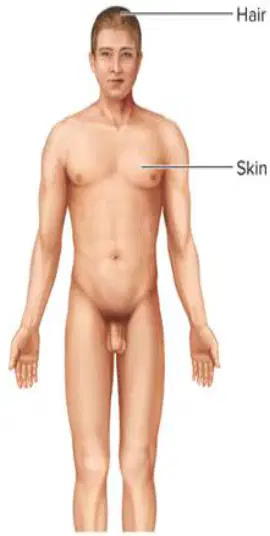
Which system provides protection, regulates temperature, prevents water loss, and helps produce vitamin D?
Nervous System
Skeletal System
Integumentary System
Muscular System
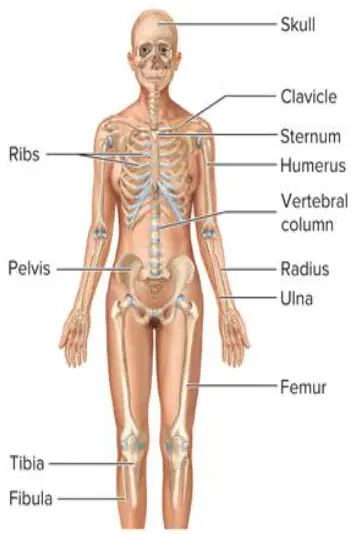
Which system consists of bones, associated cartilages, ligaments, and joints?
Muscular System
Nervous System
Skeletal System
Circulatory System

Which system produces body movements, maintains posture, and produces body heat?
Nervous System
Muscular System
Skeletal System
Circulatory System
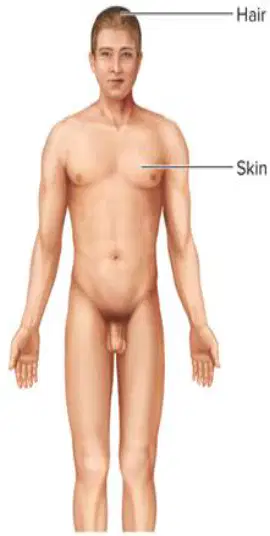
Fill in the blank: The ________ system consists of skin, hair, nails, and sweat glands.
Integumentary
Digestive
Respiratory
Circulatory
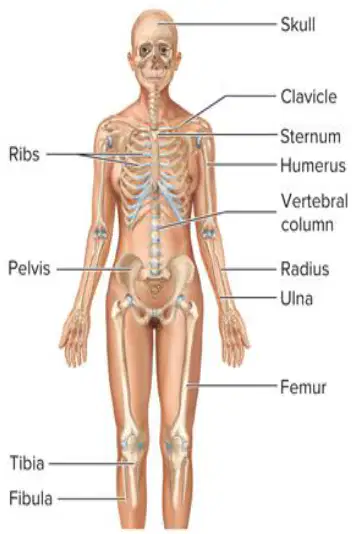
Fill in the blank: The ________ system allows body movements and stores minerals and adipose tissue.
Skeletal
Digestive
Respiratory
Nervous
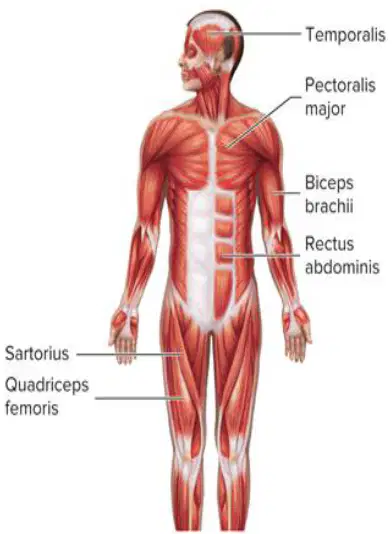
Fill in the blank: The ________ system consists of muscles attached to the skeleton by tendons.
Muscular
Digestive
Respiratory
Nervous
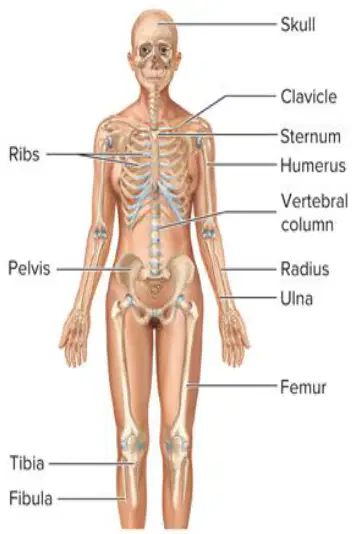
Which of the following is NOT part of the skeletal system?
Femur
Skin
Ribs
Skull
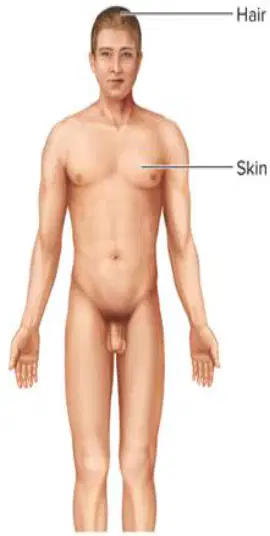
Which of the following is a function of the integumentary system?
Produces body heat
Prevents water loss
Allows body movement
Stores minerals
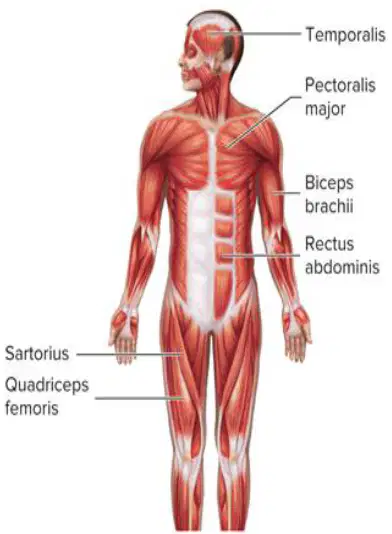
Which muscle is labeled in the muscular system diagram?
Sartorius
Tibia
Clavicle
Hair
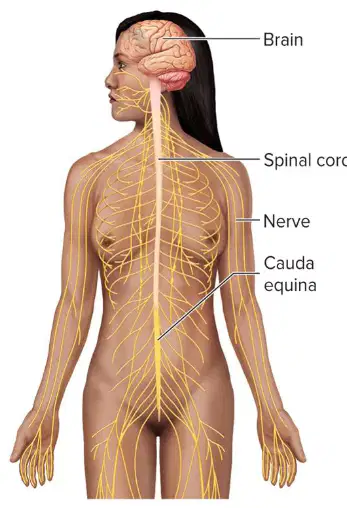
Which organ is part of the Nervous System?
Heart
Brain
Pancreas
Adrenal glands
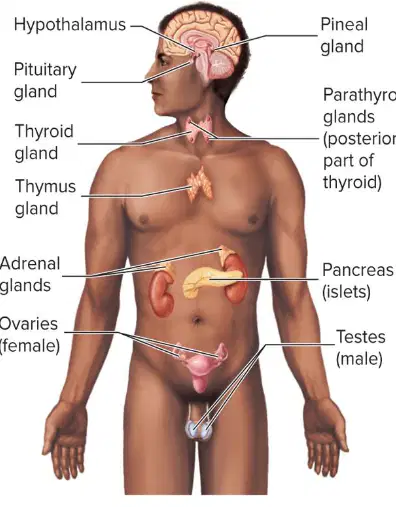
Which gland is responsible for secreting hormones in the Endocrine System?
Pituitary gland
Heart
Spinal cord
Jugular vein
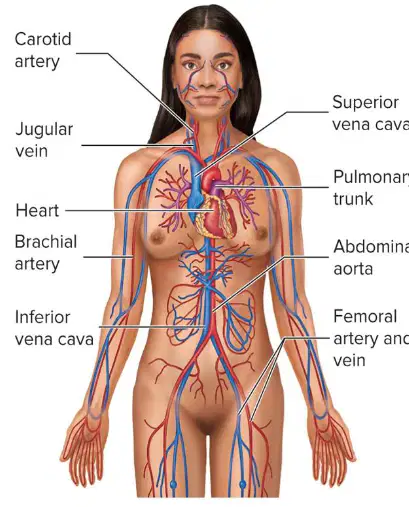
The Cardiovascular System consists of the heart, blood vessels, and _____?
blood
bones
lungs
muscles
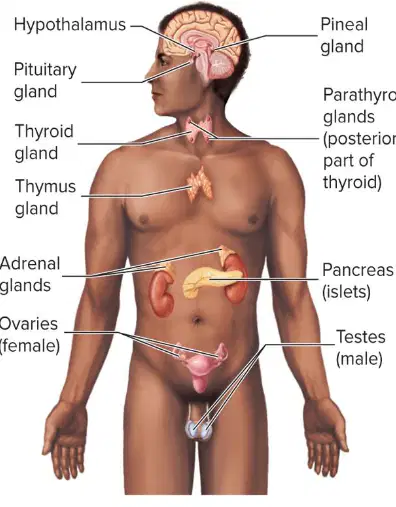
Which of the following is NOT part of the Endocrine System?
Thyroid gland
Ovaries (female)
Spinal cord
Adrenal glands
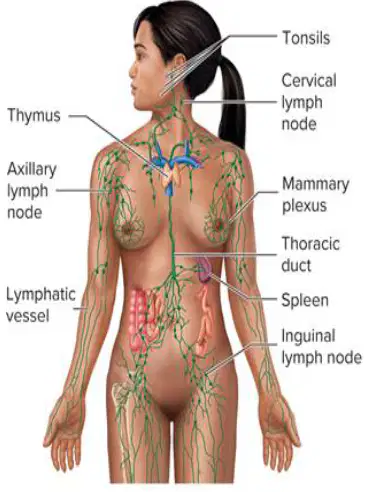
Which system removes foreign substances from the blood and lymph, combats disease, maintains tissue fluid balance, and absorbs dietary fats from the digestive tract?
Respiratory System
Digestive System
Lymphatic System
Nervous System
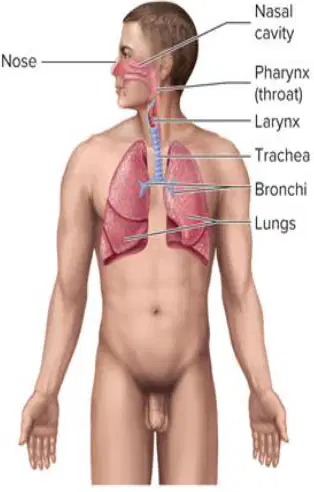
Which organ is responsible for exchanging oxygen and carbon dioxide between the blood and air?
Liver
Lungs
Stomach
Spleen

Fill in the blank: The ________ system performs the mechanical and chemical processes of digestion, absorption of nutrients, and elimination of wastes.
digestive
respiratory
circulatory
nervous
Which of the following is NOT part of the lymphatic system?
Thymus
Axillary lymph node
Trachea
Spleen
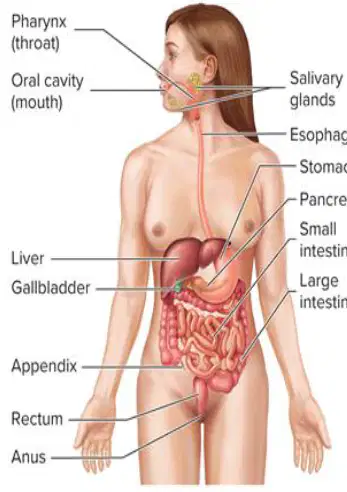
The pancreas is part of the digestive system.
True
False
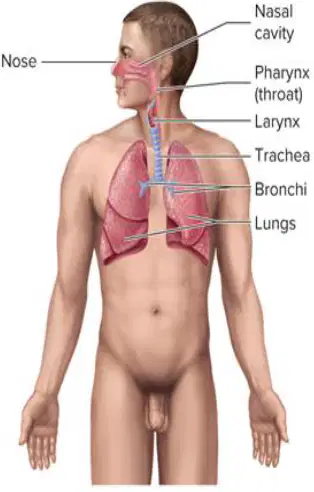
Which organ is part of the respiratory system?
Liver
Larynx
Esophagus
Pancreas
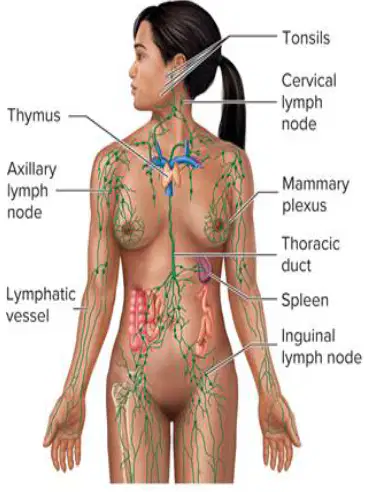
Fill in the blank: The ________ node is located in the neck and is part of the lymphatic system.
cervical lymph
inguinal lymph
axillary lymph
popliteal lymph
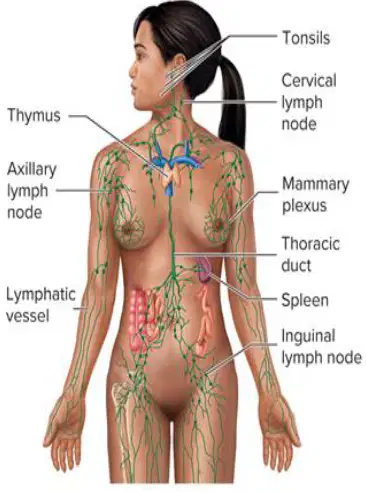
Which of the following is a function of the lymphatic system?
Absorbing dietary fats
Exchanging oxygen and carbon dioxide
Producing digestive enzymes
Pumping blood
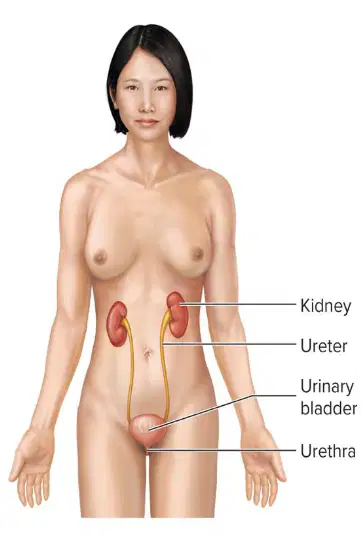
Which organ is responsible for removing waste products from the blood and regulating blood pH, ion balance, and water balance in the urinary system?
Kidney
Uterus
Testis
Mammary gland
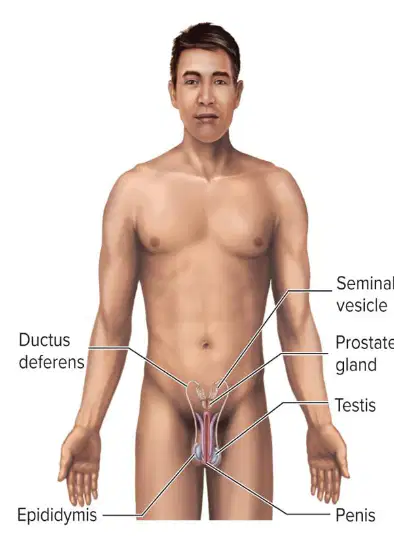
Which of the following is NOT part of the female reproductive system?
A) Ovary
B) Uterine tube
C) Prostate gland
D) Vagina
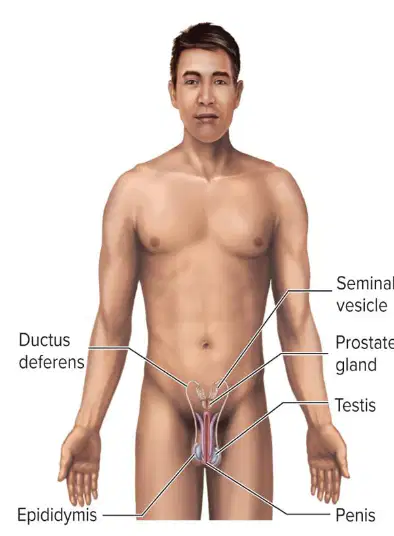
Fill in the blank: The ________ produces and transfers sperm cells to the female and produces hormones that influence sexual functions and behaviors.
male reproductive system
female reproductive system
digestive system
respiratory system
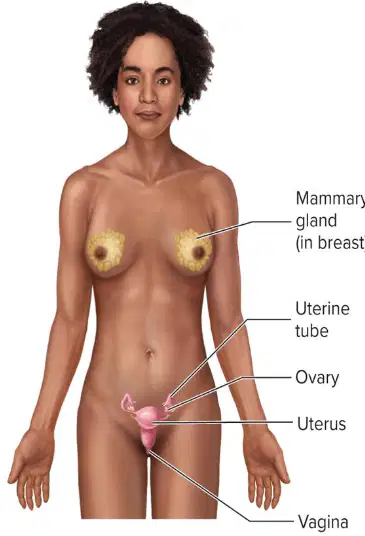
The mammary gland is part of the female reproductive system.
True
False
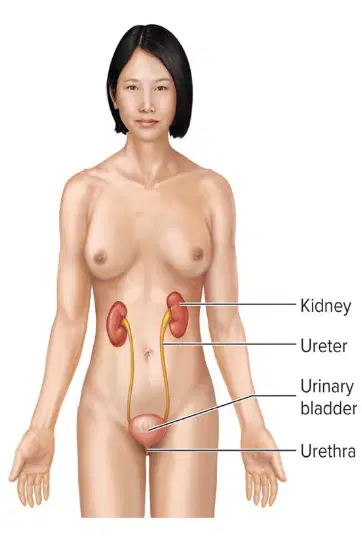
Which organ carries urine from the kidney to the urinary bladder?
Urethra
Ureter
Penis
Ovary
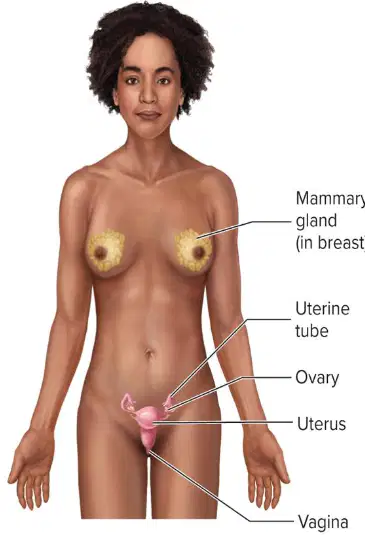
Fill in the blank: The ________ is the site of fertilization and fetal development in the female reproductive system.
uterus
ovary
fallopian tube
vagina
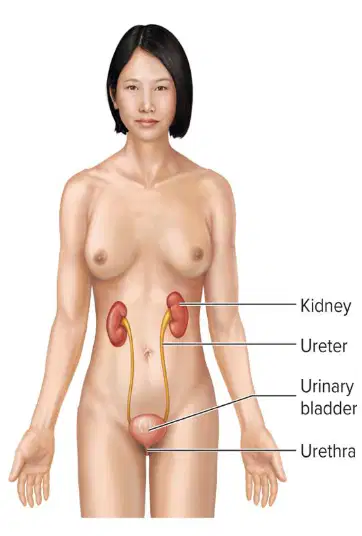
Which of the following is a function of the urinary system?
Produces oocytes
Removes waste products from the blood
Produces sperm cells
Produces milk for the newborn
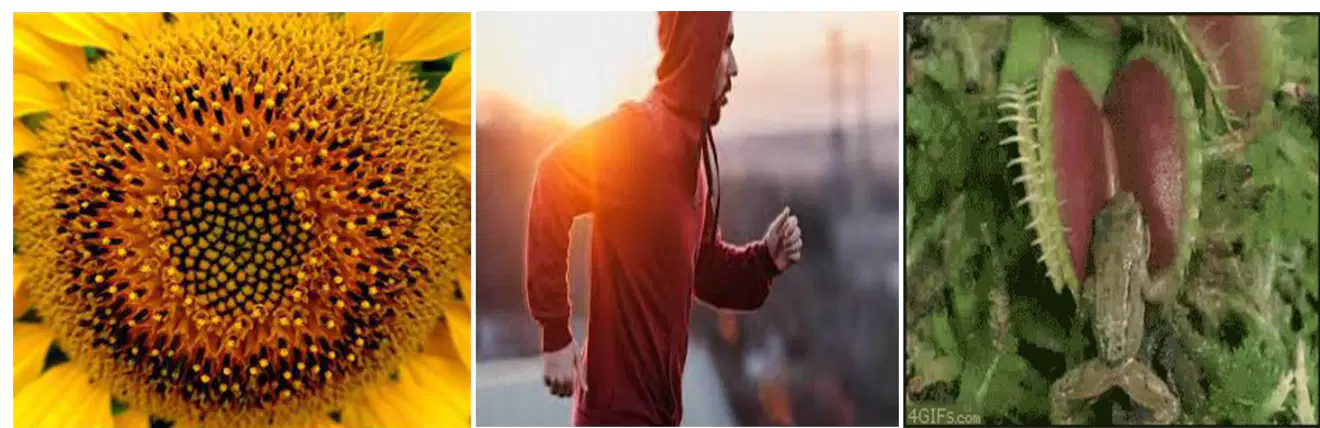
Fill in the blank: __________ refers to specific interrelationships among parts of an organism and interaction of these parts to perform specific functions.
Organization
Metabolism
Reproduction
Adaptation
Fill in the blank: __________ refers to all chemical reactions of the body.
Metabolism
Digestion
Respiration
Homeostasis
Fill in the blank: __________ is the ability to sense changes and adjust.
Responsiveness
Growth
Reproduction
Digestion
What is the definition of Growth according to the Characteristics of Life?
Increase in size and/or number of cells
Decrease in size and/or number of cells
Change in color of cells
Loss of function in cells
What is the definition of Development according to the Characteristics of Life?
Changes in an organism over time
The process of obtaining energy from food
The ability to respond to stimuli
The maintenance of a stable internal environment
Which of the following best describes Differentiation?
Change in shape of tissues, organs
Change from general to specific
Increase in size and/or number of cells
New cells or new organisms
Which of the following best describes Morphogenesis?
A) Change in shape of tissues, organs
B) Change from general to specific
C) Increase in size and/or number of cells
D) New cells or new organisms
What is the definition of Reproduction according to the Characteristics of Life?
New cells or new organisms
The process of obtaining energy from food
The ability to respond to stimuli
The maintenance of a stable internal environment
What is the maintenance of a relatively constant internal environment within the body called?
Homeostasis
Metabolism
Osmosis
Photosynthesis
What do the values of variables (conditions) fluctuate around to establish a normal range of values?
Set point
Threshold
Equilibrium
Baseline
What is the ideal normal value of a variable called?
Set point
Threshold
Baseline
Reference value
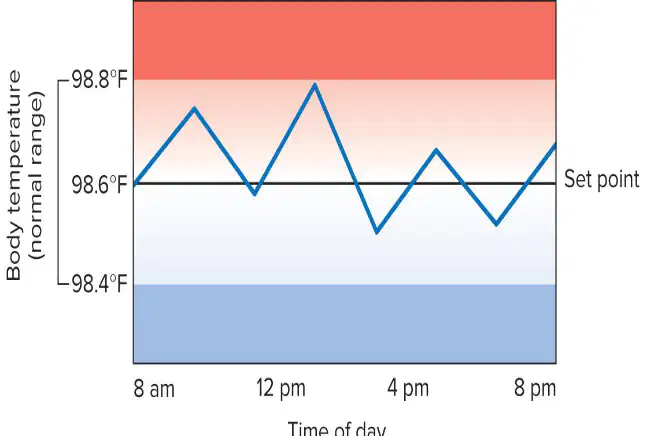
At what value does the set point for body temperature appear to be?
98.4°F
98.6°F
98.8°F
99.0°F
What regulates homeostasis by allowing a process to be adjusted by the outcome?
Feedback loops
Hormones
Enzymes
Blood pressure
The two types of feedback loops are _______ feedback and _______ feedback.
negative, positive
direct, indirect
internal, external
increasing, decreasing
Which of the following is NOT a component of a feedback loop?
A) Receptor
B) Control center
C) Effector
D) Enzyme
What is the function of the effector in a feedback loop?
The effector generates the response which can change the value of the variable.
The effector detects changes in the environment.
The effector sends signals to the control center.
The effector stores information about previous responses.
What does negative feedback regulate in the body?
Only the nervous system
Most systems in the body
Only the digestive system
Only the respiratory system
Negative feedback counteracts a change in a variable by ________ the deviation from a set point to help maintain homeostasis.
decreasing
increasing
ignoring
amplifying
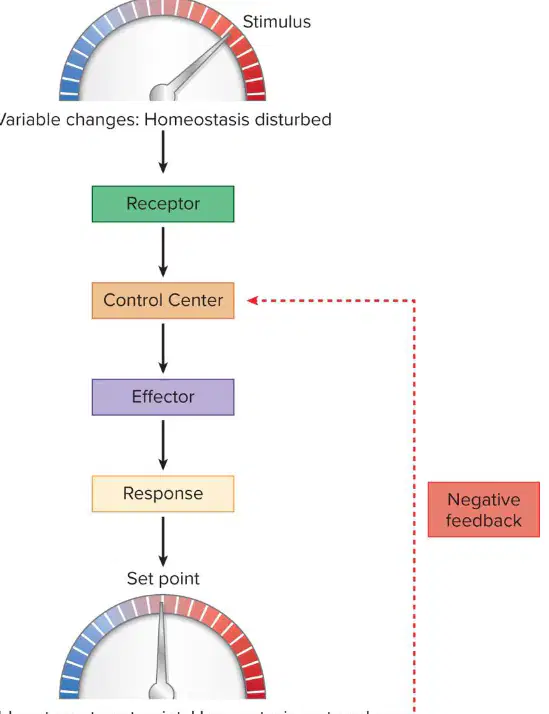
Refer to the diagram showing the process of negative feedback. What is the correct order of components involved in negative feedback?
Effector → Control Center → Receptor → Response
Receptor → Control Center → Effector → Response
Control Center → Receptor → Effector → Response
Response → Effector → Control Center → Receptor
Negative feedback increases the deviation from a set point to help maintain homeostasis.
True
False
What does positive feedback act to do?
Decrease deviation from a set point
Increase deviation from a set point
Maintain homeostasis
Stop all body mechanisms
Harmful positive feedback creates a cycle leading away from homeostasis and possibly _____
death
growth
healing
balance
Which of the following is an example of harmful positive feedback?
Child birth
Blood clotting
Drop in BP after hemorrhage
Sweating
Normal positive feedback mechanisms are beneficial for the body.
True
False
Which of the following are examples of normal positive feedback mechanisms?
A) Child birth
B) Blood clotting
C) Drop in BP after hemorrhage
D) Fever
Which example illustrates negative feedback?
Decreased blood sugar stimulates the release of glucagon which increases blood sugar
Decreased room temperature activates a thermostat, which further decreases heat output by a furnace
A rise in blood calcium levels stimulates the release of a hormone that increases blood calcium levels
A rise in estrogen levels stimulates production of a hormone that stimulates estrogen production
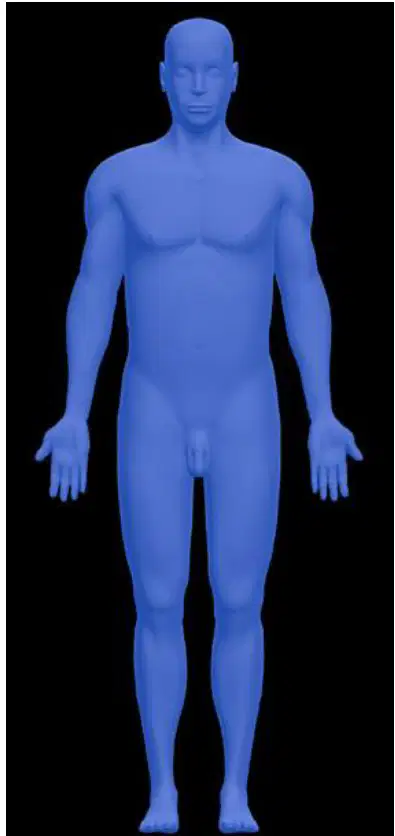
What is the anatomical position?
Body lying face up
Body erect, face directed forward, palms face forward, arms to the side
Body lying face down
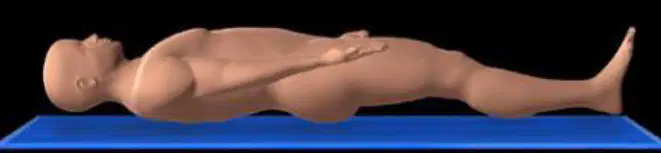
Which body position is shown in the image where the person is lying on their back?
Prone
Supine
Anatomical
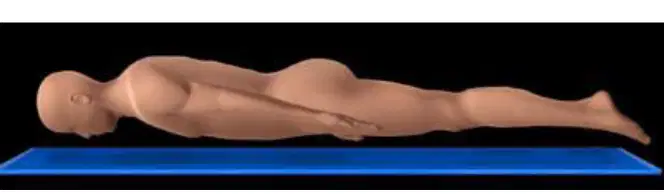
Fill in the blank: The ______ position is when the body is lying face down.
prone
supine
lateral
fetal
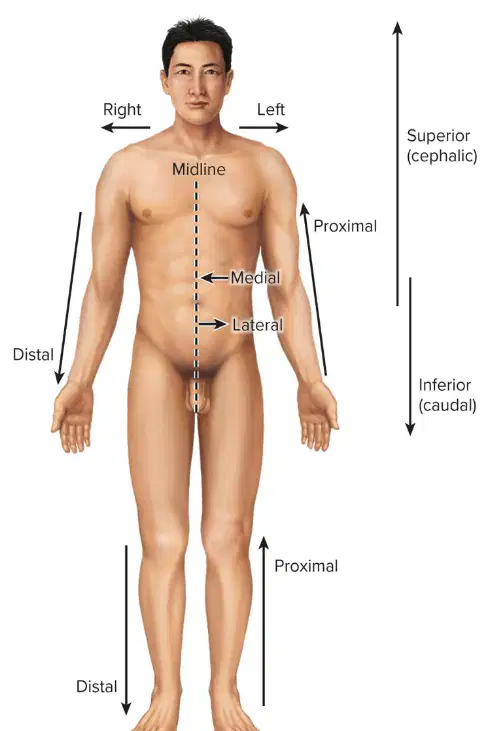
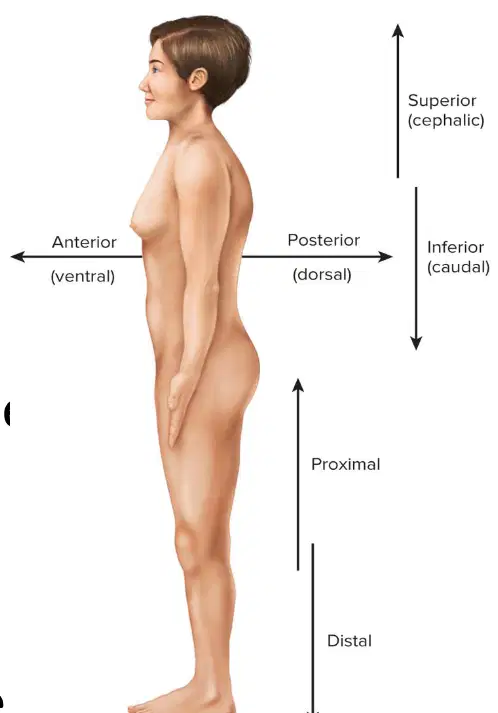
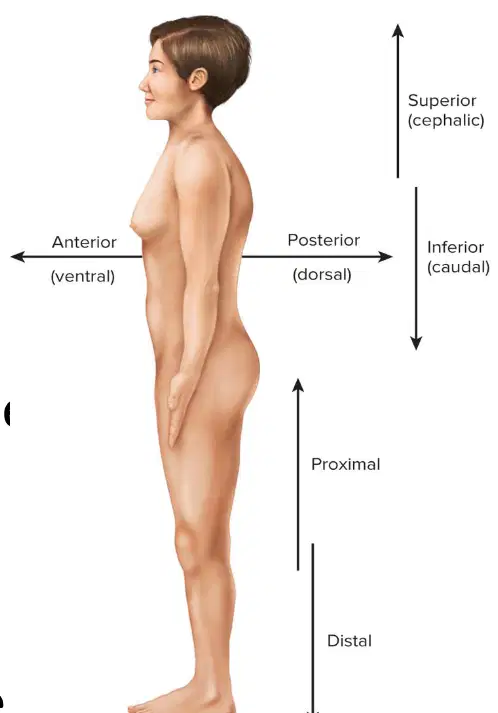
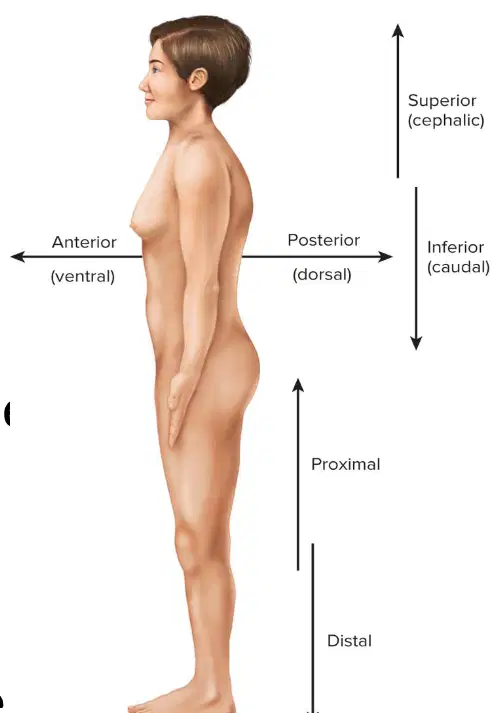
Which directional term refers to toward the head?
A) Superior (Cephalic)
B) Inferior (Caudal)
C) Anterior (Ventral)
D) Posterior (Dorsal)
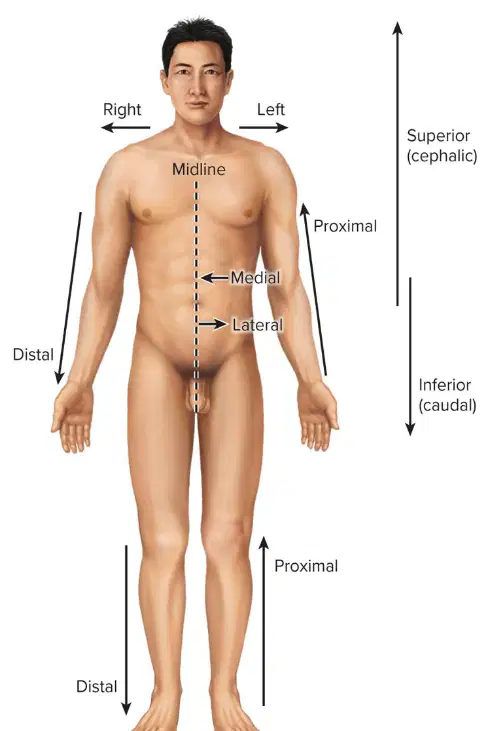
Which directional term means away from the midline of the body?
Medial
Lateral
Proximal
Distal
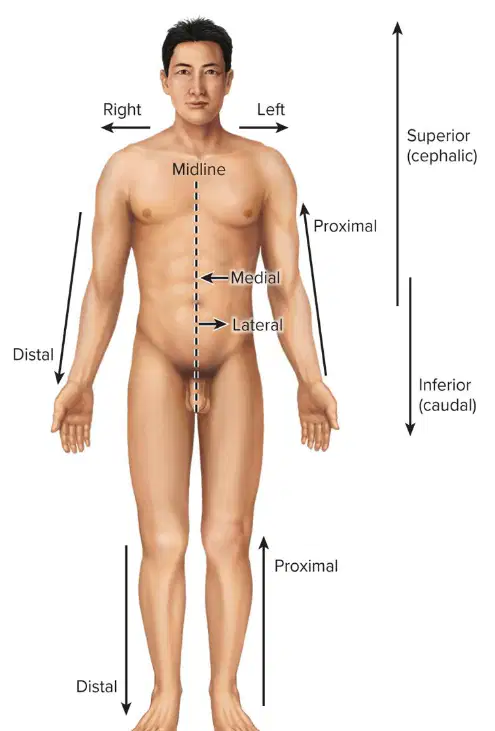
Fill in the blank: The term ________ is used to describe a position closer to the point of attachment to the body.
Proximal
Distal
Lateral
Inferior
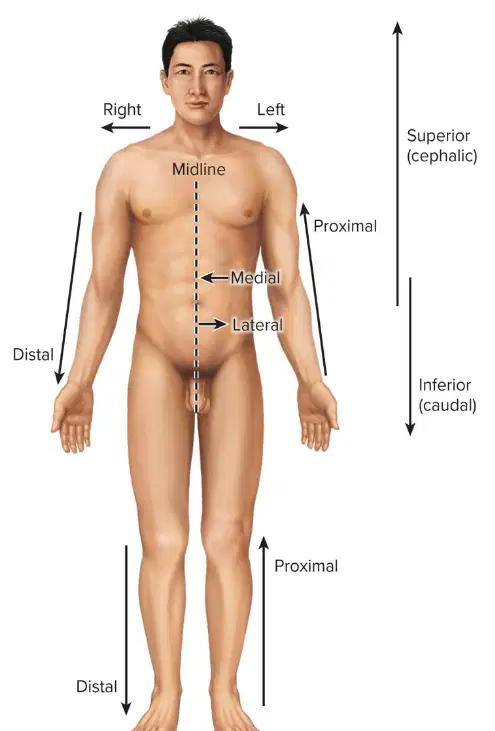
The term 'Distal' is used to describe a position farther from the point of attachment to the body.
True
False
Which of the following pairs are opposites in anatomical terminology?
A) Superior and Inferior
B) Medial and Proximal
C) Anterior and Superficial
D) Lateral and Deep
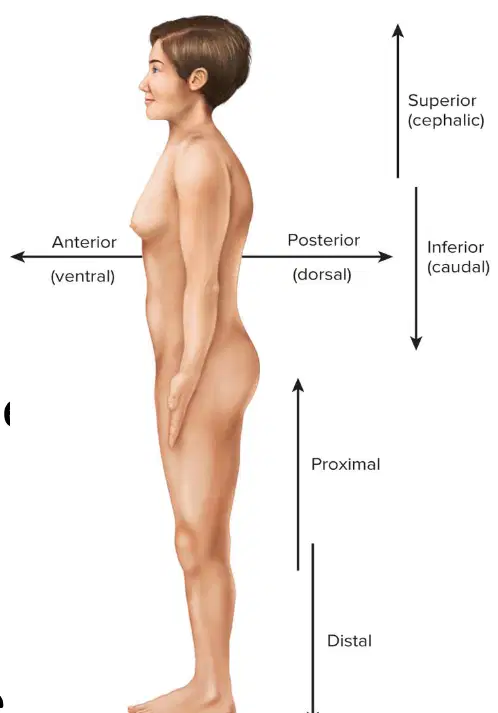
Which directional term refers to toward the head?
Superior (Cephalic)
Inferior (Caudal)
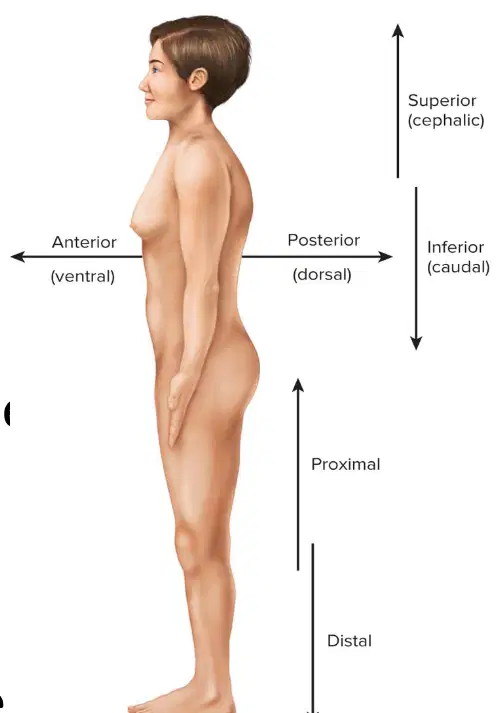
Which directional term refers to the front of the body?
Anterior (Ventral)
Posterior (Dorsal)
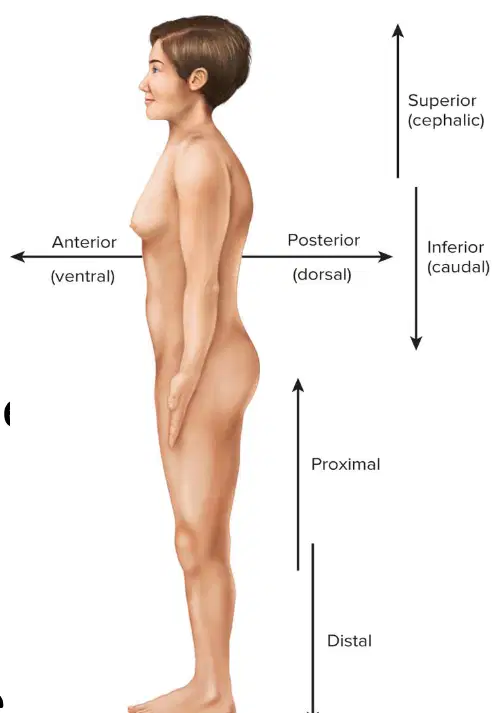
Proximal vs. Distal are used to describe points of attachment to the body. Which term means closer to the point of attachment?
Proximal
Distal
Which directional term means closer to the midline of the body?
Medial
Lateral
Superficial vs. Deep are used to describe relative position to the surface of the body. Which term means farther from the surface?
Superficial
Deep
Fill in the blank: The term ________ refers to a position toward the head.
Superior
Inferior
Posterior
Lateral

What is the anatomical term for the forehead?
Frontal
Temporal
Occipital
Mandibular

What is the anatomical term for the eye region?
Orbital
Brachial
Femoral
Carpal

What is the anatomical term for the nose region?
Nasal
Orbital
Oral
Cervical

What is the anatomical term for the mouth region?
Oral
Nasal
Ocular
Aural

What is the anatomical term for the ear region?
Otic
Orbital
Nasal
Buccal

What is the anatomical term for the cheek region?
Buccal
Femoral
Orbital
Cervical

What is the anatomical term for the chin region?
Mental
Orbital
Nasal
Cervical

What is the anatomical term for the neck region?
Cervical
Thoracic
Lumbar
Sacral

What is the anatomical term for the collarbone region?
Clavicular
Femoral
Scapular
Patellar
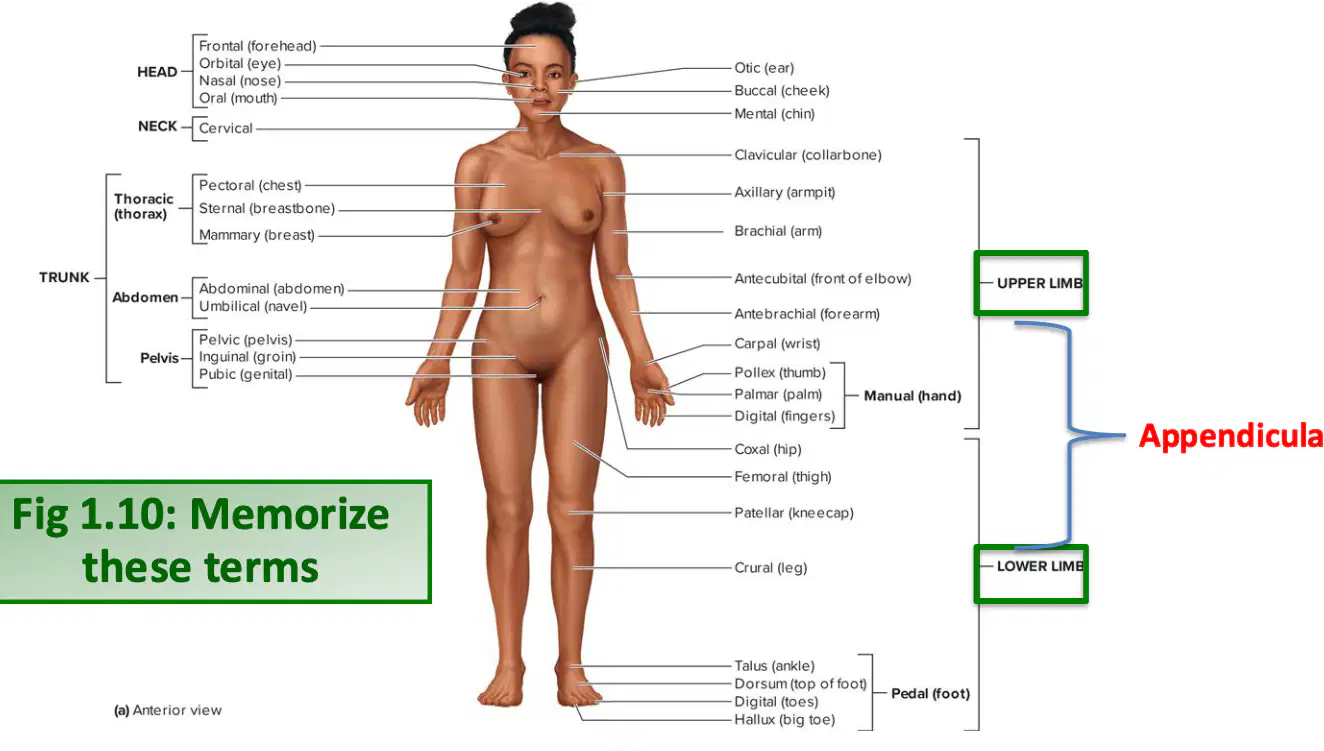
What is the anatomical term for the armpit region?
Axillary
Femoral
Cervical
Brachial

What is the anatomical term for the arm region?
Brachial
Femoral
Cervical
Carpal

What is the anatomical term for the front of the elbow?
Antecubital
Popliteal
Occipital
Patellar

What is the anatomical term for the forearm region?
Antebrachial
Brachial
Carpal
Femoral

What is the anatomical term for the wrist region?
Carpal
Femoral
Tarsal
Brachial
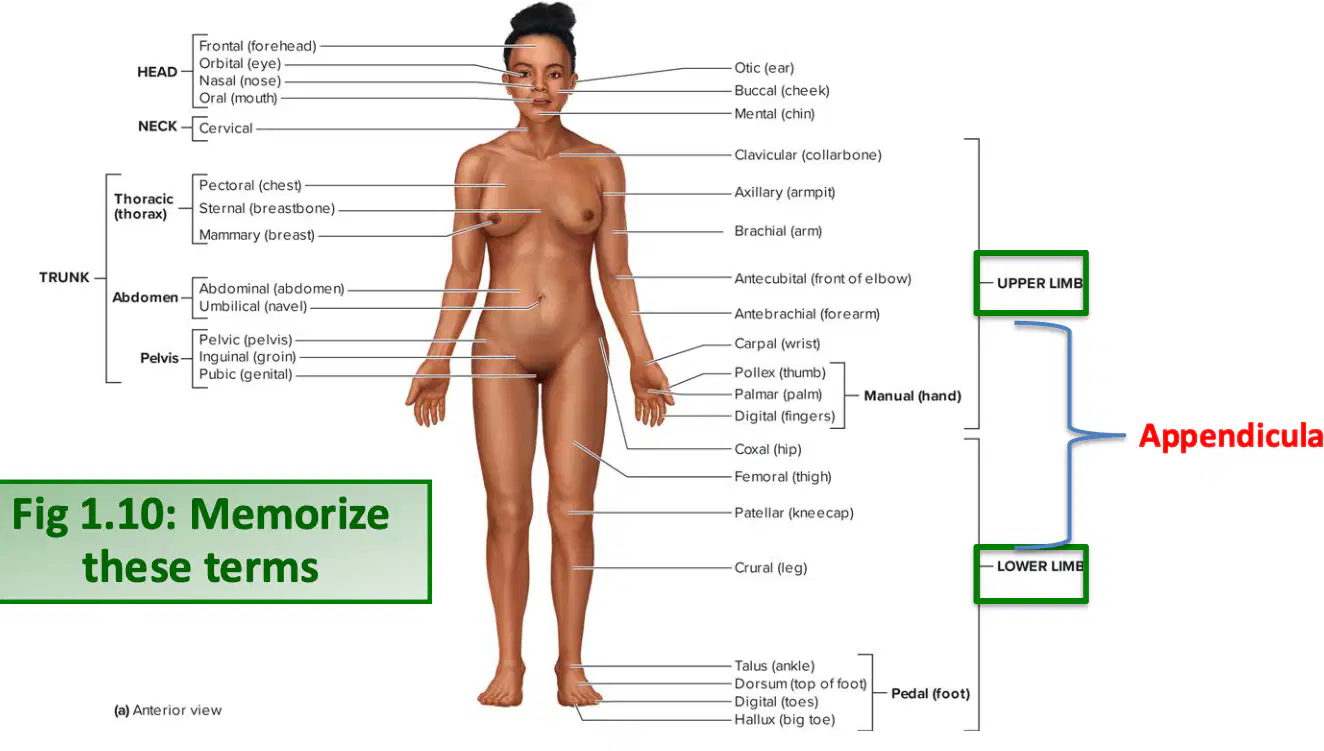
What is the anatomical term for the thumb?
Pollex
Hallux
Carpus
Tarsus

