wayground logo

Free Printable Worksheets

Font size

S
M
L
XL
Worksheets

Nutrients

Total questions: 93

Worksheet time: 1hrs 29mins

Name
Class
Date
1.
This nutrient makes up 75% of your body:
a)
water
b)
vitamin A
c)
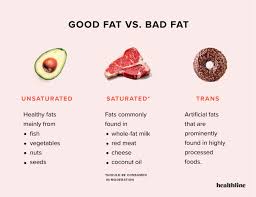
carbohydrates 
d)
protein 
2.
Which nutrient carries nutrients to cells and waste from the body?
a)
carbohydrates
b)
proteins
c)
fats
d)
water
3.
Which nutrient provides your body with energy and fiber?
a)
carbohydrates
b)
fat 
c)
protein
d)
vitamins
4.
Which nutrient helps regulate body functions?
a)
Fats
b)
Vitamins
c)
Carbohydrates
d)
Protein
5.
Which nutrient are elements that your body needs to work properly?  
a)
fats
b)
carbohydrates
c)
minerals
d)
protein
6.
There are two types of carbohydrates.  What are they?
a)
Magnesium and Calcium
b)
Simple and Complex
c)
Unsaturated and Saturated
d)
Vitamin B and Vitamin C
7.
Which of the following foods is NOT a protein?
a)
Orange
b)
Steak
c)
Eggs
d)
Chicken
8.
The study of nutrients and how the body uses them. 
a)
Health
b)
Nutrition
c)
Nutrients
d)
Diet
9.

Substances in food that your body needs to carry out its normal functions.

a)

Nutrition

b)

Protein

c)

Carbohydrates

d)

Nutrients

10.

Promotes repairing and rebuilding of muscle tissue

a)

Protein

b)

vitamins

c)

minerals

d)

fats

11.

Fast energy such as candy and fruit

a)

Complex carbohydrates

b)

Saturated fats

c)

Trans fats

d)

Simple sugars

12.

The process by which the body takes in and uses food.

a)

Nutrition

b)

Calories

c)

Body Mass Index

d)

Appetite

13.

Substances in food that provide nourishment essential for growth and the maintenance of life are called nutrients. What are the 6 nutrients?

a)

Carbohydrates, Meats, Minerals, Water, Protein, and Dairy

b)

Fruits, Milk, Vitamins, Water, Pork, and Vitamins

c)

Carbohydrates, Fats, Water, Protein, Minerals and Vitamins

d)

Carbohydrates, Fats, Minerals, Cheese, Protein, and Vegetables
14.
What measures energy in food?
a)
Calories
b)
Ruler
c)
Thermometer
d)
Food label
15.
Which nutrient helps rebuild and repair muscles?
a)
Dairy
b)
Sodium
c)
Carbohydrates
d)
Protein
16.
Which nutrient insulates the body against the cold and protects internal organs?
a)
Proteins
b)
Fats
c)
Minerals
d)
Nutrients
17.

Which nutrient helps control body functions such as digestion, metabolism, and wound healing?

a)

Vitamins

b)

Minerals

c)

Water

d)

Vegetables

18.

Which nutrient carries/transports other nutrients and oxygen throughout the body? It also makes up about 75% of your body

a)

Dairy

b)

Minerals

c)

Protein

d)

Water

19.

Which nutrient are substances that the body CANNOT manufacture, but are needed for forming healthy bones and teeth and regulating many vital body processes?

a)

Protein

b)

Minerals

c)

Water

d)

Vitamins

20.
Which nutrient is our body's MAIN source of energy?
a)
Carbohydrates
b)
Fats
c)
Water
d)
Minerals
21.

Which one of these is considered the "good fats" that we get from foods?

a)

Unsaturated Fat

b)

Trans Fat

c)

Saturated

d)

Carbs

22.
Which of the following are proteins?
a)
arugula
b)
Strawberries
c)
tortilla
d)
Beans, eggs, chicken
23.

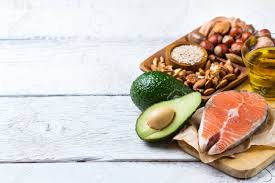
Fish, nuts, oils and avocado are healthy sources of....

a)

Fiber

b)

Protein

c)

Minerals

d)

Fat

24.

Sugars are...

a)

cholesterol

b)

complex carbohydrates

c)

amino acids

d)

simple carbohydrates and quick energy

25.
What happens if you eat more carbohydrates then your body needs?
a)
becomes DNA 
b)
turns to fat 
c)
creates extra energy 
d)
becomes waste
26.

Which Vitamin is the only one our bodies can make?

a)

A

b)

D

c)

B12

d)

Calcium

27.
There are two types of carbohydrates.  What are they?
a)
Magnesium and Calcium
b)
Simple and Complex
c)
Unsaturated and Saturated
d)
Vitamin B and Vitamin C
28.

What food group is most responsible for providing water?

a)

Meats

b)

Fruits

c)

Grains

d)

Dairy products

29.

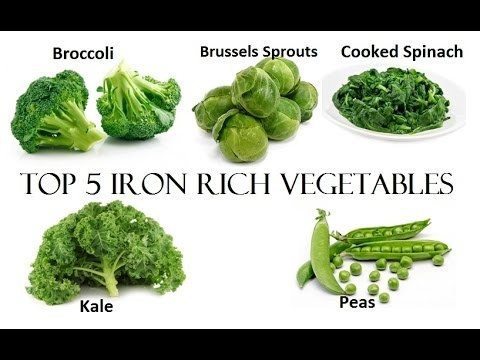
The best way to fill your diet with Iron is by eating

a)

Red meat

b)

Leafy green vegetables

c)

Thick skinned fruit

d)

Brown rice

30.

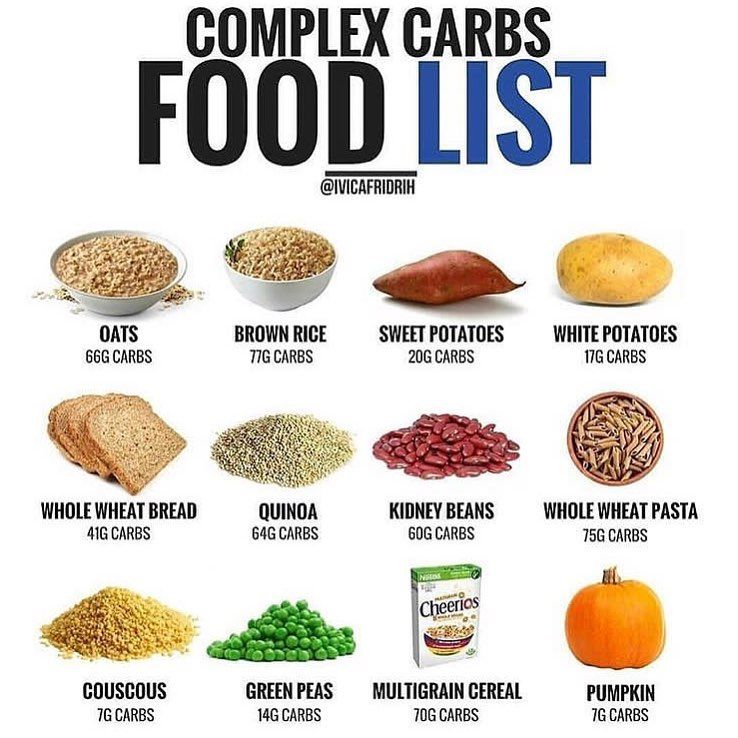
Examples of complex carbohydrates include:

a)

Soda, energy drinks, juice

b)

Whole wheat bread, vegetables, rice

c)

Lean chicken, fish, peanut butter

d)

Simple carbohydrates like sugar

31.

A nutrient the body cannot manufacture.

a)

Minerals

b)

Lipids

c)

Vitamins

d)

Water

32.

Which nutrient is the starches and sugars in foods?

a)

lipids

b)

proteins

c)

carbohydrates

d)

vitamins

33.

A nutrients that does not dissolve in water.

a)

vitamins

b)

minerals

c)

protein

d)

lipids

34.

Which nutrient is a compound that helps regulate many vital processes, including digestion, absorption and metabolism of nutrients?

a)

minerals

b)

vitamins

c)

water

d)

carbohydrates

35.

Which nutrient is vital to every body function?

a)

lipids

b)

water

c)

minerals

d)

protein

36.

What is the order of lipids from worst to least when it comes to damaging your arteries?

a)

saturated fats, unsaturated fats, trans fat

b)

saturated fats, trans fat, unsaturated fats,

c)

unsaturated fats, saturated fats, trans fats

d)

trans fats, saturated fats, unsaturated fats

37.

What type of lipid contributes less to heart disease?

a)

Trans fat

b)

Unsaturated

c)

saturated

38.

How much energy does protein, lipids, carbohydrates provide per gram? (the numbers will be in order by the question)

a)

4, 4, 9

b)

9, 4, 4

c)

4, 9, 4

39.

What is the difference between fat soluble and water soluble vitamins?

a)

Water-soluble are stored and absorbed, and Fat- soluble must be replenished daily.

b)

Fat-soluble and Water-soluble are the same we use them daily and need to replenish daily.

c)

Fat -soluble are stored and absorbed, and water- soluble dissolve in water and must be replenished daily.

d)

Water-soluble are stored and also dissolve in water, and Fat-soluble dissolve in water and pass in the bloodstream.

40.

What does this mean on a product?

a)

package date

b)

food allergy code

c)

light product date

d)

expiration date

41.

What must be placed on packages of food that are intended for sale?

a)

Food Label

b)

Nutrition Facts

c)

Nutrients Facts Label

d)

Calories Label

42.
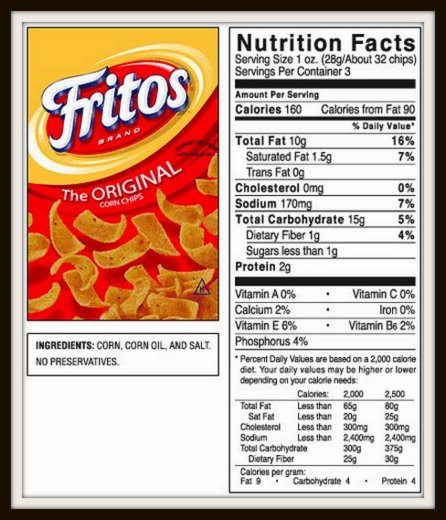
Main ingredient is?  
a)
corn
b)
corn oil 
c)
salt
d)
frito
43.
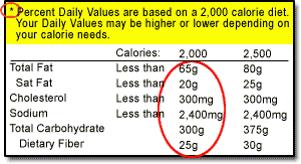
Based on a 2,000 Calorie diet, what is the total amount of fat is a person supposed to consume in a day?
a)
10g
b)
150g
c)
65g
d)
80g 
44.
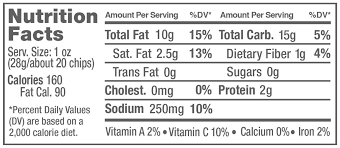
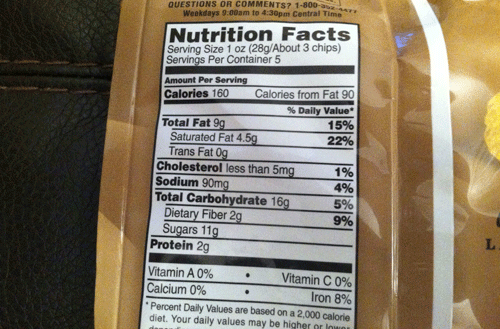
Based on the label, how many chips are in 1 serving of this bag of potato chips?
a)
20 chips
b)
28 chips
c)
160 chips
d)
90 chips
45.
What is the main ingredient in this bottle of salad dressing?
a)
Sodium
b)
Fat
c)
Vegetable Oil
d)
Potatoes
46.
What is true about serving sizes?
a)
They must be listed in commonly understood portions (cups, grams, pieces)
b)
They only need to be listed if there is more than one serving per container
47.
Reading the food label can help you compare products, make healthier choices and provide valuable information to people with food allergies. 
a)
True
b)
False
48.
Ingredients are listed on the food label from least amount to the greatest amount in terms of weight.
a)
True
b)
False
49.
Where is the Serving Size located? 
a)
Right at the top
b)
On the bottom
c)
In the middle
d)
Its not on the label
50.
Does the label give you the Serving Size?
a)
Yes
b)
No
c)
I don't know
51.
You want your Sodium to be high.
a)
True
b)
False
52.
Can you plan how many meals or snacks are in the box by the servings per container?
a)
Yes
b)
No
53.
Does the label contain what Vitamins are in the food?
a)
No
b)
Yes
54.
For Nutrients we should limit, like Saturated Fat or Sodium, we should look for products that contain...
a)
Close to 5% or less
b)
More than 20%
c)
Less than 20%
d)
30%
55.
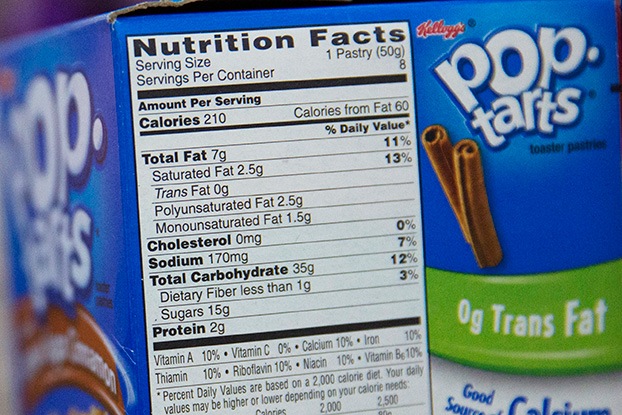
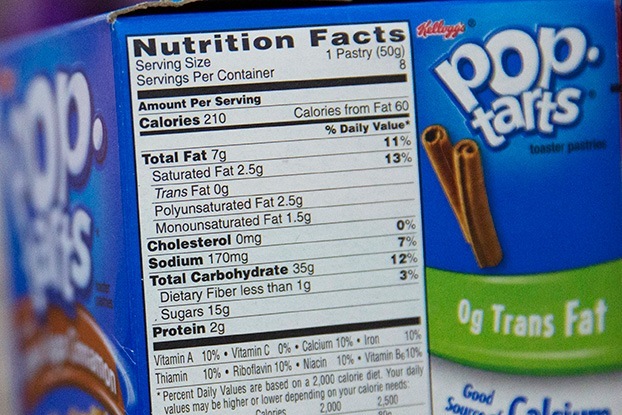
How many servings are in this container of poptarts?  
a)
1
b)
4
c)
8
d)
Unable to tell based on the information 
56.
How many grams of sugar in 1 poptart? 
a)
170
b)
34
c)
15
d)
less than 2%
57.
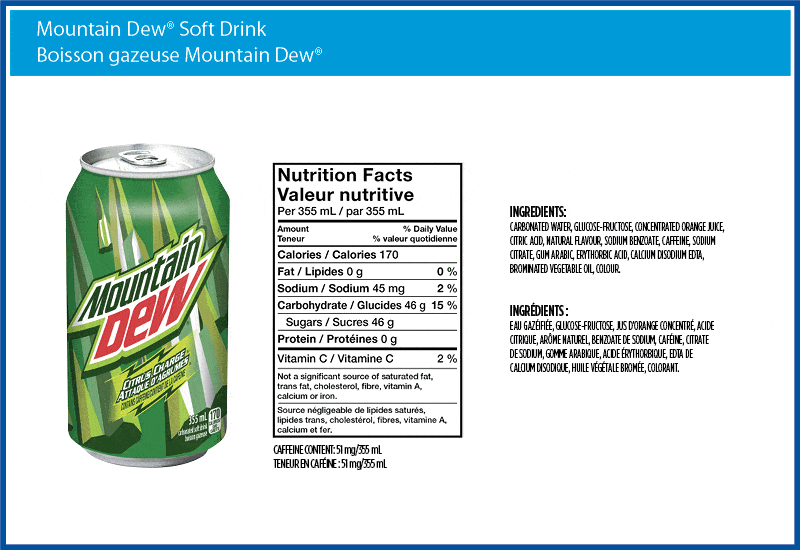
How many calories in a can of Mountain Dew?
a)
170
b)
45
c)
12 oz
d)
355
58.
Are calories bad?
a)
Yes, they make you gain weight.
b)
No, you should eat as many calories as possible for energy.
c)
No, but you should be aware of them to maintain a healthy weight.
d)
Yes.  Calories do not add any nutrients.
59.
Based on the food label, if I eat 9 potato chips, how many grams of protein would I be getting? 
a)
2g
b)
4g
c)
6g
d)
8g
60.

Who should be reading a food label?

a)

Everyone

b)

People with allergies, diseases and those on a diet

61.

What is true about the footnote in a food label? (Choose more than 1)

a)

It is different for different food

b)

It tells you that %DV is calculated based on a 2000 calorie diet

c)

It is always at the end of a food label

62.

1 serving of Nutella (6 tablespoons) has 540 calories. This means Nutella is:

a)

High Calorie Food

b)

Medium Calorie Food

c)

Low Calorie Food

63.

For a Cheetos Packet, If the serving size is 21 chips, and the servings per container is 4, this means the whole packet has

a)

21 chips

b)

21x4 chips

c)

4 chips

d)

21x2 chips

64.

Other than Vitamins and Minerals, what nutrient do we want more of in a food label and in our food?

a)

Fiber

b)

Sugar

c)

Saturated Fat

d)

Protein

65.

If you excercise and always get muscle cramps, what nutrient should you check you are getting enough of in the food labels of the food you eat?

a)

Sodium

b)

Iron

c)

Calcium

d)

Vitamins

66.

1 serving of Nutella (6 tablespoons) has 540 calories. This means 3 tablespoons of Nutella has:

a)

540/2 (540 divided by 2)

b)

540x2

c)

540

d)

540x6

67.

What is NOT true about percentage daily value (%DV)?

a)

It allows you to compare 2 foods and find out which is healthier

b)

It allows you to find out if a nutrient is medium low or high

c)

You can use it to calculate how much gram (g) fat or protein is in more than one serving of a food

d)

It is for an entire day, not just for one meal

68.

What is the healthiest Starbucks drink in the table above?

a)

Iced Juniper Latte

b)

Iced Latte Macchiato

c)

Iced Peppermint Mocha

d)

Iced Peppermint White Chocolate Mocha

69.
Which carbohydrate provides the most bulk to the diet? 
a)
Fructose 
b)
Lactose 
c)
Fiber 
d)
Sucrose
70.
Fiber absorbs water like a sponge and helps food move through the large intestine.
a)
True
b)
False
71.
Which type of food provides fiber?
a)
Food from plant sources
b)
Only from vegetables
c)
Only from fruits
d)
Only from grains
72.
Carbohydrates yield how many Calories per gram?
a)
0 Cal/gram
b)
9 Cal/gram
c)
4 Cal/gram
d)
2.25 Cal/gram
73.
Sugars all end with what three letter ending?
a)
-ote
b)
-ate
c)
-ase
d)
-ose
74.
The scientific name for table sugar is ___
a)
lactose
b)
sucrose
c)
galactose
d)
glucose
75.
Which health problems is a consequence of eating too much added sugar? 
a)
overweight
b)
heart disease
c)
diabetes
d)
all of the above
76.
Which foods do not contain natural sugar?
a)
apple
b)
milk
c)
strawberry
d)
none of the above
77.
What is not a type of carbohydrate?
a)
Fat
b)
Fiber
c)
Starch
d)
Sugar
78.
Eggs are a complete protein.
a)
True
b)
False
79.
Non-meat examples of protein include
a)
broccoli, kale, carrots
b)
beans, legumes, eggs
c)
tofu, apples, spinach
80.
Foods that are short of one or more of the essential amino acids
a)
aldehydes
b)
maillard reaction
c)
complete protein
d)
incomplete protein
81.
A food that contains all 9 essential amino acids
a)
globular proteins
b)
complete proteins
c)
fibrous proteins
d)
whey
82.
What kinds of food can you get protein from in your diet?
a)
Eggs
b)
Meat and Fish
c)
Nuts and Legumes
d)
All of the above
83.
Amino Acids:
a)
are a type of marinade.
b)
help transport fats in the body.
c)
are the building blocks from which proteins are made.
d)
are only found in plants.
84.

There are many vitamins and minerals needed to maintain a healthy body. What is the best way for a person to get all of the vitamins and minerals that are needed?

a)

Eat a variety of healthy foods.

b)

Drink a lot of water.

c)

Eat only vegetables.

d)

Exercise everyday.

85.

Some foods have more vitamins and minerals than others. Which of the following might be considered unhealthy (non-food) because it does not have many vitamins and minerals?

a)

Oranges

b)

Cheese

c)

Broccoli

d)

Soda

86.

If a food has trans fat, we will find this word in the ingredient list.

a)

Saturated

b)

Hydrogenated

c)

Unsaturated

87.

Which is the healthiest kind of fat?

a)

Unsaturated

b)

Saturated

c)

Trans

88.

Which kind of fat is always bad for us?

a)

Unsaturated

b)

Saturated

c)

Trans Fat

89.

Which type of fat is okay to eat in small amounts?

a)

Unsaturated

b)

Saturated

c)

Trans

90.
Your nutrition affects your overall health.
a)
True
b)
False
91.
Which of the following is an example of a healthy snack?
a)
chips
b)
pop tart
c)
banana
d)
doughnut
92.
We should exercise _______ minutes each day to be healthy.
a)
120
b)
90
c)
30
d)
60
93.
Ashley is getting ready for her soccer game.  Which nutrient will give her body the main fuel for her game? 
a)
Fat
b)
Water
c)
Multi-vitamin
d)
Carbohydrates