
 Worksheets
Kitchen Safety and Sanitation Quiz
Total questions: 94
Worksheet time: 47mins
Why is it important to work in a clean and safe kitchen?
To prevent accidents and food-borne illnesses
To make food taste better
To save time while cooking
To use more kitchen equipment
Which of the following is a way to prevent food-borne illnesses?
Leaving food out at room temperature
Using good safety and sanitation practices
Ignoring expiration dates
Mixing raw and cooked foods
What should you do to recognize and identify potential safety problems in the kitchen?
Ignore spills and clutter
Pay attention to hazards and unsafe practices
Only focus on cooking techniques
Use any kitchen tool without checking it
Which practice is important for good safety and sanitation in food preparation?
Washing hands before handling food
Using dirty utensils
Storing food on the floor
Cooking without cleaning surfaces
What is the process of handling food in ways that are clean and healthy called?
Safety
Cooking
Sanitation
Preservation
Why might the food we eat not always be safe?
Because it is always cooked
Because not everyone uses good sanitation practices
Because it is always fresh
Because it is always stored properly
What does safety in the kitchen mean?
Using sharp knives
Using precautionary methods to prevent accidents
Cooking food quickly
Cleaning dishes after eating
According to the text, what is the most common cause of accidents in the kitchen?
Lack of ingredients
Carelessness
Overcooking food
Using too much water
Which of the following is a safe kitchen practice?
Use a towel or your apron to remove a pan from the oven.
Pour water on a grease fire.
Wipe up spills on the floor right away.
Use electric appliances with wet hands.
What should you do if there are flames from a grease fire?
Pour water on it.
Pour salt or baking soda over it.
Use a towel to smother it.
Leave it to burn out.
Why is it important to tie back long hair while working in the kitchen?
To look neat.
To avoid hair falling into food.
To prevent hair from catching fire or getting caught in equipment.
To keep cool.
Which of the following is an unsafe kitchen practice?
Cut away from your body when using a sharp knife.
Climb up on the counter to get items from the top shelf.
Wipe up spills on the floor right away.
Tie back long hair.
What is the safest way to use a sharp knife in the kitchen?
Cut toward your body.
Cut away from your body.
Use a dull knife.
Hold the knife loosely.
What should you avoid doing when using electric appliances in the kitchen?
Use them with dry hands.
Use them with wet hands.
Plug them in carefully.
Turn them off after use.
Why is it unsafe to wear loose clothing while working in the kitchen?
It looks messy.
It can catch on fire or get caught in equipment.
It is uncomfortable.
It makes you work slower.
What is the risk of keeping cabinet doors open in the kitchen?
It makes it easier to reach items.
It can cause someone to bump into them and get hurt.
It helps you remember where things are.
It keeps the kitchen cool.
Which of the following is a recommended way to prevent burns when handling hot items?
Use dry pot holders
Use wet towels
Use bare hands
Use plastic bags
What should you do if you have a grease fire in a pan?
Pour water on the fire
Immediately put the lid on the pan
Move the pan to another burner
Blow on the fire
Why should you always lift the lids of saucepans away from you?
To keep the food warm
So the steam will not burn you
To let the food cook faster
To check the color of the food
Which of the following is NOT a safe practice to prevent kitchen fires?
Leaving pot holders near a hot burner
Turning pan handles inward
Keeping a fire extinguisher in the kitchen
Smothering a grease fire with baking soda
What should you do after you have finished cooking?
Leave the oven and range buttons on
Make sure all oven and range buttons or dials are turned off
Leave pots and pans on the stove
Open all windows
If putting a lid on a grease fire does not work, what should you use to smother the fire?
Water
Salt, baking soda, sand, or a fire extinguisher
Oil
Paper towels
What is the purpose of turning pan handles so they don’t stick out over the edge of the range?
To make cooking easier
To prevent the pan from being knocked over
To cool the pan faster
To let more steam escape

Which of the following is a recommended way to avoid falls at home?
Leave spills on the floor until later
Wipe up spills immediately
Let pets roam freely in the kitchen while cooking
Use a chair to reach high places instead of a step stool
Why should you pick up toys and other objects from the middle of the floor?
To keep the floor clean
To avoid falls and accidents in traffic areas
To make the room look bigger
To prevent pets from playing with them
What type of step stool or ladder should you use to reach high places safely?
Any available chair
A sturdy step stool or ladder
A pile of books
A folding table
What is the purpose of using floor mats and rugs with nonskid backs?
To make the floor look pretty
To keep the floor warm
To prevent slipping and falling
To protect the floor from scratches
Which of the following actions helps prevent falls while cooking?
Letting pets stay in the kitchen
Keeping pets out of the kitchen
Cooking with the lights off
Wearing socks on a slippery floor

Which of the following is the correct way to pick up a knife to prevent cuts?
By its blade
By its handle
By the tip
By the side
What should you always use when slicing, chopping, or dicing foods?
Your hands
A plate
A cutting board
The countertop
Why should sharp knives be washed separately and not simply dropped into the dishwater?
To save water
To prevent rust
To prevent accidental cuts
To keep them sharp
When cutting food, how should the blade of the knife be positioned?
Up and towards you
Down and slanting away from you
Flat on the table
Pointing straight up
Which of the following is a safe practice when using an electric mixer, food processor, blender, or garbage disposal?
Put your fingers near the moving parts
Use a spoon to stir while it’s running
Keep your fingers away from the moving parts
Add ingredients with your hands while it’s on
What is the safest way to pick up broken glass?
With your bare hands
With a wet paper towel for small pieces
With a broom only
By vacuuming it
If you need to discard large pieces of broken glass, what should you do?
Pick them up with your bare hands
Sweep them into a dustpan
Leave them on the floor
Wash them before discarding

What tool should you use to make sure food cooked in the oven, stove, or on the grill reaches a temperature hot enough to kill germs?
Food thermometer
Measuring cup
Timer
Oven mitt
At what minimum internal temperature should all poultry, including ground poultry, be cooked to ensure food safety?
145°F
100°F
165°F
120°F
Which of the following foods should be cooked to at least 160°F to ensure it is safe to eat?
Fish
Ground beef, pork, lamb, and veal
Beef steaks
Chicken breast
Beef, pork, lamb, and veal chops, roasts, and steaks should be cooked to what minimum internal temperature for safety?
120°F
145°F
165°F
100°F
Why is it important to use a food thermometer when cooking meat?
To make the food taste better
To ensure the food looks good
To make sure the food reaches a temperature hot enough to kill germs
To keep the food warm
What does "BAC" stand for in the context of food safety?
Bacteria
Bread and Cheese
Basic Air Circulation
Baking and Cooking
According to the material, why is BAC considered an "invisible enemy"?
Because it cannot be seen, smelled, or felt
Because it is very loud
Because it glows in the dark
Because it is only found in water
What is the main message of the "FIGHT BAC!" campaign?
To keep food safe from harmful bacteria
To cook food faster
To use more kitchen utensils
To avoid eating vegetables
Which of the following is NOT mentioned as a place where BAC may be found?
Inside food products
On kitchen surfaces
On knives and utensils
In the air outside
What is suggested as a way to keep food safe from BAC?
Following four simple steps
Cooking only with salt
Eating only raw food
Using plastic utensils only
What should you do to keep hands and surfaces free from bacteria?
Wash hands and surfaces often
Leave food out at room temperature
Use the same cutting board for all foods
Store food in warm places
Which of the following actions helps prevent cross contamination?
Mixing raw and cooked foods together
Using the same utensils for all foods
Keeping raw and cooked foods separate
Storing all foods in one container
Why is it important to cook food to proper temperatures?
To make food look better
To keep food warm
To kill harmful bacteria
To save time
What should you do with food to keep it safe after cooking?
Leave it on the counter
Refrigerate promptly
Store it in a warm oven
Cover it with a towel
Which of the following is NOT one of the four key steps to food safety mentioned in the material?
Clean
Separate
Freeze
Chill
What is a food borne illness?
A disease carried or transmitted to people by food
A disease caused by air pollution
A disease spread by animals
A disease caused by lack of exercise
Which of the following is a food based hazard?
Contaminated ingredients
Improper cleaning
Poor hygiene
Time & Temp abuse
Which of the following is NOT a people based hazard?
Chemical
Food handling
Cross contamination
Poor hygiene
Which of the following is an example of a people based hazard?
Improper cleaning & sanitizing
Biological
Chemical
Physical
Identify a type of food based hazard from the list below.
Physical
Time & Temp abuse
Poor hygiene
Improper cleaning
Why is cross contamination considered a people based hazard?
It occurs due to improper handling of food by people
It is caused by chemicals in food
It is a result of contaminated ingredients
It is due to natural food spoilage
What does the acronym "FAT TOM" stand for in food safety?
Food, Acidity, Temperature, Time, Oxygen, Moisture
Fat, Acid, Taste, Texture, Oil, Meat
Food, Air, Temperature, Taste, Oil, Moisture
Fruit, Acidity, Temperature, Time, Oil, Meat
Which of the following is NOT a condition that bacteria need to grow, according to FAT TOM?
Moisture
Oxygen
High acidity
Low temperature
According to FAT TOM, what is the ideal pH range for bacteria growth?
2.0-3.0
4.6-7.5
8.0-10.0
0.0-2.0
Why is it important to wrap food products tightly, according to the FAT TOM principles?
To keep the food warm
To eliminate exposure to oxygen
To add flavor
To prevent moisture loss
What temperature range is considered safe to prevent bacteria growth in food?
32°F to 50°F
40°F or colder, or 140°F or hotter
60°F to 80°F
100°F to 120°F
How long can food be in the danger zone before it becomes hazardous, according to FAT TOM?
1 hour
2 hours
4 hours
8 hours
Which type of food is NOT specifically mentioned as a risk in the FAT TOM model?
Animal origin foods that are raw or heat treated
Plant origin foods that are heat treated
Canned foods
Foods with high moisture
How does high acidity affect bacteria, according to FAT TOM?
It helps bacteria grow faster
It neutralizes the bacteria
It increases moisture
It raises the temperature
What does PHF stand for in the context of food safety?
Potentially Hazardous Foods
Perfectly Healthy Foods
Processed Healthy Foods
Partially Heated Foods
How often do bacteria double in number under favorable conditions?
Every 20 minutes
Every 2 hours
Every 1 minute
Every 24 hours
Why do foods have naturally occurring bacteria on them?
To break down the food
To make the food taste better
To keep the food fresh
To add color to the food
What is the maximum amount of time perishable foods should be left at room temperature?
2 hours
4 hours
30 minutes
6 hours
What is a recommended practice to prevent foodborne illness?
Never leave perishable foods at room temperature for more than 2 hours
Always wash food with soap
Store all foods in the freezer
Cook all foods at the same temperature
Which foodborne microorganism is commonly found on poultry and eggs?
Salmonella
Listerosis
Botulism
Trichinosis
Where is Listerosis most likely to be found?
On deli/ready to eat meats
In baked potatoes
In pork
In beef
Botulism is most often associated with which of the following?
Improperly canned goods and honey
Poultry and eggs
Potato salad and shrimp
Bad sour cream and jelly
Which microorganism can contaminate any food a human touches due to its presence in human feces?
Hepatitis A
Staphylococcus
Yeast
Ecoli
What is a common symptom of foodborne illness?
Fever
Headache
Rash
Sneezing
Which microorganism is found in high concentrations under fingernails and in nostrils?
Staphylococcus
Shigellosis
Trichinosis
Ecoli
Trichinosis is a parasite found primarily in which type of meat?
Pork
Beef
Chicken
Fish
Which foodborne microorganism is primarily found in beef?
Ecoli
Yeast
Botulism
Listerosis
Which of the following is a symptom of foodborne illness?
Diarrhea
Coughing
Sneezing
Itching
Shigellosis is commonly associated with which foods?
Potato salad, tuna, shrimp, macaroni
Poultry and eggs
Improperly canned goods
Bad sour cream and jelly
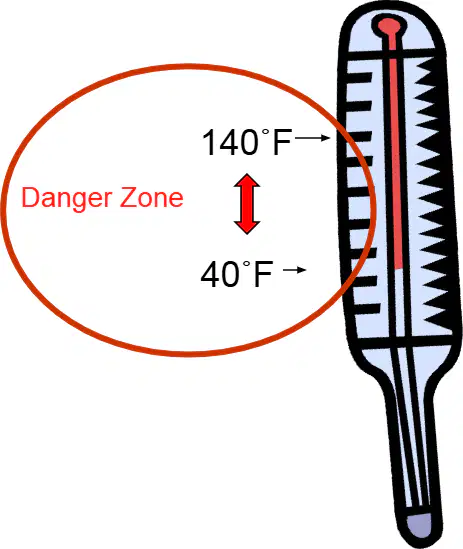
What is the "Danger Zone" in food safety?
The temperatures at which bacteria multiply rapidly.
The temperatures at which food freezes.
The temperatures at which food is fully cooked.
The temperatures at which food is safe to eat.
At what temperature is poultry and stuffing considered safely cooked?
165º F
145º F
135º F
155º F
Which of the following foods is considered safe to eat at 145º F?
Pork
Hamburger (ground beef)
Rare Beef
Poultry and Stuffing
Why is it important to avoid keeping food in the "Danger Zone" temperature range?
Because bacteria multiply rapidly in this range.
Because food tastes better outside this range.
Because food freezes in this range.
Because food loses nutrients in this range.
If a hamburger (ground beef) is cooked to 145º F, is it considered safe according to the chart?
No, it should be cooked to 155º F.
Yes, 145º F is safe for hamburger.
No, it should be cooked to 135º F.
Yes, 135º F is safe for hamburger.
What is the recommended amount of time you should rub your hands together while washing them?
5 seconds
10 seconds
20 seconds
1 minute
Which of the following is NOT a recommended step in proper hand washing?
Wet your hands with warm running water and apply soap
Rub your hands together to make a lather and scrub well
Rinse your hands with cold water only
Dry your hands using a clean cloth or paper towel
According to the information provided, when should you wash your hands?
Only after eating
Before and after treating a cut or wound
Only after touching garbage
Only after handling cooked food
Why is it important to scrub the backs of your hands, between your fingers, and under your nails while washing your hands?
To make your hands smell nice
To remove dirt and germs from all areas of your hands
To dry your hands faster
To save water
What percentage of consumers did not wash their hands before starting meal preparation, according to a recent study?
25 percent
40 percent
65 percent
80 percent
Which of the following situations requires hand washing?
After reading a book
After blowing your nose, coughing, or sneezing
After watching TV
After walking outside
What is a simple way to estimate the time needed for proper hand washing?
Count to 10
Sing the “Happy Birthday” song twice
Clap your hands three times
Wait until your hands feel dry
According to the material, approximately how many germs do sponges contain?
7.2 Billion
1 Million
500 Thousand
10 Thousand
What is the equivalent of the number of germs found in a sponge, as described in the material?
Smearing an 8oz raw piece of chicken breast on your surface
Touching a doorknob
Using a clean dish towel
Washing hands with soap
Why do we use dish towels instead of sponges, according to the material?
Because we wash them after every use
Because they are cheaper
Because they are more colorful
Because they dry faster

