
NEW
Font size
 Worksheets
U2C1L1
Total questions: 28
Worksheet time: 14mins
Which of the following is a key word related to leadership?
Autocratic
Photosynthesis
Algebra
Photosynthesis
What is one of the learning objectives related to leadership?
Describe the Army Leadership Model
Solve quadratic equations
Analyze chemical reactions
Discuss historical events
Which core ability involves using verbal, non-verbal, visual, and written techniques?
Communicate
Calculate
Experiment
Meditate
What is the definition of leadership according to the key words section?
The process of influencing people by providing purpose, direction, and motivation to accomplish the mission and improve the organization
The ability to control and command others without input
The skill of managing resources efficiently
The art of making decisions independently
Which leadership style is characterized by minimal interference and allowing individuals to make their own decisions?
Autocratic
Democratic
Laissez-faire
Contingency
What is one of the benefits of seeking out leadership opportunities in JROTC?
It guarantees a high-ranking position in the military
It builds confidence and develops skills in guiding and influencing others
It provides immediate financial rewards
It ensures a permanent leadership role
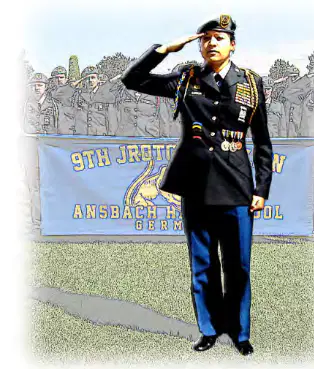
What is the primary focus of leadership opportunities in JROTC according to the text?
To provide financial incentives
To ensure students follow strict rules
To expand capabilities for the future
To limit the variety of objectives
What is a key component of the Leadership Development Program?
Motivation
Training
Inspiration
Delegation
Which of the following is a typical opportunity in the Cadet chain of command?
Community service project leader
Financial advisor
Marketing manager
IT specialist
What are the three elements that effective leadership results from?
Power, control, and influence
Purpose, direction, and motivation
Strategy, planning, and execution
Vision, mission, and goals
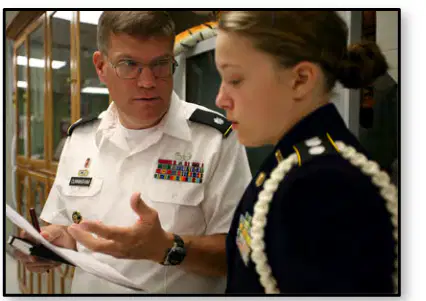
What is the purpose of evaluation in the Leadership Development Program?
To determine financial budgets
To assess the success of training
To create marketing strategies
To develop new technologies
What does the Born Leaders approach maintain about leadership?
Leadership is based on specific traits.
Leadership is learned through experience.
Leadership is a result of environmental factors.
Leadership is solely based on education.
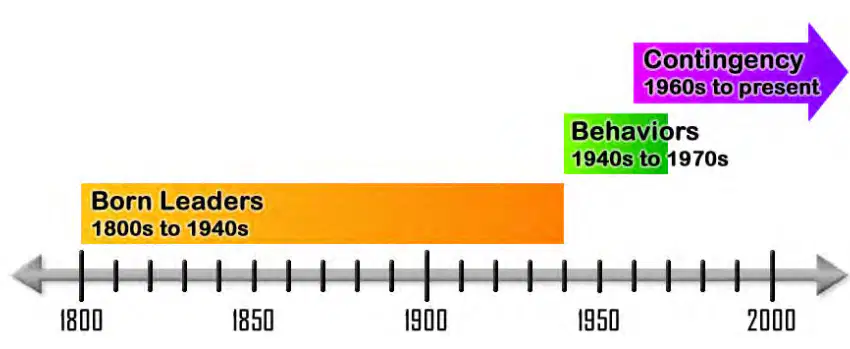
During which era did the Behaviors approach to leadership emerge?
1800s to 1940s
1940s to 1970s
1960s to present
2000s to present
What is a leader's role in motivation according to the text?
To dictate tasks without feedback
To align and elevate individual drives into team goals
To provide financial incentives only
To focus solely on personal achievements
What does the contingency model of leadership emphasize?
The importance of innate leadership traits
The combination of personal styles and situational characteristics
The role of followers in decision-making
The effectiveness of laissez-faire leadership
According to the Born Leaders Approach, what was believed about true leaders in the late 19th and early 20th century?
They were made through training
They were born with an innate ability to lead
They were chosen by followers
They were identified by their popularity
Which leadership style involves leaders making decisions alone?
Democratic
Laissez-faire
Autocratic
Contingency
What did researchers discover about the traits of leaders during the Born Leaders Approach study?
All leaders used traits in the same way
Different situations required leaders to use traits differently
Traits were irrelevant to leadership
Only innate traits mattered

What is a characteristic of the laissez-faire leadership style?
Leaders make decisions alone
Leaders consult with followers
Leaders do not provide any direction
Leaders focus on situational characteristics
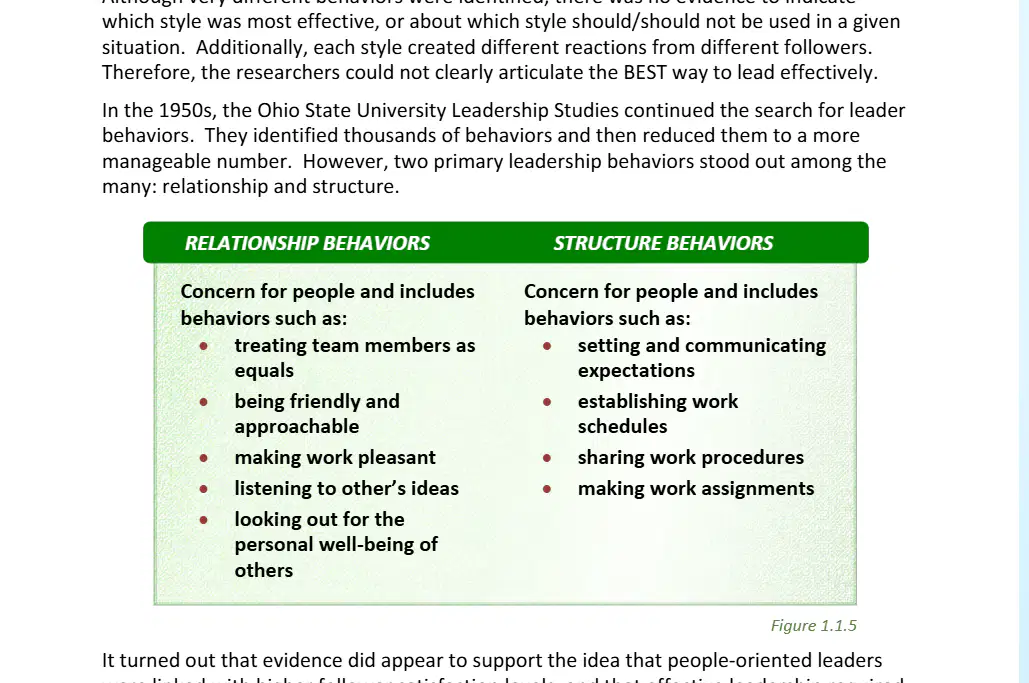
Which two primary leadership behaviors were identified by the Ohio State University Leadership Studies in the 1950s?
Relationship and Structure
Task and Process
Innovation and Creativity
Authority and Control
What does the Contingency Approach to leadership emphasize?
There is one best way to lead
Leadership effectiveness is independent of situational factors
Situational factors determine the most effective style and behaviors
Leadership cannot be taught or learned
According to the text, what is a key belief of the Contingency Approach?
Leadership is solely based on personal traits
Leadership effectiveness is impacted by situational factors and personal characteristics
Leadership is only about setting goals
Leadership does not impact group effectiveness
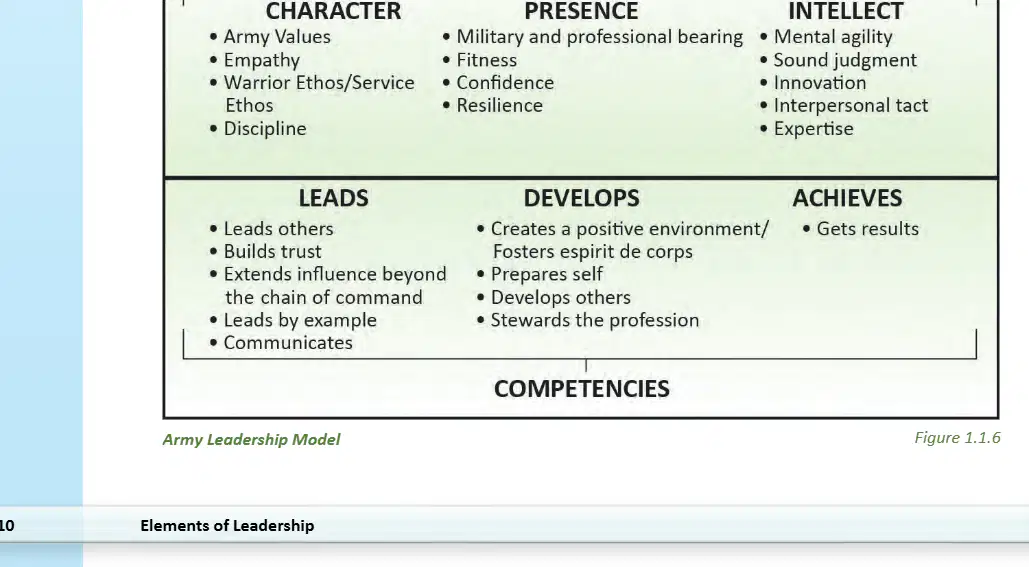
What are the three main attributes of a leader according to the Army Leadership Model?
Character, Presence, Intellect
Strength, Courage, Wisdom
Empathy, Confidence, Innovation
Trust, Discipline, Agility
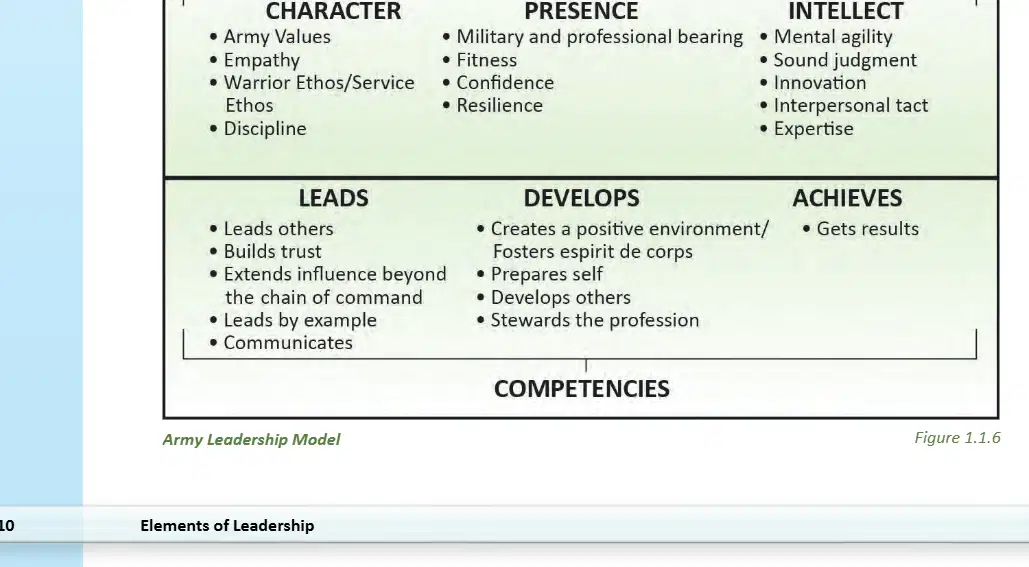
Which attribute of a leader is associated with how they are perceived by followers and others?
Intellect
Presence
Character
Competence
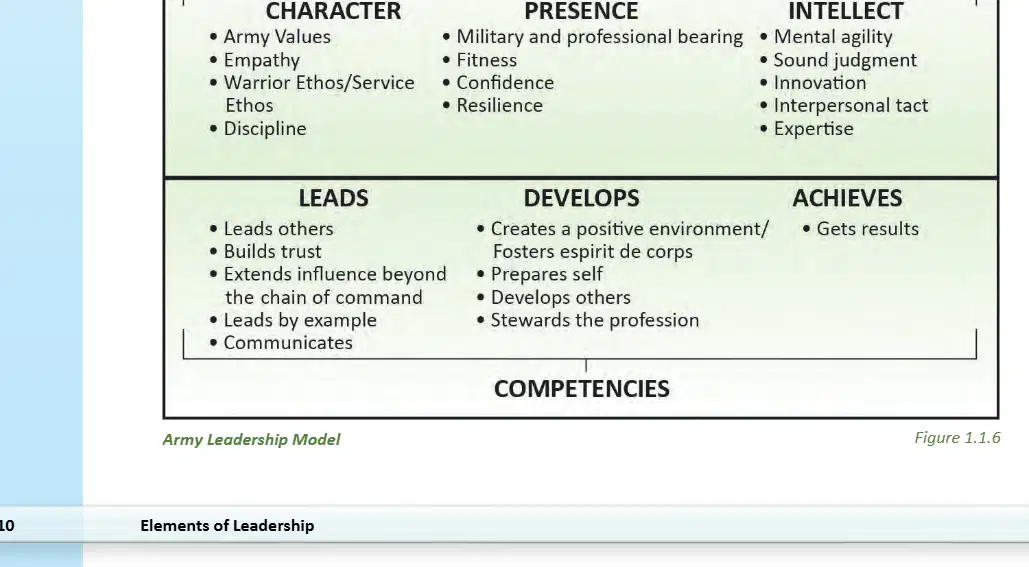
According to the Army Leadership Model, what does 'Character' help a leader determine?
The best strategic plan
The right and appropriate actions
The most efficient communication method
The quickest way to achieve goals
How have views about leadership changed over time?
They have remained the same.
They have become more focused on individualism.
They have evolved to emphasize adaptability and strategic thinking.
They have shifted towards authoritarianism.
What leadership approach is used by the Army Leadership Model?
Autocratic leadership
Transformational leadership
Servant leadership
Situational leadership
What makes an effective leader?
The ability to follow orders without question
The ability to inspire and develop others
The ability to work alone
The ability to avoid challenges

