wayground logo

Free Printable Worksheets

NEW

Font size

S
M
L
XL
Worksheets

CHECKPOINT #5 Review

Total questions: 55

Worksheet time: 1hrs 21mins

Name
Class
Date
1.
A series of steps used by scientists to solve a problem or answer a question. 
a)
scientific method
b)
experiment
c)
data collection
d)
metric system
2.
A possible explanation to a problem that has not yet been tested. 
a)
data
b)
theory
c)
hypothesis
d)
fact
3.

The first step of the scientific method is to _____________________________.

a)

ask a question/state a problem

b)

do an experiment

c)

research

d)

draw a conclusion

4.

Another word for prediction is: ________________

a)

hypothesis

b)

conclusion

c)

experiment

d)

data

5.
The information you record in an experiment is called your ____________.
a)
data
b)
conclusions
c)
notebook
d)
inquiry
6.
The final results and answers to your big question is shared in your ________________.
a)
conclusion
b)
hypothesis
c)
observation
d)
inquiry
7.
A set of step-by-step instructions is called a ______________________.
a)
procedure
b)
data
c)
inquiry
d)
hypothesis
8.
The following activity is allowed in the science laboratory
a)
Eating
b)
Drinking
c)
Chewing Gum
d)
None of these are allowed
9.
Long hair in the laboratory should always be
a)
Pulled back
b)
Always neatly groomed
c)
Cut short
d)
Held away from the table with one hand
10.
If you do not understand a direction or part of a laboratory procedure, you should
a)
Skip it and go on to the next part
b)
Figure it out as you do the lab
c)
Ask the teacher before continuing
d)
Try several methods until something works
11.

Data that can be counted or measured is

a)

Qualitative data

b)

Quantitative data

c)

an Inference

d)

an Observation

12.

Information that cannot actually be measured is

a)

Qualitative data

b)

Quantitative data

c)

an Inference

d)

an Observation

13.

An act of using one or more of your senses to gather information and take note of what occurs is

a)

Qualitative data

b)

Quantitative data

c)

an Inference

d)

an Observation

14.

A logical explanation of an observation that is drawn from prior knowledge or experience is

a)

Qualitative data

b)

Quantitative data

c)

an Inference

d)

an Observation

15.

Match the statement below to the correct description:

There are five birds on the limb.

a)

Qualitative data

b)

Quantitative data

16.

Match the statement below to the correct description:

That man is very tall.

a)

Qualitative data

b)

Quantitative data

17.

Match the statement below to the correct description:


The volume of water was 32 mL.

a)

Qualitative data

b)

Quantitative data

18.

Match the statement below to the correct description:

When we mixed water and calcium chloride together in the beaker, the beaker got very hot.

a)

Qualitative data

b)

Quantitative data

19.

Match the statement below to the correct description:

The dog is going to bite the cat.

a)

Inference

b)

Observation

20.
Which part of an atom is POSITIVELY charged?
a)
protons
b)
neutrons
c)
electrons
d)
atoms
21.
What part of an atom is NEGATIVELY charged?
a)
protons
b)
neutrons
c)
electrons
d)
atoms
22.

All matter is made of what

a)

energy

b)

atoms

c)

electrons

d)

compounds

23.
Particles in an atom that are neutral and have no charge are 
a)

Alayshatron

b)
electrons 
c)
neutrons 
d)
protons 
24.
When you heat matter, what happens to the atoms and molecules?
a)
they move faster 
b)
they move slower
c)
they stop moving
d)
they stay the same
25.
In a solid, the molecules are - 
a)
close together
b)
moving around
c)
moving fast
26.

element or compound:

a)

element

b)

compound

27.

element or compound: Cl

a)

element

b)

compound

28.

What is made of TWO or MORE different elements that are chemically combined?

a)

atom

b)

compound

c)

element

29.

element or compound? H2

a)

element

b)

compound

30.

element or compound: C6H12O6

a)

element

b)

compound

31.

element or compound: 5H4

a)

element

b)

compound

32.

element or compound: Co

a)

element

b)

compound

33.

element or compound: Cl

a)

element

b)

compound

34.

How many elements are in the compound sulfuric acid, H2SO4?

a)

3

b)

4

c)

5

d)

6

35.

How many TOTAL atoms? H2C2Na5O

a)

9

b)

10

c)

4

d)

5

36.

how many different elements in: CaHO2CH?

a)

3

b)

4

c)

6

d)

5

37.

which one is made of the most ATOMS?

a)

H3PO4

b)

H2Co3

c)

HNO3

d)

H2Co3

38.

chemical or physical change: melting chocolate

a)

chemical

b)

physical

39.

digesting a burger

a)

physical

b)

chemical

40.
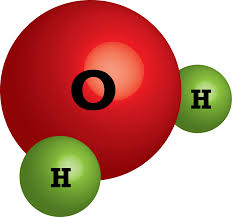
How many atoms of Hydrogen are in this compound?
a)
1
b)
2
c)
3
d)
4
41.
How many atoms of Oxygen are in this compound?
a)
1
b)
2
c)
3
d)
4
42.
How many atoms of Oxygen are in this compound?
a)
1
b)
2
c)
3
d)
4
43.
How many total atoms are in the element Carbon in this compound?
H2C3O4N5
a)
2
b)
3
c)
4
d)
5
44.
The substance being dissolved in a solution.
a)
sands
b)
solute
c)
solvent
d)
alloy
45.
The substance in which a solute is dissolved
a)
sands
b)
solvent
c)
alloy
d)
negative particles
46.
A solution is a ___________mixture.
a)
heterogeneous
b)
homogeneous
c)
concentration
d)
ionic
47.
Solutions are composed of __________ .
a)
salts and solutes
b)
solvents and salts
c)
solutes and alloys
d)
solutes and solvents
48.
If we are making Kool-aid with sugar, Kool-aid powder, and water, which part is the solvent?
a)
water
b)
powder
c)
sugar
d)
powder and sugar
49.
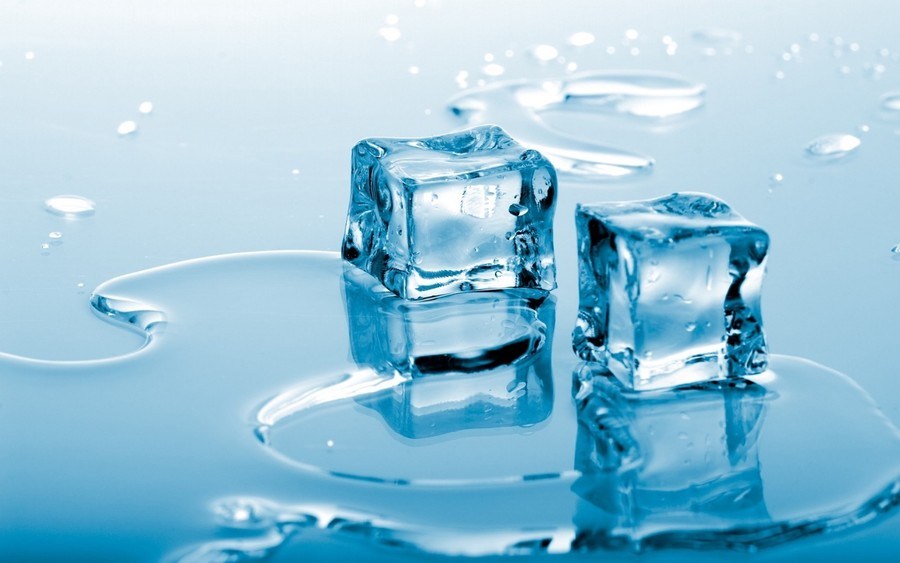
Water freezing into ice is an example of a...
a)
Physical Change
b)
Chemical Change
50.
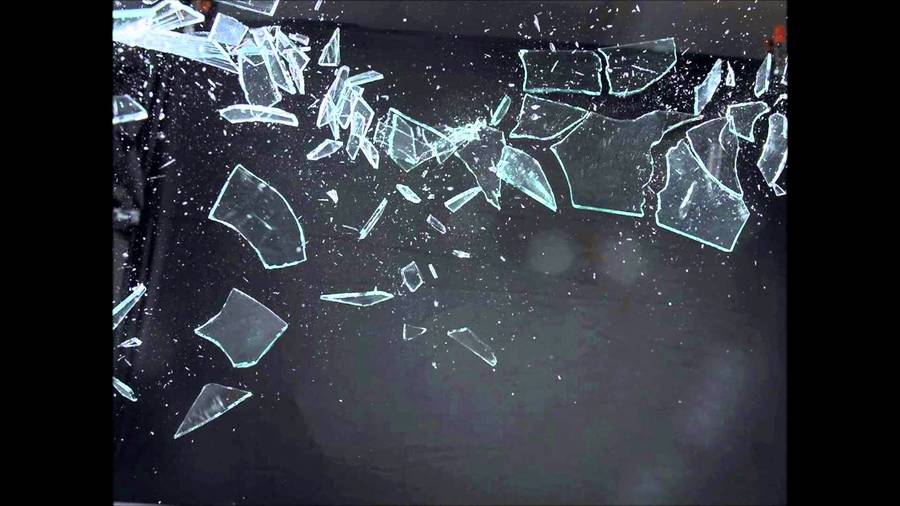
Chemical or Physical?  Glass breaking into tiny shards
a)
Chemical Change
b)
Physical Change
51.
Physical or Chemical Change?  Iron rusts
a)
Physical Change
b)
Chemical Change
52.
Physical or Chemical Change?  Cutting an orange into wedges.
a)
Physical Change
b)
Chemical Change
53.
Physical or Chemical Change?  Logs burning in a campfire.
a)
Physical Change
b)
Chemical Change
54.
Is Gatorade powder dissolving in water physical or chemical change?
a)
Physical 
b)
Chemical
55.
Is mold growing on cheese a physical or chemical change?
a)
Physical 
b)
Chemical