
 Worksheets
Chapter 7
Total questions: 96
Worksheet time: 41hrs 7mins
The major functions of the respiratory system include:
Gas exchange, regulation of blood pH, voice production, olfaction, and protection against pathogens
Digestion of food, absorption of nutrients, and elimination of waste
Production of hormones, regulation of metabolism, and control of growth
Filtration of blood, production of urine, and regulation of electrolytes
By the end of the chapter, you should be able to: Name and describe the structures of the respiratory system.
Name and describe the structures of the respiratory system.
List the functions of the digestive system.
Explain the process of photosynthesis.
Identify the bones of the skeletal system.
By the end of the chapter, you should be able to: Recognize, define, spell, and pronounce the primary terms related to the process of respiration.
Recognize, define, spell, and pronounce the primary terms related to the process of respiration.
Describe the process of digestion in detail.
List the bones in the human body.
Explain the function of the circulatory system.
By the end of the chapter, you should be able to: Recognize, define, spell, and pronounce the primary terms related to the pathology and the diagnostic and treatment procedures of the respiratory system.
Recognize, define, spell, and pronounce the primary terms related to the pathology and the diagnostic and treatment procedures of the respiratory system.
List the bones of the skeletal system.
Describe the functions of the digestive system.
Identify the main parts of the circulatory system.
Which of the following is a function of the respiratory system?
Delivers air to the lungs
Expels waste products
Produces airflow for speech
All of the above
What does the respiratory system expel as waste products?
Oxygen and nitrogen
Carbon dioxide and water
Glucose and oxygen
Nitrogen and water
Fill in the blank: The respiratory system conveys ______ from the inhaled air to the blood for delivery to the body cells.
oxygen
carbon dioxide
glucose
nitrogen
Which part of the respiratory system makes speech possible by producing airflow?
Trachea
Larynx
Bronchus
Alveoli
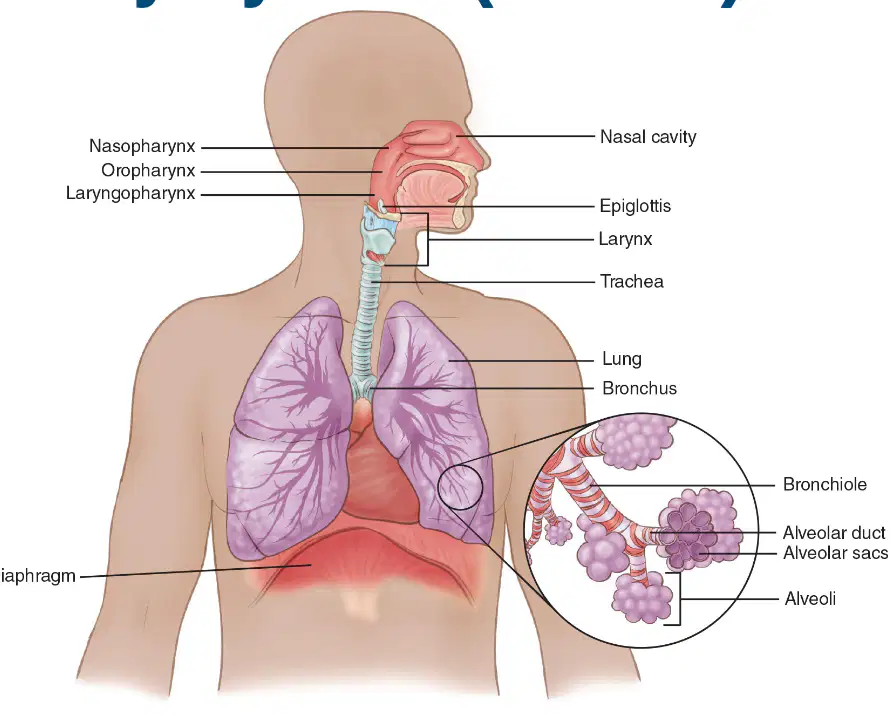
Label the following parts on the diagram of the respiratory system:
Nasal cavity, Epiglottis, Larynx, Trachea, Lung, Bronchus, Bronchiole, Alveolar duct, Alveolar sacs, Alveoli, Diaphragm.
Nasal cavity, Pharynx, Heart, Stomach, Bronchus, Bronchiole, Alveolar duct, Alveolar sacs, Alveoli, Liver, Diaphragm.
Nasal cavity, Epiglottis, Larynx, Trachea, Lung, Bronchus, Bronchiole, Esophagus, Alveolar sacs, Alveoli, Diaphragm.
Nasal cavity, Epiglottis, Larynx, Trachea, Lung, Bronchus, Bronchiole, Alveolar duct, Alveolar sacs, Kidneys, Diaphragm.
What is the wall of cartilage that divides the nose called?
Nasal septum
Nasal concha
Nasal meatus
Nasal turbinate
What are the thin hairs located just inside the nostrils called?
Cilia
Villi
Papillae
Follicles
What are the specialized tissues that line the nose called?
Mucous membranes
Alveoli
Cartilage plates
Cilia
What is the slippery secretion produced by the mucous membranes called?
Mucus
Saliva
Sweat
Plasma
What are the nerve endings that act as the receptors for the sense of smell called?
Olfactory receptors
Gustatory cells
Pacinian corpuscles
Meissner's corpuscles
Which system are the tonsils and adenoids a part of?
Digestive system
Lymphatic system
Nervous system
Circulatory system
What is the main function of the tonsils and adenoids?
Help with digestion
Help protect the body from infection coming through the nose or the mouth
Produce hormones
Aid in breathing
Tonsils are also called the _______ tonsils.
palatine
pharyngeal
lingual
tubal
Where are the tonsils located?
At the back of the mouth
Behind the nose
In the lungs
In the stomach
Adenoids are also called the _______ tonsils.
nasopharyngeal
palatine
lingual
pharyngeal
Where are the adenoids located?
At the back of the mouth
Behind the nose and the roof of the mouth
In the throat
In the lungs
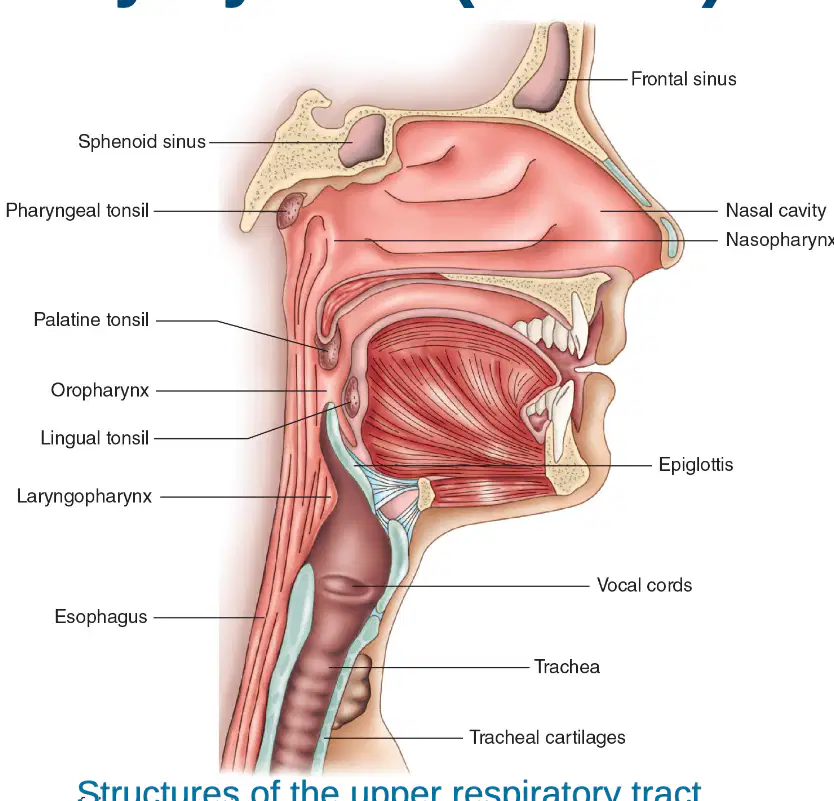
Identify the 'Palatine tonsil' in the diagram of the upper respiratory tract.
The 'Palatine tonsil' is labeled in the diagram near the back of the mouth, above the oropharynx.
The 'Palatine tonsil' is labeled in the diagram at the top of the nasal cavity, above the soft palate.
The 'Palatine tonsil' is labeled in the diagram at the base of the tongue, near the larynx.
The 'Palatine tonsil' is labeled in the diagram within the trachea, below the vocal cords.
Which of the following is a function of the paranasal sinuses?
Make the bones of the skull lighter
Help produce sound by giving resonance to the voice
Produce mucus to provide lubrication for the tissues of the nasal cavity
All of the above
The paranasal sinuses help produce sound by giving ______ to the voice.
resonance
volume
pitch
clarity
Where are the frontal sinuses located?
In the maxillary bones under the eyes
In the ethmoid bones between the nose and eyes
In the frontal bone just above the eyebrows
In the sphenoid bone behind the eye
The sphenoid sinuses are located in the ______ bone behind the eye.
sphenoid
frontal
temporal
ethmoid
The maxillary sinuses are located in the maxillary bones under the eyes.
True
False
Where are the ethmoid sinuses located?
In the frontal bone just above the eyebrows
In the ethmoid bones between the nose and eyes
In the maxillary bones under the eyes
In the sphenoid bone behind the eye
What is the pharynx commonly known as?
throat
esophagus
larynx
trachea
What does the pharynx receive after it passes through the nose or mouth?
air and food
blood and water
saliva and bile
oxygen and carbon dioxide
How many divisions is the pharynx made up of?
three
two
four
five
Which division of the pharynx is used only by the respiratory system for transport of air?
Nasopharynx
Oropharynx
Laryngopharynx
Hypopharynx
Which division of the pharynx is shared by both the respiratory and digestive systems and transports air, food, and fluids?
Oropharynx
Nasopharynx
Laryngopharynx
Hypopharynx
What is the larynx commonly known as?
Windpipe
Voice box
Food pipe
Nasal cavity
Where is the larynx located?
Between the nose and mouth
Between the pharynx and trachea
Between the lungs and heart
Between the esophagus and stomach
How many separate cartilages make up the larynx?
Nine
Six
Seven
Five
Which cartilage is also known as the Adam's apple?
Thyroid cartilage
Cricoid cartilage
Epiglottic cartilage
Arytenoid cartilage
What is the function of the soft palate in swallowing?
A) Prevents food from entering the trachea
B) Prevents food or liquid from going up into the nose
C) Supports the larynx
D) Produces sound
What is the function of the epiglottis during swallowing?
Produces sound
Prevents food from entering the trachea and lungs
Supports the larynx
Prevents food from going up into the nose
Where are the vocal cords located?
In the larynx
In the trachea
In the pharynx
In the esophagus
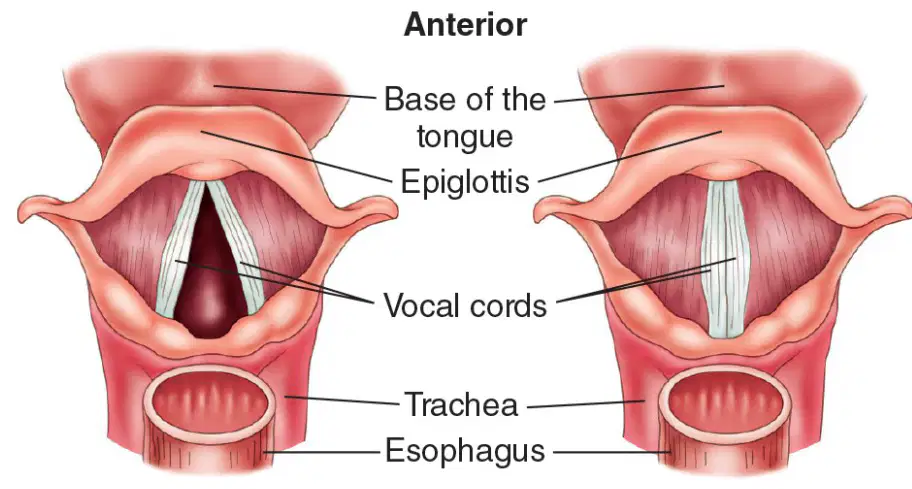
What happens to the vocal cords during speech?
The vocal cords vibrate together during speech.
The vocal cords remain completely still during speech.
The vocal cords close tightly and do not allow air through during speech.
The vocal cords move apart and do not touch during speech.
What is the main function of the trachea?
Transports air to and from the lungs
Transports food to the stomach
Pumps blood to the heart
Filters waste from the blood
The trachea is commonly known as the _________.
windpipe
esophagus
larynx
bronchus
Where is the trachea located in relation to the esophagus?
Directly behind the esophagus
Directly in front of the esophagus
To the left of the esophagus
Below the esophagus
What keeps the trachea open?
Muscle tissue
Flexible C-shaped cartilage rings
Blood vessels
Ligaments
The trachea can compress to allow food to pass down the esophagus.
True
False
Fill in the blank: The bronchi are also known as ______ bronchi.
primary
secondary
tertiary
segmental
How many large tubes make up the bronchi?
One
Two
Three
Four
Fill in the blank: The bronchi branch out from the ______.
trachea
esophagus
larynx
alveoli
The bronchi convey air into the two lungs.
True
False
Fill in the blank: The bronchi are referred to as the ______ tree.
bronchial
vascular
alveolar
tracheal
Fill in the blank: The smallest branches of the bronchi are called ______.
bronchioles
alveoli
tracheoles
capillaries
What are alveoli also known as?
Air sacs
Blood vessels
Nerve endings
Capillaries
Where are very small, grapelike clusters found at the end of each bronchiole called?
Alveoli
Trachea
Bronchi
Pleura
What is the location of the exchange of oxygen and carbon dioxide in the lungs?
Alveoli
Trachea
Bronchi
Diaphragm
Each lung contains ______ of alveoli.
millions
hundreds
dozens
thousands
During respiration, alveoli are filled with air from the ________.
bronchioles
arteries
veins
lymph nodes
What is the detergent-like substance produced by alveoli called?
Surfactant
Hemoglobin
Mucus
Plasma
What is the function of surfactant in the lungs?
Reduces the surface tension of the fluid in the lungs
Increases blood pressure
Filters dust particles
Absorbs nutrients
What are the essential organs of respiration?
The lungs
The kidneys
The liver
The heart
How many lobes does the right lung have?
One
Two
Three
Four
Which lung is larger?
Right lung
Left lung
The left lung has only two lobes: upper and lower.
True
False
The heart is also located on the same side as the left lung.
True
False
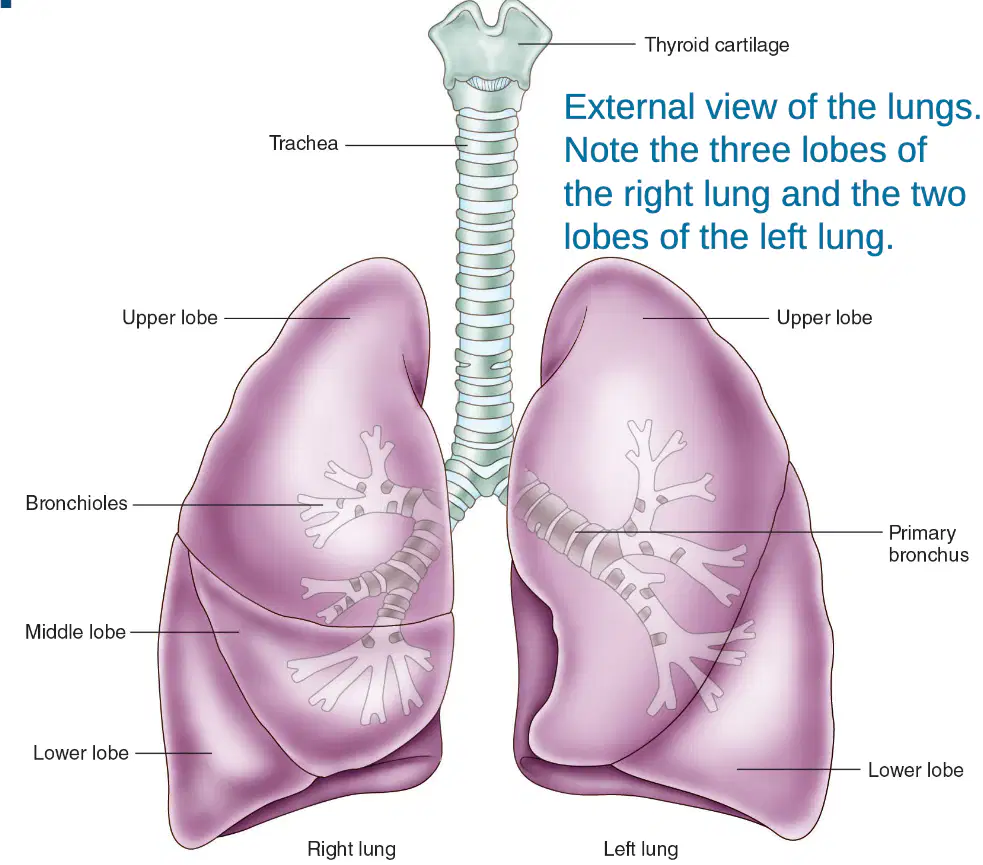
Which lung has three lobes: upper, middle, and lower?
Right lung
Left lung
Both lungs
Neither lung
What is the mediastinum?
The lower section of the chest cavity
The middle section of the chest cavity
The upper section of the abdominal cavity
The outer layer of the lungs
The mediastinum is located between the _______.
lungs
kidneys
ribs
vertebrae
The mediastinum contains connective tissue and organs.
True
False
Which of the following is NOT included in the mediastinum?
A) Heart and its veins and arteries
B) Esophagus
C) Kidneys
D) Trachea
Which of the following lists includes three organs or structures found in the mediastinum?
Heart, trachea, esophagus
Liver, stomach, spleen
Kidney, pancreas, bladder
Lung, diaphragm, appendix
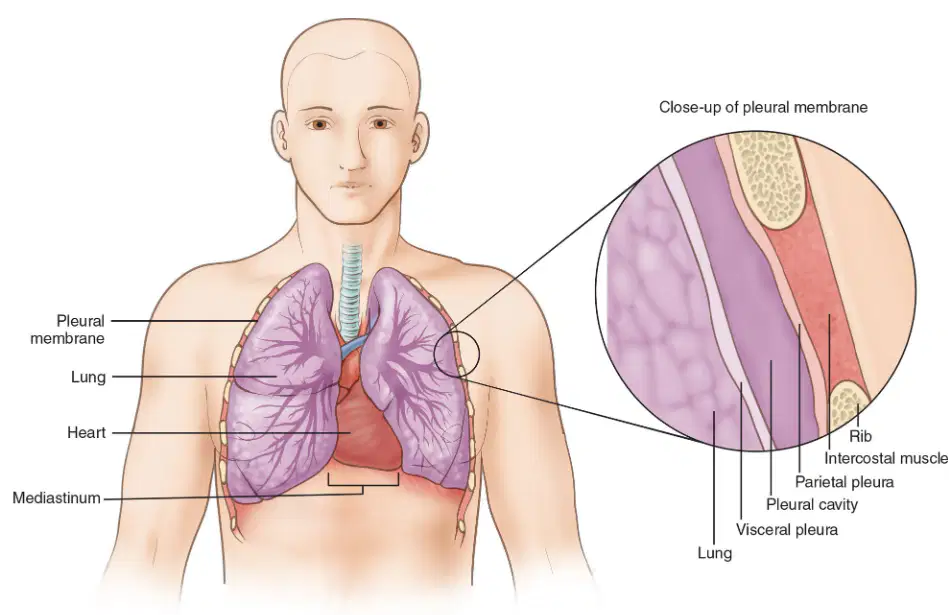
What is the function of the pleura in the respiratory system?
It helps the lungs move smoothly within the chest
It produces red blood cells
It filters air entering the lungs
It contracts to help with breathing
Fill in the blank: The parietal pleura is the ______ layer that lines the walls of the thoracic cavity.
outer
inner
middle
deep
Fill in the blank: The visceral pleura is the ______ layer that covers each lung.
inner
outer
middle
superficial
What is the pleural cavity (pleural space)?
The outer layer of the pleura
The inner layer of the pleura
The thin, fluid-filled space between parietal and visceral pleural membranes
The muscle between the ribs
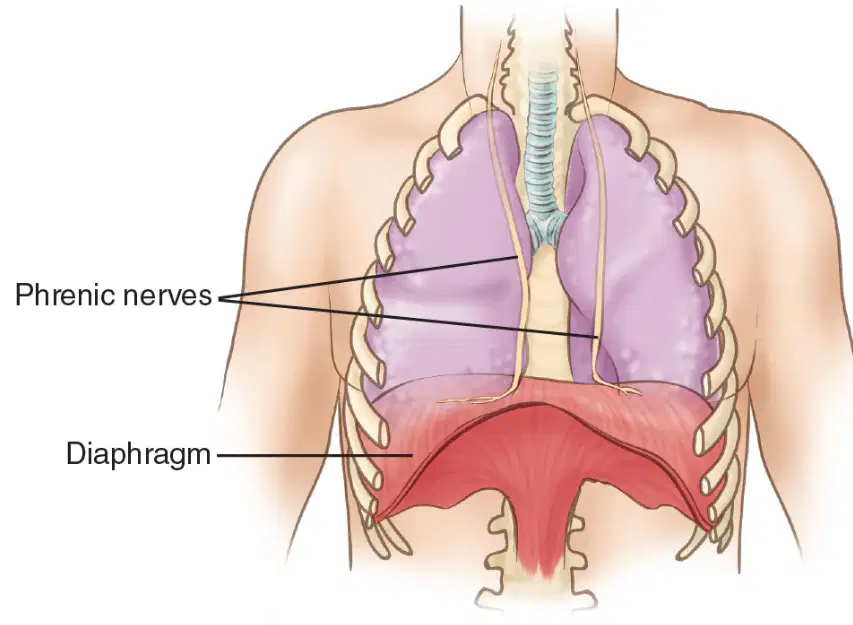
What is another name for the diaphragm in the respiratory system?
Abdominal wall
Thoracic diaphragm
Cardiac muscle
Pulmonary muscle
The diaphragm is a ______-shaped sheet of muscle that separates the thoracic cavity from the abdomen.
dome
flat
cube
cylinder
Breathing is made possible according to the functions of the diaphragm because:
the diaphragm contracts and relaxes to change the volume of the chest cavity
the diaphragm pumps blood through the lungs
the diaphragm filters air entering the lungs
the diaphragm produces oxygen for the body
The phrenic nerves stimulate the diaphragm and cause it to contract.
True
False
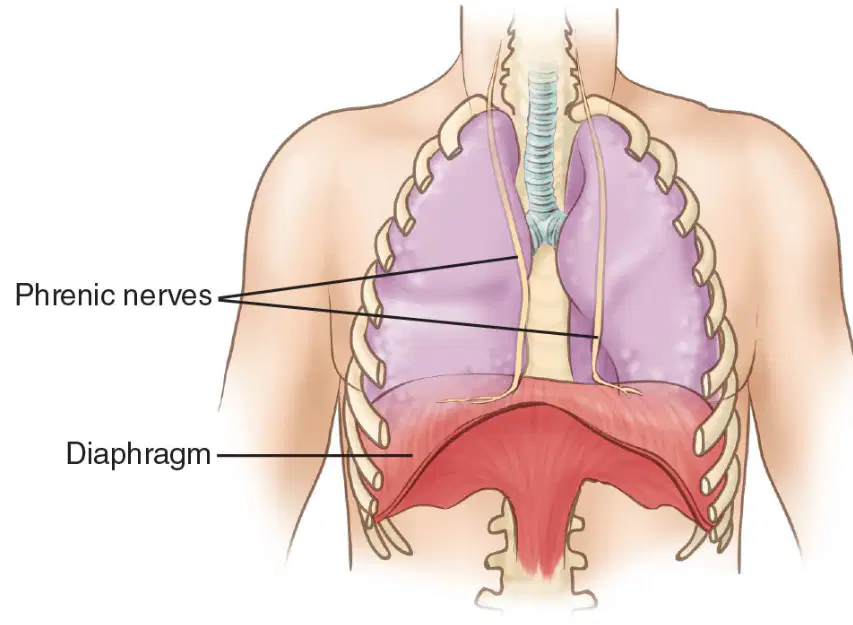
According to the diagram, what nerves control the diaphragm?
Phrenic nerves
Vagus nerves
Intercostal nerves
Facial nerves
What is inhalation?
Act of breathing out
Act of taking in air as the diaphragm contracts and pulls downward
Exchange of gases within the cells
Bringing air into and out of lungs
What is exhalation?
Act of taking in air
Act of breathing out
Exchanging oxygen for carbon dioxide
Exchange of gases within the cells
External respiration involves:
Bringing air into and out of lungs
Exchanging oxygen for carbon dioxide
Exchange of gases within the cells
Act of breathing out
Internal respiration (cellular respiration) is the ________ within the cells of the blood and tissues.
exchange of gases
production of hormones
absorption of nutrients
transmission of nerve impulses
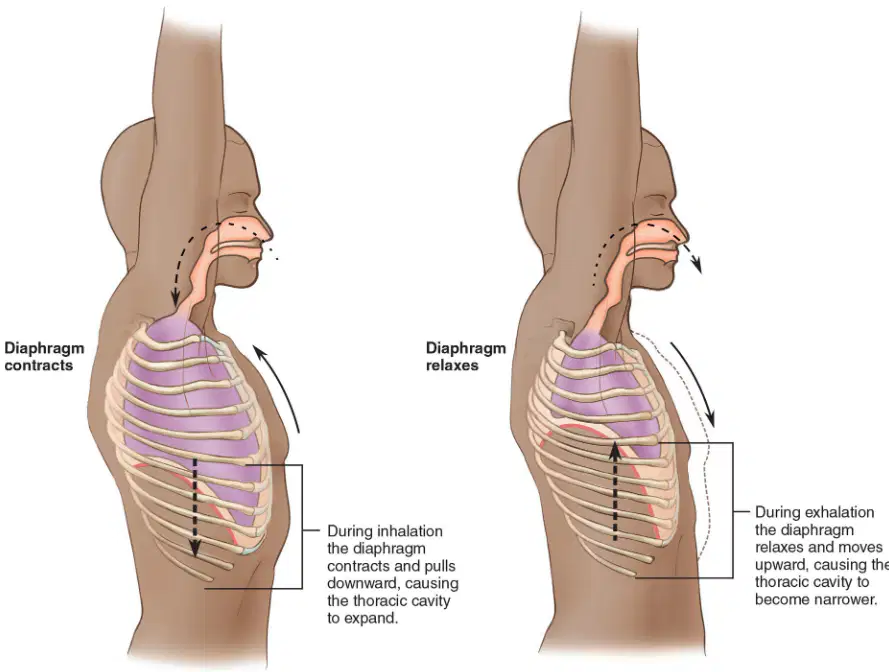
During inhalation, the diaphragm contracts and pulls downward, causing the thoracic cavity to ________.
expand
contract
remain unchanged
collapse
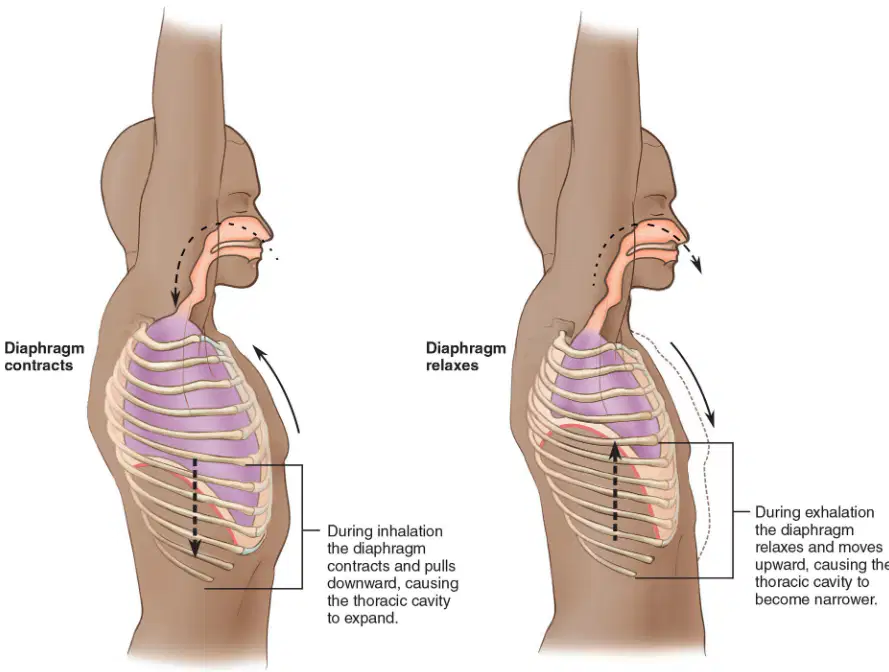
During exhalation, the diaphragm relaxes and moves upward, causing the thoracic cavity to become ________.
narrower
wider
longer
heavier
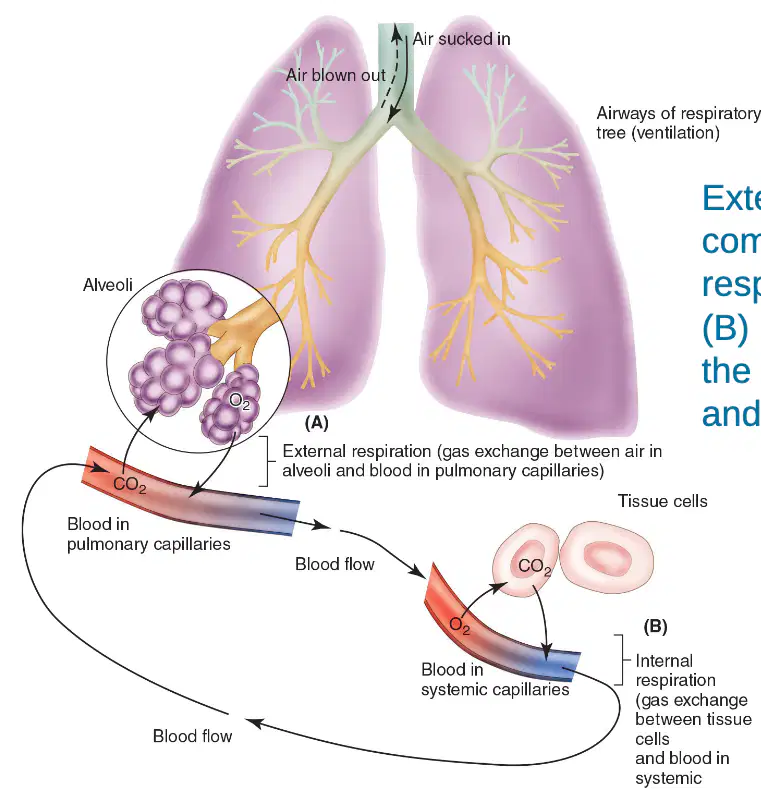
What is external respiration?
Gas exchange between air in alveoli and blood in pulmonary capillaries
Gas exchange between tissue cells and blood in systemic capillaries
Gas exchange at the cellular level within the blood and tissues
None of the above
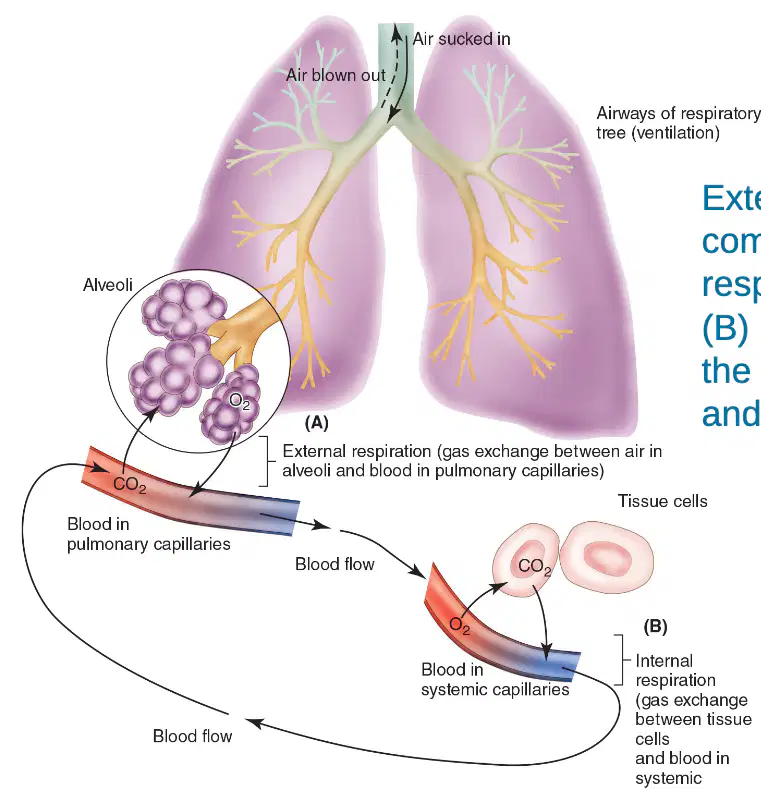
Where does internal respiration occur?
In the lungs
At the cellular level within the blood and tissues
In the alveoli
In the airways of the respiratory tree
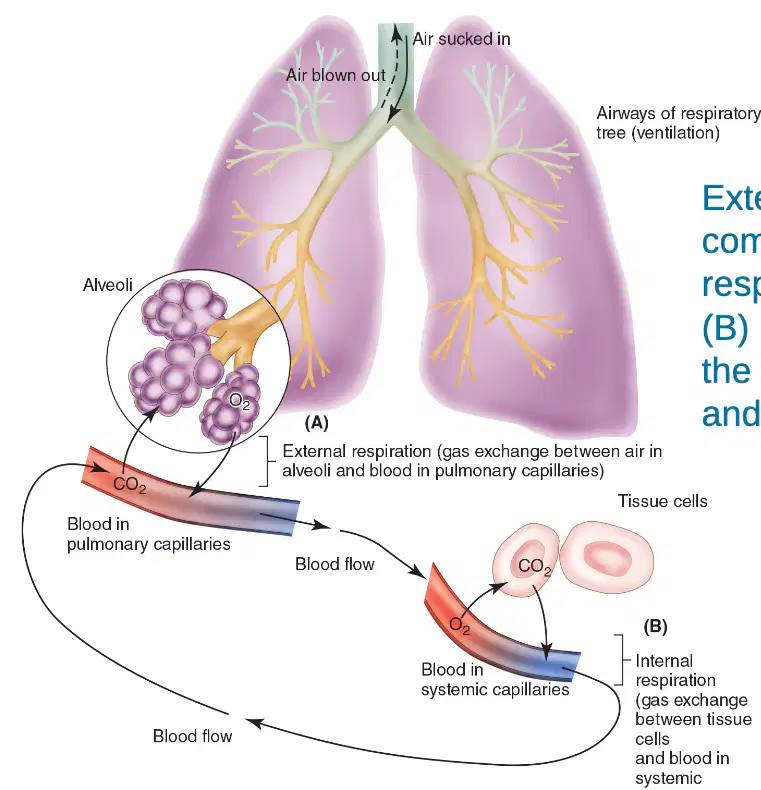
Fill in the blank: External respiration occurs in the ________.
lungs
liver
kidneys
stomach
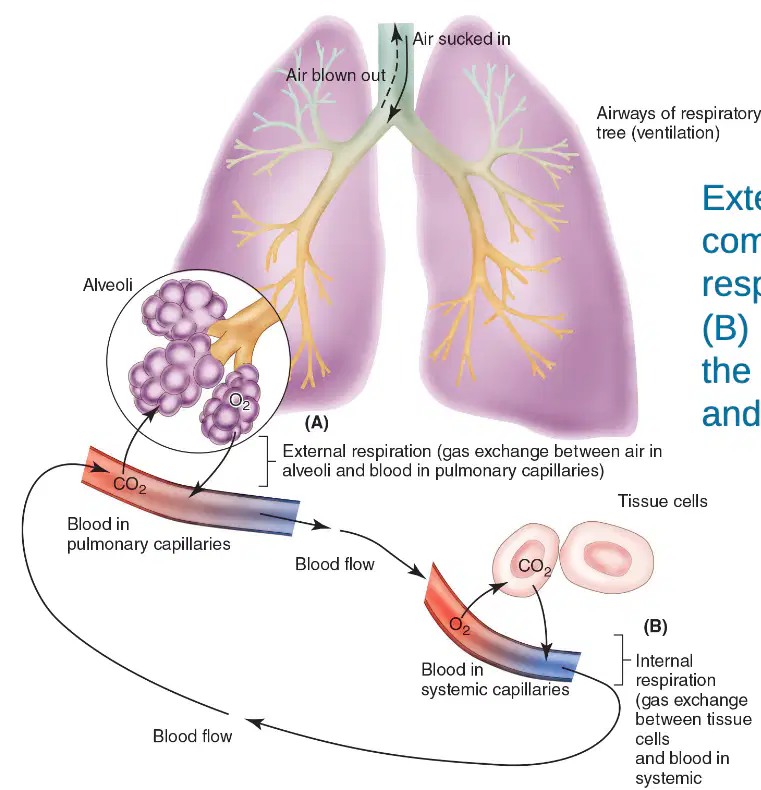
Fill in the blank: Internal respiration occurs at the ________ level within the blood and tissues.
cellular
organ
systemic
capillary
What does COPD stand for?
Chronic Obstructive Pulmonary Disease
Chronic Obstructive Pancreatic Disease
Chronic Obstructive Pulmonary Disorder
Chronic Obstructive Pancreatic Disorder
Which of the following is NOT a characteristic of COPD?
A) Bronchial airflow is obstructed
B) Most often caused by long-term smoking
C) Generally temporary and reversible
D) Generally permanent and progressive
Fill in the blank: Most people with COPD suffer from two related conditions: chronic bronchitis and _________.
emphysema
asthma
pneumonia
tuberculosis
Chronic bronchitis is a disease in which the airways have become inflamed.
True
False
Emphysema is a progressive, long-term loss of lung function.
True
False
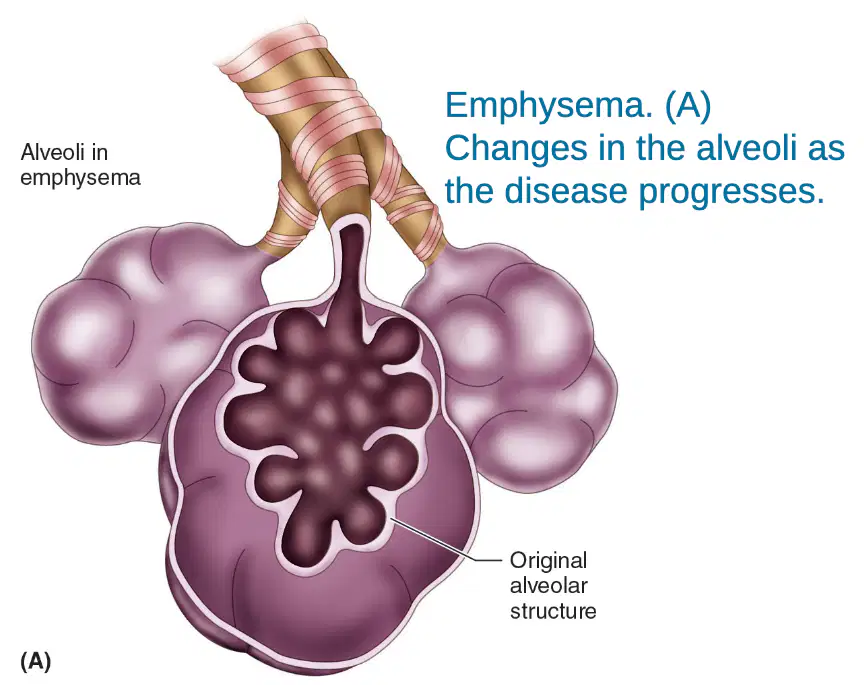
What changes occur in the alveoli as emphysema progresses?
The alveoli become inflamed
The alveoli lose their original structure
The alveoli increase in number
The alveoli become filled with fluid
What is asthma?
A) A chronic inflammatory disease of the bronchial tubes
B) A bacterial infection of the lungs
C) A viral infection of the throat
D) A genetic disorder of the heart
Asthma is often triggered by _________.
an allergic reaction
drinking water
sunlight exposure
eating fruits

