
Font size
 Worksheets
Data Cleaning, Analysis, and Visualization on Real-world Dataset
Total questions: 70
Worksheet time: 43mins
What is the primary function of an Artificial Neural Network (ANN)?
Data storage
Data classification
Data encryption
Data retrieval
In the context of image recognition, what does CNN stand for?
Convolutional Neural Network
Continuous Neural Network
Cognitive Neural Network
Composite Neural Network
Which of the following is a common application of Recurrent Neural Networks (RNNs)?
Image classification
Sequential data prediction
Image denoising
Object detection
What is the purpose of hyperparameter tuning in deep learning?
To increase model complexity
To optimize model performance
To reduce dataset size
To change the architecture
Which layer is primarily responsible for detecting features in a CNN?
Input layer
Output layer
Convolutional layer
Fully connected layer
What technique is commonly used to remove noise from images?
Feature extraction
Image denoising
Data augmentation
Batch normalization
What does YOLO stand for in object detection?
You Only Look Once
You Only Learn Once
You Only Look Online
You Only Launch Once
What loss function is commonly used in classification tasks?
Mean Squared Error
Cross-Entropy Loss
Hinge Loss
Binary Loss
Which architecture is known for its depth and is used for image classification?
LeNet
AlexNet
ResNet
All of the above
In Generative Adversarial Networks (GANs), what do the two networks do?
Generate and destroy data
Generate and discriminate data
Classify and cluster data
Optimize and validate data
What is the significance of the Capstone project in this course?
To learn theory
To apply knowledge to a real-world challenge
To prepare for exams
To complete assignments
Which of the following is a method to prevent overfitting?
Increasing model parameters
Data augmentation
Using more training data
Both B and C
What is the primary goal of using Autoencoders?
Image classification
Image generation
Data compression
Object detection
What technique can improve the training speed of deep learning models?
Gradient descent
Batch normalization
Feature scaling
Dimensionality reduction
What is the primary use of Transfer Learning?
To learn new tasks from scratch
To adapt pre-trained models to new tasks
To ignore existing models
To create new data
Which of the following is a type of data augmentation technique?
Flipping images
Changing labels
Removing pixels
Decreasing dataset size
In CNNs, what is the purpose of pooling layers?
Increase spatial dimensions
Reduce dimensionality and computation
Enhance edges
Initialize weights
Which optimizer is often used for training deep learning models?
Stochastic Gradient Descent (SGD)
Newton's Method
Random Search
Gradient Descent with Momentum
What does 'backpropagation' refer to in neural networks?
Forward data flow
Error correction
Weight updating process
Data preprocessing
What is the main advantage of using deep learning over traditional machine learning methods?
Simplicity
Ability to learn complex patterns
Requires less data
Faster computation
What is Machine Learning (ML)?
A branch of AI focused on building systems that learn from data
A method for programming computers to solve complex problems
A technology that allows machines to mimic human actions
A framework for designing neural networks
What is Deep Learning (DL)?
A subset of machine learning involving neural networks with multiple layers
A method for processing big data in real-time
A type of machine learning focused on natural language processing
A machine learning technique that requires little data
What is Generative AI (GenAI)?
Explain the concept of 'AI ethics' and why it is important in the field of technology.
AI ethics only applies to certain industries, not technology as a whole
AI ethics is irrelevant in technology as long as the end goal is achieved
AI ethics is crucial in technology to ensure fairness, transparency, and respect for human values in the development and use of artificial intelligence.
AI ethics is a hindrance to technological progress and innovation
What type of content has generative AI had the biggest impact on so far?
Text generation
Image generation
Audio generation
Video generation
Which of the following is NOT a characteristic of Artificial Intelligence?
What can generative AI misuse lead to?
Reduction in data usage
Improved AI behavior
Faster internet speeds
Deepfakes
What are some tools or frameworks for prompt engineering?
GPT-3 Playground, OpenAI Codex, or DALL-E
PromptKit, PromptStudio, or PromptCraft
Hugging Face Transformers, PyTorch Lightning, or TensorFlow
All of the above

Who is he ?
Which model is known for generating human-like text?
CNN
RNN
GPT
SVM
What does GPT stand for in the context of Generative AI?
General Purpose Transformer
Generative Pre-trained Transformer
General Pre-trained Transformer
Generative Purpose Transformer
What is prompt engineering?
The process of developing and deploying generative AI models
The process of evaluating and improving generative AI models
The process of designing and testing prompts for generative AI models
The process of training and fine-tuning generative AI models
What is "zero-shot learning" in the context of Generative AI?
Training a model without any data
The ability to perform tasks without prior training on specific examples
Fine-tuning a model with minimal data
Generating data from scratch
What is "few-shot learning" in the context of Generative AI?
Training a model with a large amount of data
The ability to learn from a few examples
Generating data with minimal supervision
Fine-tuning a model with extensive data
Which of the following is an example of a Generative AI model for image generation?
BERT
GPT-3
DALL-E
GPT-5
Which of the following is a popular dataset used for training language models?
ImageNet
COCO
Wikipedia
CIFAR-10
What is a transformer in the context of AI?
A transformer is a neural network architecture that uses self-attention mechanisms to process sequential data.
A transformer is a type of physical device used for electrical energy conversion.
A transformer is a programming language used for AI development.
A transformer is a data storage system for large datasets.
Explain the concept of self-attention in transformers.
Self-attention is a method for translating text into images.
Self-attention is a technique used only in convolutional neural networks.
Self-attention refers to the process of ignoring all other words in a sequence.
Self-attention is a mechanism in transformers that allows the model to weigh the importance of different words in a sequence based on their relationships.
Which of the following is a common challenge in training large-scale language models?
Overfitting on small datasets
Managing long-range dependencies
High computational cost
Limited training data
What is mentioned as the potential of language models in the lecture?
Decreased accuracy
Minimal impact
Revolutionizing industries
Limited applications
Which of the following are the Data Sources in data science?
Structured
UnStructured
Both A and B
None Of the above
Which of the following step is performed first by data scientist after acquiring the data?
Data Cleansing
Data Integration
Data Replication
All of the Mentioned
All data is labeled and the algorithms learn to predict the output from the input data
Dataset
Classifiers
Unsupervised learning
Supervised learning
Where the observer rewards the agent for correct responses
Decision tree learning
Sentiment analysis
Predictive models
Reinforcement learning
The science of analysing data, drawing conclusion with respect to variation observed in data is called as____________?
CONCEPT
DERIVATIVE
STATISTICS
Which of the following diagram is correct ?


Find mean of
2, 3, 5, 8, 2
10
4
5
Find Median of :
8, 2, 3, 5, 9
2
45
5
3
Find Median of:
1, 2, 3, 4, 6, 7, 8, 9
4
5
5
Find Mode of :
2, 3, 4, 2, 5, 3, 2, 6
3
2
None
Range = Largest Value - Smallest Value
3, 4 , 5 , 7, 3 , 8 , 9 , 12
12
8
9
The Standard deviation is a measurement of ____________ of a set of data value?
Amount of Consistence
Amount of Variation
Amount of Difference
A low standard deviation indicates that the values tend to be close to _________?
Mean
Median
Mode
A high standard deviation indicates that the values are spread over __________________?
small Range
uniform Range
wide Range
In normal distribution , the Mean, Median and Mode are ?
Different
l
Unequa
Equal
Which of the following is Normal Distribution ?
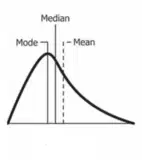
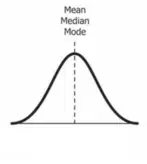
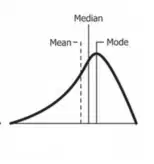
Which of the following is one of the key data science skills?
Statistics
Data Visualization
Machine Learning
All of the mentioned
Convenience sampling is a
Probability Sampling
Non-probability Sampling
Random Sampling
None of the above
Stratified random sampling is
Probability Sampling
Non-probability Sampling
Selective Sampling
None of the above
Which of the following is a method of probability sampling?
Cluster sampling
Quota sampling
Both of these
None of these
If the sample size increases the sampling error
Decreases
Increases
Remains constant
None of the above
What category of machine learning algorithm finds patterns in the data when the data is not labeled?
Supervised learning
Reinforcement learning
Reinforcement learning
Unsupervised learning
What category of machine learning algorithm finds patterns in the data when the data is not labeled?
Supervised learning
Reinforcement learning
Reinforcement learning
Unsupervised learning
In a classification problem, the outputs are
categorical or discrete
numerical or continuous
Applications of Machine Learning (Select all that apply).
Image processing
Speech recognition
Predicting weather
Surfing on website
What type of Machine Learning Algorithm is suitable for predicting the continuous dependent variable?
Logistic Regression
KNN Classifier
Decision Tree Classifier
Linear Regression
What type of Machine Learning Algorithm is suitable for predicting the dependent variable with two different values on categorical data?
Logistic Regression
Polynomial Regression
Multiple Linear Regression
Linear Regression
Appropriate chart for visualizing the linear relationship between two variables is _________________
Scatter plot
Histograms
Barchart
None of Mentioned
__________________ algorithms enable the computers to learn from data, and even improve themselves, without being explicitly programmed.
Artificial Intelligence
Deep Learning
Traditional Learning
Machine Learning
What are the two types of Supervised Learning?
Classification
Regression
Progression
Declassification

