
 Worksheets
BCA: 4th Grade: Science: Electrical Circuits
Total questions: 73
Worksheet time: 47mins
______ is all AROUND us and exists in several different forms.
Select all the types of energy we learned in class?
Sound energy
Light energy
Mechanical energy
Thermal energy
_______ is energy from the flow of an electric charge through a conductor.
Electrical energy is energy from the _____ of an electric charge through a ________?
flow; conductor
Electrical energy flows in a _______?
A _______ is a material that transfers energy quickly?
A good conductor allows the transfer of energy very ________?
quickly
List THREE examples of good conductors?
Copper
Aluminum
Rubber
Silver
An ________ is a material that does NOT transfer energy easily?
An insulator is a material that _________ transfers energy easily.
Give THREE examples of a good insulator.
Rubber
Plastic
Silver
Cotton
Correctly name all conductors and insulators.
Iron
Coopper
Aluminum
Cotton
Rubber
Plastic
Glass
Silver
Electricity is the flow of an electric _______?
Electricity is the energy used in our school and homes to give us ________?
space
food
dance
light
Electrical current is the flow of electrical energy in a _______?
circuit
A _______ is a loop of materials that allows an electrical current to flow.
A circuit has no beginning or end.
A circuit is a loop of materials that allows an electrical current to flow. It has NO ______ or ______.
beginning, end
Correctly name the FOUR main parts to a circuit?
The energy source _______ the circuit.
Name two power sources?
batteries
kicking a soccer ball
local power plant
bicycle
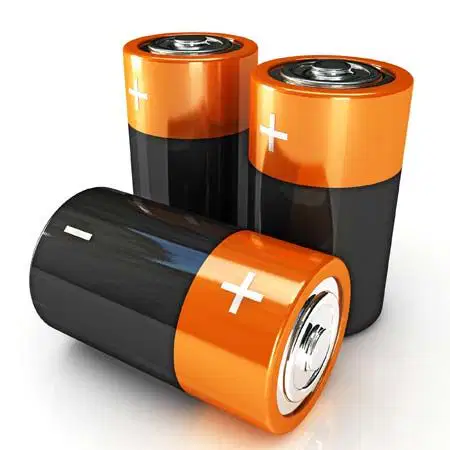
A battery has two ends that allow the current to flow. What are they called.
Positive (+) and Negative (-)
_______ provides the path for energy to flow.
Conductors provide the path for the energy to flow in a circuit?
Conductors are made of conductive materials usually _______ because they transfer energy easily?
Why are conductors usually made from metals like cooper, aluminum, silver and iron?
Conductors are made from metals because they transfer energy easily.
Conductors can all be called or referred to simply as a ______ for electrical current to flow through.
The device that changes the electrical energy into another form of energy, like light, sound, heat, or motion. We call this the _______
load
The load is one one of the four parts of a circuit. What is the main job or purpose of the load.
The main job of the load is to change electrical energy into another form of energy.
Name devices/things that are examples of load. (change electrical energy to another form of energy light, heat, sound, motion)
toaster
light bulb
radio
remote control car
This part of the circuit opens or closes the circuit.
Energy Source
Conductor
Load
Switch
The turns the load/electrical device on or off.
Read the sentence and look at the underline word. Choose the best meaning of the word.
The components of the circuits are the items that are powered by electricity?
parts or elements
Read the sentence and look at the underline word. Choose the best meaning of the word.
The wires are special material that conduct electricity.
to transmit, or carry energy
Read the sentence and look at the underline word. Choose the best meaning of the word.
Series circuits are circuits that include all the components in the same loop.
A circuit with all components in the same loop, or a single pathway for energy to travel through.
Read the sentence and look at the underline word. Choose the best meaning of the word.
Another type of circuit is a parallel circuit.
A type of electrical circuit with separate/multiple paths for energy to travel through
Read the sentence and look at the underline word. Choose the best meaning of the word.
When you turn on the light switch in your room, did you know that you're using an electrical circuit.
path for electricity can flow
The power source can be a battery, or it might be the power plant from the city.
Where the energy is coming from.
Where the energy is going to.
Where you lose energy at.
Read the sentence and look at the underline word. Choose the best meaning of the word.
The wires are special materials that conduct electricity.
long, thin, flexible piece conductive materials made of a type of metal
the path is incomplete
open cirucits
closed circuits
In an open circuit the electrical current ________ flow through the circuit.
will not
What will happen to the load or electrical device in an open circuit?
The load or electrical device will not operate or turn on
Switching the positive (+) and negative (-) ends of an energy source would make an _______ circuit.
closed
the path is complete
open circuit
closed circuit
In a closed circuits _______ current flows through the circuit.
The positive (+) and negative (-) ends of an energy source must be connected correctly to _______ the circuit.
open
close
If the batteries positive and negative ends of an energy source are connected correctly. This will give you a ________ circuit.
Select all OPEN circuits
Three different diagrams of open or closed circuits are shown below. Which type of circuit is shown in each diagram? Write ONE correct answer in each box.
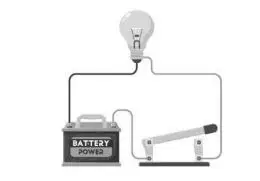
Open
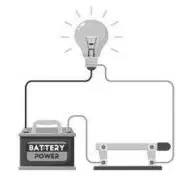
Closed
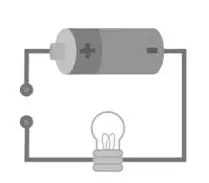
Open

A circuit with the switch closed allows.....
Electricity to not flow so the device is off
Electricity to flow so the device is on
Electricity not to flow so the device is on
Electricity to flow so the device is off

Is the circuit in the picture opened or closed?
opened
closed
neither

Is the circuit in the picture opened or closed?
opened
closed
neither

If the switch is open, your bulb will
turn on
turn off

Which statement is true about the picture?
The circuit will work because the switch is open.
The circuit won't work because the switch is open.
The circuit will work becasue electrons can flow through freely.
There is no break along this circuit pathway.
If a light in a circuit will not light up, the circuit is...
open
closed


a device that opens or closes a gap in a circuit
switch
load
power source
battery

A wire needs to be added between the light bulb and the battery to open the circuit.
A load needs to be added next to the battery to produce less energy.
A wire needs to be added between the light bulb and the battery to close the circuit.
A load needs to be added next to the battery to produce more energy.


The diagram shows a complete circuit but the bulb did not light up. Why?
The plastic spoon is an insulator of electricity and prevented electric current from flowing through the circuit.
The plastic spoon is not connected properly and prevented electric current from flowing through the circuit.
The plastic spoon is a conductor of electricity and prevented electric current from flowing through the circuit.

Is a penny an insulator or a conductor?
insulator
conductor

Is a plastic fork a conductor or an insulator?
insulator
conductor


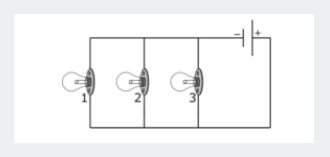

The diagram shows a series circuit with three lit bulbs. How many of the bulbs will remain lit if the wire is cut a the point shown by the arrow?
0
1
2
3
Organize these options into the right categories
path is incomplete
electrical current will not flow through the circuit
the load or electrical device will not turn on
switching the positive and negative ends of an energy source
path is complete
electrical current flows through the circuit
positive and negative ends of an energy source must be connected correctly
the load or electrical device will turn on
Name the two main types of circuits?
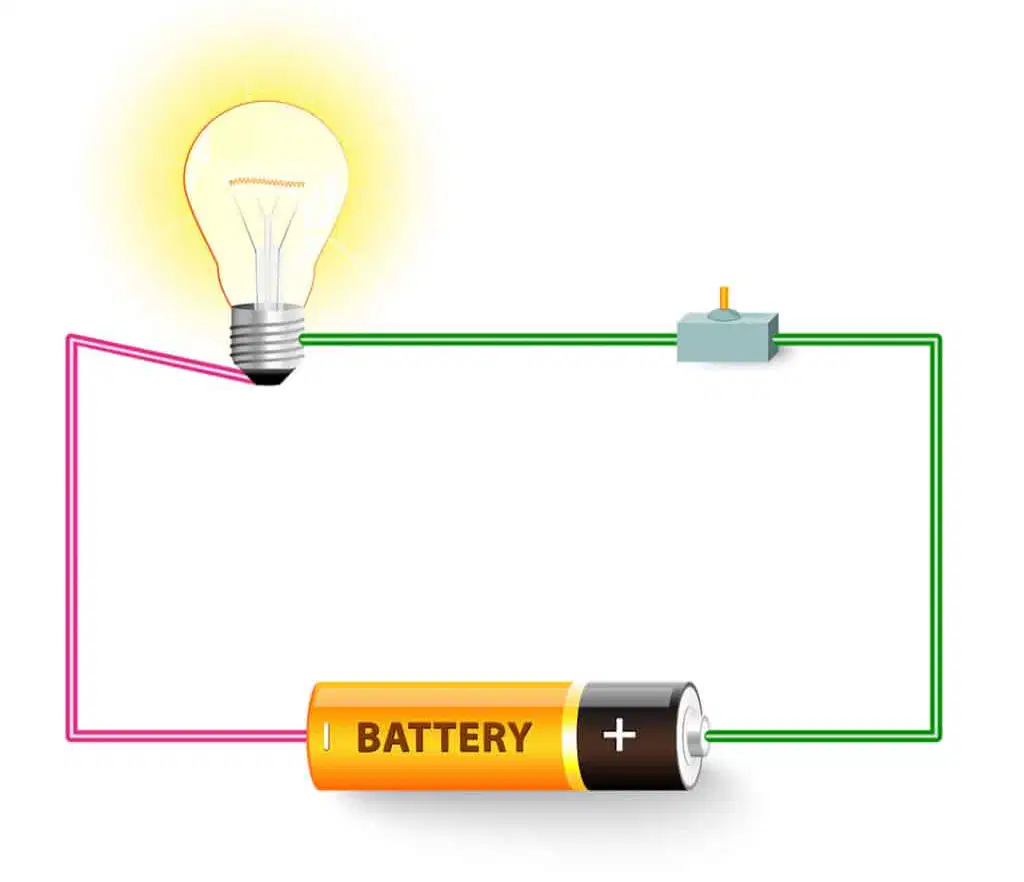
This is an example of what kind of circuit.
simple circuit
series circuit
parallel circuit

Simple circuit
Series circuit
Parallel circuit
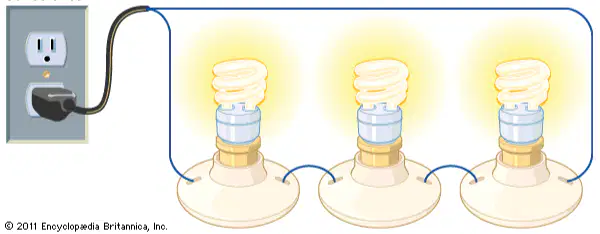
Name this circuit.
simple circuit
series circuit
parallel circuit
The wires connect each component directly to the power source, that way each component can be used separately.
Parallel circuit
Short circuit

