
 Worksheets
Scientific Principles 1&2 combined
Total questions: 48
Worksheet time: 24mins
What is the boiling point of water at sea level?
0°C
4°C
100°C
273°K
At what temperature does water have its maximum density?
0°C
4°C
100°C
273°K
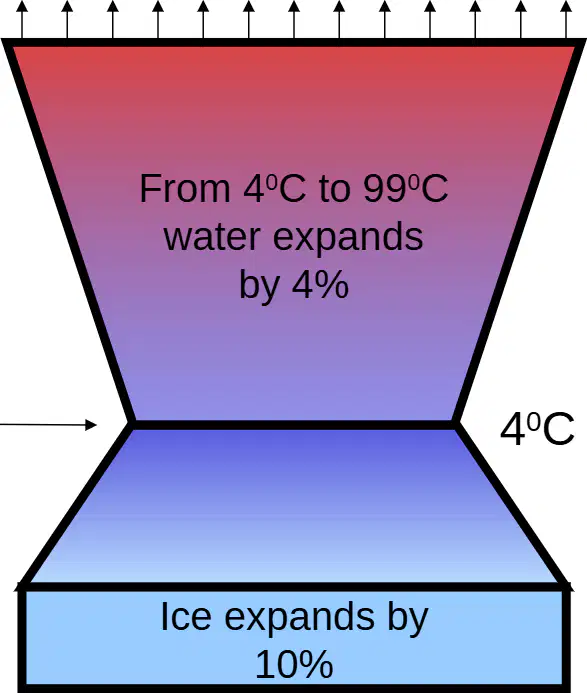
What happens to water when it freezes at 0°C?
Contracts by 10%
Expands by 10%
Expands by 4%
Contracts by 4%
From 4°C to 99°C, water expands by _____.
4%
1%
10%
0.5%

Steam expands _____ times compared to liquid water.
1,600
100
500
2,000
When water exceeds 100ºC, it can turn to steam and expand to almost ______ times its original volume.
1,600
100
500
10,000
When water is heated to 100ºC, it can turn to steam and expand to almost 1,600 times its original volume.
True
False
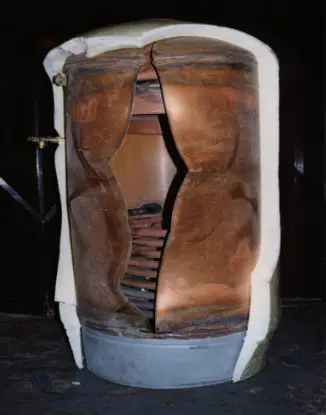
Refer to the image of the broken tank. What could be a possible reason for the damage shown in the image?
Water expansion due to heating
Freezing of water
Chemical reaction
Electrical fault
Water is a chemical compound of ______ and ______.
hydrogen, oxygen
carbon, nitrogen
sodium, chlorine
calcium, magnesium
Given enough time, water will: ______, corrode, absorb almost anything.
erode
evaporate
freeze
condense
Water can absorb and contain a number of substances depending upon where it collects.
True
False
Which of the following are characteristics of water?
hardness or softness
acid or alkaline
Metallic
insulator

What is the process called when water changes from liquid to vapor due to the sun's heat?
Evaporation
Condensation
Precipitation
Sublimation
What is the process called when water vapor cools and forms clouds?
Condensation
Evaporation
Precipitation
Sublimation
What is the process called when water falls from clouds as rain, snow, sleet, or hail?
Precipitation
Evaporation
Condensation
Transpiration
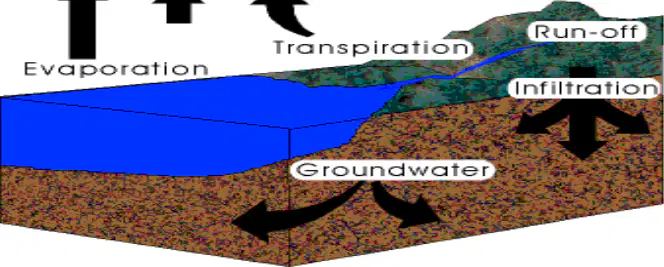
What is the process called when water from plants changes into vapor?
Transpiration
Condensation
Precipitation
Evaporation
Fill in the blank: Temporary hard water, if heated to 65°C and above, will form ________.
limescale
rust
salt deposits
soap scum
What problem does temporary hard water cause for appliances when heated to 65°C and above?
It forms limescale (calcium carbonate), which causes problems for appliances and reduces their efficiency.
It increases the water pressure in pipes.
It makes the water taste sweet.
It causes appliances to cool down faster.
Permanent hardness in water contains which of the following?
Calcium carbonates
Calcium sulphates
Magnesium
Sodium chloride
Which method is used to remove permanent hardness from water?
Heating above 65°C
Base exchange method (water softener)
Filtration
Distillation
All water contains temporary and permanent hardness, which gives the total hardness of water.
True
False
According to the pH scale, what is the pH value of pure water?
5
6
7
8
Fill in the blank: Water with a pH value greater than 7 is considered _______.
alkaline
acidic
neutral
salty
Water has the ability to dissolve lead; this is called: _________.
Plumbosolvent
Hydrosolvent
Calcisolvent
Ferrosolvent
Water that is aggressive towards copper is called: _________.
Cuprosolvent
Hydrosolvent
Aqua-reactive
Copperphilic
What does water quickly form when it is aggressive towards ferrous (iron) metals in unprotected areas?
Ferrous oxide (rust)
Calcium carbonate
Aluminum hydroxide
Copper sulfate
What can be used to protect central heating pipework and components from ferrous oxide build-up?
A chemical inhibitor
A water softener
A descaler
A heat exchanger
Fill in the blank: ________ is when liquid turns into a gas (e.g., boiling at 100°C).
Evaporate
Condense
Freeze
Melt
Fill in the blank: ________ is when a liquid turns solid (e.g., water freezes at 0°C).
Freezing
Melting
Evaporation
Condensation
Fill in the blank: ________ is when a gas turns into liquid – when it rains or when water droplets form on cold surfaces.
Condensation
Evaporation
Sublimation
Melting
What is capillary action of water? Fill in the blank: Capillary action of water is when water can be drawn _______ or _______ between two close-fitting surfaces against gravity.
sideways, upwards
downwards, backwards
forwards, downwards
backwards, sideways
According to the passage, what happens to capillary action as the gap between two surfaces widens?
Capillary action increases
Capillary action decreases
Capillary action stays the same
Capillary action stops completely
What is one way plumbers use capillary action in their work?
To make soldered joints on fittings
To clean pipes
To measure water pressure
To paint copper tubes
The water molecules have a _______ nature in the way they stick together. This creates the surface tension on top of water.
cohesive
repulsive
abrasive
diffusive
The water molecules have an _______ nature and tend to stick to other materials they come into contact with. This gives the water a curved appearance.
adhesive
repellent
abrasive
elastic
In a manometer, we have to read the water level from the bottom of the _______ or curve.
meniscus
tube
scale
bulb
What is the maximum density of water (in °C)?
4°C
0°C
25°C
100°C
What is the effect of adding glycol (antifreeze) to water?
It reduces the freezing point.
It increases the boiling point.
It makes the water evaporate faster.
It turns water into a solid.
What is the relative density of water?
1
0.5
2
0.75
What is sensible heat?
Heat that changes the state of water
Heat that raises the temperature of water without changing its state
Heat that cools water
Heat that turns water into ice
What is latent heat?
Heat that raises the temperature of water
Heat that changes water from liquid to steam (a change in state)
Heat that cools water
Heat that freezes water
Fill in the blank: The heat required to raise the water temperature to 100ºC is ______ heat. The heat required to keep it boiling is ______ heat.
sensible, latent
latent, sensible
specific, latent
latent, specific
What does the resin in a water softener hold in the filter?
The resin holds the calcium and magnesium in the filter.
The resin holds the sodium and potassium in the filter.
The resin holds the chlorine and fluoride in the filter.
The resin holds the sand and gravel in the filter.
According to the passage, on what type of boilers are polyphosphate chemicals used?
Combination boilers
Fire-tube boilers
Electric boilers
Condensing boilers

What is the purpose of passing water through a strong magnetic field in a magnetic scale inhibitor?
To alter the physical nature of the water and break the salt crystals down into small pieces so they cannot stick together.
To increase the temperature of the water for better flow.
To remove all minerals from the water completely.
To add chlorine to the water for disinfection.
True or False: The magnetic scale inhibitor works by chemically altering the water.
True
False
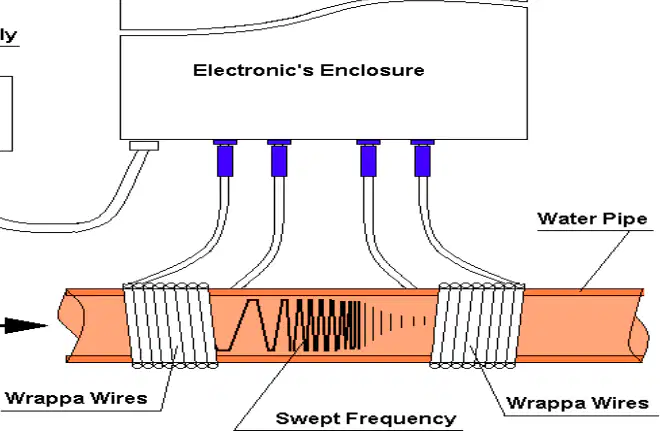
What is the main function of an electrical scale inhibitor as described in the passage?
To filter water
To use a magnetic field to produce low level radio waves that pass through the water
To heat water
To add chemicals to water
Fill in the blank: The electrical scale inhibitor works in a very similar way to the ________ inhibitor except it uses a magnetic field to produce low level radio waves that pass through the water.
magnetic
chemical
thermal
biological

