wayground logo

Free Printable Worksheets

Font size

S
M
L
XL
Worksheets

Epithelial Tissue Practice

Total questions: 52

Worksheet time: 33mins

Name
Class
Date
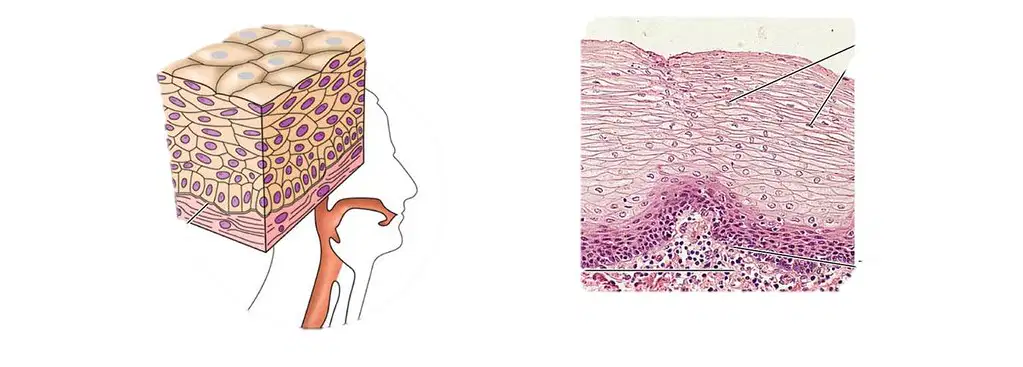
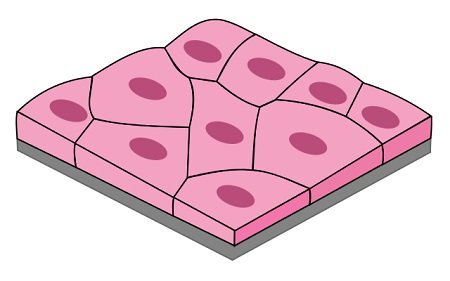
1.
What type of tissue is shown below?
a)
Simple Squamous
b)
Stratified Squamous (keratinized)
c)
Stratified Squamous (nonkeratinized)
d)
Simple Cuboidal
e)
Stratified Cuboidal
2.
Which tissue type is located on the outer skin? It is characterized by having multiple layers and no nuclei throughout the top layers.
a)
Stratified Squamous (keratinized)
b)
Simple Squamous
c)
Stratified Squamous (nonkeratinized)
d)
Simple Cuboidal
e)
Stratified Cuboidal
3.
Which single layer tissue is found in the ducts and glands and has a function that secretes and absorbs?
a)
Simple Cuboidal
b)
Simple Squamous
c)
Stratified Squamous (keratinized)
d)
Stratified Squamous (nonkeratinized)
e)
Stratified Cuboidal
4.
Which two single tissue types can be ciliated? (You will select two choices here)
a)
Simple Columnar
b)
Pseudostratified
c)
Simple Squamous
d)
Stratified Squamous (keratinized)
e)
Stratified Squamous (nonkeratinized)
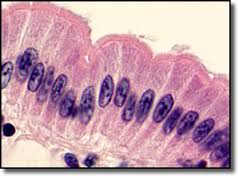
5.
Which tissue is shown in the picture below?
a)
Pseudostratified
b)
Simple Squamous
c)
Stratified Squamous (keratinized)
d)
Stratified Squamous (nonkeratinized)
e)
Simple Cuboidal
6.
Which tissue type is found in areas of extreme stress (where stretching is required) like the urinary bladder?
a)
Transitional
b)
Simple Squamous
c)
Stratified Squamous (keratinized)
d)
Stratified Squamous (nonkeratinized)
e)
Simple Cuboidal
7.
Which tissue type is the rarest tissue type and is found in your anus and the male urethra?
a)
Stratified Columnar
b)
Simple Squamous
c)
Stratified Squamous (keratinized)
d)
Stratified Squamous (nonkeratinized)
e)
Simple Cuboidal
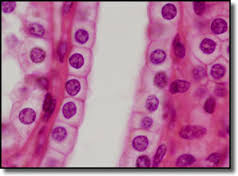
8.
Which tissue type is shown below?
a)
Stratified Squamous (nonkeratinized)
b)
Simple Squamous
c)
Stratified Squamous (keratinized)
d)
Simple Cuboidal
e)
Stratified Cuboidal
9.
Check all of the multilayer tissues below. (You will check more than one choice)
a)
Stratified Squamous (keratinized)
b)
Stratified Squamous (nonkeratinized)
c)
Stratified Cuboidal
d)
Stratified Columnar
e)
Transitional
10.
Which of the following is a function of epithelial tissues? (Check all that apply** you will pick more than one***)
a)
protection
b)
sensory function
c)
absorption
d)
secretion
e)
excretion
11.

What would be the proper name for one layer of tall, rectangular cells that have hairlike structures on their free surface?

a)

Pseudostratified Columnar Epithelium

b)

Ciliated Simple Columnar Epithelium

c)

Non-Ciliated Simple Columnar Epithelium

d)

Simple Columnar Epithelium

12.

which of the following are parts of the body where this tissue is located?

1) the tubules of the kidneys

2) the alveoli of the lungs

3) the ducts of the glands

a)

1 only

b)

1 and 2

c)

1 and 3

d)

2 and 3

e)

1, 2, and 3

13.

This type of epithelial tissue is: ​ (a)   ​ (b)  

Choose from the below words
stratified
squamous
simple
pseudostratified
cuboidal
transitional
columnar
14.

This type of epithelial tissue is: ​ (a)   ​ (b)  

Choose from the below words
stratified
squamous
simple
pseudostratified
cuboidal
transitional
columnar
15.

This type of epithelial tissue is: ​ (a)   ​ (b)  

Choose from the below words
stratified
squamous
simple
pseudostratified
cuboidal
transitional
columnar
16.

This type of epithelial tissue is: ​ (a)   ​ (b)  

Choose from the below words
stratified
squamous
simple
pseudostratified
cuboidal
transitional
columnar
17.

Simple tissues have (a)   of cells, while stratified tissues have (b)   of cells.

Choose from the below words
one layer
many layers
18.

Match the following

a)

1.

Simple Cubodial

b)

2.

Simple Columnar

c)

3.

Simple Squamous

19.

Match the following

a)
1.

simple squamous

b)
2.

simple cuboidal

c)
3.

simple columnar

d)
4.

transitional

20.
Identify:
a)
Pseudostratified
b)
Smooth Muscle
c)
Transitional
d)
Stratified Squamous
21.
Identify:
a)
Smooth Muscle
b)
Columnar
c)
Transitional
d)
Pseudostratified
22.
Identify:
a)
Columnar
b)
Cuboidal
c)
Pseudostratified
d)
Transitional
23.
Identify:
a)
Pseudostratified
b)
Simple cuboidal
c)
Transitional
d)
Simple Squamous
24.

Name the type of epithelium

a)

simple cuboidal

b)

simple squamous

c)

simple columnar

d)

stratified squamous

25.
Identify:
a)
Columnar
b)
Cuboidal
c)
Transitional
d)
Simple Squamous
26.
Identify:
a)
Smooth Muscle
b)
Columnar
c)
Transitional
d)
Pseudostratified
27.

Label the types of epithelial tissues by dragging them to their correct locations.

28.
Which of the following is a function of epithelial tissue?
a)
Protection
b)
Absorption
c)
Secretion
d)
All the the above
29.

Match the following

a)

Simple Columnar

1.

Stomach

b)

Simple Cuboidal

2.

Kidney

c)

Simple Squamous

3.

Alveoli

d)

Transitional

4.

Bladder

30.

Match the following

a)

Pseudostratified Columnar

1.

Trachea

b)

Stratified Columnar

2.

Uterus

c)

Stratified Cuboidal

3.

Sweat Glands

d)

Stratified Squamous

4.

Esophagus

31.

Match the following

a)
Found in the respiratory tract with goblet cells.
1.
Psuedostratified
b)

Found in the digestive tract.

2.

Simple Columnar

c)

Found in the salivary and mammary glands.

3.

Stratified Cuboidal

d)

Found in the ducts of the kidney.

4.

Simple Cuboidal

e)

Found only in the male urethra.

5.

Stratified Columnar

32.

Identify the type of epithelial tissue from the picture above.

a)

Simple squamous

b)

Simple cuboidal

c)

Stratified columnar

d)

Stratified cuboidal

33.

Which term describes a tissue that appers to have multiple layers, but really has only one?

a)

Simple

b)

Stratified

c)

Pseudostratified

34.

Match the following

a)
1.

simple squamous

b)
2.

simple cuboidal

c)
3.

simple columnar

d)
4.

transitional

35.

Match the following

a)
1.

stratified squamous

b)
2.

stratified cuboidal

c)
3.

stratified columnar

d)
4.

pseudostratified columnar

36.

What type of epithelial tissue is this?

a)

Simple squamous

b)

Simple cuboidal

c)

Simple columnar

d)

Stratified squamous

e)

Stratified cuboidal

37.

What type of epithelial tissue is this?

a)

Simple squamous

b)

Simple cuboidal

c)

Simple columnar

d)

Stratified squamous

e)

Stratified cuboidal

38.

What type of epithelial tissue is this?

a)

Simple squamous

b)

Simple cuboidal

c)

Simple columnar

d)

Stratified squamous

e)

Stratified cuboidal

39.

What type of epithelial tissue is this?

a)

Stratified Columnar

b)

Simple cuboidal

c)

Simple columnar

d)

Stratified squamous

e)

Stratified cuboidal

40.

What type of epithelial tissue is this?

a)

Stratified Columnar

b)

Simple cuboidal

c)

Simple columnar

d)

Stratified squamous

e)

Stratified cuboidal

41.

What type of epithelial tissue is this?

a)

Stratified Columnar

b)

Pseudostratified

c)

Simple columnar

d)

Stratified squamous

e)

Stratified cuboidal

42.

What type of epithelial tissue is this?

a)

Stratified Columnar

b)

Pseudostratified

c)

Simple columnar

d)

Stratified squamous

e)

Stratified cuboidal

43.

Which of the following is NOT a function of epithelial tissue?

a)

Protection

b)

Absorption

c)

Filtration

d)

Secretion

e)

Messaging

44.
Absorption, diffusion and filtration of substances is the function of this tissue. 
a)
Connective tissue
b)
Epithelial tissue
c)
Nervous tissue
d)
Muscle tissue
45.

Which epithelial tissue would have the fastest absorption rate?

a)

Simple squamous

b)

Stratified squamous

c)

Simple columnar

d)

Pseudo-stratified

46.

Which of the following is NOT one of the 3 major types of epithelial tissue:

a)

simple

b)

stratified

c)

pseudostratified

d)

complex

47.

Check the one that is NOT a type of simple epithelial tissue

a)

squamous

b)

cuboidal

c)

columnar

d)

transitional

48.

Which type of epithelial tissue has a single layer, thin & flattened cells, common site of filtration and diffusion, found in air sacs of lungs

a)

simple cuboidal

b)

stratified cuboidal

c)

simple squamous

d)

stratified squamous

49.

This type of epithelial tissue is found in the bladder.

a)

simple squamous

b)

stratified squamous

c)

transitional

d)

pseudostratified columnar

50.
This term means "a single layer".
a)
squamous
b)
stratified
c)
simple
d)
transitional
51.
Identify:
a)
Pseudostratified
b)
Simple cuboidal
c)
Transitional
d)
Simple Squamous
52.
Absorbs nutrients in the digestive tract
a)
Columnar
b)
Cuboidal
c)
Simple Squamous
d)
Pseudostratified