
Font size
 Worksheets
Intelligence and Espionage Concepts Worksheet
Total questions: 89
Worksheet time: 45mins
Define foreign intelligence entity.
A foreign organization, person, or group that conducts intelligence activities to acquire U.S. information, block or impair U.S. intelligence collection, influence U.S. policy, disrupt U.S. systems and programs. Espionage is the primary goal of Foreign Intelligence Entities.
A U.S. government agency responsible for domestic law enforcement.
A private company that provides security services to U.S. citizens.
An international humanitarian organization focused on disaster relief.
Define espionage.
The act of delivering, transmitting, or communicating information about U.S. national security to a foreign intelligence entity with an intent or reason to believe that the information may be used to the detriment of the United States or to the advantage of a foreign nation.
The process of negotiating treaties between two countries for mutual benefit.
The act of providing humanitarian aid to foreign nations in times of crisis.
The process of developing new technologies for national defense.
Define Insider Threat.
An insider that uses their access, wittingly or unwittingly, to do harm to the security of the Department’s people, facilities, or information through espionage, national security crimes, acts of harm, or unauthorized release of information.
A person outside the organization who attempts to gain unauthorized access to information systems.
A natural disaster that impacts the security of the Department’s facilities or information.
A software bug that unintentionally exposes sensitive information to the public.
Identify traditional intelligence collection methods.
Open Source; Human Intelligence (HUMINT); Elicitation; Eavesdropping; Recruitment.
Quantum Computing; Blockchain Analysis; Virtual Reality Simulation; Drone Swarming.
Genetic Engineering; Space Mining; Deep Sea Drilling; Nanotechnology Surveillance.
Augmented Reality Training; Cryptocurrency Mining; Social Media Influencing; Automated Trading Bots.
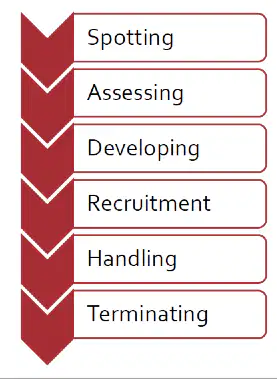
Identify the foreign intelligence recruitment cycle.
Spotting, Assessing, Developing, Recruitment, Handling, Terminating. Build relationship and gain trust; exploit weaknesses; coerce or use inducements; start with small requests then bigger demands; praise and reward; multi-stage process.
Planning, Execution, Evaluation, Reporting, Dismissal. Immediate trust-building; avoid weaknesses; no inducements; large demands first; no rewards; single-stage process.
Selection, Training, Assignment, Promotion, Retirement. Ignore relationship; exploit strengths; avoid coercion; only big requests; punish mistakes; random process.
Discovery, Interview, Testing, Hiring, Firing. Build distrust; hide weaknesses; use threats only; start with big demands; no praise; one-step process.
Identify the Prime Intelligence Targets for a foreign intelligence entity.
Marine Security Guards are prime intelligence targets. Placement is an asset’s proximity to desired information. Access is an asset’s ability to collect desired information.
Foreign intelligence entities are only interested in local civilians with no access to information.
Prime intelligence targets are always high-ranking government officials only.
Only embassy chefs are considered prime intelligence targets.
Identify the motivators for committing espionage. (Fill in the blank)
Ideology; Personal Gain; Protection of Self or Family; Fear; Revenge; Mental Instability.
Curiosity; Artistic Expression; Environmental Concerns; Athletic Competition.
Religious Observance; Culinary Interests; Gardening; Fashion Trends.
Technological Advancement; Space Exploration; Urban Planning; Wildlife Conservation.
Identify the indicators that a person is committing espionage.
Disgruntled; Divided Loyalties; Working odd hours; Unauthorized removal; Unnecessary copying; Unauthorized Devices; No need to know; Unexplained affluence; Foreign travel; Unreported contacts; Bragging.
Wearing uniforms; Following all security protocols; Volunteering for extra work; Always on time.
Frequent participation in company events; Regularly updating passwords; Praising management; Avoiding all travel.
Always working in teams; Reporting suspicious activity; Attending training sessions; Requesting feedback.
Identify in writing the definition of terrorism. (Fill in the blank)
Calculated use of violence or threat of violence to inculcate fear; intended to coerce or to intimidate governments or societies in the pursuit of goals that are generally political, religious, or ideological.
The peaceful negotiation between conflicting parties to resolve disputes without violence.
A government policy aimed at increasing economic growth through trade agreements.
The use of media to promote cultural understanding and tolerance among nations.
Identify in writing the objectives of a terrorist.
Cause a government reaction; Obtain logistical support; Emotional impact on audience other than victims; Extract revenge.
Promote international trade agreements; Foster diplomatic relations; Encourage cultural exchange; Support humanitarian aid.
Increase literacy rates; Improve public health; Develop infrastructure; Promote environmental sustainability.
Establish democratic institutions; Enhance technological innovation; Expand educational opportunities; Strengthen economic stability.
Identify in writing the tactics of a terrorist.
Assassinations; Hostage Taking; Kidnapping; Hijacking/Skyjacking; Seizure; Arson; Bombings; Raids; Sabotage; Hoax; Special Weapons; Use of Technology.
Peaceful negotiations; Community service; Environmental conservation; Educational reforms.
Charity work; Disaster relief; Medical research; Urban planning.
Sports events; Art exhibitions; Scientific conferences; Cultural festivals.
Identify in writing the ideologies of terrorists. (Fill in the blank)
Political – Right Wing, Left Wing, Anarchist Wing; Religious; Social.
Economic – Capitalist, Socialist, Feudalist; Environmental; Technological.
Cultural – Artistic, Linguistic, Culinary; Historical; Mythological.
Scientific – Rationalist, Empiricist, Positivist; Mathematical; Logical.
Identify in writing the structure of terrorist organizations.
Cell; Hierarchical; Network.
Linear; Modular; Circular.
Random; Isolated; Dispersed.
Centralized; Decentralized; Autonomous.
Identify in writing the phases in the Terrorist Planning Cycle. (Fill in the blank)
Broad Target Selection; Intelligence Gathering and Surveillance; Specific Target Selection; Pre-Attack Surveillance Planning; Rehearsal; Actions on Objective; Execution; Escape and Exploitation.
Initial Reconnaissance; Weapon Procurement; Target Elimination; Escape and Concealment.
Target Selection; Funding; Recruitment; Execution; Media Release.
Planning; Resource Allocation; Attack; Surrender; Negotiation.
Identify in writing the basic methods of surveillance.
Fixed Surveillance; Mobile Surveillance; Technical Surveillance; Combination Surveillance; Ubiquitous Technical Surveillance (UTS).
Covert Surveillance; Overt Surveillance; Passive Surveillance; Active Surveillance; Digital Surveillance.
Visual Surveillance; Audio Surveillance; Manual Surveillance; Automated Surveillance; Remote Surveillance.
Direct Surveillance; Indirect Surveillance; Satellite Surveillance; Drone Surveillance; Internet Surveillance.
Identify in writing how to detect surveillance.
Be alert; know what is normal; gather descriptive information; report suspicious activity immediately.
Ignore your surroundings and focus on your tasks only.
Only report activity if you are absolutely certain it is a threat.
Wait for someone else to notice and report suspicious activity.
Identify in writing actions to take if under surveillance.
Conceal your suspicions; call authorities and report; make detailed report; know safe areas; move toward friendly security; break law if necessary to draw attention; use high-density areas; use multiple entrances and exits; deviate route; change appearance; hide; signal taxi; contact police.
Ignore the situation and continue as normal; avoid contacting anyone; never change your route; stay in isolated areas.
Confront the person following you directly; do not inform authorities; avoid crowded places; keep your routine unchanged.
Panic and run without a plan; avoid making any reports; never seek help from authorities; always use the same entrance and exit.
Identify the key terms of contact reporting. (Fill in the blank with the key terms.)
Contact – all manner of personal or impersonal communications; Foreign National; Locally Engaged Staff; Expatriate; Romeo/Honeypot; Official Contact; Unofficial Contact; Non-Romantic/Non-Sexual Types; General Acquaintance; Friendship; Romantic Relationship; Sexual Encounter.
Contact – only official communications; Domestic National; Unofficial Contact; Business Relationship; Non-Romantic Types.
Contact – all manner of impersonal communications; Foreign National; Expatriate; Official Contact; Friendship; Business Encounter.
Contact – only personal communications; Locally Engaged Staff; Romeo/Honeypot; General Acquaintance; Romantic Relationship.
What is the Purpose of Reporting? (Fill in the blank with the purpose.)
Protect the person against Foreign Intelligence Service; develop information to analyze contact; tracking and investigative tool; determine validity of contact.
To increase the number of contacts with Foreign Intelligence Service.
To encourage unauthorized disclosure of information.
To promote personal relationships with foreign contacts.
Identify the definition of a critical counterintelligence person.
Any and all assignments, as determined by the Department of State, subject to a heightened human intelligence threat to its facilities and/or employees.
A person responsible for overseeing all embassy operations regardless of threat level.
An individual who manages only the physical security of government buildings.
Any employee who has completed basic counterintelligence training.
Identify the Marine Security Guard policy on contact reporting. (Fill in the blank with the policy.)
Submit a contact report within 24 hours of first sexual encounter; after 24 hours of continuous contact; second contact or meeting; when person attempts to establish recurring contact. Observe the more restrictive policy between DOS and COM.
Submit a contact report only after the third contact or meeting, regardless of circumstances.
Submit a contact report only if the contact is deemed suspicious by the Marine Security Guard.
Submit a contact report within 72 hours of any contact, regardless of the nature of the contact.
Identify what information should be contained in a contact report. (Fill in the blank with the information.)
Full identifying information of the Marine; precise details of with whom, when, and where; circumstances of the contact; information concerning any sensitive or classified information sought or elicited; additional comments or photos. Complete the DS-1887 Foreign Contact Report.
Only the name of the Marine and the date of contact.
A brief summary of the contact without any identifying details or sensitive information.
Just the location and time of the contact, omitting all other details.
Identify who receives the completed contact report. (Fill in the blank with the recipient.)
Regional Safety Officer.
Human Resources Manager.
Finance Director.
Operations Supervisor.
Identify how often training regarding contact reporting must be conducted. (Fill in the blank with the frequency.)
Within 72 hours of newly assigned MSG’s arrival to post and quarterly at guard school.
Annually during the security review.
Only upon request by the supervisor.
Every six months during routine training.
Identify how to report travel to a critical counterintelligence post. (Fill in the blank with the reporting procedure.)
Advanced notification (30 days) to DetCdr, RSO, and Region Headquarters; RSO ensures Marine receives country brief; Marine must report any problems encountered while in travel status.
Report travel only after returning from the post; no need to notify DetCdr or RSO.
Notify only the Region Headquarters within 7 days of travel; no country brief required.
Submit a written report to the local embassy after travel is completed; no prior notification necessary.
Identify the legal standards for the use of force during the seizure of an individual. (Fill in the blank with the standards.)
Utilize the Graham Factors: Severity of the Crime; Immediacy of the Threat; Actively Resisting Arrest; Attempting to Evade Arrest; consider number of subjects/officers, size, age, condition, violent history, alcohol/drug use, mental history, presence of bystanders, availability of less-than-lethal weapons, subject’s possession or access to weapons; give warning when feasible.
Apply the Miranda Rights: Right to Remain Silent; Right to an Attorney; Right to a Fair Trial; Right to Due Process.
Follow the Exclusionary Rule: Evidence obtained unlawfully must be excluded from trial; officers must have a warrant for all searches.
Use the Reasonable Suspicion Standard: Officers may detain individuals based on a reasonable belief that a crime is occurring or has occurred.
Identify when deadly force is objectively reasonable. (Fill in the blank with the condition.)
Reasonable belief that subject poses imminent danger of death or serious physical injury.
When the subject is fleeing the scene of a minor crime.
Whenever an officer feels threatened, regardless of the situation.
If the subject is verbally disrespectful to law enforcement.
A DS-7778: Use of Force Reporting Form will be utilized in which of the following situations?
Whenever force is used by security personnel.
Only when a weapon is discharged.
Only during routine patrols.
Only for verbal warnings.
General security protective measures include:
Access control, surveillance, and security training
Ignoring security protocols
Leaving doors unlocked
Sharing passwords with others
Protective measures for a residence include:
Installing security systems
Leaving doors unlocked
Ignoring suspicious activity
Avoiding outdoor lighting
Protective measures for ground transportation include:
Vehicle inspections and route planning
Ignoring security protocols
Leaving vehicles unattended in unsecured areas
Sharing travel plans publicly
Protective measures for air travel include:
Wearing a mask and sanitizing hands
Ignoring safety instructions
Avoiding seat belts
Opening windows during flight
The collateral duties in a Marine Security Guard Detachment include which of the following?
Training NCO, Supply NCO, and Armory Custodian
Company Commander, Platoon Leader, and First Sergeant
Squad Leader, Fire Team Leader, and Rifleman
Pilot, Navigator, and Loadmaster
The mission of each collateral duty is to:
Support the primary mission of the organization.
Replace the main duties of personnel.
Eliminate the need for supervision.
Reduce the number of required personnel.
Each collateral duty has which of the following responsibilities?
Specific tasks assigned to support primary duties
Unrelated tasks with no connection to the main job
Only administrative paperwork
No responsibilities at all
Which of the following is required to ensure vehicles are in proper operational status for the Vehicle Marine?
OF-108 (Usage Report)
Monthly Vehicle Reports
Weekly PMCS
All of the above
Name one report that must be maintained by the Vehicle Marine to ensure preventative maintenance is conducted at the required times and intervals.
OF-108 (Usage Report)
DA Form 31 (Leave Form)
SF-86 (Security Clearance Form)
DD Form 214 (Discharge Papers)
Which item is NOT listed as a requirement for Vehicle Marine?
Fuel Tracker
GPS
Annual CBRN Test
Insurance Vard
What is the purpose of the Chemical, Biological, Radiological, Nuclear Defense Marine (CBRN) Marine?
To maintain serviceable CBRN assets; coordinate, manage, and track all CBRN required training and evaluations for the detachment; and assist the DetCdr with all CBRN-related matters.
To provide medical support to injured personnel during combat operations.
To oversee all logistics and supply chain operations within the detachment.
To conduct intelligence gathering and surveillance missions for the unit.
Which of the following is a responsibility of the CBRN Marine?
CBRN Training (MarineNet:CBRNISM010)
Order gear on ILMS
Monthly SHELF LIKE INVENTORY
All of the above
What must be inspected or confirmed by the CBRN Marine according to DD1348?
Receipt
Serial number
Expiration date
Packaging
Which of the following is NOT a task for the Supply Marine?
ILMS
DPL
Monthly NEPA
Fuel Tracker
What is the main administrative responsibility of the Supply Marine?
To carry out the necessary administrative tasks associated with accountability of property and the ordering of supplies essential for operational readiness, morale, and welfare of each detachment member, including requesting, tracking, receiving, reporting, maintaining, and conducting disposition of equipment.
To oversee the training schedules and physical fitness of all detachment members.
To manage the communication systems and ensure secure transmission of information within the unit.
To supervise the maintenance and repair of all vehicles and heavy machinery assigned to the detachment.
Who is responsible for ensuring that sufficient funds are available to provide food for a balanced diet and to reimburse employees for services in connection with the preparation of food and the daily operation of the MSGR?
Morale, Welfare and Recreation (MWR) Marine
Ball Marine
Mess Marine
Administration (Admin) Marine
Which of the following is NOT a responsibility of the Mess Marine?
Weekly Det meal
Det functions/coins funds
Monthly mess bills
Marines Bill the same amount for expenses for food/services
Within how many hours do funds need to have a voucher/Ledger entry according to the Mess Marine responsibilities?
Within 24 hours
Within 12 hours
Within 48 hours
Within 72 hours
Who is responsible for promoting the well-being, morale, and efficiency of detachment personnel and guests by providing social and recreational activities?
Morale, Welfare and Recreation (MWR) Marine
Logistics Officer
Operations Chief
Supply Clerk
What is the main responsibility of the Ball Marine?
To manage monthly mess bills
To plan the detachment’s annual birthday ball celebration
To maintain the Directives Control Point
To provide social and recreational activities
Official 5732 Funds can only be used to set off certain costs of the ceremony portion like photographer and DJ services.
True
False
What is the time frame for submitting the Ball AAR after the event?
Within 30 days after the event
Within 7 days after the event
Within 60 days after the event
Within 90 days after the event
Who is responsible for the management of information and the maintenance of detachment directives?
Administration (Admin) Marine
Supply Officer
Operations Chief
Logistics Specialist
Within how many days of receipt should you do your directives/Pubs according to the Administration (Admin) Marine responsibilities?
Within 15 days
Within 7 days
Within 30 days
Within 60 days
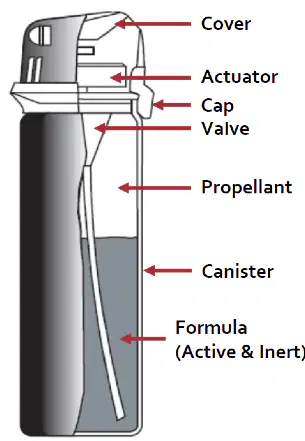
Identify the nomenclature of the MK-IV aerosol projector.
MK-IV Aerosol Projector
MK-V Gas Dispenser
MK-III Spray Device
MK-II Mist Emitter
Identify the characteristics of Oleoresin Capsicum (OC).
Tearing and involuntary closure of eyes; upper respiratory inflammation; anxiety, fear, and panic.
Loss of hearing and temporary paralysis; blurred vision; excessive sweating.
Sudden increase in appetite; drowsiness; muscle relaxation.
Enhanced sense of taste; rapid heartbeat; numbness in fingers.
Identify the characteristics of Chlorobenzylidene Malononitrile (CS).
White crystalline solid; irritant causing burning sensation of eyes, nose, mouth, throat, exposed skin; nasal discharge; difficulty breathing; coughing; sneezing.
Colorless liquid; pleasant floral odor; used as a food additive.
Yellow oily substance; non-irritant; used in perfumes and cosmetics.
Blue crystalline powder; causes drowsiness and mild euphoria when inhaled.
Identify the three employment techniques for the MPG-120.
Handheld/Thrown (Short Ranges); Shotgun Launched (Longer Ranges); only use C200 cartridges; do not point toward personnel unless Deadly Force authorized.
Handheld/Thrown (Short Ranges); Air-dropped (Long Ranges); use only C100 cartridges.
Mounted on vehicles; Shotgun Launched (Longer Ranges); use only C300 cartridges.
Handheld/Thrown (Short Ranges); Underwater Launched; use only C200 cartridges.
The first aid procedures for someone exposed to chemical munitions include:
Removing the person from the contaminated area and flushing eyes and skin with water.
Applying ice packs to the affected area and giving painkillers.
Covering the person with a blanket and keeping them warm.
Giving the person food and water immediately.
Define possible psychological and physiological effects a subject may experience after exposure to SIMs (Specialty Impact Munitions).
Psychological – Fear/Anxiety, Panic; Physiological – Blunt Trauma, Pain, Swelling, Restricted range of movement, possible Penetrating Trauma.
Psychological – Euphoria, Excitement; Physiological – Increased energy, Heightened senses, Rapid healing.
Psychological – Indifference, Calmness; Physiological – Weight loss, Improved vision, Enhanced memory.
Psychological – Joy, Motivation; Physiological – Muscle growth, Enhanced flexibility, Improved digestion.
Identify the deployment considerations necessary to improve a desirable outcome when deploying SIMs.
Close range increases incapacitation and injury risk; long range may affect accuracy and energy; distance equates to time; factors influencing point of aim include clothing, age, physical condition, threat level; avoid head, neck, spine, groin; Zone 1 large muscle groups; Zone 2 medium muscle groups; Zone 3 serious injury only when deadly force threshold; may need follow up engagements.
Always aim for the head or neck to ensure maximum effectiveness; deploy at any range without considering accuracy; clothing and age are not relevant; follow up engagements are unnecessary.
Deploy SIMs only at maximum range for safety; point of aim should always be the extremities; avoid considering physical condition or threat level; follow up engagements are discouraged.
Clothing and age are the only factors to consider; always aim for the groin; Zone 1 and Zone 2 are not relevant; deadly force threshold is not required for serious injury.
Define the Force Options and identify the appropriate level for Less Than Lethal Weapons.
Use respective Mission Use of Force and Firearms Policy as it pertains to Less Than Lethal Weapons.
Always use lethal force first in all situations.
Less Than Lethal Weapons should never be used under any circumstances.
Only use Less Than Lethal Weapons for crowd control, regardless of the situation.
Identify deployment strategies and be able to make appropriate recommendations for SIMs selection.
Crowd Control – area affecting SIMs (rubber balls, foam batons, rubber batons, wood batons); Single Subject – precise/maximum energy SIMs; flexible (lead/silica bags); non-flexible (rubber, wood, dense foam); product config 40mm; functional knowledge of delivery systems (M203, PGL65, Stinger Grenade).
SIMs are only used for training purposes and do not require deployment strategies or recommendations.
Deployment strategies for SIMs focus solely on chemical agents and exclude kinetic impact munitions.
SIMs selection is based only on officer preference and does not involve functional knowledge of delivery systems.
Identify the fundamentals of room entry, in accordance with the Foreign Affairs Security Training Center Basic Special Agent Course Room Entry/Defensive Tactics (RED-T).
Maintain situational awareness, communicate with team members, use proper entry techniques, and clear all corners.
Enter the room individually without communication.
Ignore corners and focus only on the center of the room.
Move quickly without checking for threats or communicating.
What is a Breach Point in Room Entry Tactics (RET) Fundamentals?
Location on the objective where the team will employ any means available to break through or secure a passage through an obstacle (e.g., door, window, wall, roof, etc).
A designated area for team members to regroup after clearing a room.
The point where the team initiates communication with the objective's occupants.
A location used for storing equipment during an operation.
What does 'Stack' refer to in Room Entry Tactics (RET) Fundamentals?
A Team or Unit.
A type of weapon.
A communication device.
A defensive position.
What is the Security Side of the Door in Room Entry Tactics (RET) Fundamentals?
The security side of the door allows you to best see inside the room as soon as the door begins to open.
The security side of the door is the side farthest from the hinges, regardless of visibility.
The security side of the door is always the left side, no matter the room layout.
The security side of the door is the side closest to the wall.
In Room Entry Tactics (RET) Fundamentals, which side is the security side for inward-opening doors?
Hinge side.
Handle side.
Top side.
Bottom side.
In Room Entry Tactics (RET) Fundamentals, which side is the security side for outward-opening doors?
Knob side.
Hinge side.
Top side.
Bottom side.
What is the Primary Direction of Clear (PDC) in Room Entry Tactics (RET) Fundamentals?
The PDC is always left (if MSGs are unable to clear left, they can clear in another direction). It is a systematic way of clearing an unknown structure, prioritizes direction of movement, and minimizes uncleared space in a structure.
The PDC is always right, regardless of the situation, and does not consider uncleared space.
The PDC is determined randomly each time a room is entered, with no systematic approach.
The PDC focuses on clearing the center of the room first, ignoring the corners.
What is a Split Stack in Room Entry Tactics (RET) Fundamentals?
A method used to alert MSGs that there are multiple danger areas (e.g., open doors on both sides of the hallway) that need to be covered and brings another MSG to the point position.
A technique for breaching doors using explosives.
A communication protocol for silent entry.
A formation where all team members enter through a single doorway in a line.
What does the command 'Shot' mean in Room Entry Tactics (RET) Fundamentals?
It is used to freeze all movement within the building, so a MSG can engage a threat and not endanger other MSGs within the objective building.
It signals the team to breach the door immediately.
It instructs the team to retreat from the objective building.
It is a command to check all corners of the room upon entry.
What does the command 'Continue' mean in Room Entry Tactics (RET) Fundamentals?
It is only given after the command 'Shot'. It indicates to MSGs they may continue with their original actions.
It signals the team to halt all movement immediately.
It instructs the team to retreat from the room.
It means to switch to a different entry point.
What does 'Support' mean in Room Entry Tactics (RET) Fundamentals?
Given when a MSG needs support for any reason (e.g., call MSGs in a specific direction or into a specific room or to control an individual for any reason while on an objective).
A signal to retreat from the objective area immediately.
A command to secure all exits before entry.
A term used for breaching doors with explosives.
What is the term used to let others know that you are moving in depth or forward into a room?
Closing/Close
Stacking/Stack
Breaching/Breach
Clearing/Clear
What are the positions that are designated prior to leaving a room called?
Headlight/Taillight
Point/Rear
Lead/Follow
Front/Back
Which area is defined as a location, space, point, or area where contact with the threat is probable or imminent?
Danger Area
Safe Zone
Observation Post
Assembly Area
Which area can have an instant or immediate effect on the security of the team, such as an open door?
Immediate-Threat Danger Area
Low-Visibility Area
Safe Zone
Observation Post
What is the non-verbal release where team members synchronize their movements by one MSG raising their barrel and holding it until the second MSG matches the movement called?
Muzzle Dip
Barrel Tap
Sync Raise
Silent Signal
What are areas that are covered by observation and fire, starting at the weapon system and extending to its maximum effective range called?
Sectors of Fire
Fields of View
Lines of Advance
Zones of Control
What is the process of clearing an Immediate-Threat Danger Area during entry while moving to the dominating position called?
Sectors In-Depth
Bounding Overwatch
Reconnaissance by Fire
Suppressive Advance
Identify in writing the room entry commands, in accordance with the Foreign Affairs Security Training Center Basic Special Agent Course Room Entry/Defensive Tactics (RED-T).
Room entry commands include: 'Stack up', 'Breach', 'Clear', and 'Secure'.
Room entry commands include: 'Fall back', 'Retreat', 'Evacuate', and 'Disperse'.
Room entry commands include: 'Advance', 'Hold', 'Withdraw', and 'Surrender'.
Room entry commands include: 'Assemble', 'Disband', 'Regroup', and 'Dismiss'.
Identify in writing the two types of room entry responses, in accordance with the Foreign Affairs Security Training Center Basic Special Agent Course Room Entry/Defensive Tactics (RED-T).
Dynamic and Deliberate entry responses
Covert and Overt entry responses
Rapid and Slow entry responses
Single and Double entry responses
What are the positions that are designated prior to leaving a room called?
Headlight and Taillight
Front and Rear Guard
Entry and Exit Points
Primary and Secondary Positions
What is the 'Headlight' position when leaving a room?
The last MSG leaving the room
The point position moving in the direction of travel
The MSG who gives the command
The MSG who supports the team
What does the command 'Support' mean in the context of room entry?
It is given when a MSG needs support for any reason, such as calling MSGs in a specific direction or into a specific room, or to control an individual for any reason while on an objective.
It is a command to retreat from the room immediately.
It is an order to secure all exits of the room.
It is a signal to initiate a search for hidden objects in the room.
What is the purpose of the command 'Close' during room entry?
To let others know that you are moving in depth or forward into a room, usually given from a dominating position after you have no other work in your immediate area.
To signal that the room is clear and safe to enter.
To instruct team members to stay outside the room.
To indicate that the door should be locked behind you.
Identify in writing the Free Flow method of room entry, in accordance with the Foreign Affairs Security Training Center Basic Special Agent Course Room Entry/Defensive Tactics (RED-T).
The Free Flow method involves team members entering a room quickly and continuously without pausing at the doorway, maintaining momentum and covering all angles.
The Free Flow method requires each team member to enter the room one at a time, waiting for a signal before proceeding.
The Free Flow method involves stacking at the door and entering only after a flashbang is deployed.
The Free Flow method requires team members to enter the room in a single file, maintaining physical contact with the person in front.
Identify the principles to room clearing, in accordance with the Foreign Affairs Security Training Center Basic Special Agent Course Room Entry/Defensive Tactics (RED-T).
Maintain security, communicate, control speed, and cover all angles.
Enter the room individually and quickly without coordination.
Focus only on the center of the room and ignore corners.
Move silently without communicating with the team.
The objective of Initiative-Based Tactics is to gain and maintain the ______ throughout a mission. The team initiates an action and uses momentum on the objective using these principles. (Fill in the blank)
advantage
distance
communication
cover
The principles of RET will allow the team the opportunity to gain a tactical advantage and put the threat at a disadvantage.
True
False

