
 Worksheets
Quiz #5 - Light and Heat Energy
Total questions: 96
Worksheet time: 1hrs 22mins


The earth receives heat energy from the sun by _______________, which is the transfer of energy as electromagnetic waves.


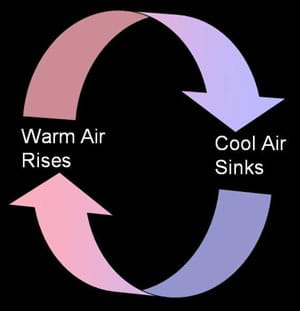
Near the ceiling of a room the air is warmer. The warm air rises because of
conduction
convection
radiation

In heat transfer, heat always flows from the _______________ substance to the _______________ substance.
Hotter to colder
Colder to hotter
Hotter to hotter
Colder to colder

When you use a microwave, what is the main way that heat is transferred?
Convection
Conduction
Radiation
insulation.

An iron is placed on your clothes to smooth out the wrinkles. The iron transfers heat to your clothes through
conduction
convection
radiation

You get sunburned due to __________ from the sun.
conduction
convection
radiation

Near the ceiling of a room the air is warmer. The warm air rises because of
conduction
convection
radiation

The heat from a lamp allows a lizard to remain warm. This is an example of which type of heat transfer?
radiation
conduction
convection
insulation

Energy transfer during which hot fluid rises and cold fluid sinks, creating a cycle, is called...
Heat
Convection
Radiation
Conduction

Which Earth's surface heats quicker, sand or water?
Water
Sand
N/A
N/A

Boiling Water (a)

Curling Iron (a)

Weather Patterns (a)

Sun Bathing (a)

Mantle (a)

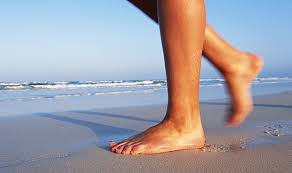
Feet on Hot Sand (a)

Lava Lamp (a)

Heat Lamps (a)

Cold Pack on Person
Heat is transferred from the cold pack to the person.
Heat is transferred from the person to the cold pack
The cold pack is getting warmer. The person is getting colder.
The cold pack is getting colder. The person is getting warmer.
What is the transfer of heat by movement of liquids or gases? (a)
What is a transfer of heat energy by electromagnetic waves? (a)
What is the transfer of heat by direct contact? (a)
What is the measurement of the average kinetic energy of a substance? (a)
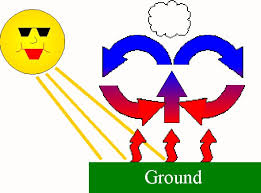
Warm air rises and the cool air sinks. This is...
(a)

Heat transfers from an area of (a) temperature to an area of (b) temperature.

Warm water from the ocean moves to the north while cool waters moves to the south. This is an example of.. (a)

If an object has particles that are moving very quickly, the object 's temperature is probably (a) .

conduction
ironing a shirt
convection
a radiator heating a cold room
radiation
a microwave heating food
Heat transfer through waves is called___
conduction
convection
radiation
Boiling Water
Conduction
Convection
Radiation
Curling Iron
Conduction
Convection
Radiation
Weather Patterns
Conduction
Convection
Radiation
Sun Bathing
Conduction
Convection
Radiation
Feet on Hot Sand
Conduction
Convection
Radiation
Lava Lamp
Conduction
Convection
Radiation

Microwaving Food
Conduction
Convection
Radiation

Hot Air in a Toaster
Conduction
Convection
Radiation
Heat Lamps
Conduction
Convection
Radiation
Why does an ice cube melt when dropped into hot liquid?
The liquid absorbs heat from the ice.
Heat from the liquid transfers to the ice.
Heat from the ice transfers to the liquid.
Cold from the ice transfers into the liquid.
Which is an example of radiation?
boiling a pot of noodles for dinner
getting hot from lying in the sun
feeling warm while taking a shower
burning yourself after touching a hot plate
Which is the best example of conduction?
boiling a pot of water
feeling heat from a fireplace
a hot air balloon rising and falling
touching a hot handle and getting burned
What is the name of the clear, dome-shaped layers of the eye?
Sclera
Retina
Lens
Cornea
What does the cornea do?
Protect the eye from damage and disease
Change light into electrical signals
Focus the light on the retina
Control the amount of light the eye takes in
What do we call the colored part of the eye?
Pupil
Lens
Retina
Iris
What does the iris do?
Changes light into electrical signals
Sends electrical signals to the brain
Regulates the amount of light that enters the eye
Focuses light on the retina
What is the black, circular opening in the middle of the iris?
Pupil
Retina
Optic Nervice
Sclera
How does the iris regulate the amount of light that enters the eye?
It makes the pupil bigger in low light
It makes light into electrical signals
It makes the pupil smaller in bright light
It focuses the light on the retina
What is the transparent structure behind the iris that focuses light on the retina called?
Pupil
Lens
Optic Nerve
Sclera
What is the name of the light sensitive tissue at the back of the eye that converts light into electrical signals?
Retina
Optic Nerve
Cornea
Iris
What are the names of the photoreceptors in the retina?
Optic Nerve
Cones
Sclera
Rods
What do cones detect?
Focus of the light
Color
Shape of the eye
Bright light
What are rods more sensitive too?
Bright light
Out of focus light
Low light
Black and White light
What else are rods responsible for?
The sclera
The Vitreous Humor
Peripheral Vision
Regulating the amount of light that enters the eye
What is peripheral vision?
Ability to see things that aren't directly in front of you
Ability to see things directly in front of you
Ability to see things at night
Ability to see things that aren't really there
What is the largest sensory nerve in the eye?
Spinal Nerve
Optical Nerve
Auditory Nerve
You've got a Nerve
What does the optical nerve do?
Sees stuff
Sends the electrical signals to the brain
Converts light into electrical signals
Focuses light
What is the Vitreous Humor?
Jokes about the eye
The coating that makes the eye white
The clear, jelly-like substance that fills the space between the lens and the retina
Ice cream
What does the vitreous humor do?
Maintains the shape of the eye
Makes people laugh
Allows light to pass to the retina
Makes the eye white
Label the diagram of the eye
pupil
What is the tough white outer coating of the eye that makes it white?
Iris
Vitreous
Pupil
Sclera
Reorder the following
The light enters through the pupil
The light passes through the lens that focuses it on the retina
The retina sends the electrical signals to the optic nerve
The optic nerve sends the electrical signals to the brain
How fast does the process of seeing take?
Instantly
13 milliseconds
1 minute
.013 seconds
When light waves bounce off a surface we call this:
Reflection
Refraction
Absorption
When light waves bend as they pass through a transparent medium we call this:
Refraction
Reflection
Absorption
When light waves are captured in matter and transferred to a new form of energy we call this:
Absorption
Reflection
Refraction
When light waves bounce off of a smooth surface at the same angle of incidence in which they hit the surface we call this:
Diffuse Reflection
Specular Reflection
Diffuse Refraction
Specular Refraction
When light waves bounce off of a rough object and are scattered in all directions we call this:
Specular Reflection
Specular Refraction
Diffuse Reflection
Diffuse Refraction
The colors of the visible light spectrum in order from largest wavelength to smallest wavelength are:
Violet, Indigo, Blue, Green, Yellow, Orange, and Red
Green, Blue, Indigo, Violet, Red, Orange, and Yellow
Red, Orange, Yellow, Green, Blue, Indigo, and Violet
Yellow, Orange, Red, Violet, Indigo, Blue, and Green
The color that absorbs visible light waves is:
Black
White
Red
Violet
The color that reflects all visible light waves is:
White
Black
Green
Yellow
If you see the color orange, this means:
The colors red, yellow, green, blue, indigo, and violet have been absorbed and orange has been refracted.
The colors red, yellow, green, blue, indigo, and violet have been absorbed and orange has been reflected.
The color orange has been absorbed and red, yellow, green, blue, indigo, and violet are refracted.
The color orange has been absorbed and red, yellow, green, blue, indigo, and violet are reflected.

Light waves bending through a prism is an example of:
Reflection
Refraction
Absorption

Light waves bouncing off of this mirror is an example of:
Reflection
Refraction
Absorption

Light waves bouncing off of this lake is an example of:
Reflection
Refraction
Absorption

A carbon nanotube capturing light is an example of:
Reflection
Refraction
Absorption

A fish bowl bending light waves and distorting an image of a cat's face is an example of:
Reflection
Refraction
Absorption

A black shirt capturing light waves and making a person feel hot in the summer is an example of:
Reflection
Refraction
Absorption

Light waves bending through a magnifying glass and becoming so concentrated that they start a fire is an example of:
Reflection
Refraction
Absorption

A light wave bouncing off of a windshield visor is an example of:
Reflection
Refraction
Absorption
Light being captured inside of a black hole in outterspace is an example of:
Reflection
Refraction
Absorption
A transverse wave's oscillations move __________________ to it's energy transfer.
Parallel
Perpendicular
Horizontal
Vertical
A longitudinal wave's oscillations move ___________________________ to its energy transfer.
Perpendicular
Parallel
Horizontal
Vertical

