
 Worksheets
Symbolism and Decisions in Conflict
Total questions: 1
Worksheet time: 16mins
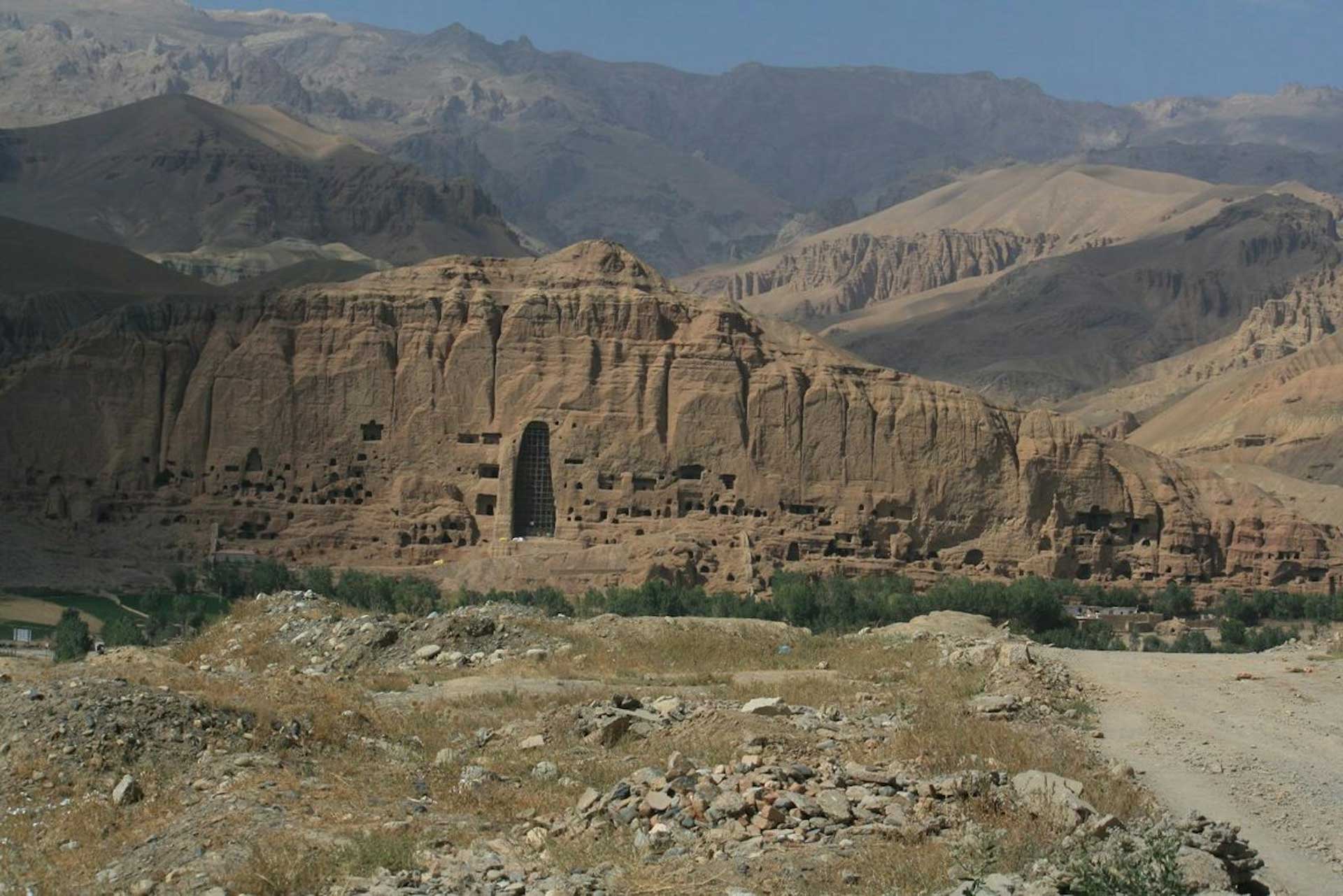
The Mountains of Afghanistan
Reshmina paused, taking a moment to gaze at the majestic mountains that stretched across Afghanistan and into China. These enormous peaks always made her feel small, reminding her of the vast world beyond her village. It was easy to get lost in the everyday life of her village, but looking up at the mountains helped her remember there was so much more.
However, Reshmina couldn't find her brother, Pasoon, anywhere. These mountains were perfect for hiding, which was why the Taliban were so difficult to locate and fight. Pasoon had to be out there, perhaps just over the next hill or in the next valley.
But where was Pasoon headed? Reshmina started walking again, trying to figure out her brother's destination. The Taliban didn't have a fixed village or base. They moved through the mountains and passes between Afghanistan and Pakistan, crossing the unmarked border as if it were their own territory. Pasoon might be heading in that direction, but how could he be sure to find them?
Suddenly, Reshmina remembered a time when she had followed Pasoon into these mountains. It was a year or two ago. Pasoon had invited her to explore, and she had happily skipped her chores to join him. He had picked up a stick and was swinging it like a sword. Reshmina walked beside him, naming things in English: "Rock," "Tree," "Sun," "Brother." She couldn't remember a happier day.
They passed a large rock with a Pakistani phone number painted on it, a recruitment sign for the Taliban. They followed a goat path up the mountain. Eventually, they reached a flat space at the top of a cliff, where an old wooden rifle leaned against a rock. The rifle was worn from years of fighting, but it still looked usable. Pasoon went straight to it, as if he knew it would be there. It was heavy for him, but Reshmina knew he had used a rifle before to hunt with their father. She watched as he checked if the rifle was loaded.
There were two cartridges of bullets on the ground, and Pasoon loaded them into the rifle. "Pasoon, what are you doing?" Reshmina asked, alarmed. "That's not yours." "No, it's the Taliban's!" Pasoon said. "Darwesh and Amaan said they'd give me five American dollars to shoot at the American camp!"
Reshmina felt her blood run cold. Pasoon hadn't stumbled upon the rifle by accident, and he hadn't invited her along for a casual exploration. He knew exactly where he was going and what he was going to do. Shaking, Reshmina looked over the side of the mountain.
Across the valley, a small American base was made of plywood and plastic tarps. It was deliberately placed in Taliban territory to provoke attacks. Pasoon took aim with the rifle, intending to do just that. Reshmina grabbed the rifle, trying to pull it away. "Pasoon! You can't! They have big guns! They'll kill you! They'll kill both of us!"
Pasoon frowned and pulled the rifle back. "They won't even know where I am," he said. "Besides, I'm not going to hit anything. Darwesh and Amaan told me all I have to do is shoot at them. Then they'll waste their expensive bombs, and we'll be long gone." "But why?" Reshmina had asked. "Why not leave them alone?" Pasoon's face turned sour. "We'll leave them alone when they leave us alone."
Pasoon steadied the rifle and took aim. Reshmina backed away, wondering why he had brought her along. To watch? To cheer him on? He had to know she wouldn't do that. Was he scared? Maybe. Or maybe he had brought her along so a single boy walking alone wouldn't look so suspicious.
PAKOW. The rifle kicked when Pasoon fired, knocking him down. Reshmina covered her ears. Pasoon quickly hid behind the rock, afraid to see what his shot had done. Soon, they heard the shouts of the Americans and the sound of their guns firing back. Reshmina ducked low, but Pasoon was right—their bullets didn't come close. The Americans had no idea where the shooter was.
Pasoon giggled behind the rock. "I'll just wait until they think I've gone, and then shoot at them again." "Pasoon, this isn't a game!" Reshmina cried. But Pasoon wasn't listening. He was enjoying feeling grown-up and important.
Reshmina realized that the Taliban would tell Pasoon what he wanted to hear: that he was old enough to make his own decisions, old enough to join them and fight the Americans. That's where Pasoon would go—back to that ridge with the phone number and the gun, back to the heart of Taliban country.
Reshmina hurried down the goat path into the valley. At the bottom of the hill, young boys from her village played on an old abandoned Soviet tank. The tank was broken and tilted, half-buried in the dirt. Scorch marks showed where the Afghan fighters had hit it with rockets years ago.
The boys pushed the tank's cannon uphill, then rode it as it swung back down, laughing as it threw them into the dirt. "Do you boys know my brother Pasoon?" Reshmina asked. "Did he come by here recently?" "Yes!" one of the boys said. "And he wouldn't help us push the gun!" Reshmina sighed. Pasoon had come this way, and there was nothing else in this direction except the Taliban.
The boys squealed as their tank ride threw them off again, and Reshmina climbed the next hill. Away from the river, the land was dusty and brown, the ground rocky and hard. Reshmina saw a boy herding his goats in the distance and wondered if they had found anything to eat. She doubted it.
"That should be Pasoon up there," Reshmina thought. "A young boy singing to his goats, not running off to join the Taliban and fight a war that started before he was born." Reshmina stopped to catch her breath, stepping onto a boulder and loosening her headscarf.
She had begun to lose her twin brother in school. Their textbooks, used to learn the alphabet, were old anti-Soviet primers printed by the United States. They taught the alphabet but also taught the children of Afghanistan to fight back against their Soviet captors. Reshmina remembered some of the lessons: "K is for Kabul," "J is for Jihad," "T is for Topak" (gun).
Even their math textbooks encouraged them to fight. "A Kalashnikov bullet travels at 800 meters per second. A mujahid has the forehead of a Russian in his sights 3,200 meters away. How many seconds will it take the bullet to hit the Russian?" Reshmina knew that the Americans had made those textbooks to hurt their enemy, the Soviet Union. They hadn't expected to one day invade Afghanistan themselves. Now the Americans were the infidels they had trained the mujahideen to fight.
Reshmina had ignored the calls to war in their textbooks and used the books to learn her letters and numbers. But the pictures of tanks and planes and guns had been more interesting to Pasoon. And it didn't help when boys like Darwesh and Amaan kept telling him how great things were in the Taliban. Then Hila had been killed in that airstrike, and Reshmina had brought a wounded American soldier into their home, and now Pasoon was gone. Unless she could catch him.
Reshmina squinted into the sun and saw movement on a ridge across the valley. It was Pasoon! She would recognize him anywhere. Reshmina's heart leaped. She still loved her twin brother, even if she wanted to punch him in the face. Pasoon was waving his arms, and she called out to him.
The tiny figure stopped waving and turned. Reshmina saw that he hadn't been waving to her at all, but to someone up on the next ridge. She scanned the top of the hill. There, among the rocks, she saw the shapes of four men silhouetted against the light. Four men wearing baggy pants and turbans and carrying rifles. Reshmina was too late. Pasoon had found the Taliban.
Why did Reshmina feel small when looking at the mountains?
The mountains were difficult to climb and made her feel weak.
The mountains reminded her of the vast world beyond her village.
The mountains blocked the sun and made her feel insignificant.
The mountains were a constant reminder of the Taliban's presence
What did Reshmina and Pasoon find on their previous exploration of the mountains?
A group of American soldiers lost and seeking help.
A map leading to a secret Taliban base.
A recruitment sign for the Taliban and an old wooden rifle.
A hidden cave filled with supplies and ammunition.
Why did Pasoon want to shoot at the American camp?
To prove his loyalty to Reshmina.
To steal weapons and supplies from the base.
To provoke the Americans into wasting their expensive bombs.
To warn the Americans to leave their territory.
Why does Reshmina remember the old anti-Soviet textbooks, and what specific examples from the books does she recall?
How did the death of Hila and Reshmina bringing a wounded American soldier into their home influence Pasoon's decision to join the Taliban, according to Reshmina's thoughts?
What realization does Reshmina come to when she sees Pasoon waving on the ridge, and how does this realization impact her?
Describe the significance of the abandoned Soviet tank that the boys are playing on. How does it symbolize the history and conflicts in Afghanistan, as portrayed in the passage?

