
Font size
 Worksheets
Unit 2 Review: Biomolecules, Cells, and Cell Complexity
Total questions: 56
Worksheet time: 36mins
Which type of cell has membrane-bound organelles?
prokaryotic cell
eukaryotic cell
bacteria cell
non-living cells
Which type of cell has a nucleus?
prokaryotic cell
eukaryotic cell
bacteria cell
non-living cells
Which type of cell free floating genetic material (DNA)?
prokaryotic cell
eukaryotic cell
plant cell
animal cell

Which part of the cell acts as a boundary between the inside of the cell and the outside?
cell membrane
nucleus
mitochondria
chloroplast
cell wall

Which part of the cell contains the genetic material (DNA)?
cell membrane
nucleus
mitochondria
chloroplast
cell wall
Which of the following can NOT be part of a prokaryotic cell?
cell membrane
cell wall
genetic material (DNA)
nucleus
There are more bacteria on you than there are of your own cells. There are also more bacteria on this earth than eukaryotic cells. In relation to cell complexity why might that be?
prokaryotes are simpler and able basically can survive every where. Even places you might not think life could be found.
Prokaryotes are more complex and only able to survive in very strict environments.
____________ & _________________ are organelles that definitely arose from endosymbiosis.
Nucleus and cell membrane
Chloroplast and mitochondria
Mitochondria and nucleus
Cell wall and chloroplast
The theory of Endosymbiosis explains
The origin of eukaryotes
How bacteria live
How species develop
Why cells rely on one another
The endosymbiotic theory states that a prokaryotic cell...
grew out of an aerobic prokaryotic cell
engulfed an aerobic bacteria and photosynthetic bacteria
grew out of a photosynthetic prokaryotic cell
digested an aerobic bacteria and photosynthetic bacteria
Mitochondria and Chloroplasts have their own DNA which means they can divide themselves. True or False?
True
False
Compare and contrast scientific explanations for cellular complexity in prokaryotic and eukaryotic cells.
Both types of cells are explained by the endosymbiotic theory.
Prokaryotic cells are explained by the endosymbiotic theory, while eukaryotic cells are not.
Eukaryotic cells are explained by the endosymbiotic theory, while prokaryotic cells are not.
Neither type of cell is explained by the endosymbiotic theory.
Which of the following best describes the relationship between the host cell and the engulfed bacteria in the endosymbiotic theory?
Parasitic
Mutualistic
Competitive
Commensalistic
This theory includes the internal folding of the cell membrane within a single cell to form membrane bound organelles within a cell.
Endosymbiotic Theory
Autogeneous Theory
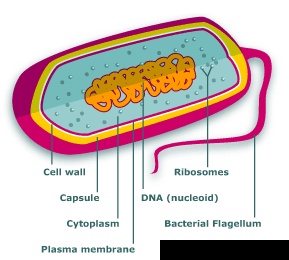
Which places the following in order from largest to smallest?
Eukaryotic cell, prokaryotic cell, virus
Prokaryotic cell, Eukaryotic cell, virus
Virus, Prokaryotic cell, and Eukaryotic cell.
Which cells are considered more complex? Select all that apply
Prokaryotic cells
Eukaryotic cells
Bacteria cells
Plant, Animal, Fungi, Protist cells
I have circular chromosomes instead of linear chromosomes.
Prokaryotic Bacteria cells
Eukaryotic cells
I have linear chromosomes/DNA.
Prokaryotic/bacterial cells
Eukaryotic cells
I have endoplasmic reticulum, mitochondria, chloroplasts, and other membrane bound organelles.
Eukaryotic cells
Prokaryotic cells
I am unicellular only.
Eukaryotic cells
Prokaryotic cells
I can be unicellular or multicellular
Eukaryotic cells
Prokaryotic cells
I can metabolize nutrient/have an active metabolism.
Cells (both prokaryotic and eukaryotic)
Viruses
I have genetic material.
Cells (both prokaryotic and eukaryotic)
Viruses
I have a capsid that protects my genetic material.
Cells (both prokaryotic and eukaryotic)
Viruses
I have a cell membrane, ribosomes, cytoplasm, and DNA.
Cells (both prokaryotic and eukaryotic)
Viruses
I have a nuclear membrane that protects my genetic material.
Prokaryotic cells only
Viruses
Eukaryotic cells only
Projections on the capsid of a virus allow the virus to do which if the following?
Nothing
metabolize nutrients
gain entry into a host cell
control the world
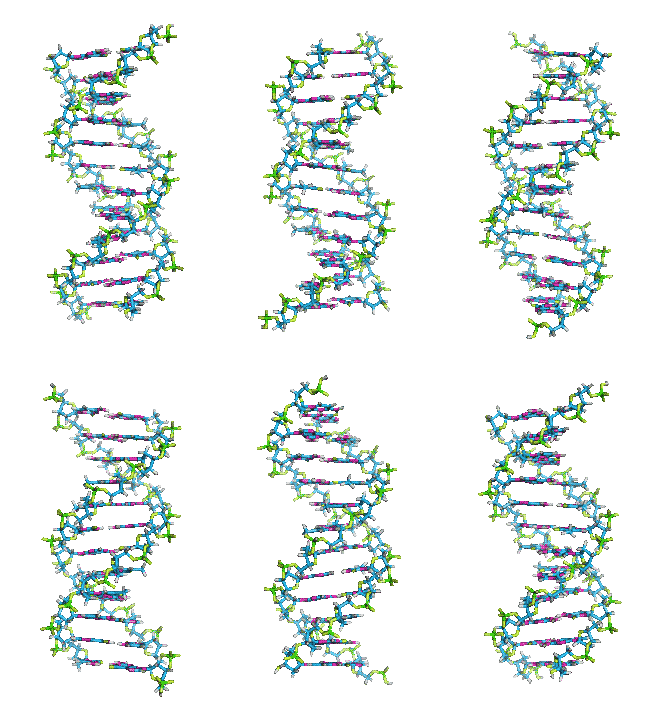

Polymer's split apart to form ________, by __________.
monomers, hydrolysis
monomers, dehydration synthesis
amino acids, hydrolysis
amino acids, dehydration synthesis
What organelle is made up of phospholipids?
nucleus
cell membrane
cytoplasm
I store genetic information and help to transfer it from one generation to the next.
Carbohydrates
Lipids
Proteins
Nucleic Acids
I can provide quick energy for cells.
Carbohydrates
Lipids
Proteins
Nucleic Acids
I make up muscles in the body, and I also help your immune system to function by forming antibodies. I am the biomolecule group that is the most diverse in it functions. So the two listed above are just a few of the roles I might play in an organism.
Carbohydrates
Lipids
Proteins
Nucleic Acids
I catalyze chemical reactions in the body by lowering the amount of energy needed to do that reaction.
Enzymes/Proteins
Phospholipid/lipids
DNA/Nucleic Acid
Glycogen/carbohydrate
I often end in -ase, and I'm often named after what I help to make or break down.
enzyme
carbohydrate
lipid
nucleic acid
Which correctly describes the relationship between lactose and lactase?
Lactose=milk sugar
Lactase=enzyme that helps digest the milk sugar
Lactase=milk sugar
Lactose=enzyme that helps digest the milk sugar
I'm the carbohydrate that makes up cell walls in plants.
Glycogen
Starch
Cellulose
Chitin
I'm the carbohydrate that makes up insect exoskeletons.
Glycogen
Starch
Cellulose
Chitin
I'm the carbohydrate that stores energy on the short term for animals in their liver and muscle cells.
Glycogen
Starch
Cellulose
Chitin
I'm the carbohydrate that stores energy on the short term for plants in their roots, seeds, fruits, and vegetables.
Glycogen
Starch
Cellulose
Chitin
All of the biomolecules have different structures. From this we can infer that they all also have different ___________.
Functions
structures
Antibiodies in the immune system are which type of biomolecule?
Carbohydrates
Lipids
Proteins
Nucleic Acids
The hormones estrogen and testosterone are which biomolecules?
Carbohydrates
Lipids
Proteins
Nucleic Acids
The hormone insulin is a chemical messenger in the body which helps to regulate one's blood sugar. Insulin is which biomolecule?
Carbohydrates
Lipids
Proteins
Nucleic Acids

A cat is an example of a...
Prokaryote
Eukaryote
Both
Neither

A sunflower is an example of a...
Prokaryote
Eukaryote
Both
Neither

E. coli (a bacteria) is an example of a...
Prokaryote
Eukaryote
Both
Neither

A mushroom (a fungi) is an example of a...
Prokaryote
Eukaryote
Both
Neither
Where is DNA found in Prokaryote cell?
Inside of the Nucleus
Inside of the cell (No specific place)

