
 Worksheets
C02 Trends Atomic/Ionic Radii
Total questions: 96
Worksheet time: 2hrs 43mins
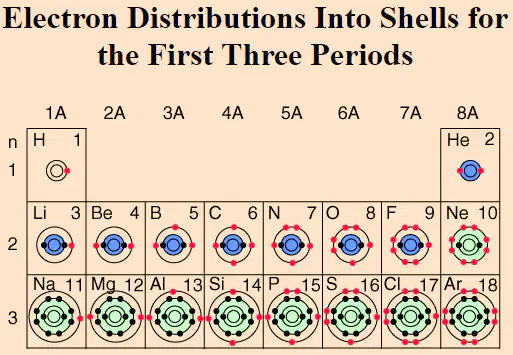
What periodic trend do you notice about valence electrons?
(Mark all that apply.)
Valence electrons increase across a row
Valence electrons increase down a group
Valence electrons decrease across a row
Valence electrons decrease down a row
Valence electrons stay constant down a group.
What is true when moving from left to right across a row in the first 3 periods?
electrons are added only to the valence shell
the number of energy levels increase
the number of energy levels decrease
shielding electrons are added to inner shells.
What is true when moving down a group?
electrons are added only to the valence shell
the number of energy levels increase
the number of energy levels decrease
electrons are added to different electron shells
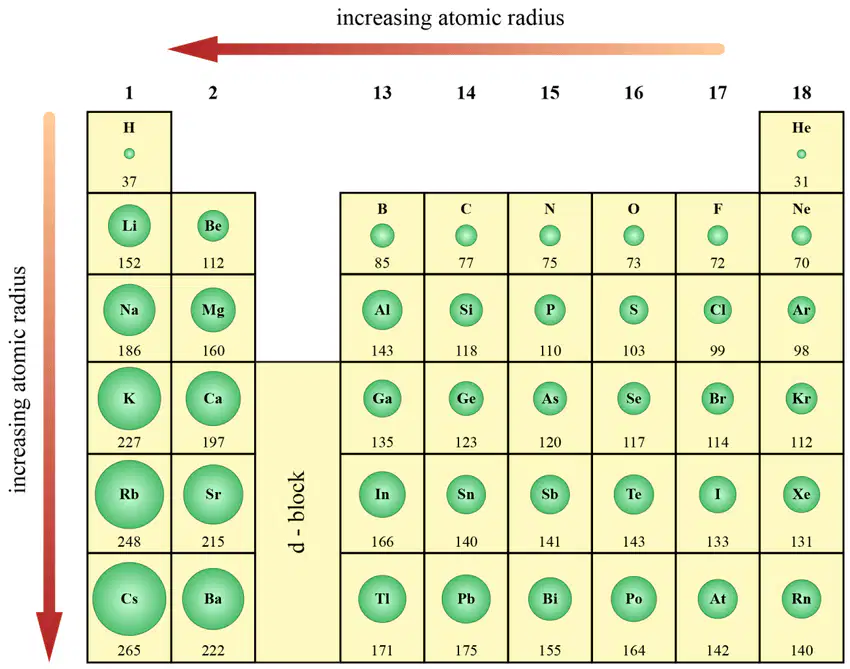
Which of the following correctly describes the GROUP trend for atomic radius?
Atomic radius increases as new electrons are added within the same electron shell
Atomic radius decreases with increasing number of energy levels.
Atomic radius decreases as new electrons are added within the same electron shell
Atomic radius increases with increasing number of energy levels.
Which of the following correctly describes the PERIOD (L to R) trend for atomic radius?
Atomic radius increases as new electrons are added within the same electron shell
Atomic radius decreases with increasing number of energy levels.
Atomic radius decreases as new electrons are added within the same electron shell
Atomic radius increases with increasing number of energy levels.
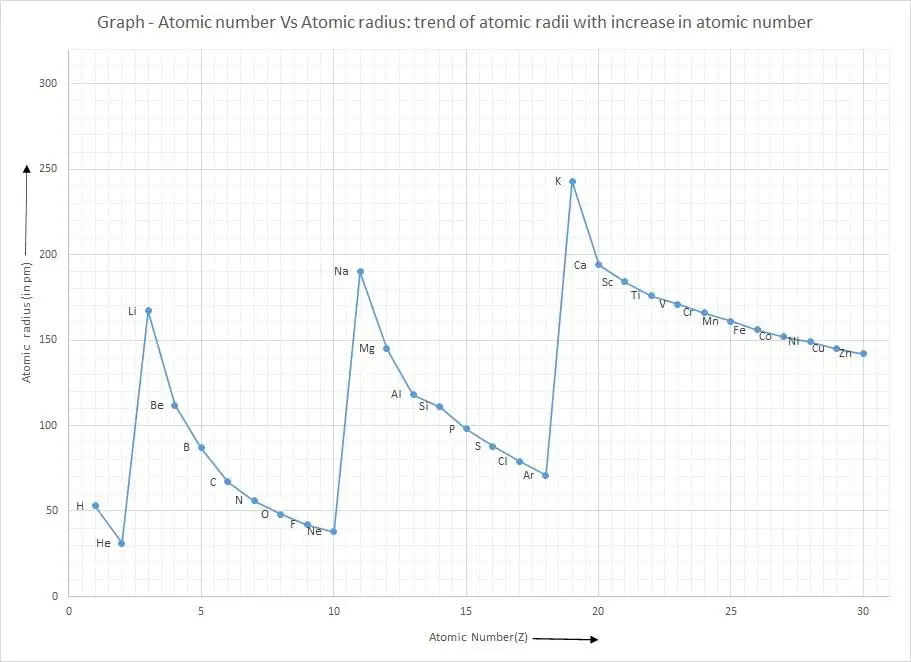
What trend do you notice for the atomic radii shown in the picture?
Select a correct answer
atomic radius decreases as atomic numbers increase
atomic radius decreases from lithium to potassium
atomic radius decreases from lithium to neon
Ionization energy decreases helium to calcium
What trend do you notice for the atomic radii shown in the picture?
Select a correct answer
atomic radius increases as atomic numbers increase
atomic radius increases from lithium to potassium
atomic radius increases from lithium to neon
Ionization energy increases from sodium to zinc
Which of the following will definitely have a larger radius than Zinc?
Gallium
Aluminum
Magnesium
Strontium
As you move across the periodic table atoms tend to get smaller because, ______________.
the atoms have more mass, which increases the gravitational pull
it doesn't, atoms get bigger going from left to right because of the additional protons and electrons that are being added.
effective nuclear charge tends to increase
atoms lose energy levels make them smaller
According to the periodic trend, which periodic group has the smallest atomic radius?
Alkali metals
Halogens
Noble Gases
Transition metals

If the distance between the two nuclei is 100pm, what is the atomic radius?
200 pm
100 pm
50 pm
25 pm
If the distance between the two nuclei is 50pm, what is the atomic radius?
200 pm
100 pm
50 pm
25 pm
If the distance between the two nuclei is 200pm, what is the atomic radius?
200 pm
100 pm
50 pm
25 pm
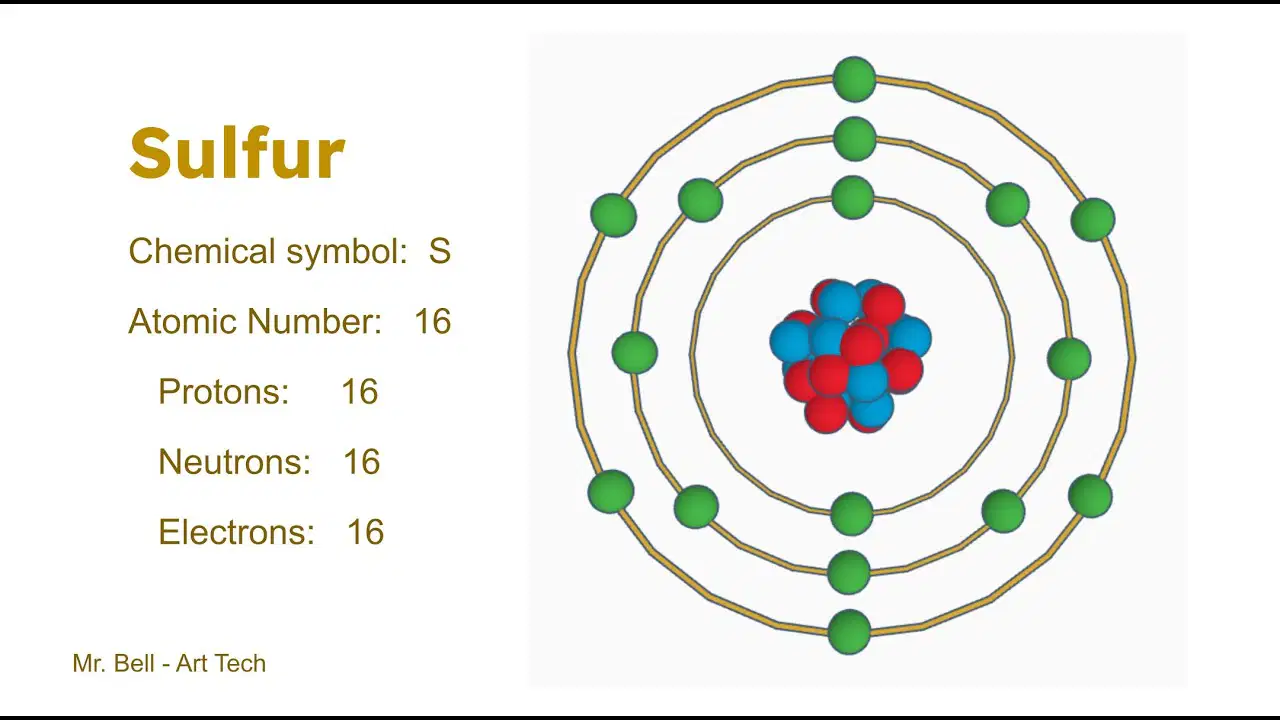
How many shielding electrons does sulfur have?
(a)
How many protons does sulfur have?
(a)
What is sulfur's effective nuclear charge (Zeff)
(a)

Silicon has an atomic number of 14, what is it's effective nuclear charge?
+14
+4
+10
+7
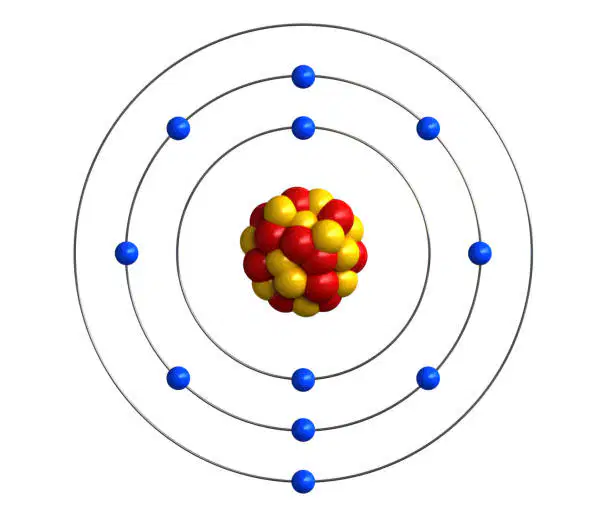
What is the effective nuclear charge for sodium?
+1
+11
+10
+2
How many shielding electrons does sodium (Na) have?
1
2
10
11
8
When looking at elements in the same period, why does increasing the effective nuclear charge make the atoms smaller?
It increases the force of attraction between the protons thus pulling the protons closer together and making the atom smaller
It increases the force of attraction on the valence electrons thus pulling the electrons closer to the nucleus and making the atom smaller
If reduces the number of main energy levels or shells thus making the atom smaller
It increases the force of repulsion the electrons have on each other thus causing the electrons to spread out and making the atom smaller
Which of the following is the smallest?
Na+
K+
Rb+
Fr+
Which of the following is the smallest?
Na+
Mg2+
Al3+
Which of the following is smallest?
Cl-
S2−
P3−
Which of the following is smaller?
the anion (negative ion)
parent atom
Which of the following is smaller?
the cation (positive ion)
parent atom
Which of the following is smaller?
Sr2+
Sr
Which of the following is smaller?
O
O2−
Why are cations smaller than their parent atoms?
when cations form they gain protons which increases the effective nuclear charge which increases the force of attraction of the nucleus on the electrons causing the electron cloud to shrink
when cations form they lose all of the valence electrons which leaves the valence shell empty. The next lower shell (which is smaller) becomes the new outer shell.
Why are anions larger than their parent atoms?
when anions form they gain an additional outer shell thus making them larger
when anions form they gain electrons which increases the repulsion force between the electrons causing the electron cloud to expand.
The electron cloud is ... (pick all that apply)
mostly empty space
mostly electrons with little empty space
free to expand and contract
static (does NOT change its size)
Which of the following decreases across a row from left to right? (Mark all that apply)
ionic radii
atomic radii
electronegativity
ionization energy
Which of the following increases down a group? (Mark all that apply)
ionic radii
atomic radii
electronegativity
ionization energy
Put in order from biggest to smallest (decreasing size)
Calcium
Iron
Zinc
Bromine
Krypton
Atomic radii trends is . . . .
generally decrease along each period of the table, from the alkali metals to the noble gases; and increase down each group.
generally increase along each period of the table, from the alkali metals to the noble gases; and increase down each group.
generally increase along each period of the table, from the alkali metals to the noble gases; and decrease down each group.
generally decrease along each period of the table, from the alkali metals to the noble gases; and decrease down each group.
Put these in order of decreasing size (largest to smallest) (Left to Right)
B
C
N
O
F
Atomic radii (a) as you go from left to right.
Increases or decreases?
Atomic radii (a) as you go DOWN a group
Increases or decreases?

Put these in order of predicted INCREASING size (smallest to largest) (Left to Right)
Cs
Rb
K
Na
Li

Which one is predicted to be bigger,
O, S, Se or Te?
(a)
Which one is predicted to be smallest,
O, S, Se or Te?
(a)

In the following configuration, which electrons are the core electrons?
1s2 2s2 2p6 3s2 3p4
Hint: 1s = 1st shell, 2s & 2p = 2nd shell, 3s & 3p = 3rd shell
1s2 2s2 2p6
3s2 3p4
1s2 2s2
2s2 2p6 3s2 3p4
In the following configuration, which electrons are the valence electrons?
1s2 2s2 2p6 3s2 3p4
Hint: 1s = 1st shell, 2s & 2p = 2nd shell, 3s & 3p = 3rd shell
1s2
3s2 3p4
1s2 2s23s2
2s2 2p6 3s2 3p4
2s2 2p6
How many shielding electrons does carbon have? (hint: find the total number of electrons and subtract the valence electrons)
6
Which of these represents a group?
Which of these represents a period?
Using the periodic trends.
Which element is bigger?
sodium, Na
sulfur, S
can't tell using just the trends
Using the periodic trends.
Which element is bigger?
carbon, C
fluorine, F
can't tell using just the trends
Using the periodic trends.
Which element is bigger?
sodium, Na
potassium, K
can't tell using just the trends
Using the periodic trends.
Which element is bigger?
magnesium, Mg
potassium, K
can't tell using just the trends
Using the periodic trends.
Which element is bigger?
magnesium, Mg
lithium, Li
can't tell using just the trends
According to periodic trends which part of the periodic table contains the BIGGEST atoms (largest radius)?
According to periodic trends which part of the periodic table contains the SMALLEST atoms (smallest radius)?
Select all of the shielding electrons.
Select all of the valence electrons.

According to Coulomb's Law, OPPOSITE charges .....
attract
repel
neither
According to Coulomb's Law, LIKE charges .....
attract
repel
neither
According to Coulomb's Law, BIGGER charges means...
stronger force
weaker force
no change
According to Coulomb's Law, SMALLER charges means...
stronger force
weaker force
no change
According to Coulomb's Law, charges FARTHER apart means...
stronger force
weaker force
no change
According to Coulomb's Law, charges CLOSER together means...
stronger force
weaker force
no change
Click on the end of the period with the
Higher Zeff
Click on the end of the period with the
Bigger Atoms
Click on the end of the period with the
Smaller Atoms
Click on the end of the period with the
Lower Zeff
Which one has a larger radius, the atom or the ion? (Click on it.)
Which one is bigger, the atom or the ion?
Click on it.
How does Zeff change down a group?
Zeff increases down a group
Zeff decreases down a group
Zeff stays relatively constant down a group
Choose the element with the largest atomic radius.
The atomic radius (a) across a row from left to right and (b) down a group.
Which of the following element(s) have HIGHER atomic radii than Selenium?
Oxygen
Sulfur
Tellurium
Which of the following element(s) have LOWER atomic radii than Selenium?
Oxygen
Sulfur
Tellurium

Which would be a correct title for this diagram?
Electronegativity trends
Atomic Radius trends
Atomic Mass trends
Which of the following atoms has the largest atomic radius?
nitrogen
phosphorus
potassium
cesium
What causes the shielding effect inside an atom?
the electrons between the nucleus and the valence shell
the extra neutrons in the nucleus
the extra protons in the nucleus
the valence electrons only

What property is being measured in this diagram?
Density
Electronegativity
Atomic Radius
Atomic Mass
Ions are formed when atoms gain or lose ___.
electrons
protons
neutrons
atomic mass
How do scientists measure the size of atoms?
by counting energy levels
measuring the distance between 2 nuclei
measuring the nucleus
using the atomic number

In group 2, which of these elements has the largest atomic radius?
Ba
Mg
Ca
La

Which of these halogens has the largest atomic radius?
fluorine, F
chlorine, Cl
bromine, Br
iodine, I
As you move across a period, what happens to the nuclear charge in the atoms?
It increases because more protons are added.
It decreases because protons are taken away.
It stays the same.
When an atom loses an electron, the size will
be greater
decrease then increase back to normal size
have no change
be smaller
When atom gains an electron, the size will
increase
decrease
have no change
increase then decrease back to normal size
Which end contains BIGGER atoms?
Which end contains SMALLER atoms?
What does Zeff stand for? (3 words)
(a)
Label the arrows for the correct trends for
Atomic Radius
If the force of attraction between the nucleus and valence electrons INCREASES what is the effect on the size of the atom?
atomic radius decreases
atomic radius increases
no effect
If the force of attraction between the nucleus and valence electrons DECREASES what is the effect on the size of the atom?
atomic radius decreases
atomic radius increases
no effect

