
 Worksheets
Unit 2: American Revolution Test
Total questions: 86
Worksheet time: 44mins
The Sugar Act was a law passed by the British Parliament. What did the act do?
It placed a tax on sugar and molasses imported into the American colonies.
It banned the import of tea into the colonies.
It required colonists to house British soldiers.
It abolished slavery in the colonies.
The Stamp Act was a law passed by the British Parliament in 1765. What was the main colonial response to the Stamp Act, and how did the views of the colonists differ from those of the British Parliament?
Colonists protested and boycotted British goods, while Parliament believed the tax was fair to pay for colonial defense.
Colonists supported the tax, while Parliament thought it was unnecessary.
Colonists ignored the law, while Parliament immediately repealed it.
Colonists welcomed the act, while Parliament was against it.
The Quartering Acts required American colonists to provide housing and supplies for British soldiers. How did the colonists and the British Parliament view these acts?
Colonists opposed the acts as unfair, while Parliament saw them as necessary for maintaining order.
Both colonists and Parliament fully supported the acts.
Colonists wanted more soldiers, while Parliament wanted fewer.
Parliament opposed the acts, but colonists supported them.
The Townshend Acts were a series of laws passed by the British government. What happened when the acts were repealed and how did people respond?
The acts were mostly repealed except for the tax on tea, leading to continued protests and boycotts by colonists.
The acts were fully enforced, resulting in peace between Britain and the colonies.
The acts were never repealed, and colonists accepted the taxes without protest.
The acts were repealed and all taxes were removed, ending all colonial resistance.
Which statement best summarizes the roles of John Adams and Paul Revere in the Boston Massacre?
John Adams defended the British soldiers in court, and Paul Revere spread propaganda about the Boston Massacre.
John Adams led the protest against the British, and Paul Revere was a judge at the trial.
Paul Revere defended the British soldiers, and John Adams created propaganda about the event.
John Adams and Paul Revere both served as witnesses for the British soldiers.
The Tea Act of 1773 was significant because it:
Allowed the British East India Company to sell tea directly to the colonies.
Gave colonists the right to vote in British Parliament, which they supported enthusiastically.
Banned all tea imports to the American colonies, causing economic hardship for British merchants.
Required colonists to grow their own tea, which they refused to do.
The Boston Tea Party involved colonists in Boston dumping tea into the harbor, leading to a strong response from the King. What was the impact of this event?
It led to harsh British laws known as the Intolerable Acts.
It resulted in immediate independence for the colonies.
It caused the King to lower taxes on tea.
It made the colonists support British rule more strongly.
The Intolerable Acts were a series of laws passed by the British Parliament in response to colonial protests. What was the main colonial reaction to these acts?
They viewed them as unfair and a violation of their rights.
They welcomed the acts as necessary for order.
They ignored the acts completely.
They believed the acts would improve trade.
Mercy Warren Otis played which role leading up to the American Revolution?
She wrote plays supporting the Patriot cause.
She led British troops in battle.
She was a Loyalist governor.
She signed the Declaration of Independence.
Samuel Adams was:
an American revolutionary leader and politician
a famous British general
the inventor of the steam engine
a French philosopher
Crispus Attucks was:
first person killed in the Boston Massacre
a famous British general during the American Revolution
the author of the Declaration of Independence
a leader of the Continental Congress
Paul Revere was:
an American patriot known for his midnight ride during the American Revolution
a famous British general during the American Revolution
the first President of the United States
an inventor of the steam engine
George Washington was:
Commander of the Continental Army
a famous British king
an explorer who discovered America
a French military leader
Who was the King of England during the American Revolution
King Phillip
King George I
King George II
King George III
Who was appointed governor of Massachusetts?
William Howe
Thomas Gage
George Washington
Thomas Jefferson
General William Howe played a significant role in the American Revolution as:
A British general who led major campaigns against the American forces
An American diplomat who negotiated with France
A leader of the Continental Congress
A French general who aided the Americans
Thomas Paine made significant contributions to the American Revolution by:
writing Common Sense
leading the Continental Army in major battles
serving as the primary author of the Declaration of Independence
negotiating the Treaty of Paris with Britain
James Armistead's significance in the American Revolution was that he:
was a spy for the Continental Army.
led the Continental Army in major battles.
signed the Declaration of Independence.
was a British general who surrendered at Yorktown.
The role of Marquis de LaFayette in the American Revolution was:
He provided military leadership and support to the American cause.
He led the British forces against the Americans.
He was a French king who declared war on America.
He negotiated the Treaty of Paris for the British.
Baron von Steubon's contributions to the American Revolution included:
Training and disciplining the Continental Army at Valley Forge
Negotiating the Treaty of Paris
Leading the Boston Tea Party
Serving as the first President of the United States
The Battle of Bunker Hill was a significant early battle in the American Revolutionary War. What was the outcome of the battle?
The British won the battle but suffered heavy losses.
The Americans won and forced the British to retreat.
The battle ended in a stalemate with no clear winner.
The French joined the war after this battle.
The Battles of Lexington and Concord marked the beginning of the American Revolutionary War. What is the event known as the "Shot Heard Around the World"?
The first shot fired at Lexington, starting the battles
The signing of the Declaration of Independence
The surrender of British troops at Yorktown
The Boston Tea Party
The 1st Continental Congress resulted in which four outcomes decided by the delegates?
A petition to King George III, a boycott of British goods, formation of local militias, and agreement to meet again if demands were not met.
Declaration of Independence, formation of the Continental Army, signing of the Treaty of Paris, and creation of the Bill of Rights.
Imposing new taxes on the colonies, dissolving colonial assemblies, appointing a royal governor, and establishing a new currency.
Immediate declaration of war, alliance with France, abolition of slavery, and drafting a new constitution.
The Second Continental Congress offered the Olive Branch Petition to King George III in an attempt to avoid war. What was the King's response?
He rejected the petition
He accepted the petition
He ignored the petition and appointed John Adams as the leader of the Colonies
He negotiated peace
At the Battle of Dorchester Heights. At the end of the engagement what did General Howe do?
At the end of the Battle of Dorchester Heights, General Howe decided to evacuate Boston.
At the end of the Battle of Dorchester Heights, General Howe surrendered to Washington.
At the end of the Battle of Dorchester Heights, General Howe launched a counterattack.
At the end of the Battle of Dorchester Heights, General Howe requested reinforcements from England.
Which of the following best describes Common Sense?
A pamphlet written by Thomas Paine advocating independence
A novel written by Benjamin Franklin about colonial life.
A speech given by George Washington urging loyalty to Britain.
A law passed by the British Parliament to tax the colonies.
After the Declaration of Independence, colonists had to choose between two sides, and this choice impacted their lives significantly. What were the sides and what was the impact of choosing a side?
The sides were Patriots and Loyalists; choosing a side could lead to social, economic, and personal consequences.
The sides were Federalists and Anti-Federalists; choosing a side determined voting rights.
The sides were Democrats and Republicans; choosing a side affected tax rates.
The sides were Union and Confederacy; choosing a side led to military service.
The groups that were left out of the Declaration of Independence include:
Women, enslaved people, and Native Americans
Landowners, merchants, and farmers
British loyalists, French allies, and Spanish settlers
Colonial governors, soldiers, and artisans
The role of African Americans in the war was:
They served as soldiers, laborers, and support staff in both the British and Continental Army
They led all major battles as generals.
They were not involved in the war at all.
They only worked as spies for the Continental Army
The conditions of a soldier in war were:
harsh and dangerous
luxurious and comfortable
peaceful and relaxing
safe and enjoyable
The Hessians were:
German soldiers hired by the British during the American Revolution.
French allies of the American colonists.
Native American warriors allied with the British.
British naval officers.
The Battle of Trenton was significant for which of the following reasons?
It was a surprise attack by George Washington's army that resulted in an important American victory.
It marked the end of the Revolutionary War with a British surrender.
It was the first battle fought entirely at sea during the war.
It was a major defeat for the Continental Army, forcing them to retreat.
The Battle of Saratoga was seen as the turning point of the Revolutionary War because:
It convinced France to support the American cause, boosting morale and resources.
It marked the end of the war with a British victory.
It resulted in the capture of George Washington by the British.
It led to the immediate surrender of all British forces in America.
Marquis de Lafayette and Baron Friedrich von Steuben were important figures in the war because:
They provided crucial military leadership and training to the Continental Army.
They negotiated peace treaties with Britain.
They led the British forces against the Americans.
They financed the entire war effort for the colonies.
What was the result of the Battle of Yorktown and what was James Armistead's role?
The British surrendered, ending major fighting, and James Armistead served as a spy for the Patriots.
The Patriots retreated, and James Armistead led a cavalry charge.
The French surrendered, and James Armistead was a British general.
The battle ended in a stalemate, and James Armistead was a messenger for the British.
The Treaty of Paris of 1783 ended the Revolutionary War and determined the division of North America. Which of the following best describes the terms and impact of this treaty?
It recognized American independence, set the boundaries of the United States, and divided North America between the U.S., Britain, and Spain
It established a trade agreement between the U.S. and France, but did not change any territorial boundaries in North America.
It allowed Britain to keep control of all its former colonies in North America and did not recognize American independence.
It resulted in the United States becoming a colony of Spain and losing all its land east of the Mississippi River.
Which battle was a turning point in the American Revolution because it led to French support for the Americans?
Battle of Bunker Hill
Battle of Saratoga
Battle of Yorktown
Battle of Trenton
Which battle is considered the first battle of the American Revolution?
Battle of Yorktown
Battle of Bunker Hill
Battle of Lexington and Concord
Battle of Saratoga
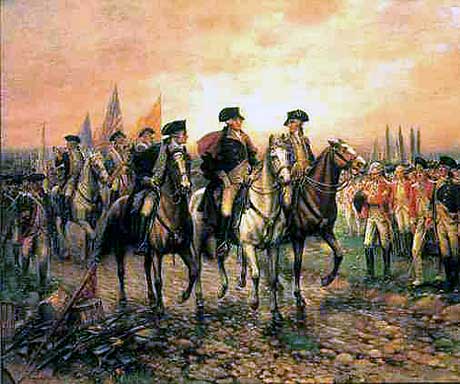

What year was the Treaty of Paris signed, ending the Revolutionary War?
1776
1781
1783
1791
What was the significance of the Treaty of Paris 1783?
It ended the French and Indian War.
It recognized American independence from Britain.
It established the League of Nations.
It ended the War of 1812.
The Treaty of Paris contained all of the following provisions except
British recognition of the United States as an independent country
the Mississippi River was the western boundary of the country
a forgiving of all colonial debts owed to Britain
the United States promised to honor land claims by Loyalists
Many African Americans felt encouraged during the Revolutionary War because the Declaration of Independence said:
the Patriots would win the war
all men are created equal
slavery would be illegal
the British were coming
free African Americans can fight in the war
African Americans fought for the British in higher numbers because
they were offered reduced time as slaves
they were paid more
they were treated more fairly
they were offered their freedom at the end of the war
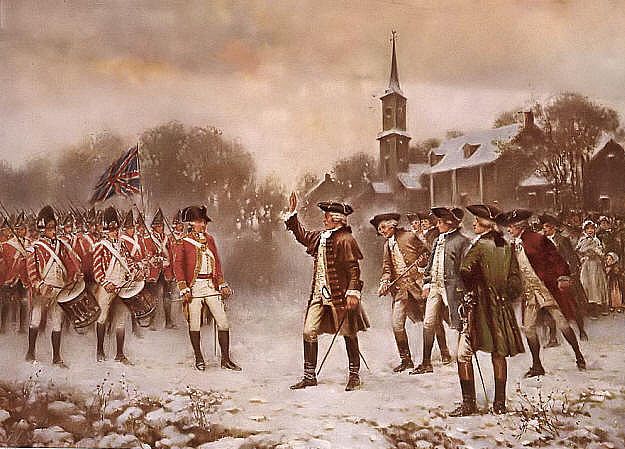

What impact does Thomas Paine have on the American Revolution?
he persuades the colonists to rebel
he persuades the colonists to remian loyal
he persuades the colonists to immigrate to England
What was the main purpose of the Sugar Act of 1764?
To ban the import of tea into the colonies
To raise revenue from the American colonies by taxing sugar and molasses imports
To encourage colonists to grow their own sugar cane
To provide free sugar to British soldiers
What was the main purpose of the Stamp Act passed by the British Parliament in 1765?
To raise revenue from the American colonies by requiring them to purchase stamps for legal documents and printed materials
To provide free land to settlers in the colonies
To ban the import of tea into the colonies
To establish a new colonial government
How did the colonists respond to the Stamp Act?
They paid the tax and wrote thank you letters to Parliament
They moved back to Britain
They organized boycotts and formed groups like the Sons of Liberty to oppose it
They accepted the tax without protest
What was the main purpose of the Townshend Acts passed by the British Parliament in 1767?
To raise revenue from the American colonies by taxing imports such as glass, lead, paint, paper, and tea.
To grant independence to the American colonies.
To encourage trade between Britain and France.
To abolish slavery in the colonies.
How did American colonists respond to the Townshend Acts?
They organized boycotts of British goods and protested the new taxes.
They welcomed the taxes as fair and necessary.
They moved to Britain in protest.
They immediately paid the taxes without complaint.
Which of the following items was NOT taxed under the Townshend Acts?
Glass
Molasses
Paint
Tea
What event is commonly referred to as the Boston Massacre?
The first battle of the American Revolution at Lexington and Concord.
The signing of the Declaration of Independence.
The destruction of British tea in Boston Harbor by colonists.
The killing of five colonists by British soldiers in Boston on March 5, 1770.
Who was the lawyer that defended the British soldiers accused in the Boston Massacre trial?
Samuel Adams
Benjamin Franklin
George Washington
John Adams
What was the main purpose of the Tea Act of 1773?
To encourage colonists to grow their own tea
To increase the price of tea in Britain
To ban the import of tea into the colonies
To grant the British East India Company a monopoly on tea sales in the American colonies
How did the colonists respond to the Tea Act?
They welcomed the cheaper tea and increased their purchases
They stopped drinking tea altogether
They organized the Boston Tea Party and dumped British tea into the harbor
They sent a letter of thanks to the British Parliament
Which of the following was a direct consequence of the Tea Act?
The election of George Washington as President
The repeal of the Stamp Act
The passage of the Intolerable Acts by the British Parliament
The signing of the Treaty of Paris
Which group was primarily responsible for organizing the Boston Tea Party?
Daughters of the American Revolution
British Parliament
Continental Congress
Sons of Liberty
What was the main reason colonists dumped tea into Boston Harbor during the Boston Tea Party?
To celebrate a British victory
To avoid a tea shortage
To protest the tax on tea imposed by the British government
To support the British East India Company
What disguise did the participants of the Boston Tea Party use during the event?
They wore colonial governor robes
They dressed as Mohawk Native Americans
They wore British military uniforms
They dressed as merchants
What was the main purpose of Paul Revere's midnight ride?
To warn the colonial militia that British troops were approaching
To deliver a message to King George III
To organize a tea party in Boston
To recruit soldiers for the Continental Army
What was the main reason British troops marched to Lexington and Concord in April 1775?
To negotiate peace with the colonists
To arrest colonial leaders and seize colonial weapons
To build new forts in the area
To collect taxes from the colonists
Which colonial figure is famous for his midnight ride to warn that the British were coming before the battles of Lexington and Concord?
Samuel Adams
Paul Revere
George Washington
Benjamin Franklin
What was the outcome of the battles of Lexington and Concord for the British troops?
They captured all colonial leaders and weapons
They suffered heavy losses and were forced to retreat to Boston
They won a decisive victory and ended the rebellion
They formed an alliance with the colonists
Why is the "shot heard around the world" considered significant in world history?
It marked the beginning of the American Revolutionary War, inspiring other revolutions worldwide.
It was the last battle of the American Revolution.
It ended the American Revolution immediately.
It was the first use of gunpowder in battle.
What was the main outcome of the Battle of Trenton for the Continental Army?
It led to the immediate surrender of British forces in New York.
It boosted morale and encouraged more soldiers to reenlist.
It caused the French to withdraw their support.
It resulted in a major defeat and loss of supplies.
Who led the surprise attack on the Hessian forces at Trenton on December 26, 1776?
George Washington
John Adams
Benedict Arnold
Thomas Jefferson
Which of the following best describes the conditions faced by the Continental Army at Valley Forge during the winter of 1777-1778?
Harsh cold, lack of food and supplies, and widespread disease
Celebrations and festivities throughout the winter
Comfortable housing and abundant resources
Continuous battles with the British
Who played a significant role in training and disciplining the Continental Army at Valley Forge, greatly improving their effectiveness?
Baron von Steuben
Thomas Jefferson
Benjamin Franklin
Paul Revere
What was the main outcome of the Continental Army's encampment at Valley Forge?
The war ended immediately after the winter
The army disbanded due to poor conditions
The army emerged stronger, better trained, and more unified
The British captured the camp
What was the main colonial response to the Intolerable Acts?
They accepted the laws and paid the required taxes.
They organized the First Continental Congress to coordinate a response.
They moved to Canada to avoid the new laws.
They asked King George III for more British soldiers.
Why did the British government pass the Intolerable Acts?
To punish the Massachusetts colonists for the Boston Tea Party
To reward the colonies for their loyalty
To encourage trade between Britain and the colonies
To end the French and Indian War
Who was the primary author of the Declaration of Independence?
John Adams
Benjamin Franklin
George Washington
Thomas Jefferson
On what date was the Declaration of Independence officially adopted by the Second Continental Congress?
July 4, 1776
July 2, 1776
August 2, 1776
September 17, 1787
Which of the following is a key idea expressed in the Declaration of Independence?
All men are created equal and have unalienable rights
The king should have absolute power
Colonies must pay taxes without representation
Slavery should be expanded in the colonies
According to the Declaration of Independence, what is the primary purpose of government?
To collect taxes for the king
To enforce religious laws
To expand the territory of the nation
To protect the rights of the people
Which grievance against King George III is listed in the Declaration of Independence?
Imposing taxes on the colonists without their consent
Granting the colonies full independence
Allowing colonists to elect their own king
Providing free trade with other nations
Which all-African American regiment is most famous for its service in the Revolutionary War?
The 1st Rhode Island Regiment
The Harlem Hellfighters
The Tuskegee Airmen
The Buffalo Soldiers
What was a significant reason African Americans joined the Continental Army during the Revolutionary War?
They were required to serve by law
They wanted to support the British monarchy
They were offered freedom from enslavement
They were promised land in the West
What was a major contribution of the 1st Rhode Island Regiment during the American Revolution?
They negotiated the Treaty of Paris
They fought bravely at the Battle of Yorktown
They wrote the Declaration of Independence
They led the Boston Tea Party
Who was Colonel Tye during the American Revolution?
The author of the Declaration of Independence
A Patriot general from Virginia
A Loyalist leader and former enslaved African American who fought for the British
A French officer who aided the Continental Army
What was one major contribution of Colonel Tye to the British cause in the American Revolution?
He served as a spy for George Washington
He commanded the Continental Army at Yorktown
He negotiated the Treaty of Paris
He led raids against Patriot forces and disrupted supply lines in New Jersey
Why did Colonel Tye and other enslaved people join the British during the American Revolution?
They wanted to support the Continental Congress
They were forced to join by colonial governors
The Patriots offered them land in exchange for service
The British promised freedom to enslaved people who fought for them

