Wayground logo

Free Printable Worksheets

Font size

S
M
L
XL
Worksheets

atoms ions isotopes assessment

Total questions: 35

Worksheet time: 24mins

Name
Class
Date
1.
Adding or subtracting neutrons (charge = 0, mass = 1) makes the element change into an...
a)
ion
b)
mixture
c)
isotope
d)
neutral atom
2.
The atomic number is equal to _.
a)
the number of protons and electrons
b)
the number of neutrons only
c)
the total number of protons and neutrons
d)
the number of protons neutrons and electrons
3.
What is the charge on a lithium atom that looses 1 electron?
a)
+1
b)
0
c)
-1
d)
-2
4.
Is the element shown in this image an ion, isotope or normal atom?
a)
atom
b)
isotope
c)
cation (+ ion)
d)
anion (- ion)
5.
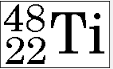
How many protons does this isotope of titanium have? Hint titanium has an atomic number of 22.
a)
48
b)
22
c)
26
d)
70
6.
What element is this?  What is the mass number of this atom?
a)
sodium, 23
b)
magnesium, 23
c)
magnesium, 12
d)
sodium, 11
7.
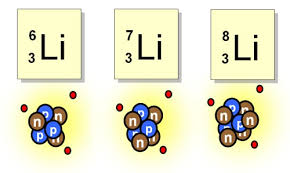
Which atom has  4 neutrons?
a)
Li-6
b)
Li-7
c)
Li-8
d)
they have the same # of neutrons
8.
What is the atomic number of Fe? (click to see image)
a)
26
b)
55.845
c)
56
d)
None of these
9.
How many neutrons does B (Boron) contain?
a)
5
b)
11
c)
6
d)
10.811
10.
How many neutrons does B (Boron) contain?
a)
5
b)
11
c)
6
d)
10.811
11.
Carbon has an atomic number of 6 and an atomic mass of 12. Which elements are considered isotopes of carbon?
a)
Carbon-12
b)
Carbon-13
c)
Carbon-14
d)
Both Carbon-13 and Carbon-14
12.
How many neutrons does Lithium have (atomic mass = 6.94)
a)
3
b)
4
c)
6.94
d)
24.94
13.

An atom with the same number of protons and electrons (no charge) and the expected atomic mass or number of neutrons from the periodic table.

a)

Neutral/Normal Atom

b)

Ion

c)

Isotope

14.

An atom that has gained or lost electrons in an attempt to become stable/bond with another atom.

a)

Normal/Neutral Atom

b)

Ion

c)

Isotope

15.

A negatively charged ion that has gained electrons to satisfy the octet rule (metals do this)

a)

Anion

b)

Cation

c)

Neutral Atom

d)

Isotope

16.

A positively charged ion that has lost electrons to satisfy the octet rule (non-metals do this)

a)

Anion

b)

Cation

c)

Neutral Atom

d)

Isotope

17.

Atoms of the same element that have different mass than expected because they have a different number of neutrons.

a)

Neutral Atom

b)

Ion

c)

Isotope

d)

Cation

18.

If an atom has 9 protons and 10 electrons it has a charge of ____.

a)

0

b)

-1

c)

+1

d)

-2

19.

If an atom has 4 protons and 2 electrons it has a charge of ____.

a)

0

b)

-2

c)

+2

d)

+1

20.

If an atom has a charge of +3 and an atomic number of 5 it should have _______ electrons.

a)

1

b)

2

c)

3

d)

4

21.

If an atom has a charge of -2 and an atomic number of 16 it should have _______ electrons.

a)

14

b)

16

c)

18

d)

20

22.

If an atom has a charge of 0 (neutral) and an atomic number of 8 it should have ____ electrons.

a)

0

b)

8

c)

7

d)

9

23.

Which of these determines the identity of an atom?

a)

proton

b)

neutron

c)

valence electron

d)

protons and neutrons

24.

How do you determine how many Neutrons an atom has?

a)

Protons + Valence Electrons

b)

Atomic Mass - Atomic Number

c)

Atomic Mass + Atomic Number

d)

Protons + Electrons

25.

What do we call a substance that consists of only one type of atom?

a)

Atom

b)

Element

c)

Compound

d)

Substance

26.
What is the atomic number for an element with three protons?
a)
2
b)
1
c)
3
d)
6
27.
If an atom has 12 positively charged subatomic particles, which of the following must it also have to be considered a neutral atom?
a)
12 neutrons
b)
12 electrons
c)
12 protons
d)
24 protons and neutrons
28.
What is the mass number?
a)
The average atomic mass
b)
the number of protons and neutrons in the nucleus
c)
the number of protons in the nucleus
d)
the number of protons and electrons in the nucleus
29.
What is the atomic number of Fe? (click to see image)
a)
26
b)
55.845
c)
56
d)
None of these
30.
Two atoms of different elements will definitely have different numbers_____
a)
Nuclei
b)
Protons
c)
Neutrons
d)
Electrons
31.
Although carbon's three isotopes are carbon-12, carbon-13, and carbon-14, its average atomic mass is 12.01 because
a)
Carbon-12 is the heaviest isotope
b)
Carbon-12 is the most useful to humans
c)
Carbon-12 is the most common isotope
32.
Isotopes are atoms that have different
a)
Mass numbers
b)
Element names
c)
Atomic Numbers
33.
Two atoms that have different numbers of protons are 
a)
Different ions
b)
Different isotopes
c)
Different elements
34.
Which phrase describes two atoms that are isotopes
a)
Same mass number, same atomic number
b)
Same mass number, different atomic number
c)
Different mass number, same atomic number
d)
Different mass number, different atomic number
35.
An ion that has a negative charge is formed when an atom 
a)
Loses neutrons
b)
Loses electrons
c)
Gains neutrons
d)
Gains electrons