
 Worksheets
Gene Expression
Total questions: 40
Worksheet time: 24mins
Central Dogma
through transcription, DNA creates mRNA
through translation, mRNA creates polypeptides
through translation, DNA creates mRNA
through folding, polypeptides create proteins
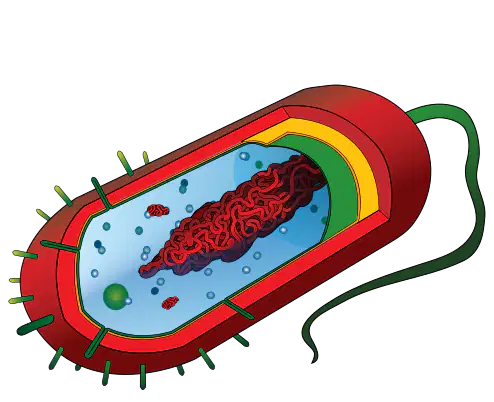
In a prokaryotic cell, transcription takes place in the
nucleoid
nucleus
cytoplasm
ribosome
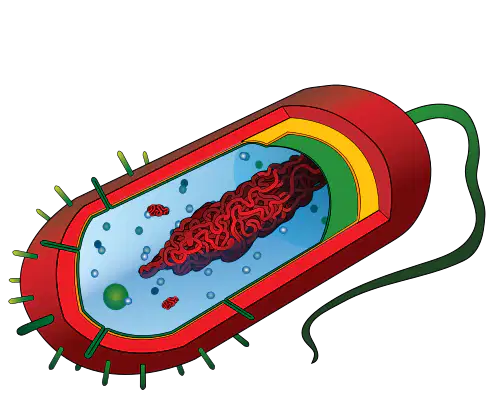
In a prokaryote, transcription takes place in the same place as translation
True
False
Translation uses mRNA to produce polypeptides
True
False
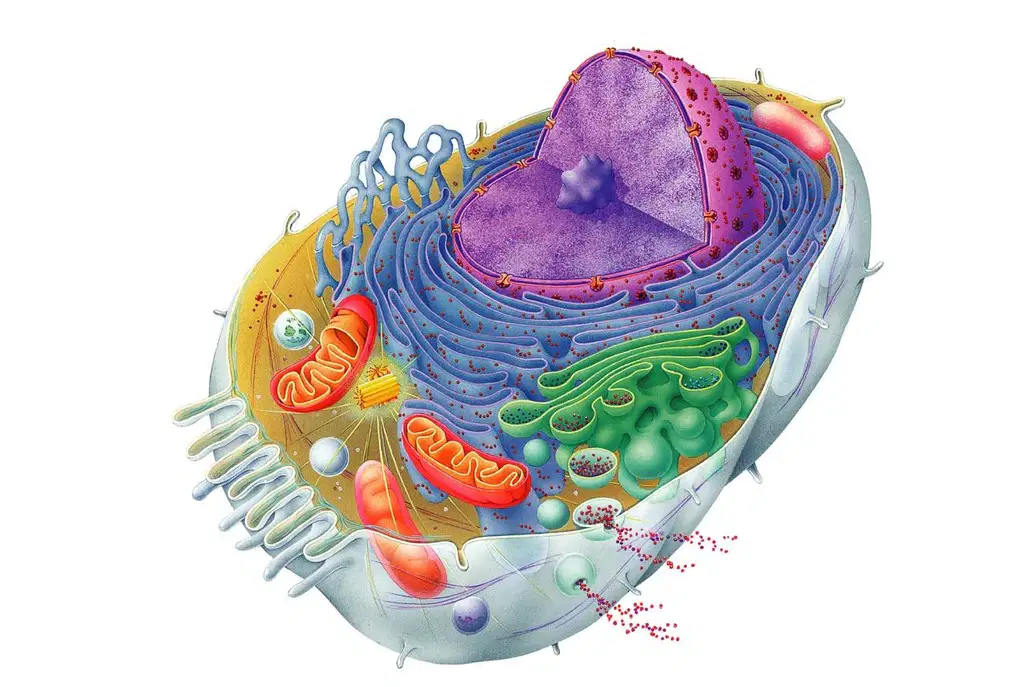
Which processes take place in the nucleus of a eukaryote
RNA modification
translation
protein production
transcription
In both prokaryotes and eukaryotes, translation takes place in the cytoplasmic region
True
False
What organelle is responsible for protein production?
nucleus
ribosome
cell membrane
nucleoid
Which are exceptions to the central dogma?
RNA goes through reverse transcription in retroviruses
RNA may be used to create more copies of DNA
DNA creates tRNA through transcription
DNA creates tRNA through translation
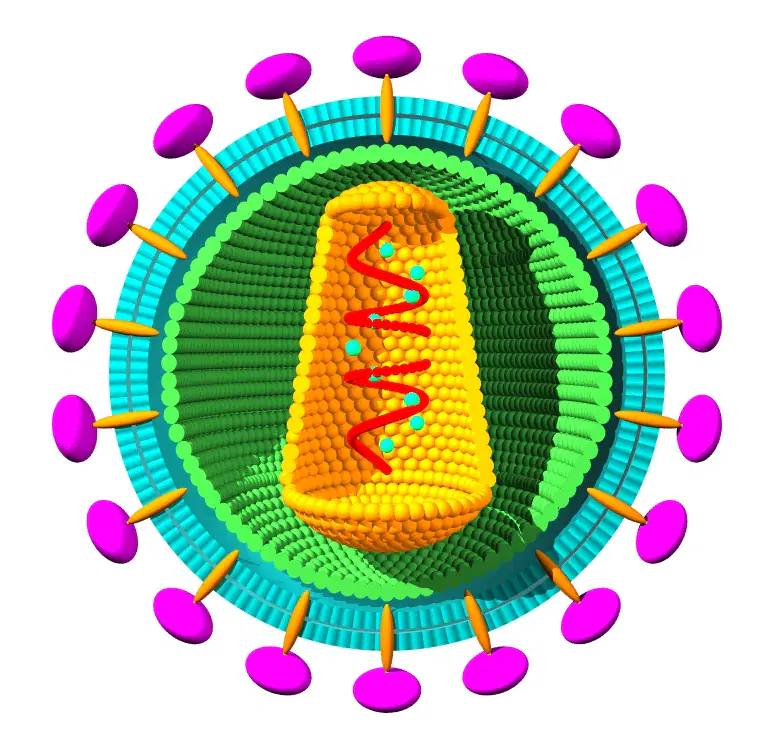
Retroviruses are composed of
RNA + protein capsule
a single membrane containing DNA
DNA + protein capsule
prokaryotic cells
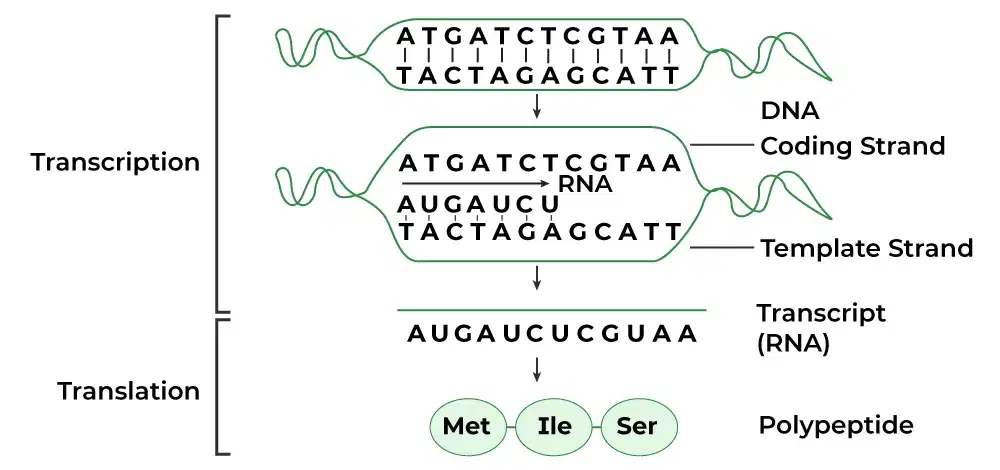
mRNA is synthesized in which direction during transcription?
3' -5'
5' - 3'

the promoter region
indicates the start of transcription
indicates the end of transcription
Is located upstream of the DNA that will be copied into RNA
Is located downstream of the gene of the DNA that will be copied into RNA
Which DNA strand has the same base sequence as the mRNA created
during transcription (with T instead of U)
non-template strand
coding strand
non-coding strand
template strand
Which DNA strand is complementary to the mRNA produced during transcription
non-coding strand
coding strand
template strand
non-template strand
1. 5'-ACT TTG CCT-3'
2. 3'-TGA AAC GGA-5'
Number 2 is the coding strand, and has the same sequence as the mRNA (with T instead of U)
True
False
5'-ACT TTG CCT-3'
3'-TGA AAC GGA-5'
What is the sequence of the mRNA produced?
5'-ACU UUG CCU-3'
3'-UGA AAC GGA-5'
3'-ACT UUG CCU-5'
5'-UGA AAC GGU-3'
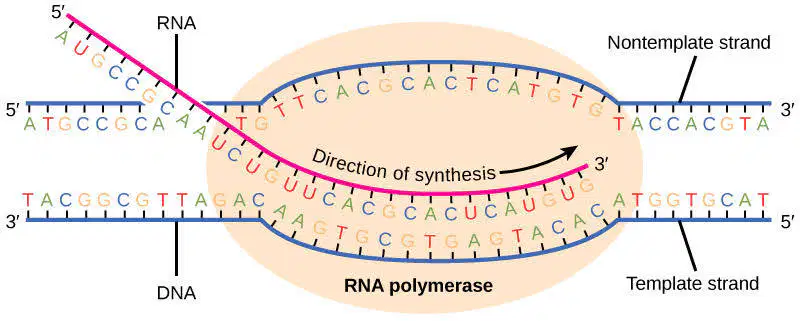
The coding strand runs in which direction
5' to 3'
3' to 5'
The transcribed mRNA runs in which direction
5' to 3'
3' to 5'
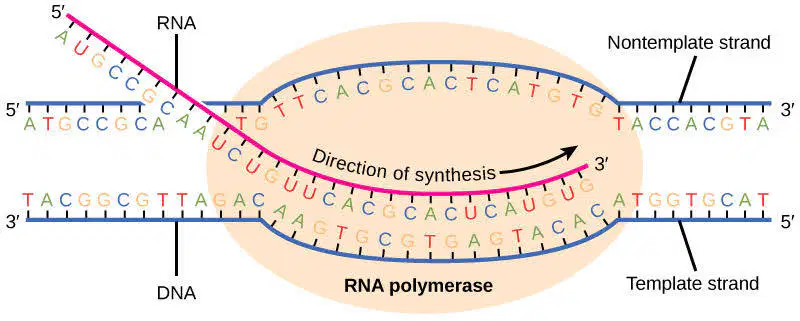
The non-coding strand runs in which direction
5' to 3'
3' to 5'
Genes cannot be turned off/on
True
False
In this step of transcription, sigma binds to RNA polymerase then the promoter of DNA
elongation
initiation
recognition
termination
In this step of transcription, mRNA is synthesized 5'-3' using the template strand
initiation
termination
elongation
recognition
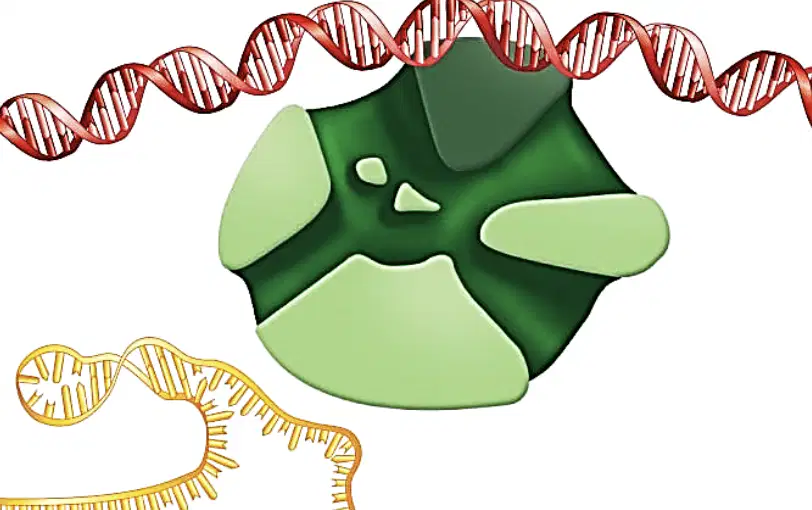
This diagram represents what stage of transcription?
termination
elongation
initiation
What triggers termination in transcription?
terminator region in DNA
binding of sigma to RNA polymerase
stop codons
hairpin loop in RNA
Which is not a step in RNA modification?
removal of exons and connection of introns
a cap added to the 5' end of mRNA
The mRNA forms a hairpin loop to signal termination
a sequence of A's form a poly-A tail on the 3' end
RNA modification occurs in both prokaryotes and eukaryotes
True
False
RNA polymerase is a
protein in which transcription occurs
an enzyme which carries out transcription
a catalyst which speeds up the process of transcription
the open complex created by DNA separation to synthesize mRNA
Eukaryotes contain a sigma protein for transcription
True
False
The start codon in translation
AUG
UAA
UGA
ATG
The genetic code is unambiguous, meaning that
UCU only codes for the amino acid phenylalanine
one amino acid can be specified by more than one codon
each codon specifies for only one amino acid
codons that specify for the same amino acid often share the first two bases
There are 64 codons that code for amino acids
True
False
The genetic code is conservative, meaning that
There are 2 codons that code for leucine
codons that specify for the same amino acid often share the first two bases
one amino acid can be specified by more than one codon
UUA and UUG which code for leucine start with UU
All organisms share the same universal genetic code except
yeast
arthropods
mitochondria
mammals
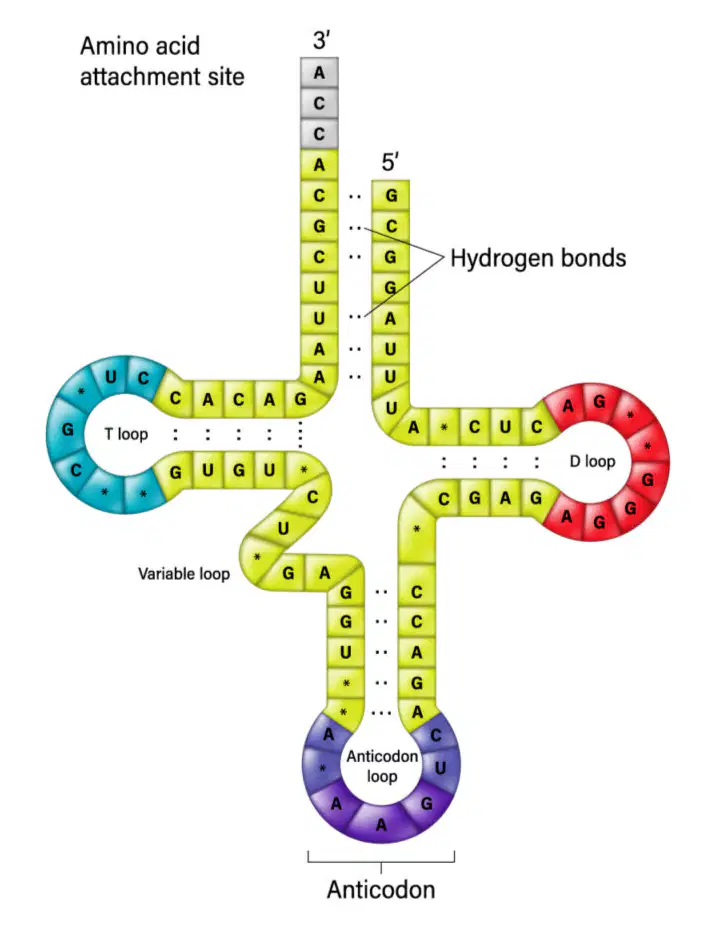
Type of RNA that delivers amino acids to the ribosome and translates codons into amino acids
mRNA
tRNA
rRNA
The anticodon on tRNA has a complementary sequence to
the coding strand of DNA
the mRNA being translated
the non-template strand of DNA
the amino acid it codes for
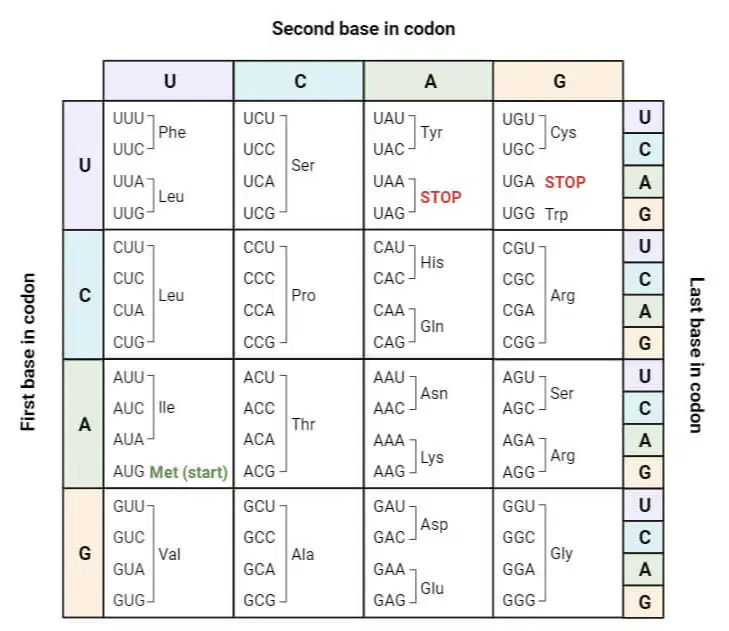
a tRNA with the anticodon AGA would carry what amino acid?
Serine
Arginine
If the anticodon on tRNA is complementary to mRNA, which direction does it run?
antiparallel;
5'-3'
antiparallel
3'-5'
parallel
5'-3'
parallel
3'-5'

This diagram represents
translation in the cytoplasm
a ribosome
production of polypeptides
DNA being transcribed into RNA
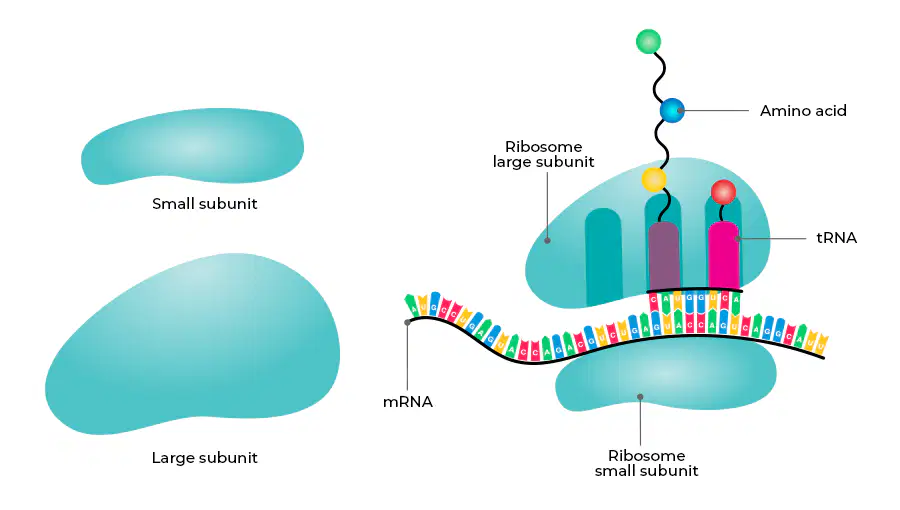
The function of the small subunit in prokaryotic ribosomes
catalyze polypeptide synthesis
ensure correct anticodon-codon pairing occurs
polypeptide exit tunnel
bind to and hold the mRNA
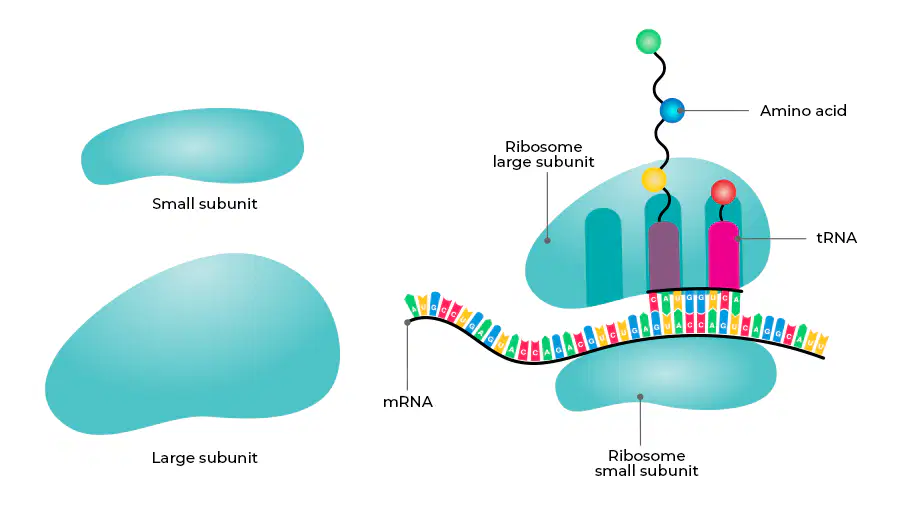
The function of the large subunit in a ribosome
receive the tRNA with corresponding amino acids
Hold site A, P, and E site for tRNAs
bind to mRNA
catalyze polypeptide synthesis

The amino acid attaches to which part of tRNA?
anticodon loop
3' end
5' end
D loop

