
 Worksheets
F.6 GCE Geography - Unit 8.4a - Plenary
Total questions: 93
Worksheet time: 47mins
Which of the following best describes "hard engineering measures" in coastal management?
Building artificial structures to control natural processes
Planting trees to stabilize the coastline
Allowing natural erosion to occur without intervention
Relocating people away from coastal areas
What is a common disadvantage of hard engineering measures for coastal protection?
They are inexpensive and easy to build
They look natural and enhance ecosystems
They are relatively expensive and can damage coastal ecosystems
They are only effective in rural areas
Why are hard engineering methods most likely to be used in areas of high economic value?
Because they are the cheapest option available
Because these areas have more natural resources
Because these areas have more people and properties at risk
Because they are less effective in low-value areas
Explain why hard engineering measures might be controversial despite their effectiveness in preventing erosion and flooding.
They are always the most cost-effective solution
They can look unnatural and damage coastal ecosystems
They are easy to build and maintain
They increase the natural beauty of the coastline
What is the primary purpose of constructing large concrete sea walls in front of cliffs?
To protect cliffs from coastal erosion and prevent coastal flooding
To provide a habitat for marine life
To increase tourism along the coastline
To generate electricity from wave energy
How do recurved sea walls help reduce the impact on the coastline?
By absorbing wave energy into the wall
By deflecting wave energy back out to sea
By allowing water to pass through the wall
By increasing the height of the beach
A coastal engineer is deciding between a recurved and a straight sea wall. Which design should they choose if their main goal is to deflect wave energy back out to sea, and why?
Recurved sea wall, because it is designed to deflect wave energy back out to sea
Straight sea wall, because it absorbs wave energy
Recurved sea wall, because it increases beach width
Straight sea wall, because it is less expensive
Which of the following is NOT a function or feature of seawalls?
Providing recreational space for walking and sightseeing
Serving as promenades
Enhancing the natural appearance of the landscape
Protecting the coast
How can access to the beach be maintained when a seawall is present?
By building tunnels under the seawall
By incorporating steps or ramps into the structure
By removing sections of the seawall
By using boats only
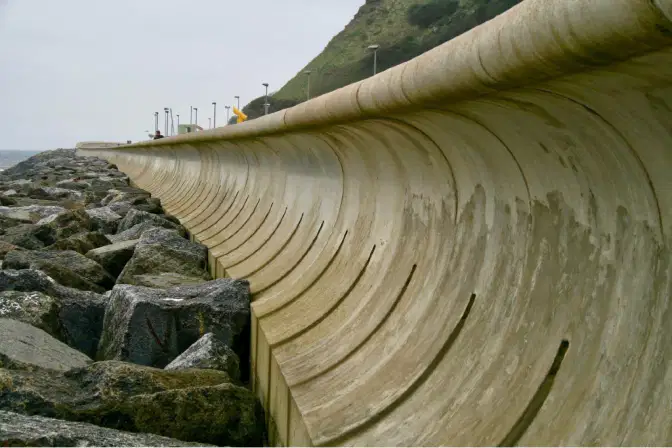
What is one common criticism of seawalls?
They are too expensive to build
They have a short lifespan
They have an unnatural appearance and can disrupt the visual landscape
They are not effective at protecting the coast
Explain why seawalls are often used as promenades and how this dual function might benefit local communities.
They are wide and flat, making them suitable for walking and sightseeing, which can attract tourists and provide recreational space for residents.
They are made of wood, which is comfortable to walk on.
They are always located in city centers.
They are designed to be invisible.
What is a primary reason why sea walls require regular maintenance?
To remain effective against wave action
To improve the appearance of the coastline
To increase the height of the cliffs
To allow more sediment to reach the beaches
Which additional defense might be needed to reinforce the base of a sea wall in areas with strong wave action?
Rock armour (riprap)
Sandbags
Wooden planks
Concrete pillars
How do sea walls affect the natural replenishment of nearby beaches?
They can reduce it by preventing sediment from cliff erosion from entering the sediment cell
They increase it by allowing more sediment to flow to the beaches
They have no effect on beach replenishment
They double the amount of sediment on the beaches
What is a potential negative effect of sea walls on beach material in front of the structure?
They can increase wave turbulence, leading to greater erosion of beach material
They prevent all erosion from occurring
They make the beach material stronger
They cause the beach to expand
Explain how the construction of sea walls can have both positive and negative impacts on coastal environments. Use evidence from the text to support your answer.
Sea walls halt cliff erosion but reduce sediment supply to beaches and can increase beach erosion due to wave turbulence.
Sea walls only have positive impacts by stopping all erosion.
Sea walls make beaches grow larger by adding more sediment.
Sea walls have no impact on the environment.
Which government department is responsible for constructing and reinforcing concrete sea walls along parts of the Sai Kung waterfront in Hong Kong?
Hong Kong Civil Engineering and Development Department (CEDD)
Hong Kong Environmental Protection Department
Hong Kong Transport Department
Hong Kong Housing Authority
What is one of the main purposes of constructing sea walls along coastal areas?
To increase the height of buildings
To absorb and deflect wave energy
To provide electricity to coastal towns
To improve air quality
Explain how sea walls contribute to the safety and accessibility of coastal areas, using the example of Sai Kung, Hong Kong.
By providing a barrier that absorbs wave energy, prevents flooding, and supports public access, sea walls protect infrastructure and enhance recreational opportunities.
By increasing the number of boats in the area.
By reducing the amount of rainfall in coastal regions.
By promoting the growth of coral reefs.
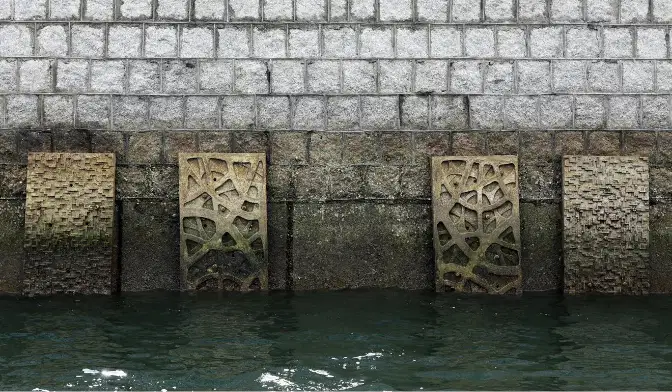
What does the image above illustrate?
A natural rock formation
A reinforced concrete sea wall designed to protect the coastline
A dam used for hydroelectric power
A bridge over a river
Which of the following is a primary benefit of sea walls as mentioned in the material?
Reducing damage from storm surges and slowing down coastal erosion.
Increasing the speed of coastal erosion.
Providing habitats for marine life.
Enhancing the natural beauty of the coastline.
During Typhoon Mangkhut (2018), what was observed in areas with reinforced sea walls compared to unprotected coastlines?
They experienced less flooding and damage.
They experienced more flooding and damage.
There was no difference in flooding and damage.
They experienced more beach access.
Which of the following is NOT a challenge associated with sea walls?
Sea walls can look visually intrusive and limit beach access.
Regular maintenance is required to protect against weathering and wave impact.
Sea walls always increase the biodiversity of the area.
The walls may contribute to increased wave reflection, leading to erosion of adjacent unprotected areas.
Explain how sea walls can indirectly contribute to coastal erosion in areas adjacent to where they are built.
By increasing wave reflection, which leads to erosion of adjacent unprotected areas.
By absorbing all wave energy and preventing erosion everywhere.
By providing more sand to nearby beaches.
By reducing the need for regular maintenance.
What is the primary purpose of groynes built along coastlines?
To provide a habitat for marine life
To interrupt longshore drift and trap sediment
To increase wave energy
To create fishing spots
Which of the following materials is NOT commonly used to construct groynes?
Wood
Rock
Concrete
Plastic
How do groynes help in reducing coastal erosion?
By increasing the speed of waves
By absorbing wave energy through sediment build-up
By removing sediment from the beach
By allowing more water to flow inland
What is one potential disadvantage of groynes mentioned in the text?
They always increase erosion
They can appear unnatural and impede access along the beach
They reduce tourism
They are made only from plastic
Explain how groynes can benefit local economies.
By making beaches narrower and less attractive
By attracting visitors and boosting tourism
By increasing the cost of beach maintenance
By reducing the number of visitors
A coastal town is experiencing significant erosion and loss of beach material. As a coastal engineer, how would you justify the construction of groynes to the local council, considering both their benefits and drawbacks?
Groynes are cheap and have no disadvantages.
Groynes trap sediment, widen beaches, and protect infrastructure, but may look unnatural and restrict beach access.
Groynes only benefit marine life and have no effect on erosion.
Groynes are only useful for fishing and tourism.
What is the typical lifespan of a groyne structure?
5 to 10 years
10 to 15 years
20 to 30 years
Up to 25 years
What is one negative impact of groynes on coastal areas further down the coast?
They increase beach tourism
They cause flooding
They lead to increased erosion
They improve water quality
Why can groynes cause conflict between coastal communities?
They are expensive to build
They trap sediment, starving beaches further down the coast
They attract too many tourists
They reduce fish populations
Which of the following is a reason why groynes require ongoing maintenance?
They are made of biodegradable materials
They are frequently damaged by tourists
They are exposed to harsh coastal conditions
They are only used during certain seasons
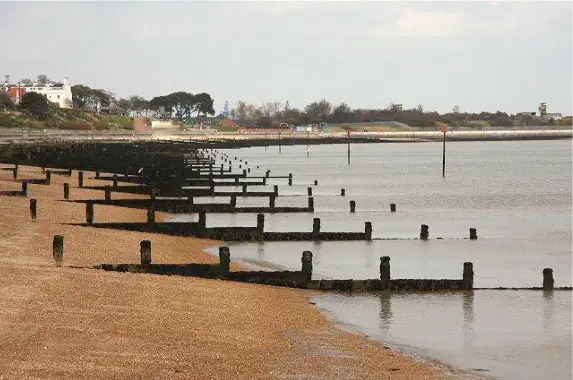
What is the primary function of the structures shown in the diagram?
To trap sediment and protect the beach
To generate electricity
To provide habitat for marine life
To increase wave height
Which material has traditionally been used for groynes at Pevensey Bay to protect coastal communities?
Timber
Concrete
Steel
Plastic
What is one major reason for the shift away from using timber groynes at Pevensey Bay?
Timber groynes are too short to be effective
The use of hardwood timber raises concerns and costs
Timber groynes are environmentally friendly
Timber groynes are easy to install
Why does the effectiveness of timber groynes decrease over time at Pevensey Bay?
The groynes are washed away by storms
The beach level eventually exceeds the height of the groynes
The groynes are eaten by marine animals
The groynes are buried by sand dunes
Based on the information provided, what strategic reason might coastal managers have for exploring alternatives to timber groynes at Pevensey Bay?
Timber groynes are aesthetically unpleasing
Timber groynes require frequent and costly replacement and become less effective as beach levels rise
Timber groynes attract too many tourists
Timber groynes are illegal in the UK
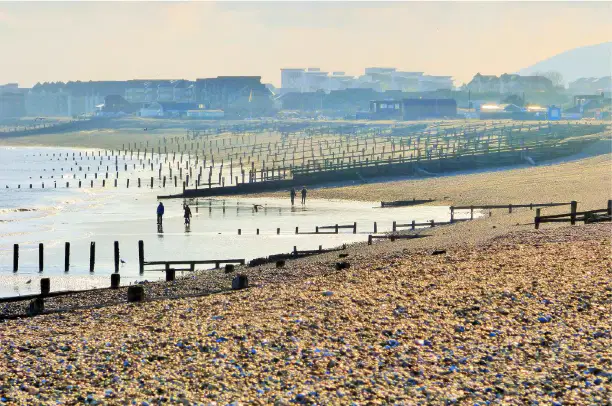
What does the image most likely illustrate about the use of groynes at Pevensey Bay?
Groynes are used to protect the coastline from erosion
Groynes are used to attract fish to the shore
Groynes are used to build sand dunes
Groynes are used for recreational purposes only
What is another name for rock armour used in coastal protection?
Rip-rap
Gabion
Breakwater
Sea wall
Which of the following best describes the main purpose of placing rock armour at the base of cliffs or sea walls?
To absorb wave energy and reduce erosion
To increase the height of the cliffs
To create habitats for marine life
To reflect wave energy back to the sea
What materials are most commonly used for rock armour due to their durability and resistance to erosion?
Granite and concrete
Sand and clay
Limestone and wood
Steel and plastic
Why are the rocks in rock armour typically arranged in a loose, interlocking pile with gaps between them?
To allow water to pass through and dissipate energy
To make the structure look more natural
To prevent the rocks from moving
To reflect energy back to the sea
A specialised form of rock armour known as accropodes is designed for what main purpose?
Added stability and resistance to wave forces
To increase the height of the sea wall
To provide a habitat for fish
To reflect sunlight
Suppose a coastal engineer is deciding between using granite, concrete, or wood for constructing rock armour. Based on the information provided, which material should they avoid and why? (DoK Level 3)
Wood, because it lacks durability and resistance to erosion
Granite, because it is too heavy
Concrete, because it is not stable
Granite, because it absorbs too much water
What is the approximate cost of rock armour per metre?
£1,000
£2,000
£3,000
£5,000
Which of the following is a drawback of using rock armour for coastal protection?
It always matches the local geology
It can obstruct access to the beach and pose a safety hazard
It is inexpensive to install
It never requires maintenance
Why is the cost of rock armour often high?
The rocks are always found locally
The rocks are often imported when local materials are unavailable
The installation process is very simple
The rocks are made of precious metals
Over time, what maintenance issue can arise with rock armour?
The rocks may dissolve in water
The rocks may settle or shift, requiring additional material and maintenance
The rocks become lighter
The rocks turn into sand
A local council is considering installing rock armour along a coastline. What strategic factor should they consider based on the drawbacks listed?
The colour of the rocks
The potential for the rocks to obstruct beach access and require ongoing maintenance
The number of tourists visiting the beach
The type of fish in the sea
Which of the following was the main reason for choosing rock armour over a traditional sea wall at Ocean Beach, San Francisco?
Rock armour was more visually appealing.
Rock armour was a more affordable alternative.
Sea walls were banned in San Francisco.
Rock armour required no maintenance.
What is one criticism local residents and environmental groups have about the use of rock armour at Ocean Beach?
The boulders are too small to be effective.
The boulders are visually intrusive and less effective than expected.
The boulders increase the risk of flooding.
The boulders attract too many tourists.
Each winter, what happens to the boulders used in the rock armour at Ocean Beach?
They are washed away by the tide.
They sink deeper into the sand.
They become covered in vegetation.
They are removed for cleaning.
Why does the rock armour at Ocean Beach require the addition of more rocks over time?
The rocks are stolen.
The rocks erode due to wind.
The boulders sink deeper into the sand after powerful waves.
The rocks are used for construction elsewhere.
Evaluate the effectiveness of rock armour as a coastal protection method based on the example of Ocean Beach. Consider both its advantages and disadvantages.
It is highly effective and requires no maintenance.
It is affordable but can be visually intrusive and less effective over time, requiring ongoing maintenance.
It is the most expensive and least effective method.
It is only suitable for tropical beaches.
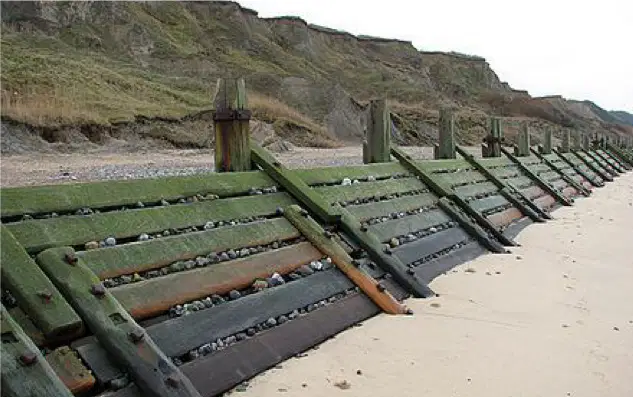
What is the primary purpose of revetments as described in the material?
To increase wave energy on the beach
To prevent erosion of cliffs by dissipating wave energy
To make the beach more natural
To allow people to walk easily up and down the beach
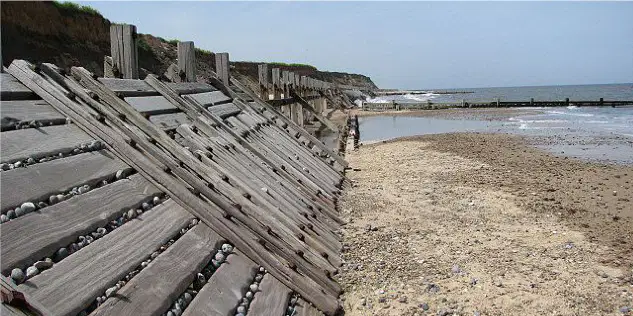
Which material is most commonly used to construct revetments?
Concrete blocks
Steel panels
Timber slats
Plastic sheets
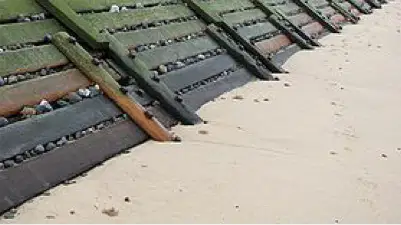
How long do revetments typically last before needing replacement?
5 years
10 years
20 years
50 years
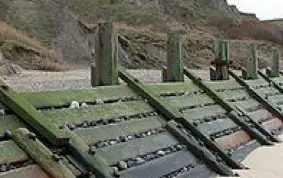
What is one disadvantage of revetments mentioned in the material?
They are very cheap to build
They make the beach more natural
They can be a barrier to people walking on the beach
They increase wave energy
If a local council wants to install 100 metres of revetment, approximately how much would it cost based on the information provided?
GBP 1,200
GBP 12,000
GBP 120,000
GBP 1,000,000
Explain how revetments help in the deposition of beach material.
By increasing wave energy, they wash away material
By reducing wave energy, they encourage deposition of material
By blocking sunlight, they prevent deposition
By attracting more people, they increase litter
A coastal engineer is deciding between revetments and another method for cliff protection. What evidence from the material could they use to argue for revetments?
Revetments are natural and last forever
Revetments dissipate wave energy and prevent cliff erosion for about 20 years
Revetments are the cheapest option available
Revetments increase the recreational value of the beach
What is the main reason revetments were chosen for Hopton Beach?
They are an affordable strategy.
They are the most effective at stopping erosion.
They are aesthetically pleasing.
They are required by law.
What happened to the revetments at Hopton Beach over time?
They were upgraded to concrete walls.
They were painted for better visibility.
They became degraded and stopped protecting the cliffs.
They were moved further inland.
Which event led to the replacement of revetments with rock armour at Hopton Beach?
A landslide in 2013 endangered guests at a caravan park.
A flood destroyed the revetments.
A new law required rock armour.
The golf club requested a change.
Why was the land behind the revetments at Hopton Beach not considered valuable enough for more expensive protection?
It was mostly a golf club.
It was a major city.
It was a protected wildlife reserve.
It was a busy port.
Explain why the revetments at Hopton Beach were eventually replaced with rock armour, using evidence from the example.
The revetments degraded and no longer protected the cliffs, leading to a landslide that endangered people, so they were replaced with a more effective solution.
The revetments were too expensive to maintain, so they were replaced with sandbags.
The revetments were blocking the view, so they were removed.
The revetments were causing pollution, so they were replaced with plants.
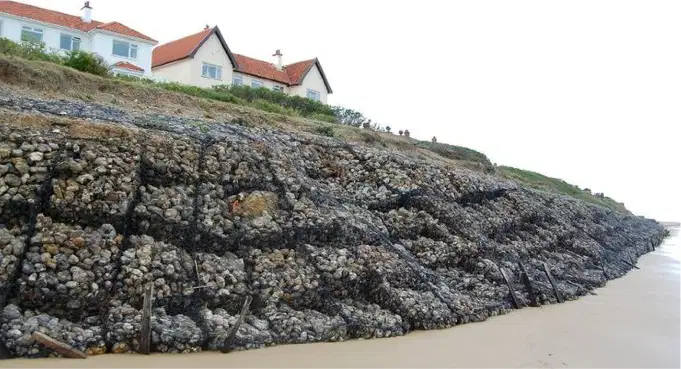
What is the primary function of gabions when placed in front of a cliff base?
To absorb wave energy and reduce erosion potential
To increase the height of the cliff
To provide a habitat for marine animals
To improve the aesthetic value of the beach
Which of the following is a disadvantage of using gabions for coastal protection?
They are very expensive to install
They only have a lifespan of around 10 years
They require no maintenance
They are made entirely of concrete
Why might gabions start to look more natural over time?
The wire mesh rusts and disappears
Vegetation starts to grow over them
The rocks dissolve into the sand
They are painted to match the environment
Explain why regular maintenance is required for gabions used in coastal protection.
The wire cages can break and need repair
The rocks need to be replaced with sand
The gabions need to be painted regularly
The cages must be moved every year
A coastal engineer is deciding between gabions and another method for cliff protection. What factors should they consider based on the information provided?
Cost, lifespan, maintenance needs, and potential hazards
Only the color of the gabions
The number of tourists visiting the beach
The type of fish in the water
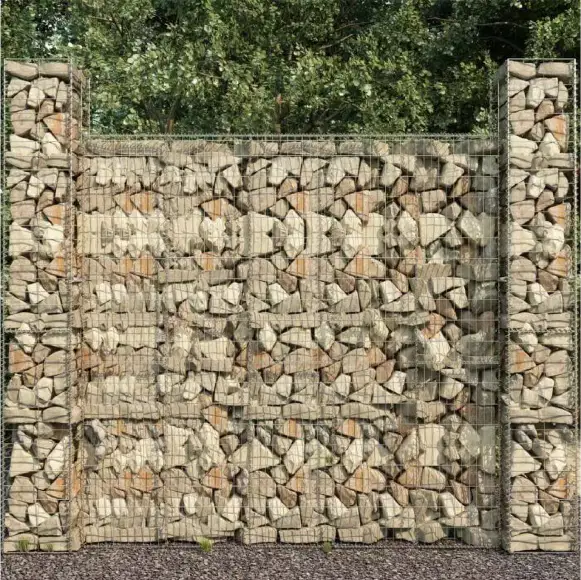
What was the primary purpose of installing gabions along the coast of Newcastle, Ireland in the 1990s?
To protect an area of sand dunes
To create a walking path
To improve the natural beauty of the coast
To provide habitats for wildlife
Which of the following was a major problem with the gabions installed in Newcastle, Ireland?
They needed to be repaired every year due to storm damage
They attracted too many tourists
They increased the risk of flooding
They were too expensive to install initially
Why did local people object to the use of gabions along the coast?
They looked unnatural and trapped trash, making them unsightly
They were too noisy
They blocked access to the beach
They caused erosion of the sand dunes
Based on the information provided, what could be a potential improvement to the use of gabions for coastal protection?
Designing gabions to blend better with the natural environment and prevent trash accumulation
Making gabions out of plastic instead of metal
Placing gabions further inland
Using gabions only during the summer months
What is the primary purpose of placing concrete blocks or boulders offshore as breakwaters?
To increase the speed of waves
To break waves early and reduce their erosive power
To create surfing waves
To increase beach erosion
Which of the following is a potential disadvantage of offshore breakwaters?
They always increase beach erosion
They can disrupt natural sediment flow by causing sediment buildup behind the breakwater
They are easy and inexpensive to build
They create obstructions on the beach
Why are offshore breakwaters considered favourable compared to other coastal protection methods?
They are built on the beach and block access
They do not cause any obstructions on the beach
They are the cheapest option available
They increase the number of breakers for surfers
What is a typical cost and lifespan for offshore breakwaters, according to the material?
GBP1,000 per metre, lifespan of 10 years
GBP10,000 per metre, lifespan of up to 50 years
GBP5,000 per metre, lifespan of 20 years
GBP20,000 per metre, lifespan of 100 years
Explain how offshore breakwaters can impact recreational activities such as surfing, and discuss one benefit they provide for maritime activities.
They increase the number of surfing waves and make boating more dangerous
They reduce breakers loved by surfers but provide sheltered areas for boats
They have no effect on surfing or boating
They make surfing easier and reduce boat safety
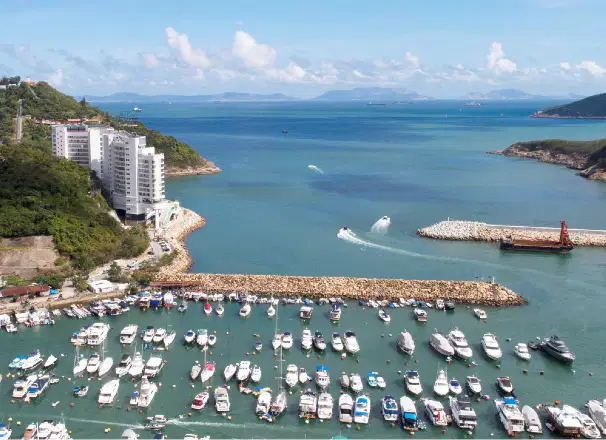
Which of the following is a primary function of offshore breakwaters?
To increase wave energy near the shore
To dissipate wave energy and enclose calm waters
To promote rapid coastal erosion
To block all marine life from entering the harbor

What is one of the main challenges associated with offshore breakwaters?
They require no maintenance
They always improve marine ecosystems
Regular maintenance is needed to preserve structural integrity
They are unaffected by storms
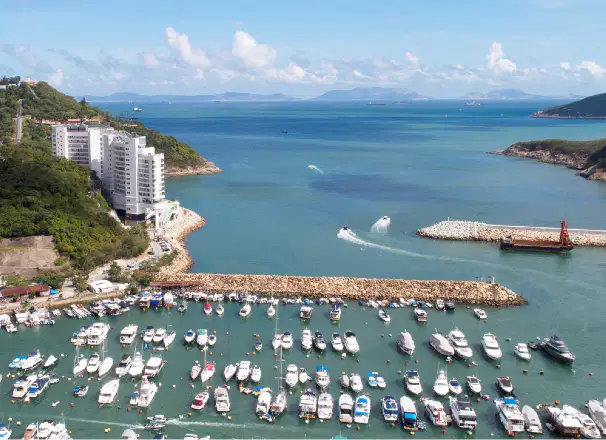
How do offshore breakwaters contribute to vessel safety and local economies?
By increasing wave impact and discouraging tourism
By providing refuge for boats during storms and supporting tourism
By causing more coastal erosion
By blocking all access to the harbor
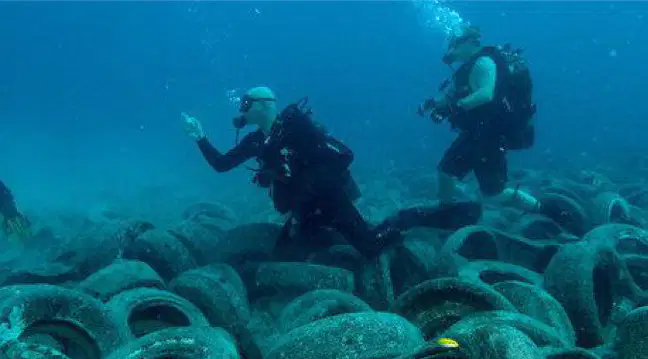
What materials are commonly used to create offshore artificial reefs?
Old tires and cement
Plastic bottles and sand
Wooden planks and metal rods
Glass and rubber sheets
What is one main purpose of constructing offshore reefs parallel to the coastline?
To increase wave energy at the shore
To encourage waves to break early and reduce their energy
To make the coastline steeper
To attract more tourists to the beach
Which of the following is a potential negative impact of offshore reefs on marine environments?
They always increase fish populations
They can disrupt habitats for some creatures on the seabed
They make the water warmer
They reduce the amount of sand on beaches
Why might surfers be unhappy about the construction of offshore reefs?
The reefs make the water too shallow for surfing
The reefs can disrupt breaking waves
The reefs attract dangerous animals
The reefs make the water colder
Offshore reefs are expensive to build. Approximately how much do they cost per metre?
GBP2,000
GBP10,000
GBP20,000
GBP50,000
Explain how offshore reefs can both benefit and negatively impact marine environments.
They only benefit marine environments by creating habitats.
They benefit by creating habitats but can also disrupt existing seabed habitats.
They only negatively impact marine environments by causing erosion.
They have no impact on marine environments.
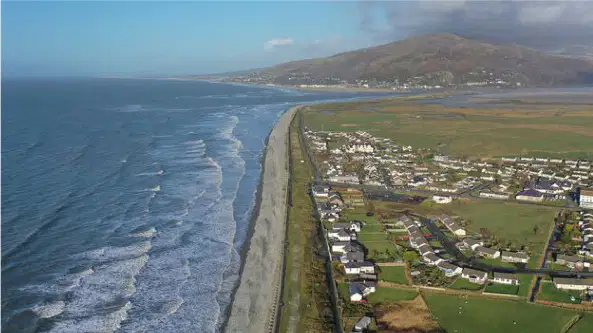
What is "managed retreat" as illustrated by the example of Fairbourne, Wales?
The process of building new sea defenses to protect a village from rising sea levels.
The decision to stop maintaining sea defenses and allow a village to be affected by rising sea levels.
The relocation of a village to a higher elevation to avoid flooding.
The construction of barriers to prevent coastal erosion.
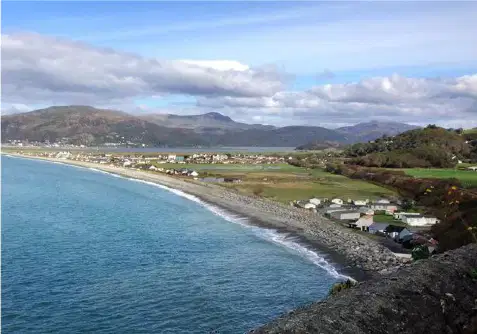
Why did the local council in Fairbourne, Wales, decide to stop maintaining the village's sea defenses in 2016?
Because the population of the village was increasing.
Due to escalating maintenance costs and climate change predictions.
Because the sea defenses were no longer needed.
Due to a lack of available building materials.

