
 Worksheets
CHINESE ARCHITECTURE_QUIZ NO. 02_HOA 03
Total questions: 20
Worksheet time: 17mins
An ancient Chinese practice of arranging spaces to create harmony and balance with the
surrounding environment. The term literally translates to "wind-water".
MINJIHAN XINYANG
SANJIAO
FENG SHUI
DOUGONG
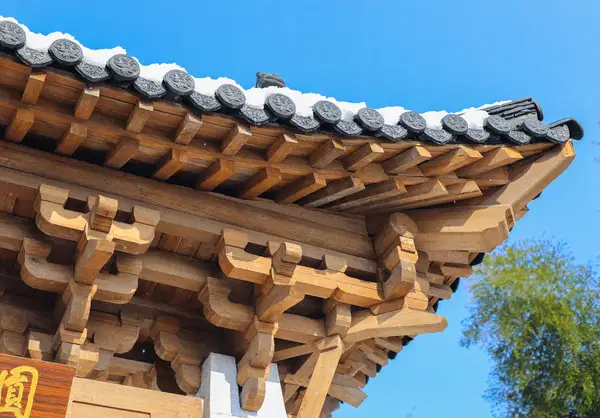
What do you call the intricate wooden brackets, interlock columns and beams,
that provides strong and decorative structural support?
Shou
Doupong
Gopong
Dougong
A TERM FOR ARCHITECTURAL POLYCHROME PAINTING
CHAI'A
CAIHUA
CHUA
FU LU SHOU
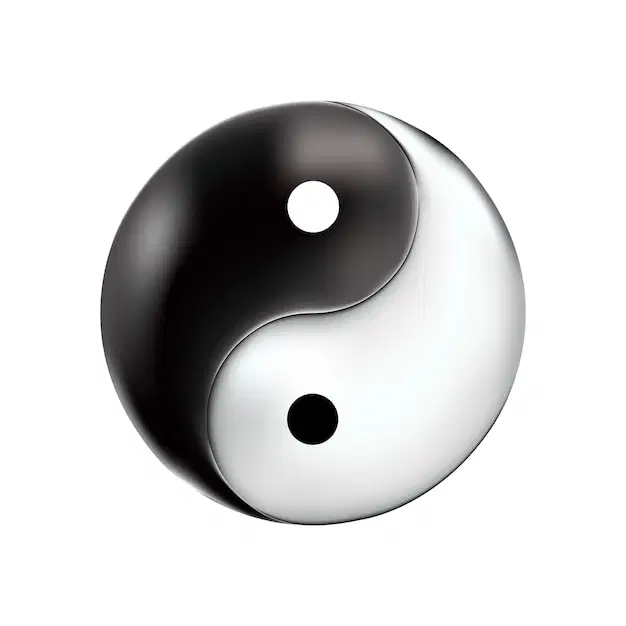
This common Chinese Symbol is called?
(a)
This Color signifies/ symbolizes:
-Earth
- Center
-Imperial Authority,
-The Emperor
BLUE & GREEN
GOLD
YELLOW
RED
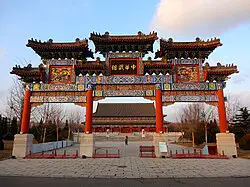
A Chinese archway usually made of fine wood or stone, well painted and with glazed tiles sometimes, for memory and decoration.
PAILOU
TORII
PAIFANG
SONGYUE
A Chinese (a) is a tower-like structure with levels that is usually built for religious or
memorial purposes. You can often find them in Buddhist temple complexes.
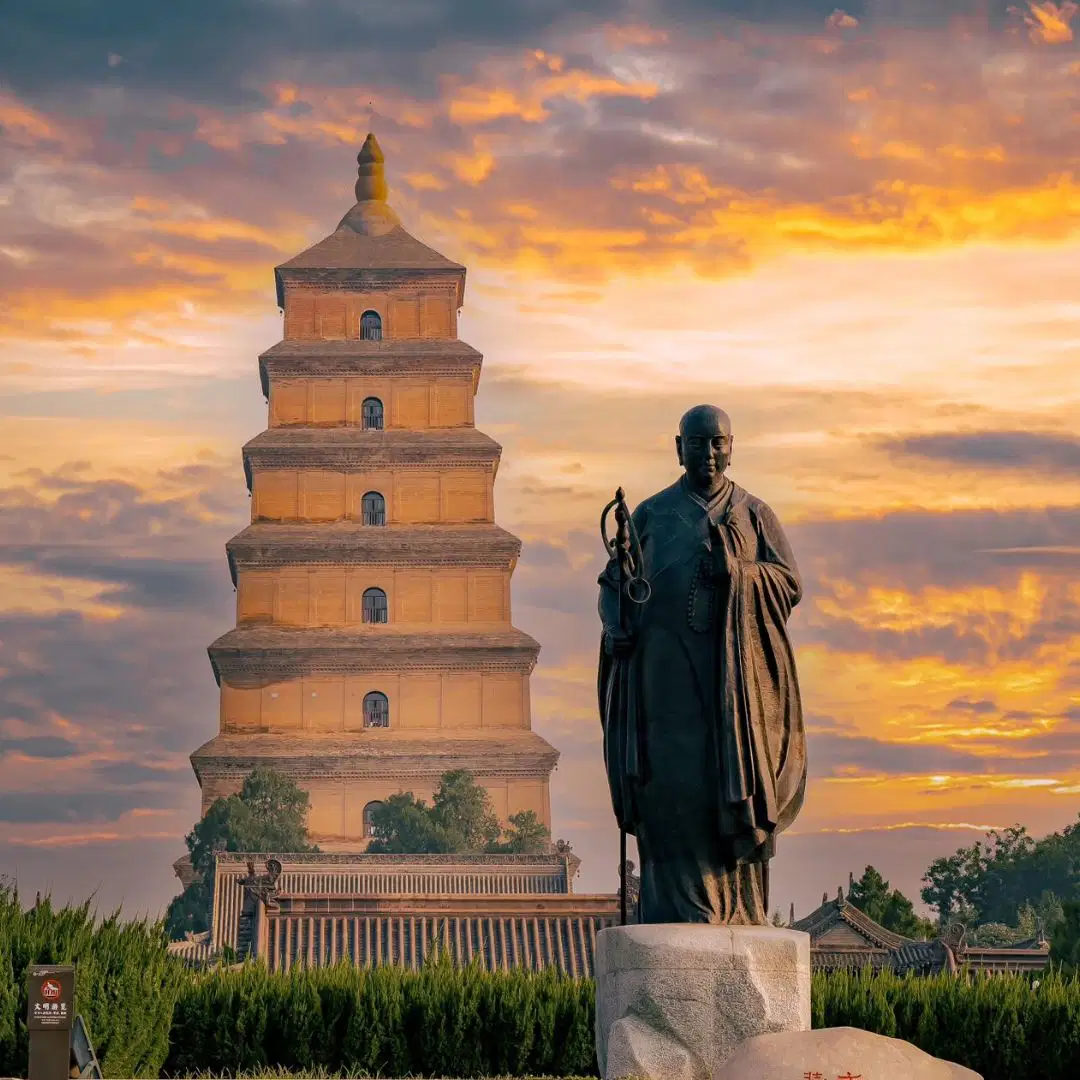
A famous ancient Buddhist pagoda in Xi'an, China, built during the Tang Dynasty over 1,300 years ago. Constructed to house Buddhist relics and scriptures brought from India by the monk Xuanzang.
Xuanzang Pagoda
The Pagoda
Wuyan Pagoda
Big Wild Goose Pagoda

The decorative and symbolic element that crowns the very top of the pagoda.
Steeple or Finial (塔
刹, Tǎchà)
Eaves (屋檐,
Wūyán)
Body (塔身,
Tǎshēn)
Base (臺基, Táijī)
Chinese pagodas traditionally have an _______ number of levels, with common designs featuring three, five, seven, or thirteen stories, reflecting traditional beliefs about auspiciousness and spiritual significance.
EVEN
ODD
HIGH
LOW
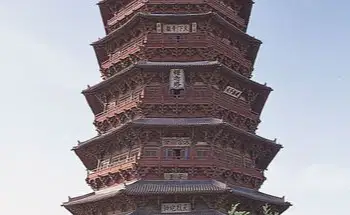
The main, vertical section of the pagoda, composed of multiple
stories or tiers. This is the most prominent part of the structure.
Steeple or Finial (塔
刹, Tǎchà)
Eaves (屋檐,
Wūyán)
Body (塔身,
Tǎshēn)
Base (臺基, Táijī)
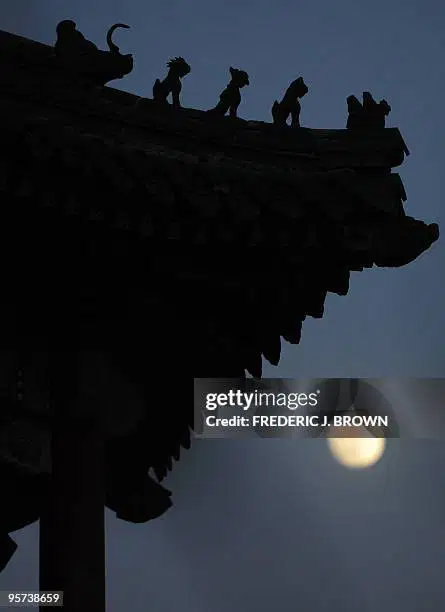
The tiered, multi-level roofs that project outward from each
floor. They are often characterized by their signature
curved corners.
Steeple or Finial (塔
刹, Tǎchà)
Eaves (屋檐,
Wūyán)
Body (塔身,
Tǎshēn)
Base (臺基, Táijī)
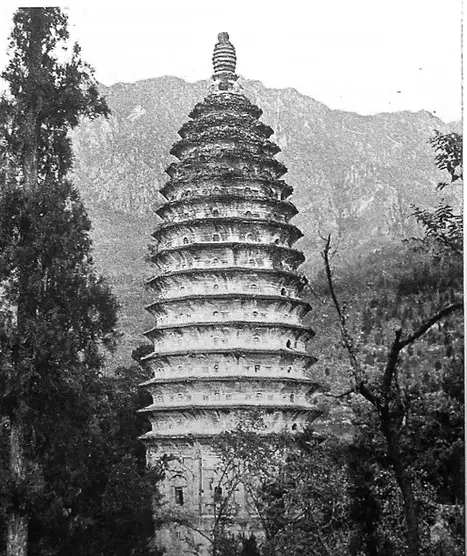
Located on Mount Song in Henan Province, it features a unique 12-sided
design and a parabolic exterior that reflects the blend of Indian and Chinese architectural styles. Known for its innovative cylindrical structure.
Yingxian Wooden Pagoda
Liaodi Pagoda
Iron Pagoda
Songyue Pagoda

UNESCO World Heritage Site since 1987. Built between 1406–1420 under Emperor
Yongle of the Ming Dynasty. Served as the political and ceremonial center of China
for nearly 500 years, housing 24 emperors of the Ming and Qing dynasties.
THE TEMPLE OF HEAVEN
THE FORBIDDEN C I T Y
THE IMPERIAL PALACE
THE JEWEL PALACE
UNESCO World Heritage Site since 1987. One of the
world’s most iconic architectural achievements, built over many dynasties
from the 7th century BCE and expanded during the Ming Dynasty (14th–17th centuries).
THE BERLIN WALL
THE TEMPLE OF CHINA
THE GREAT WALL OF CHINA
THE MING WALL
Stretching more than ______ kilometers, it was constructed as a
defensive system to protect Chinese states and empires from northern invasions.
2,000
20,000
200,000
220,000
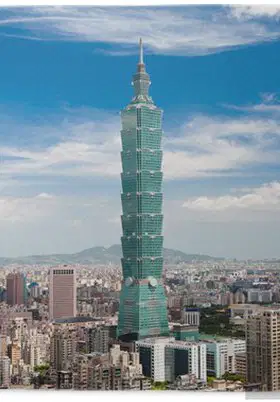
The tower’s design resembles a traditional Chinese pagoda, which has a tiered, upward structure symbolizing spiritual ascent. It is segmented into eight sections, and in Chinese culture, the
number 8 signifies prosperity, good fortune, and success.
(a)

This structure was primarily designed by architect Zaha Hadid
in the Deconstructivist style, and it does not directly adapt concepts from traditional Chinese architecture. Instead, its Chinese influence comes from its interpretation of the surrounding natural
landscape and its purpose as a landmark for modern Guangzhou.
Louvre Pyramid
Sydney Opera House
Guangzhou Opera House
Great Wall of China
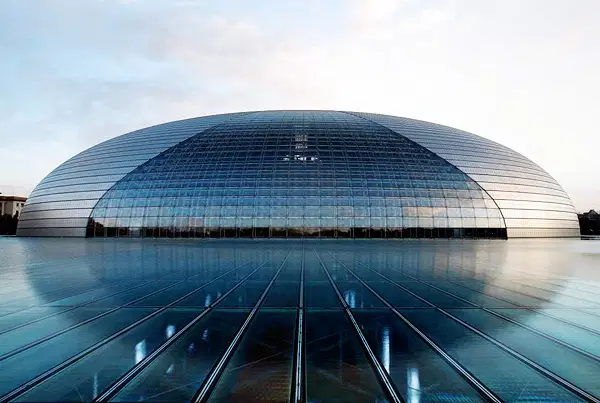
Is one of Beijing’s most iconic modern landmarks. Designed
by French architect Paul Andreu, the building is an enormous elliptical dome
made of titanium and glass, surrounded entirely by an artificial lake. Because of its
shape, it is nicknamed The Giant Egg.
National Centre for the Performing Arts
National Stadium
Shanghai Tower
CCTV Headquarters

Was a globally acclaimed, Chinese-born American architect known for his elegant, modernist style that blended East and West, drawing inspiration from his Chinese heritage while embracing the modern materials of steel and glass.
Ieoh Ming Pei
Lou Tzu
Wang Shu
I.M Pei

