
 Worksheets
ALKANES
Total questions: 45
Worksheet time: 37mins
Which of the following statements concerning the reaction of methane with bromine is/are correct?
(1) It is an addition reaction.
(2) It is a substitution reaction.
(3) A similar reaction will occur if propane is used instead of methane.
(1) only
(2) only
(1) and (3) only
(2) and (3) only
Which is the structures with IUPAC nomenclature
2,2,4-trimethylpentane
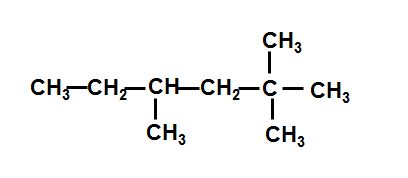
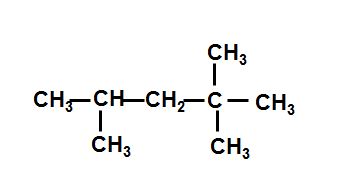
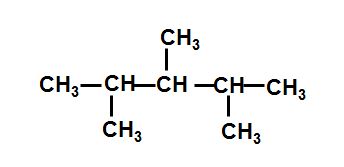
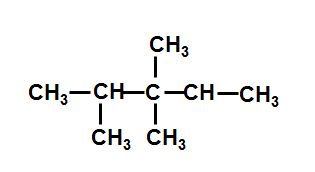
What happens if an alkane reacts with limited oxygen?
Produced carbon dioxide and water
Produced carbon monoxide and water
Produced oxygen and water
Produced soot and water
What is the condition needed for substitution reaction with chlorine?
presence of sunlight
presence of red light
presence of UV light
all of the above
Which of the following is NOT a product formed when methane reacts under the needed conditions with chlorine?
CH3Cl
CH2Cl2
CHCl4
CCl4
What type of chemical reaction is this:
C3H8 + 5O2 --> 3CO2 + 4H2O
Incomplete combustion
Substitution with oxygen
Complete combustion
Substitution with chlorine
What type of chemical reaction is this:
C3H8 + Br2 --> C3H7CBr + HBr
Incomplete combustion
Substitution with chlorine
Complete combustion
Substitution with bromine
Which of the following is true about incomplete combustion?
It takes place because there is too much supply of air
It takes place because there is not enough supply of air
The products are soot and hydrocarbons
The products are hydrogen and water
The following is a product of the reaction between propane and chlorine: C3H8Cl2
TRUE
FALSE
The boiling points of alkane molecules increase as their molecular sizes increase.
True
False

State the type of reaction of the above reaction.
Nucleophilic Addition Reaction
Electrophilic Substitution reaction
Free Radical Substitution reaction
Rearrangement
How many steps of mechanism for Free Radical Substitution Reaction of Alkane.
1
2
3
4

What is the name of step for the mechanism above.
Chain Elimination Step
Chain Initiation step
Chain Termination step
Chain Propagation step

What is the major product formed for this reaction.


State the function of UV light for the above reaction.
To provide energy for Heterolytic Cleavage occur in Bromine molecule.
To provide energy for Homolytic Cleavage occur in Bromine molecule.
To provide energy for Heterolytic Cleavage occur in Propane molecule.
To provide energy for Homolytic Cleavage occur in Propane molecule.

What step in Free Radical Substitution Reaction Mechanism that can be repeated to form above products.
Chain Propagation Step
Chain Termination Step
Chain Initiation Step
Chain Elimination Step

Which step produces two highly reactive chlorine free radicals.
Chain Propagation Step
Chain Termination Step
Chain Initiation Step
Chain Elimination Step

Single barbed arrow show....
attack or movement of an unpaired electron
attack or movement of an electron pair
attack or movemant of a lone pair
attack or movemant of an electron pair and unpaired electron

Draw the structural formulae of monosubstituted major formed when the above alkane subjected to the bromination reaction under sunlight.


Give the name of reaction, when alkanes react with bromine in the presence of UV.
Hydrogenation
Halogenation
Hydration
Hydrohalogenation

What is the name of this step?
Termination Step
Propagation Step
Initiation Step
Cleavage Step
What is the type of cleavage that occurs in the initiation step when a halogen is exposed to UV light?
Heterolytic fission
Hoholytic fission
Homoterolytic fission
Homolytic fission
Which equation is a propagation step in the conversion of chloromethane into dichloromethane by reaction with chlorine in the presence of ultraviolet light?
CHCl3 + Cl2 ⟶ CCl4 + HCl
●CH2Cl + ●Cl ⟶ CH2Cl2
CH3Cl + ●Cl ⟶ CH2Cl2 + ●H
●CH2Cl + Cl2 ⟶ CH2Cl2 + ●Cl
Which one of the following is NOT a propagation reaction between methane and chlorine?
CH4 + Cl• → CH3• + HCl
CH3• + Cl• → CH3Cl + H•
CH3• + Cl2 → CH3Cl + Cl•
CH3Cl + Cl• → CH2Cl• + HCl

Which step is this in the synthesis of chloroalkanes?
Termination
Initiation
Propagation
Position
A particle with an unpaired electron:
Ion
Nucleophile
Free Radical
Neutrophile
Crude oil is made up of:
Ethane
Butane
A mixture of different hydrocarbons
Extremely large hydrocarbons which are broken up once extracted
Different fractions in crude oil are separated by:
Cracking
Fractional Distillation
Filtration
Crystalisation
Shorter hydrocarbons have:
Higher boiling points
Lower boiling points
Petrol is used for:
Fuel in cars
Fuel in aircraft
Domestic heating and cooking
Road surfacing
Kerosene (paraffin) is used for:
Fuel for cars
Domestic heating and cooking
Fuel in aircraft
Fuel for large ships and in power stations
Fuel oil is used for:
Fuel in some cars and larger vehicles
Fuel for large ships and in some power stations
Roof and road surfacing
Fuel for cars
Bitumen is used for:
Fuel for large ships and in some power stations
Roof and road surfacing
Fuel in aircraft
Fuel in cars

Where do long chain hydrocarbons collect?
At the top
In the middle
At the bottom
Produced by burning fossil fuels
Carbon Dioxide
Sulfur Dioxide
Nitrogen Dioxide
Phytochemical Oxidant
Source: Chemical reaction of VOCs and NOx
Health effects: breathing problems, reduced lung capacity, asthma, eye irritation, reduced resistance to disease
Environmental effects: can damage plants
Dust, ash and pollen are examples of this air pollutant...
Lead
Ground-level ozone
Particulate matter
Nitrogen oxides

