
 Worksheets
Benchmark 1 Review
Total questions: 63
Worksheet time: 2hrs 57mins

In what year did King John become ruler of England?
1199
1216
1189
1204

Which region did King John lose to France in 1204?
Normandy
Aquitaine
Brittany
Gascony

In 1205, why did King John increase taxes for nobles and merchants?
To pay for war; he takes property and hostages to force payment
To build new castles for the royal family
To fund a grand celebration for his coronation
To provide free land to all peasants
To reduce the working hours of merchants
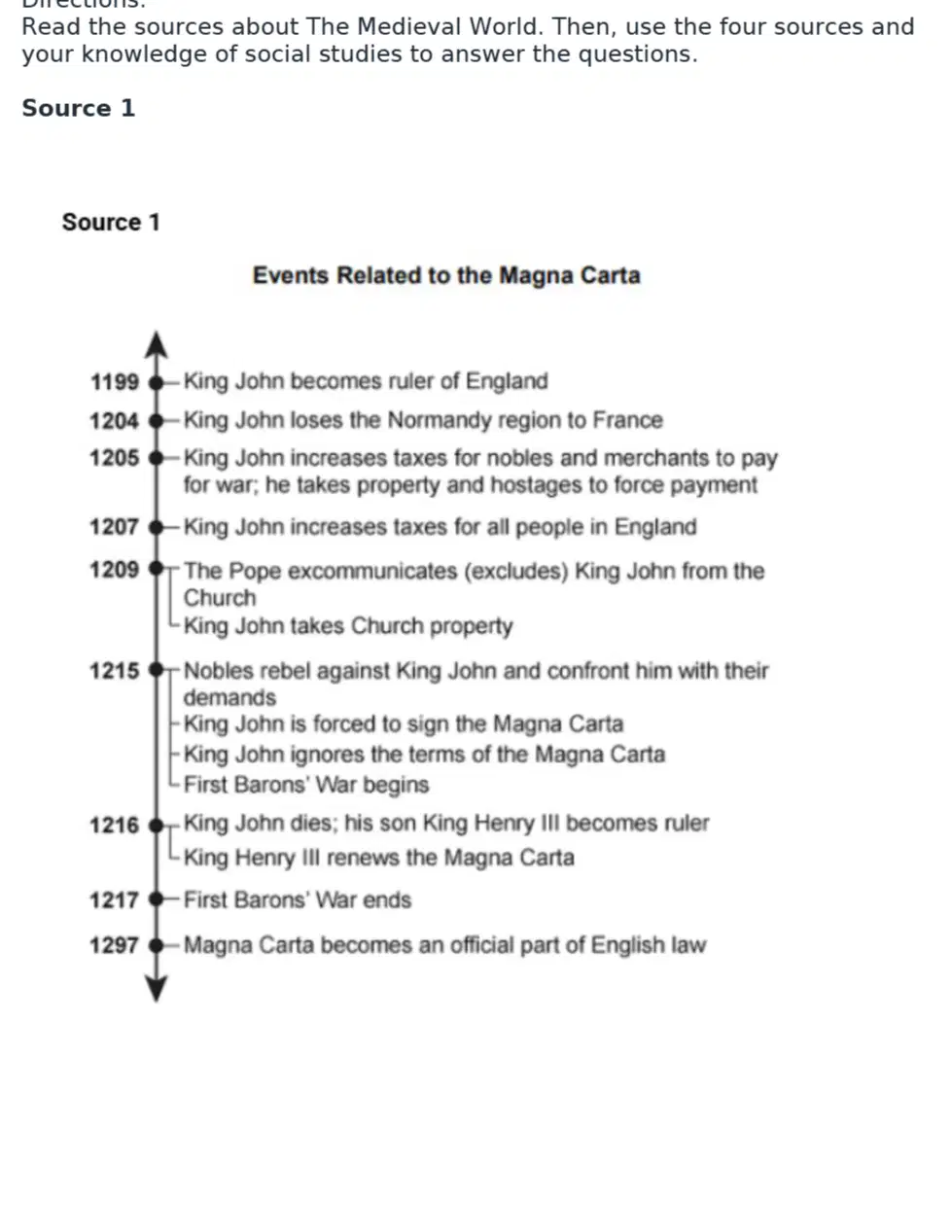
In 1207, King John increased taxes for all people in England.
True
False

Who excommunicated King John from the Church in 1209?
The Pope
The Archbishop of Canterbury
The King of France
The Bishop of London

What significant event happened in 1215 involving King John and the nobles?
Nobles rebelled against King John and confronted him with their demands; King John was forced to sign the Magna Carta.
King John was crowned as the new king of France.
The Black Death swept through England, killing thousands.
King John led a successful crusade to the Holy Land.

What document was King John forced to sign in 1215?
The Magna Carta
The Bill of Rights
The Petition of Right
The English Civil Code

What war began after King John ignored the terms of the Magna Carta?
First Barons' War
Hundred Years' War
War of the Roses
English Civil War

Who became ruler after King John died in 1216?
His son, King Henry III
King Richard II
Queen Elizabeth I
King Edward IV

In what year did the Magna Carta become an official part of English law?
1297
1215
1350
1415
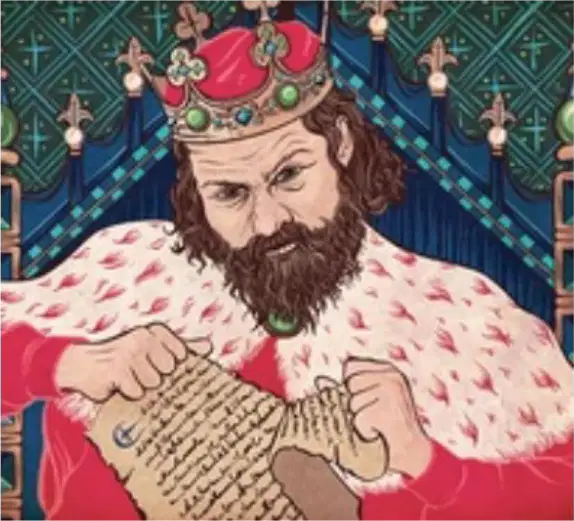
Based on the source note, did King John actually tear the Magna Carta in half?
Yes
No
What were some of the actions taken by King John that contributed to the drafting of the Magna Carta?
A. Demanding large sums of taxes from nobles.
B. Expanding the rights of serfs
C. Wasting funds from the Royal treasury
D. Ordering that prisoners to be starved to death
E. Loss of the Normandy region to France.

In what year did King John become ruler of England?
1199
1216
1189
1204

Which region did King John lose to France in 1204?
Normandy
Aquitaine
Brittany
Gascony

In 1205, what did King John do to raise money for war?
He increased taxes for nobles and merchants and took property and hostages to force payment.
He sold off large portions of royal land to foreign rulers.
He abolished all taxes and relied solely on donations from the church.
He borrowed money exclusively from Italian bankers.

In 1207, King John increased taxes for all people in England.
True
False

Who excommunicated King John from the Church in 1209?
The Pope
King Philip II
Archbishop of Canterbury
The Bishop of London

What did King John do after being excommunicated in 1209?
He took Church property.
He abdicated the throne.
He went into exile.
He converted to Islam.

What major event happened in 1215 involving King John and the nobles?
Nobles rebelled against King John and confronted him with their demands. King John was forced to sign the Magna Carta.
King John was crowned as the new emperor of France.
The Black Death spread throughout England, causing widespread panic.
King John established the first English Parliament.

What did King John do after signing the Magna Carta?
He ignored the terms of the Magna Carta.
He abdicated the throne and left England.
He became a supporter of the barons.
He immediately implemented all the terms.

Who became ruler after King John died in 1216?
His son, King Henry III.
King Richard II.
Queen Elizabeth I.
King Edward IV.

When did the First Barons' War end?
1217
1215
1220
1204

In what year did the Magna Carta become an official part of English law?
1297
1215
1350
1415
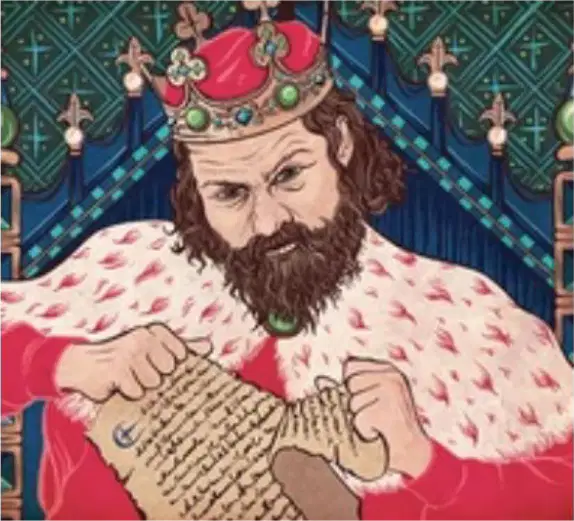
What does the cartoon of King John tearing the Magna Carta represent?
The actual event of King John destroying the Magna Carta
How English nobles viewed King John
King John signing the Magna Carta
The creation of the Magna Carta
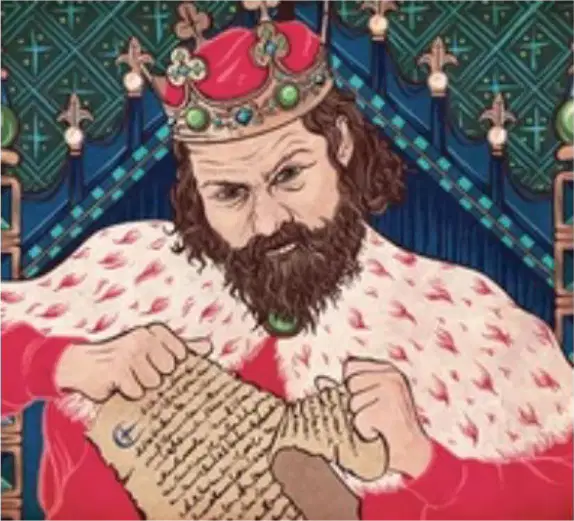
King John actually tore the Magna Carta in half as shown in the cartoon.
True
False
According to the Magna Carta, under what condition would the Crown have guardianship of a man's heir?
If the 'fee-farm' owes knight's service.
If the heir is over 21 years old.
If the heir is married.
If the estate is held by the church.
This section of the Magna Carta discusses what about land ownership and guardianship?
It explains the rules for land ownership and guardianship.
It describes the process of electing a king.
It outlines the rights of merchants.
It focuses on religious freedoms.
Why is the Magna Carta considered an important document?
It reinforced the power of kings
It strengthened the nobility's power to collect taxes
It applied laws of England to the Monarchy
It declared equality for nobles and serfs
What evidence from the source best supports the answer to Part A?
"We will not have guardianship of his heir, nor of the land that belongs to the other person's fee"
"By reason of any small property that he may hold of the Crown for a service of knives, arrows, or the like"
"No official shall place a man on trial upon his own unsupported statement, without producing credible witnesses to the truth of it"
"No free man shall be seized or imprisoned, or stripped of his rights or possessions, or outlawed or exiled, or deprived of his standing in any other way"
According to the timeline 'Events Related to the Magna Carta', in what year did King John become ruler of England?
1199
1215
1189
1204
According to the timeline 'Events Related to the Magna Carta', what significant event happened in 1204?
King John loses the Normandy region to France
The Magna Carta is signed by King John
The Battle of Hastings takes place
King John is crowned King of England
According to the timeline 'Events Related to the Magna Carta', in which year did King John increase taxes for nobles and merchants to pay for war and take property and hostages to force payment?
1205
1210
1215
1199
According to the timeline 'Events Related to the Magna Carta', what did King John do in 1207?
King John increases taxes for all people in England
King John signs the Magna Carta
King John is crowned King of England
King John abolishes all taxes
According to the timeline 'Events Related to the Magna Carta', who excommunicated King John from the Church in 1209?
The Pope
The Archbishop of Canterbury
The King of France
The Bishop of London
According to the timeline 'Events Related to the Magna Carta', what did King John do after being excommunicated in 1209?
King John takes Church property
King John signs the Magna Carta
King John abdicates the throne
King John declares war on France
According to the timeline 'Events Related to the Magna Carta', what happened in 1215?
Nobles rebel against King John and confront him with their demands; King John is forced to sign the Magna Carta; King John ignores the terms of the Magna Carta; First Barons' War begins
The Black Death sweeps through England, killing a large portion of the population.
The English Civil War begins between the Royalists and Parliamentarians.
The Battle of Hastings takes place, leading to Norman rule in England.
According to the timeline 'Events Related to the Magna Carta', who became ruler after King John died in 1216?
His son King Henry III
William the Conqueror
Richard the Lionheart
Edward I
According to the timeline 'Events Related to the Magna Carta', what did King Henry III do after becoming ruler in 1216?
King Henry III renews the Magna Carta
King Henry III abolishes the Magna Carta
King Henry III declares war on France
King Henry III signs the Treaty of Versailles
According to the timeline 'Events Related to the Magna Carta', when did the First Barons' War end?
1217
1215
1225
1204
According to the timeline 'Events Related to the Magna Carta', in what year did the Magna Carta become an official part of English law?
1297
1215
1350
1415
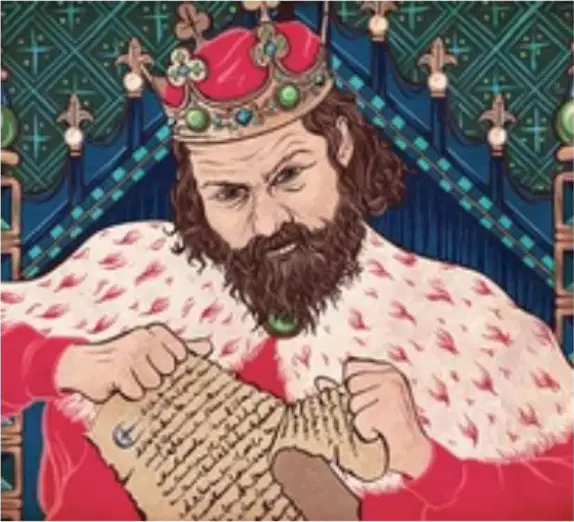
What does the cartoon of King John tearing the Magna Carta represent?
The actual event of King John tearing the Magna Carta
How English nobles perceived King John
King John signing the Magna Carta
The end of the monarchy
According to clause 37 of the Magna Carta, when will the Crown NOT have guardianship of a man's heir or land?
When the man holds land only from the Crown
When the man holds land from both the Crown and someone else for knight's service
When the man owes knight's service to the Crown
When the man holds no land at all
According to clause 38 of the Magna Carta, no official shall place a man on trial without producing ________ to the truth of it.
credible witnesses
written confessions
royal decrees
personal opinions
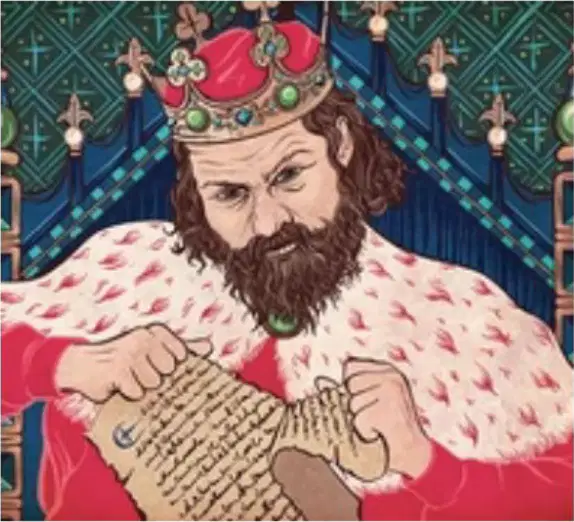
The artist chose to depict King John tearing the Magna Carta, even though it did not actually happen, to symbolize his rejection of its terms.
To symbolize his rejection of its terms.
To show his support for the Magna Carta.
Because it was a historical fact.
To illustrate a peaceful agreement.
The Magna Carta changed the way the government functioned during Medieval England in which two ways?
It limited the king's power and established the rule of law.
It abolished the monarchy and created a democracy.
It increased the king's power and removed Parliament.
It established a new religion and banned taxes.
Why did the Church play an important role in life during the early Middle Ages?
A. English Kings required daily attendance at Church.
B. The Church provided social services like hospitals and schools.
C. Churches supplied communities with military protection.
D. The Church owned roads, homes, and city services.
E. The Church was one of the only major institutions to survive the Fall of Rome.
Place the events that lead to the adoption of the Magna Carta in chronological order from earliest to latest.
1. The king of France attacked two English-held cities. 2. King John increased taxes on nobles and merchants. 3. Angry barons and nobles overthrew King John's rule. 4. King John was forced to accept the demands outlined in the Magna Carta.
1. King John increased taxes on nobles and merchants. 2. The king of France attacked two English-held cities. 3. Angry barons and nobles overthrew King John's rule. 4. King John was forced to accept the demands outlined in the Magna Carta.
1. Angry barons and nobles overthrew King John's rule. 2. The king of France attacked two English-held cities. 3. King John increased taxes on nobles and merchants. 4. King John was forced to accept the demands outlined in the Magna Carta.
1. King John was forced to accept the demands outlined in the Magna Carta. 2. Angry barons and nobles overthrew King John's rule. 3. The king of France attacked two English-held cities. 4. King John increased taxes on nobles and merchants.
Select the best answer from each list to complete the sentences about the Magna Carta. King John is remembered as a ______ ruler, as evidenced by allowing 22 knights to starve to death at Corfe Castle. The Magna Carta was established to ensure ______ applied to future rulers.
tyrannical, rule of law
benevolent, absolute monarchy
just, divine right
merciful, hereditary succession
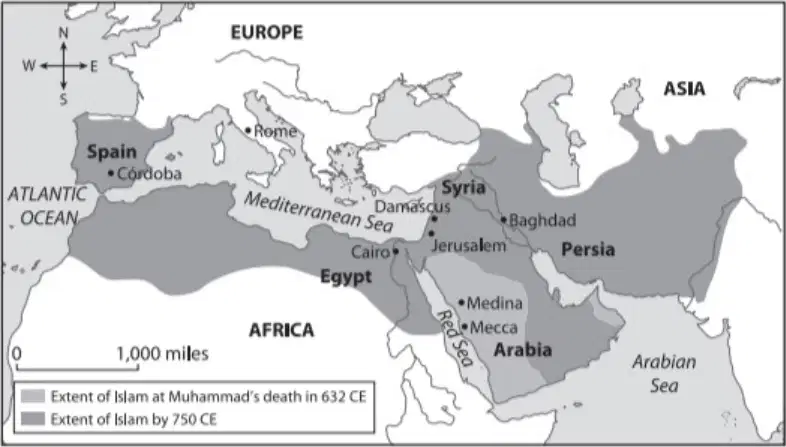
Which statement explains how Islam changed after Muhammad's death in 632 CE?
A. Religious wars led to a decrease in the number of followers of the Islamic faith.
B. The first four caliphs spread Islam through conquest.
C. Fewer Islamic scholars traveled to Mecca on a pilgrimage.
D. Muslim scholars stopped studying mathematics.
Select the features that are characteristic of Islamic art.
Use of intricate geometric patterns
Depiction of human figures in religious art
Frequent use of bright neon colors
Focus on landscape painting
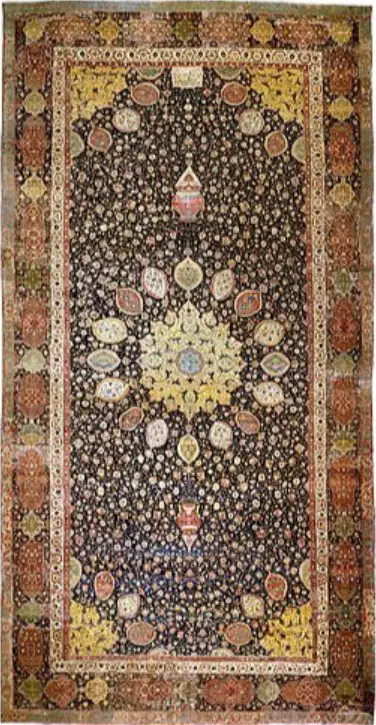
Which of the following is most characteristic of Persian art as seen in the Ardabil Carpet?
A. Scenes of everyday people
B. The repeated use of single colors
C. Items to enhance interior home design
D. Geometric patterns
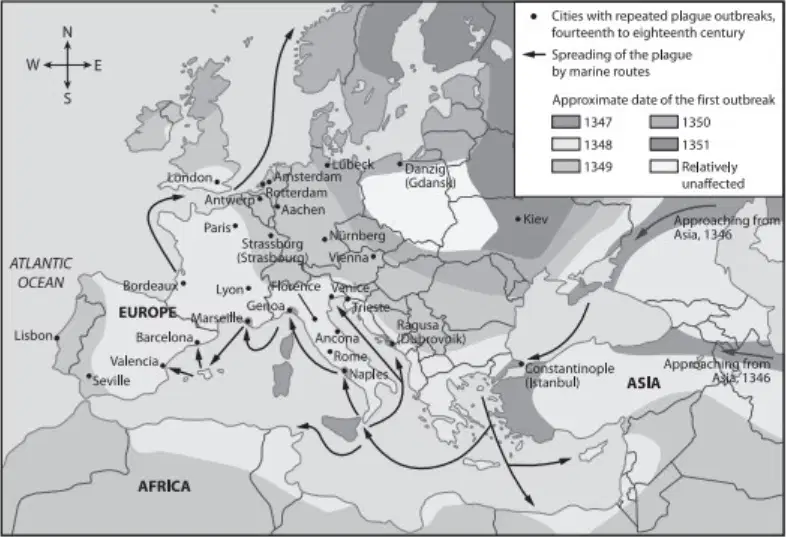
Refer to the map titled 'Second Pandemic of the Black Death in Europe (1347–51 CE)'. Which letter on the map represents Asia?
Western Europe
Rome
Africa
Asia
What factor most contributed to a strong economy of the Kings of Ghana?
Taxes from trade allowed for expansion and beautification.
The spread of Islam increased influence and religious economies.
Scientific discoveries allowed for the sale of new technologies.
Isolation from other countries prevented the loss of key resources.
Which of the following conclusions are best supported by the passage?
Salt was a key source of wealth in the Ghana Empire.
Much of the population in the Ghana Empire had difficulty finding water.
The lack of trees and shade led to scorching temperatures.
Gold and silver were the most valuable resources in Ghana.
Which line from the passage best supports your answer in Part A?
The line that directly provides evidence for the answer in Part A.
A line that introduces a new character.
A line that describes the setting.
A line that summarizes the passage.
What is the most likely explanation for why Kumbi Saleh was the most important city in Ghana?
Nearby mountains provided gold and other resources.
Access to rivers and oceans provided food and fertile soil.
It was located at the center of several trade routes.
It was the site of several architectural wonders.
Why did the Ghana Empire decline in the late 12th century? Select two correct answers.
A. Disagreement between Ghana's leaders led to civil war.
B. Climate changes, such as drought, led to difficulties.
C. A decline in resources such as salt and gold led to poverty.
D. Invaders from the Susu forces threatened them militarily.
E. New technology made trade routes less productive.
What was the main reason for the wealth of the Ghana Empire?
Control of the gold and salt trade
Taxation of European merchants
Conquest of Egypt
Farming along the Nile River
Which city served as the capital of the Ghana Empire and was a major center for trade?
Marrakesh
Kumbi Saleh
Timbuktu
Cairo
Why was salt highly valued in the Ghana Empire?
It was a rare gemstone
It was used to make weapons
It was used as a building material
It was essential for preserving food and maintaining health


What was significant about the location of the Ghana Empire?
It had access to the Atlantic Ocean and therefore valuable shipping routes.
Most of the empire was located in the mountains overlooking other empires.
It was located between the gold mines in the south and valuable salt resources in the north
The empire was isolated from other empires, keeping it safe from attacks.

Which factor contributed most to Ghana’s power?
resources
water routes
education system
central location

