
 Worksheets
Unit 1 Exam
Total questions: 59
Worksheet time: 30mins
Name
Class
Date
1.
The monomer of this biomolecule is glucose, a monosaccharide.
a)
Carbohydrate
b)
Lipids
c)
Proteins
d)
Nucleic Acids
2.
The monomer of this biomolecule is an amino acid
a)
Carbohydrate
b)
Lipids
c)
Proteins
d)
Nucleic Acids
3.
This biomolecule is made of fatty acids and glycerol
a)
Carbohydrate
b)
Lipids
c)
Proteins
d)
Nucleic Acids
4.
The function of this biomolecule is to store genetic information.
a)
Carbohydrate
b)
Lipids
c)
Proteins
d)
Nucleic Acids
5.
DNA and RNA are examples of which biomolecule?
a)
Carbohydrate
b)
Lipids
c)
Proteins
d)
Nucleic Acids
6.
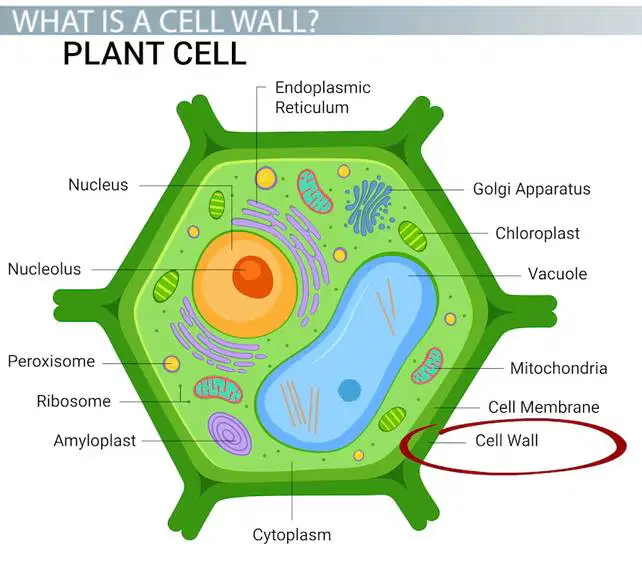
Choose the description that best describes the cell organelle/structure shown above.
a)
This cell structure provides support to the cell and is not found in animal cells.
b)
This cell structure is a protective barrier that encloses a cell and controls the movement of materials into and out of the cell.
c)
This cell organelle contains the cell’s DNA and is the control center of the cell.
d)
This cell organelle breaks down food molecules to make ATP.
7.
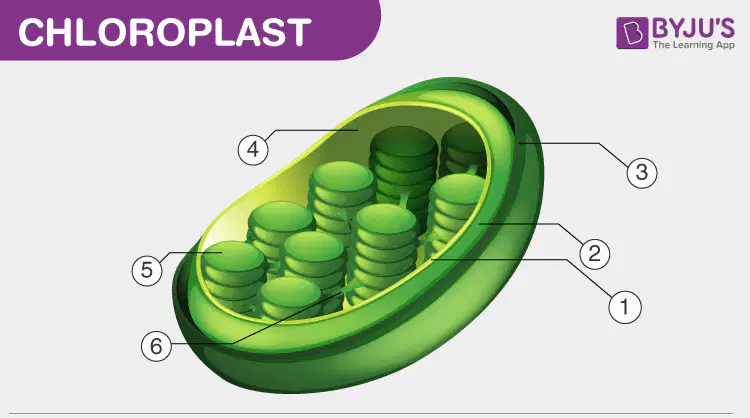
Choose the description that best describes the cell organelle/structure shown above.
a)
This cell structure provides support to the cell and is not found in animal cells.
b)
This cell organelle is a series of folded membranes in which proteins, lips, and other materials are made.
c)
This cell organelle contains digestive enzymes, gets rid of waste materials, and protects against foreign invaders.
d)
This cell organelle is found in plant cells and harnesses and uses the energy of the sun to make sugar.
8.

Choose the description that best describes the cell organelle/structure shown above.
a)
This cell organelle contains the cell’s DNA and is the control center of the cell.
b)
The fluid within the cell and its contents.
c)
This cell organelle breaks down food molecules to make ATP.
d)
This cell organelle is found in plant cells and harnesses and uses the energy of the sun to make sugar.
9.
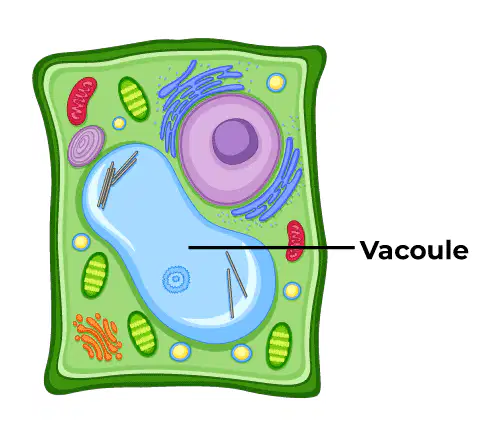
Choose the description that best describes the cell organelle/structure shown above.
a)
This organelle stores water and aids in digestion within the cell.
b)
This organelle packages and distributes materials to be transported out of the cell.
c)
This cell organelle contains the cell’s DNA and is the control center of the cell.
d)
This cell organelle is a series of folded membranes in which proteins, lipids, and other materials are made.
10.

Choose the description that best describes the cell organelle/structure shown above.
a)
This cell structure is a protective barrier that encloses a cell and controls the movement of materials into and out of the cell.
b)
This cell structure provides support to the cell and is not found in animal cells.
c)
This organelle stores digestive enzymes and aids in digestion within the cell.
d)
This cell organelle makes proteins and are the smallest of all organelles.
11.
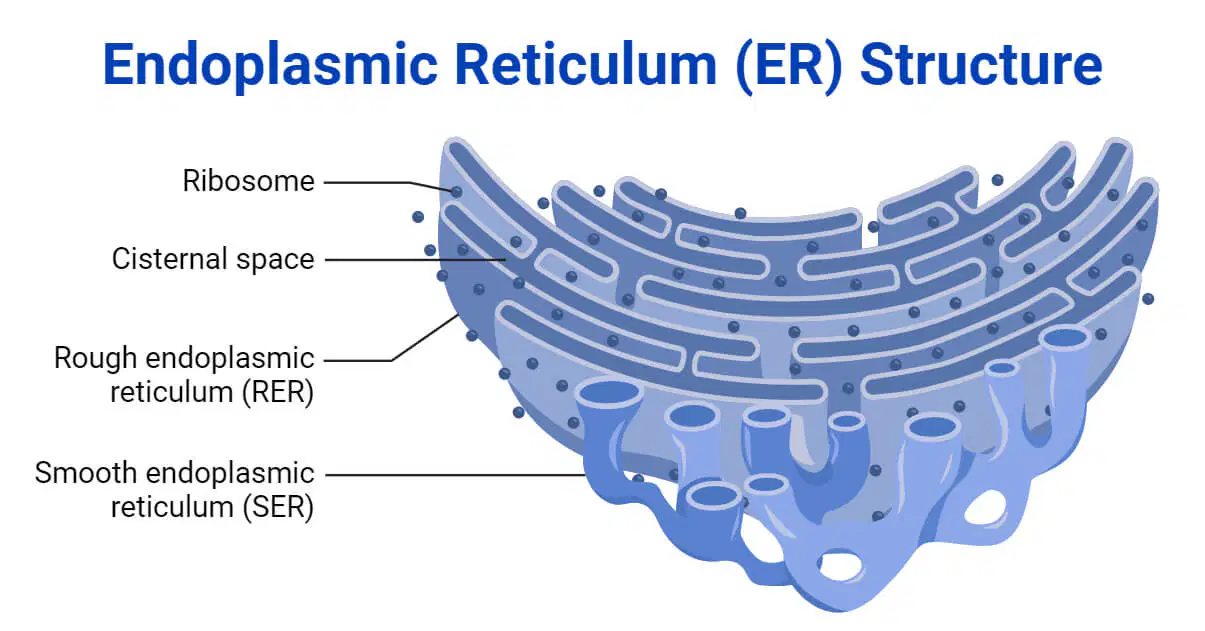
Choose the description that best describes the cell organelle/structure shown above.
a)
This cell organelle contains digestive enzymes, gets rid of waste materials, and protects against foreign invaders.
b)
This cell organelle breaks down food molecules to make ATP.
c)
This cell organelle contains the cell’s DNA and is the control center of the cell.
d)
This cell organelle is a series of folded membranes in which proteins, lipids, and other materials are made.
12.

Choose the description that best describes the cell organelle/structure shown above.
a)
This organelle packages and distributes materials to be transported out of the cell.
b)
This cell organelle contains digestive enzymes, gets rid of waste materials, and protects against foreign invaders.
c)
This cell organelle contains the cell’s DNA and is the control center of the cell.
d)
This cell organelle breaks down food molecules to make ATP.
13.
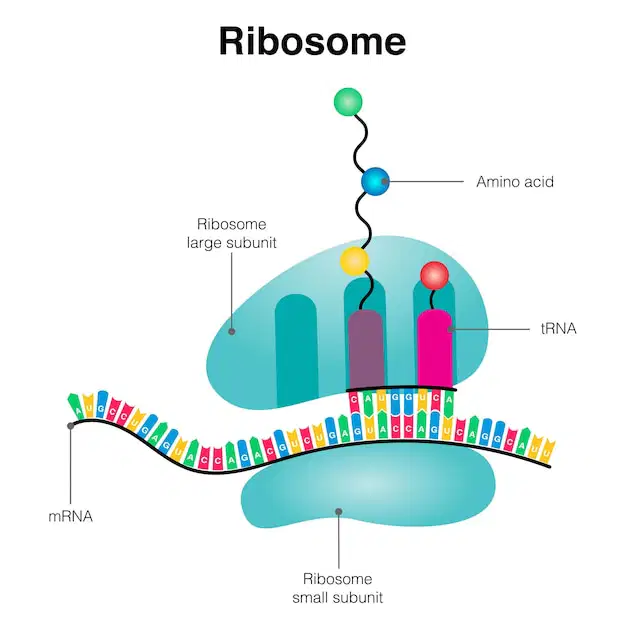
Choose the description that best describes the cell organelle/structure shown above.
a)
This organelle stores digestive enzymes and aids in digestion within the cell.
b)
This cell organelle makes proteins and are the smallest of all organelles.
c)
This type of eukaryotic cell lacks a cell wall and does not contain chloroplasts.
d)
This cell organelle contains the cell’s DNA and is the control center of the cell.
14.

Choose the description that best describes the cell organelle/structure shown above.
a)
This cell structure provides support to the cell and is not found in animal cells.
b)
This cell organelle contains the cell’s DNA and is the control center of the cell.
c)
This cell organelle makes proteins and are the smallest of all organelles.
d)
This cell structure is a protective barrier that encloses a cell and controls the movement of materials into and out of the cell.
15.
Which cell organelles/structures does the animal cell NOT have that a plant cell does have? (Select all that apply.)
a)
Cell Wall
b)
Ribosomes
c)
Cytoplasm
d)
Chloroplasts
16.
Prokaryotes include the following:
a)
Bacteria, Plants & Animals
b)
Plants & Animals
c)
Bacteria
17.
Prokaryotes _____ in their cells.
a)
have no nucleus or membrane bound organelles
b)
have membrane bound organelles
c)
have a nucleus
d)
have mitochondria
18.
_____ are bacteria and viruses that cause disease.
a)
Microbes
b)
Pathogens
c)
Decomposers
d)
Autotrophs
19.
What word describes when water is attracted to other substances?
a)
cohesion
b)
adhesion
c)
capillary action
d)
surface tension
e)
polarity
20.
The tightness across the surface of water that enables paper clips to float is ____________.
a)
capillary action
b)
adhesion
c)
polarity
d)
surface tension
e)
cohesion
21.
When a molecule has an opposite electrical charge on each end, it is known as what?
a)
cohesion
b)
hydrogen bond
c)
polar molecule
d)
capillary action
e)
adhesion
22.
When water molecules stick easily to other water molecules, this is called what?
a)
cohesion
b)
hydrogen bond
c)
polar molecule
d)
capillary action
e)
adhesion
23.
Water is polar because...
a)
The molecule has two poles, at which the it is colder than other regions of the molecule.
b)
The unequal sharing of electrons gives the water molecule a slight negative charge near its hydrogen atoms and a slight positive charge near its oxygen atom.
c)
The water molecule is neutral.
d)
The unequal sharing of electrons gives the water molecule a slight negative charge near its oxygen atom and a slight positive charge near its hydrogen atoms.
24.
The plasma (cell) membrane's function in a cell will...
a)
Makes Proteins
b)
Regulates material that enter and leave the cell
c)
Has DNA
d)
Converts glucose into usable energy (ATP)
25.
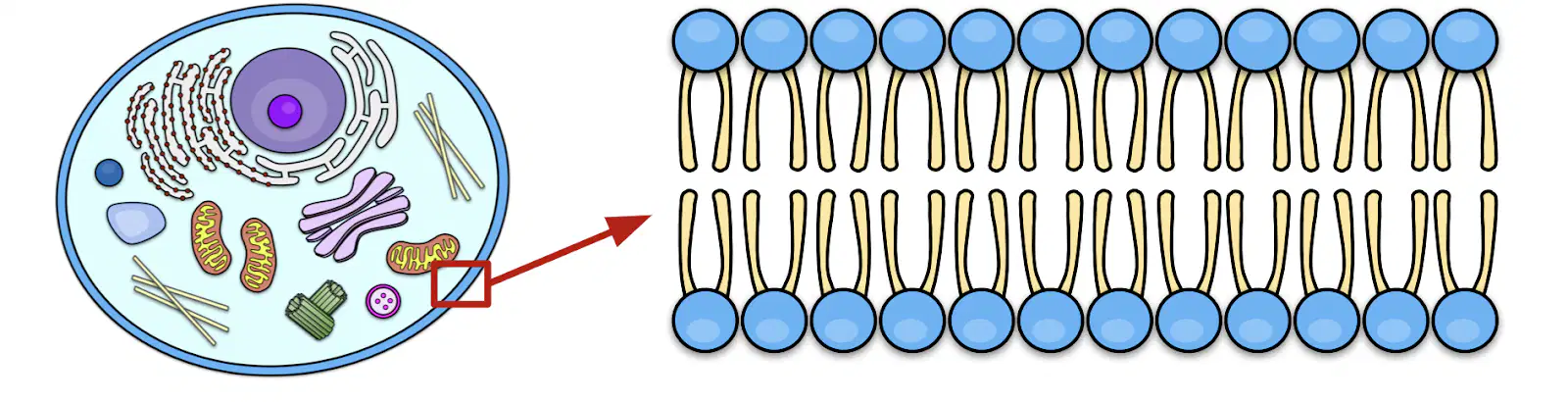
Which description below best describes the phospholipids that make up the cell membrane?
a)
Hydrophilic Head and Hydrophilic Tail
b)
Hydrophilic Head and Hydrophobic Tail
c)
Hydrophobic Head and Hydrophilic Tail
d)
Hydrophobic Head and Hydrophobic Tail
26.
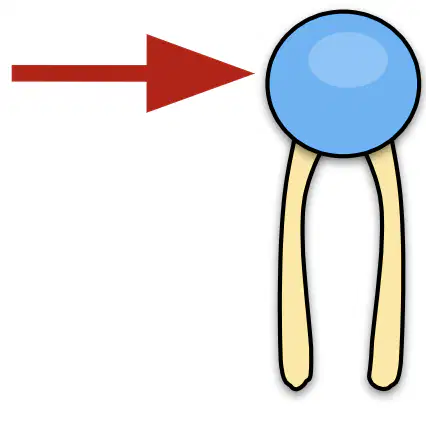
Which part of a phospholipid is being identified by the arrow?
a)
Hydrophilic tail
b)
Hydrophilic head
c)
Hydrophobic head
d)
Hydrophobic tail
27.
What is the name of the process by which water moves through a membrane?
a)
Photosynthesis
b)
Meiosis
c)
Mitosis
d)
Osmosis
28.

Which term describes the movement of molecules and ions across a membrane without using additional energy?
a)
Active Transport
b)
Passive Transport
c)
Hypotonic Transport
d)
Hypertonic Transport
29.
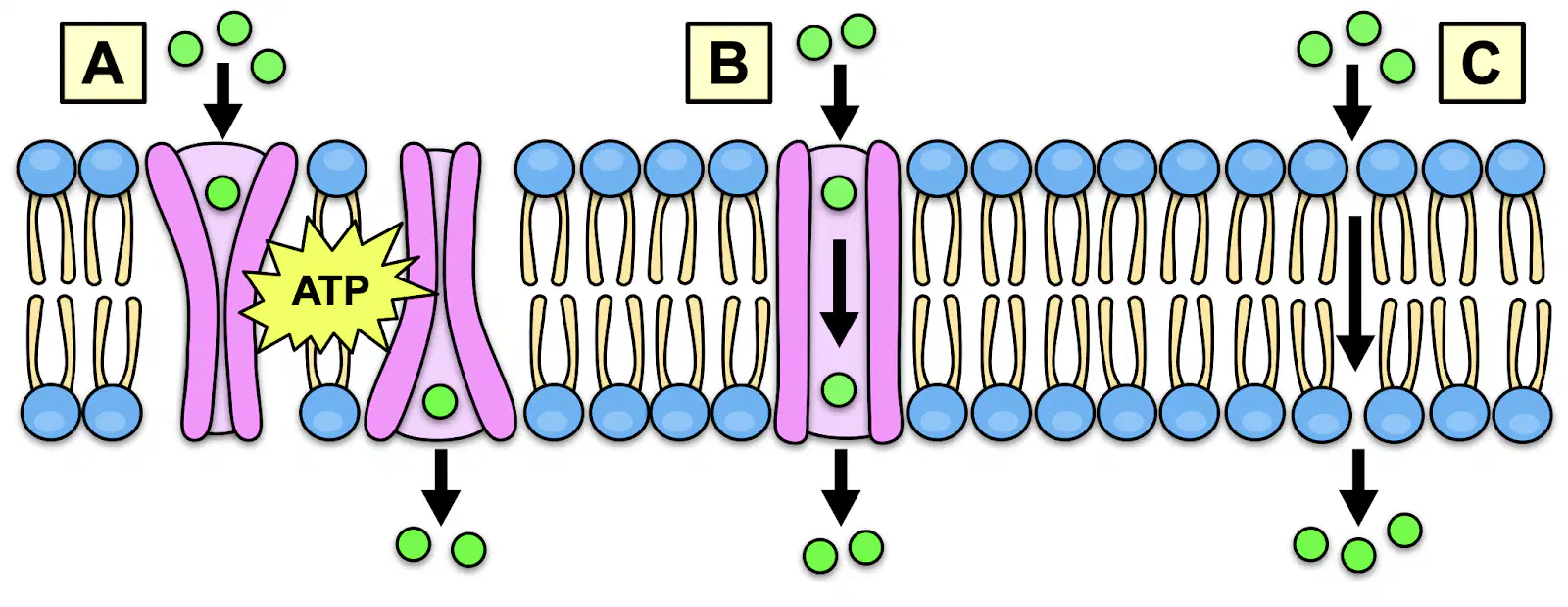
Which diagram below shows active transport?
a)
Diagram A
b)
Diagram B
c)
Diagram C
d)
Both A and C
30.
Which scenario below would be an example of active transport?
a)
A higher concentration of potassium ions exists outside of the cell. Potassium ions continue to move out of the cell.
b)
There is an equal concentration of potassium ions inside and outside of the cell. Potassium ions are transported evenly in both directions.
c)
A higher concentration of potassium ions exists inside of the cell. Potassium ions move out of the cell.
d)
A higher concentration of potassium ions exists outside of the cell. Potassium ions move into the cell.
31.
What structure can help bacteria move?
a)
Flagellum
b)
Mesosome
c)
Capsule
d)
Whip
32.
What type of medicine kills bacteria?
a)
Cough Medicine
b)
Antifungals
c)
Vaccine
d)
Antibiotics
33.
Viruses are cells while bacteria are not
a)
True
b)
False
34.
Viruses are about the same size as a human cell.
a)
True
b)
False
35.
Viruses are living organisms.
a)
True
b)
False
36.
Viruses always need a host cell to reproduce (replicate)
a)
True
b)
False
37.
A way that bacteria can be helpful is _____.
a)
by breaking down food
b)
by decomposing dead organisms
c)
in food production
d)
all of these
38.
One difference between the lytic and lysogenic duplication cycles is that
a)
Lytic occurs only once
b)
Lytic creates multiple duplicates, while lysogenic produces one offspring
c)
Lysogenic cycle only occurs in host cells
d)
Viruses in the lysogenic cycle wait for an external stimulus before duplicating
39.
Viruses show NO characteristics of life
a)
True
b)
False
40.
Viruses may have RNA, which is single-stranded, or ____________ which is double-stranded genetic information.
a)
Amino Acids
b)
PNA
c)
DNA
d)
Chromosomes
41.
Viruses contain nucleic acids such as DNA and are surrounded by a _______________ coat.
a)
lipid
b)
protein
c)
carbohydrate
42.
Which of the following is produced by medical researchers and helps protect us from viruses?
a)
Antibodies
b)
Interferon
c)
Vaccines
d)
Bleach
43.
What are the stages of mitosis in the correct order?
a)
prophase, anaphase, metaphase, telophase
b)
prophase, metaphase, anaphase, telophase
c)
anaphase, metaphase, prophase, telophase
d)
telophase, anaphase, metaphase, prophase
44.
Cells produced in mitosis have __________chromosomes as the parent cell.
a)
fewer
b)
the same number of
c)
more
45.
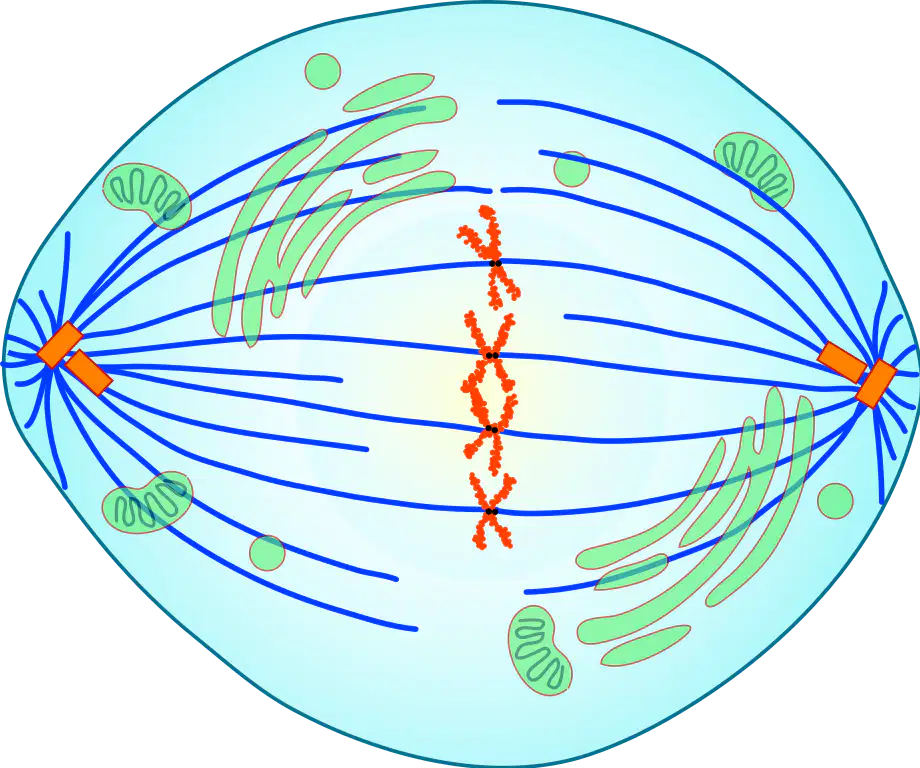
Notice the image below. What stage of mitosis would this be?
a)
anaphase
b)
metaphase
c)
prophase
d)
telophase
46.
Why do cells reproduce or divide?
a)
growth
b)
repair
c)
reproduction
d)
all of the above
47.
This organ system exchanges gases and brings oxygen into the body and removes carbon dioxide.
a)
respiratory
b)
circulatory
c)
digestive
d)
excretory
48.
This organ system circulates blood which transports nutrients, wastes, hormones, oxygen, and helps maintain a stable temperature in the body.
a)
circulatory
b)
respiratory
c)
digestive
d)
urinary
49.
This organ system is responsible for protecting the body against harmful pathogens. When a germ enters the body, this system uses several organs to locate and hopefully eliminate the invading particle.
a)
immune
b)
endocrine
c)
integumentary
d)
skeletal
50.
The heart and vessels are part of the -
a)
circulatory
b)
respiratory
c)
endocrine
d)
nervous
51.
The lungs are part of the -
a)
digestive
b)
respiratory
c)
muscular
d)
lymphatic
52.
A path along which nerves send messages to the brain
a)
cell body
b)
dendrite
c)
reflex
d)
flinch
53.
The center of the neuron cell
a)
cell body
b)
dendrite
c)
reflex
d)
flinch
54.
Microscopes typically contain three (or more) of these and they are the primary optical lenses on a microscope - the part that actually does the magnifying. They may range from 4x-100x.
a)
eye piece tube
b)
objective lenses
c)
course adjustment knob
d)
aperture
55.
These round wheels on the sides are used to focus the microscope.
a)
coarse and fine focus knobs
b)
aperture knobs
c)
condenser knobs
d)
diaphragm
56.
This object is where the specimen or slide is viewed and placed. It may have clips and it may also move up and down.
a)
porch
b)
objectives
c)
stage
d)
base
57.
If the eyepiece magnifies 10x and you are using a 10x objective, what is your total magnification?
a)
10x
b)
20x
c)
100x
d)
1000x
58.
At high (40x) objective lens your should ONLY use the _____ knob to avoid cracking the slide.
a)
fine
b)
course
59.
What is the Phenomenon for Unit 1?
a)
Sea Otters
b)
Biomolecules and cells
c)
Human disease
d)
Viruses and bacteria
100 %

