
 Worksheets
Biology Sem 2 Review Part 1
Total questions: 54
Worksheet time: 27mins
Name
Class
Date
1.
Natural selection is also known as “survival of the _________”
a)
Strongest
b)
Fastest
c)
Fittest
d)
Species
2.
"On the origin of species" was written by
a)
Charles Darwin
b)
Thomas Malthus
c)
James Hutton
3.
The Galapagos Islands are located near:
a)
Russia
b)
China
c)
Africa
d)
South America
4.
Which statement IS TRUE?
a)
Individuals evolve
b)
populations evolve
5.
According to Darwin, 'fitness' refers to an organism's ability to
a)
Survive and reproduce
b)
Eat and Sleep
c)
Exercise more
d)
Use their legs
6.
Darwin’s theory of evolution suggests that
a)
Animals that look alike are the most closely related
b)
Species change over time
c)
Extinct species are NOT related to living species
d)
Different species can interbreed.
7.
A red form and a green form of an insect lives in the green rainforest trees. You might expect:
a)
the green population to increase and the red to decrease
b)
the green population to decrease and the red to increase
c)
both populations should stay the same
d)
both populations will increase
8.
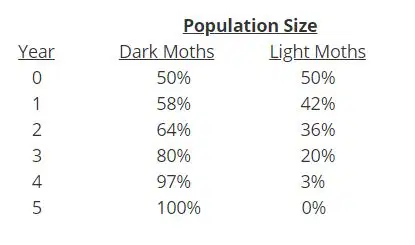
Looking at the data below, what type of environment do you think this data was collected from?
a)
Light Trees
b)
Dark Trees
c)
There's no way to tell
9.
Artificial or natural selection? Mice that are faster don't get snatched up by owls.
a)
Artificial Selection
b)
Natural Selection
10.
Artificial or natural selection? Cows that are breed to be bigger for more meat
a)
Artificial Selection
b)
Natural Selection
11.
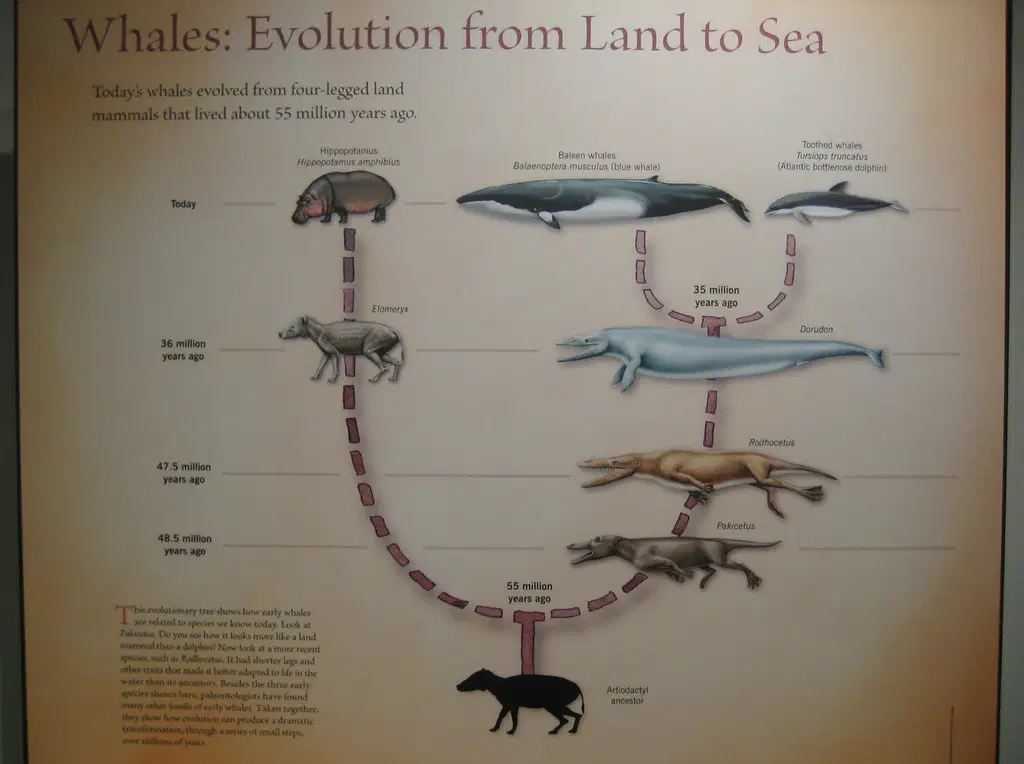
This diagram suggests the following:
a)
common ancestory
b)
Living species descend, with changes, over time
c)
descent with modification
d)
All of the above
12.

These finches live in the Galapagos Islands. What process produced the different types of beaks?
a)
artificial selection
b)
natural selection
c)
geographical distribution
d)
inheritance of acquired traits
e)
disuse of the beak
13.
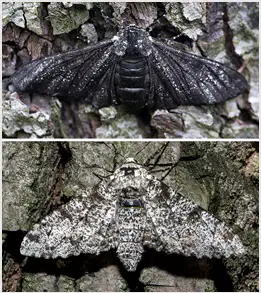
The example of the peppered moths living in England demonstrates that...
a)
a change in the environment can result in the evolution of a species that live there
b)
evolution occurs so slowly that it is not possible to observe within a person’s lifetime
c)
the environment near these cities has always favored dark colored moths
d)
English people hate moths
14.
Population change over time is
a)
Fitness
b)
adaptations
c)
evolution
d)
descent by modification
15.
Every DNA nucleotide contains the following 3 molecules
a)
phosphate, deoxyribose, and a base
b)
phosphate, deoxyribose and thymine
c)
phosphate, ribose and a base
16.
The DNA strand is ATCTTCGTCAT. The complement would be
a)
TAGATGCAGTA
b)
TAGAAGCAGTA
c)
TAGAAGCGTA
d)
TAGAAGGCAGTA
17.
DNA is found in
a)
the ribosome
b)
the cell membrane
c)
the nucleus
d)
in different locations depending on the cell.
18.
The bases ATCG are used in
a)
DNA
b)
RNA
c)
both DNA and RNA
19.
The bases AUCG are used in
a)
DNA
b)
RNA
c)
both DNA and RNA
20.

This is a picture of
a)
DNA
b)
RNA
c)
Both DNA and RNA
d)
Neither DNA or RNA
21.
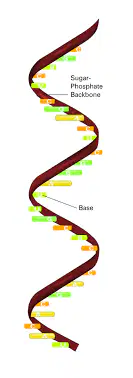
This is a picture of
a)
DNA
b)
RNA
c)
Both DNA or RNA
d)
Neither DNA or RNA
22.
The sugar in DNA is
a)
Ribose
b)
Deoxyribose
c)
Can be either Ribose or Deoxyribose
23.
The sugar in RNA is
a)
Ribose
b)
Deoxyribose
c)
Can be either Ribose or Deoxyribose
24.
The DNA base pairing rule says
a)
Adenine bonds with Thymine
b)
Adenine bonds with Cytosine
c)
Adenine bonds with Guanine
d)
Adenine bonds with Uracil
25.
The RNA base pairing rule says
a)
Adenine bonds with Thymine
b)
Adenine bonds with Cytosine
c)
Adenine bonds with Guanine
d)
Adenine bonds with Uracil
26.
DNA sometimes leaves the nucleus
a)
True
b)
False
27.
RNA sometimes leaves the nucleus
a)
True
b)
False
28.
This type of RNA copies a section of DNA and brings the message out to the ribosome
a)
tRNA
b)
rRNA
c)
mRNA
29.
The DNA strand is TAC. The complementary RNA strand is
a)
ATG
b)
UTG
c)
TUC
d)
AUG
30.
The function (job) of this is to carry out instructions (copy the recipe)
a)
DNA
b)
mRNA
c)
nucleotide
d)
all of the above
31.
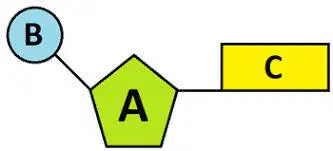
Nucleotides consist of three things:
a)
nitrogenous base, phosphate group and sugar
b)
Sugar, bases and carbon bonds
c)
phosphate, sugars and hydrogen bonds
32.
The function (job) of this is to contain instructions an organism needs to live and develop
a)
DNA
b)
mRNA
c)
nucleotide
d)
all of the above
33.
What would be the percentage of Thymine (T) based on the following data of wheat DNA: A %= 27.3 C %= 22.7 G% =22.8 T%=??
a)
27.3 %
b)
50 %
c)
22.8 %
d)
72.7 %
34.
What is a gene?
a)
a segment of DNA that codes for a protein
b)
a whole strand of DNA
c)
a segment of DNA that codes for a sugar
d)
a complementary strand
35.
This is a monomer (building block) of proteins
a)
DNA
b)
RNA
c)
Amino acids
36.
What is a mutation?
a)
DNA that is copied properly
b)
DNA that is used to make a sugar
c)
A sequence of DNA that has a change or mistake
d)
A sequence of DNA that left the nucleus
37.
Which of these steps is in the correct order?
a)
RNA --> DNA --> Protein
b)
RNA --> Protein --> DNA
c)
DNA --> RNA --> Protein
38.
If a proteins shape is altered, it can no longer carry out it's function
a)
True
b)
False
39.
This process makes a copy of one side of DNA into mRNA
a)
Transcription
b)
Translation
40.
This is the process of making a protein by linking amino acids together
a)
Transcription
b)
Translation
41.
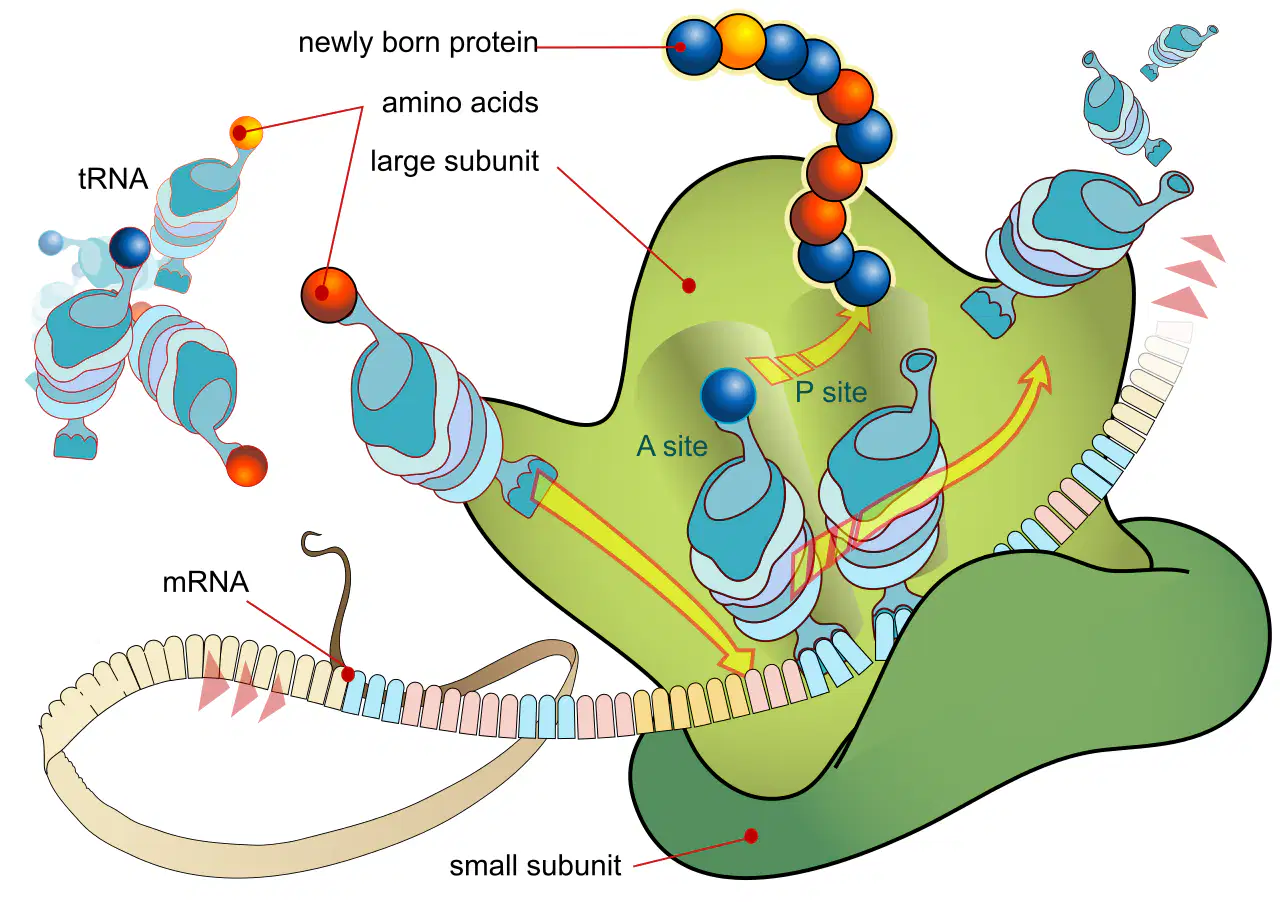
Which process does this picture show?
a)
Transcription
b)
Translation
c)
Replication
42.
A codon is:
a)
a single base in RNA
b)
a series of 3 bases in RNA
c)
a series of 3 bases in DNA
43.
A protein is:
a)
A chain of nucleotides
b)
A chain of Amino Acids
c)
A single amino acid
d)
A bunch of different things
44.
Proteins are synthesized (made):
a)
in the nucleus
b)
in a ribosome
c)
in a mitochondria
d)
different places depending on what type
45.
This type of RNA brings the message to the place where proteins are made
a)
transfer RNA
b)
Messenger RNA
c)
ribosomal RNA
46.
This type of RNA brings the correct amino acid to the place where proteins are made
a)
transfer RNA
b)
Messenger RNA
c)
ribosomal RNA
47.
This is an example of one codon
a)
UUU
b)
UUU ATC
c)
ATC
48.
In order to make a protein the message on DNA must first be converted to
a)
another DNA
b)
mRNA
c)
an amino acid
49.

Use the codon chart to name the amino acids for these codons: AUG UUG
a)
Met - Phe
b)
Ile- Leu
c)
Met- Leu
d)
Met-Start
50.

Find the amino acid for this segment of DNA: CCG TGG TAA TTT
a)
GLY-THR-ILE-LYS
b)
THREO-ISO-LYS-GLY
c)
GLY-THREO-ARG-LYS
d)
LYS-ISO-THREO-GLY
51.

What amino acid change would occur due to a mutation in a RNA sequence from CUG to CCG?
a)
Serine would become Leucine
b)
Serine would become Cysteine
c)
Leucine would become Proline
d)
There would be no change in the amino acid
52.

What amino acid change would occur due to a mutation in a RNA sequence from UCC to UCG?
a)
Serine would become Leucine
b)
Serine would become Cysteine
c)
Leucine would become Serine
d)
There would be no change in the amino acid
53.
What is the function (job) of the protein Hemoglobin?
a)
It carries water through the body
b)
It carries oxygen through the body
c)
It helps fight infections
d)
It causes cavities in teeth
54.
Which of these are symptoms of Sickle Cell Disease? (check all that apply)
a)
Fatigue (tiredness)
b)
Hunger
c)
Chronic Pain
d)
Upset stomach
e)
Hair loss
100 %

