
 Worksheets
Surface of the Earth Review
Total questions: 24
Worksheet time: 12mins
Name
Class
Date
1.
What is the difference between rocks and minerals?
a)
rocks are organic
b)
rocks are made of minerals
c)
minerals are rocks
d)
rocks are not naturally occurring
2.
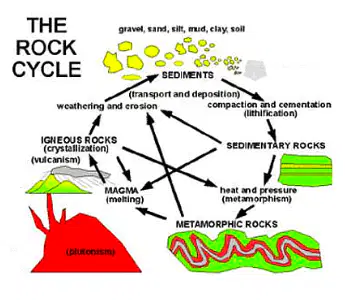
Under normal temperature and pressure conditions, what type of rock could be formed from the weathering and erosion of metamorphic rock?
a)
igneous rock
b)
extrusive rock
c)
metamorphic rock
d)
sedimentary rock
3.
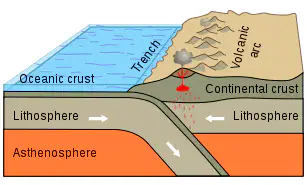
When the two crustal plates converge the oceanic plate always bends and subducts beneath a continental plate. Once the oceanic crust subducts, the rocks are subjected to changes in heat and pressure.
Because of this, we would expect to find ___________ rocks in the area of a subduction.
a)
clastic
b)
igneous
c)
metamorphic
d)
sedimentary
4.
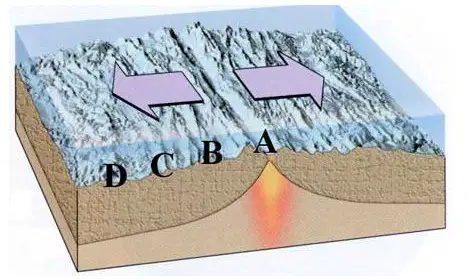
Divergent plate boundaries occur where hot magma rises to the surface, pushing the plates apart.
What type of rock would you expect to find forming at point A?
a)
metamorphic
b)
igneous
c)
sedimentary
d)
clastic
5.
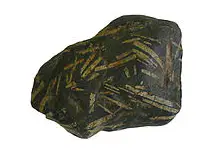
Choose 3 facts about igneous rocks (CHOOSE 3)
a)
example: obsidian
b)
made from magma/lava
c)
usually contains crystals (depends on how fast it cools)
d)
example: limestone
e)
made from heat & pressure
6.
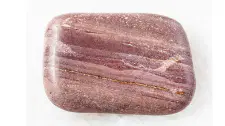
Choose 3 facts about sedimentary rocks (CHOOSE 3)
a)
contains fossils, sand and pebbles
b)
example: limestone
c)
made from compacted & cemented sediments
d)
example: gneiss
e)
contains crystals
7.
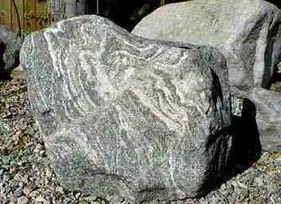
Choose 3 facts about metamorphic rocks (CHOOSE 3)
a)
made from heat and pressure
b)
has ribbon like features
c)
example: gneiss
d)
made from magma or lava
e)
example: obsidian
8.
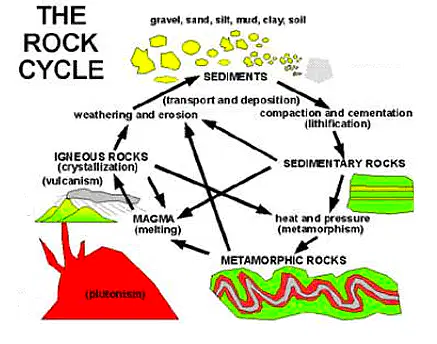
Describe how a metamorphic rock might become a sedimentary rock over time.
a)
Metamorphic rock melts and cools
b)
Metamorphic rock undergoes weathering and erosion. Then, the sediment slowly compacts and cements over time.
c)
Metamorphic rock is buried deep in the Earth. It undergoes a change and is lifted to the surface.
d)
Metamorphic rock cannot become sedimentary rock
9.
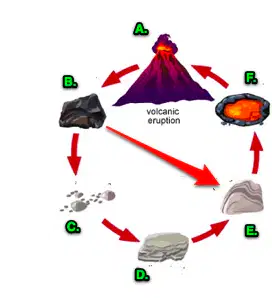
Which letter in the diagram represents sedimentary rock?
a)
A
b)
B
c)
C
d)
D
10.
Which type of rock can include shells or fossils?
a)
igneous
b)
sedimentary
c)
metamorphic
11.
In the lab, a student wants to identify two different minerals. So, she takes them and scrapes them across a plate to see the color of the powder they leave behind. What property of minerals is she testing?
a)
color
b)
hardness
c)
luster
d)
streak
12.
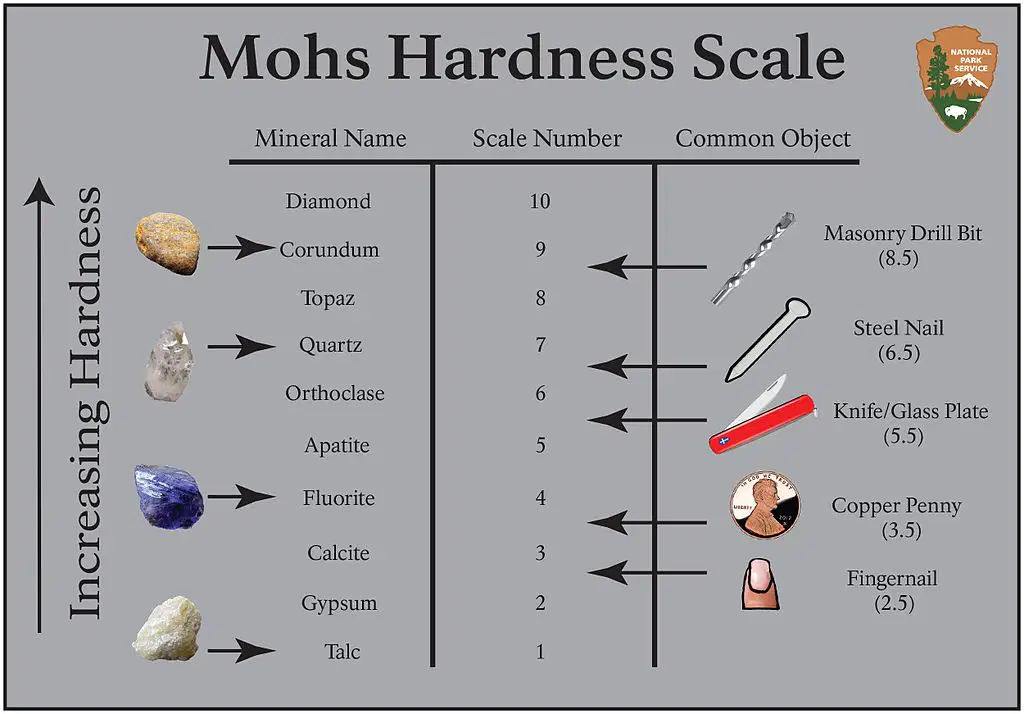
Which mineral is harder than a fingernail, but softer than a glass plate?
a)
diamond
b)
fluorite
c)
quartz
d)
gypsum
13.
Rocks are made of minerals and other materials.
a)
True
b)
False
14.
A measure of a mineral's resistance to scratching. This is measured by scratching it against another substance of known hardness on the Mohs Hardness Scale.
a)
color
b)
hardness
c)
luster
d)
streak
15.
Which is the hardest mineral?
a)
diamond
b)
quartz
c)
topaz
d)
talc
16.
Which test to identify a mineral is unreliable?
a)
color
b)
hardness
c)
gravity
d)
density
17.
What is the difference between cleavage and fracture?
a)
cleavage is breaking into specific patterns. fracture is breaking into random patterns.
b)
cleavage is breaking into random patterns. fracture is breaking into specific patterns
c)
cleavage and fracture are the same
18.
Where would you most likely find rocks that have become smooth?
a)
in the mantle
b)
bottom of the ocean
c)
on the top of a hill
d)
in a fast moving river
19.
A rabbit burrows into the crack of a large rock and widens and splits the rock.
This is an example of ____________________.
a)
erosion
b)
weathering
c)
deposition
d)
sediment
20.
Flood waters moving soil from one location to another
a)
weathering
b)
erosion
c)
deposition
21.
What process is occurring when sediments are deposited at the end of a river bank, creating a delta.
a)
weathering
b)
erosion
c)
deposition
22.
Which is an example of chemical weathering?
a)
Ice freezing in a crack and breaking the rock open
b)
Acid rain breaking down rocks
c)
Wind breaking down rocks over time
d)
Freshwater smoothing out rocks in a river
23.
True or False: Water can be involved in weathering, erosion and deposition.
a)
True
b)
False
24.
All erosion involves (a)
100 %

