
Font size
 Worksheets
Stages of Team Development Quiz
Total questions: 39
Worksheet time: 22mins
What is the first stage of team development?
Storming
Norming
Forming
Performing
Which stage of team development involves the team working effectively towards goals?
Adjourning
Performing
Storming
Forming
In which stage of team development do conflicts typically arise as team members start to push against boundaries?
Norming
Storming
Adjourning
Performing
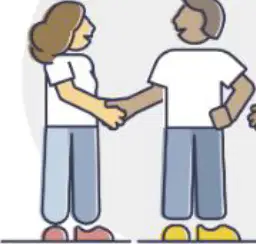
What is the initial stage where team members meet for the first time?
Forming
Storming
Norming
Performing
During the forming stage, what is the primary focus of team members?
Competing with each other
Understanding the team's purpose and roles
Completing tasks quickly
Establishing leadership
What behavior is expected from team members during the forming stage?
Being argumentative
Being polite and respectful
Ignoring others' opinions
Taking charge immediately
What does showing respect to others involve during the forming stage?
Ignoring their needs
Demonstrating care and consideration
Agreeing with everything they say
Avoiding interaction
What is a common misconception about introverts in teamwork?
They are naturally good leaders.
They are rude, selfish, or arrogant.
They enjoy spontaneous collaboration.
They prefer to work in large groups.
How can you build a more effective working relationship with an introverted teammate?
By ignoring their strengths.
By forcing them to speak more.
By recognizing their strengths and adapting your communication style.
By encouraging them to lead every meeting.

What do introverts thrive on according to the text?
Spontaneous collaboration.
Quiet reflection and deep thinking.
Constant social interaction.
Leading group discussions.
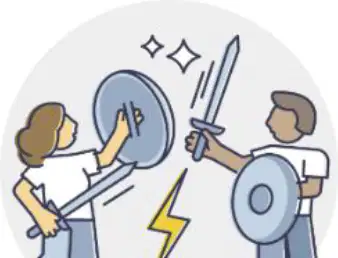
What is the "Storming" stage in team development?
A stage of conflict and competition as team members become more confident and start to address important issues.
A stage where team members celebrate their achievements.
A stage where team members are forming initial relationships.
A stage where team members disband after completing their tasks.
What can be expected during the "Storming" stage?
Complete harmony and agreement.
Disagreements, challenges to ideas, and tensions can arise.
Team members working in isolation.
Immediate resolution of all conflicts.
What should team members do to manage the "Storming" stage effectively?
Ignore all conflicts and hope they resolve themselves.
Take steps to manage emotions and maintain good relationships.
Avoid addressing any issues to prevent conflict.
Focus solely on individual tasks without collaboration.

What is a characteristic of aggressive communication?
Collaborative problem-solving
Using phrases like "It's your fault"
Active listening
Empathy and understanding
Which of the following is an example of non-verbal aggressive communication?
Smiling and nodding
Eye-rolling and finger-pointing
Maintaining eye contact
Open body language
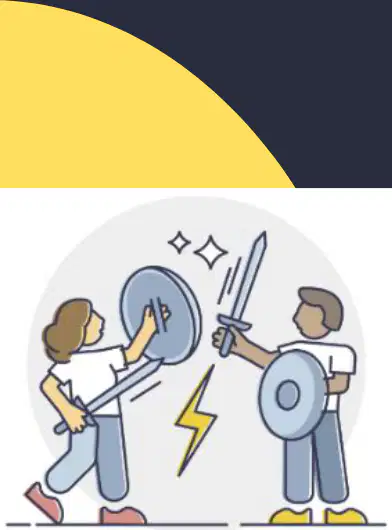
What is one consequence of aggressive communication in a team?
Increased trust among team members
Emotional burnout
Improved communication
Enhanced teamwork
How does aggressive communication affect team interactions?
It leads to positive interactions
It fosters creativity
It leads to increased conflict and distrust
It encourages collaboration
What should be avoided to keep a group positive and productive?
Passive communication
Aggressive communication
Open communication
Supportive communication
What is group polarization?
A process where team members agree on a solution.
A situation where team members adopt more extreme attitudes than initially.
A method to encourage team collaboration.
A strategy to improve team communication.
Which of the following is a technique to avoid group polarization?
Encourage groupthink.
Use aggressive language.
Encourage independent reflection before discussions.
Avoid external feedback.
Why is it important to use neutral language in discussions?
To make discussions more entertaining.
To ensure everyone agrees with the leader.
To help understand different perspectives without bias.
To avoid any form of discussion.
What is one benefit of seeking external feedback in a group setting?
It reinforces existing biases.
It provides an impartial perspective.
It discourages new ideas.
It limits the scope of discussion.

What is the "Norming" stage in team development characterized by?
Increased conflict and division
Increased cohesion and unity
Decreased communication
Decreased team goals
What should team members expect during the "Norming" stage?
Increased individualism
Acceptance of each other's talents
Focus on personal goals
Decreased sense of community
Which of the following is a recommended action during the "Norming" stage?
Establishing rules and procedures
Ignoring team conflicts
Focusing on individual achievements
Avoiding feedback

What is the "Performing" stage characterized by?
Low productivity and lack of focus
High productivity and efficiency
Initial team formation and confusion
Conflict and disagreement
What should be expected from a team in the "Performing" stage?
The team is disorganized and lacks motivation
The team is highly motivated and collaborates well
The team is focused on individual goals
The team is struggling to meet deadlines
What actions should be taken to maintain motivation in the "Performing" stage?
Criticize team members frequently
Focus on individual achievements
Honestly praise and encourage each other
Ignore deadlines and results

What is the final stage of a team's process where they conclude their work?
Forming
Storming
Norming
Adjourning
What should a team do during the adjourning stage?
Start new projects
Wrap up activities and provide closure
Form new teams
Ignore past efforts
During the adjourning stage, what is expected of the team?
Begin brainstorming new ideas
Finish tasks, tie up loose ends, and disband
Establish new roles
Increase team size
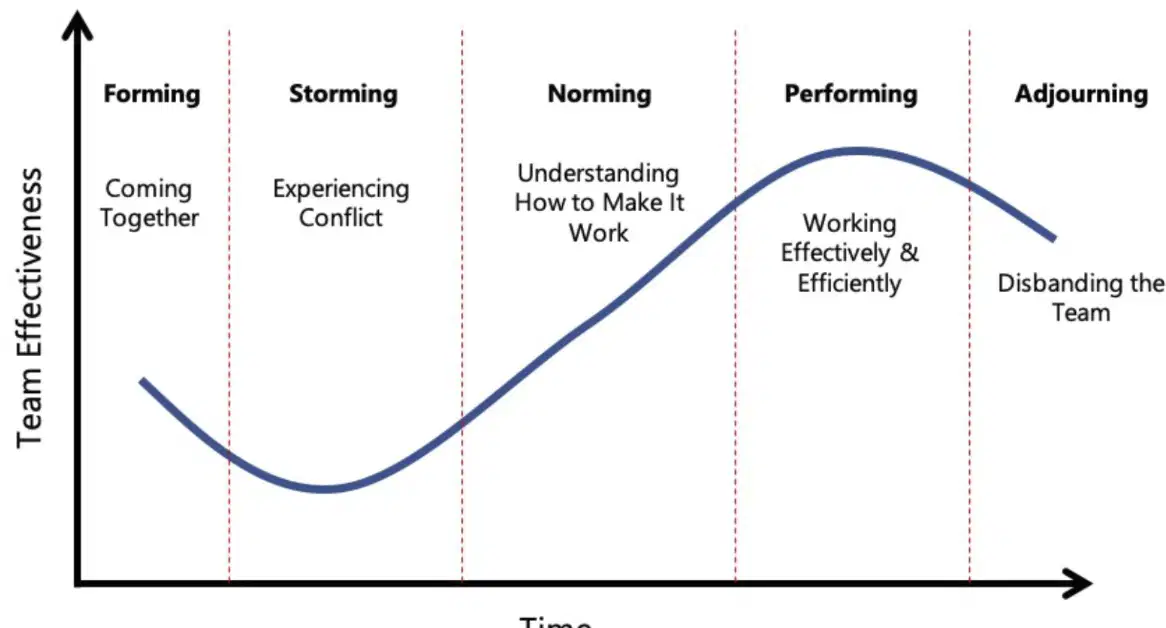
What is the first stage of team development according to the diagram?
Storming
Norming
Forming
Performing
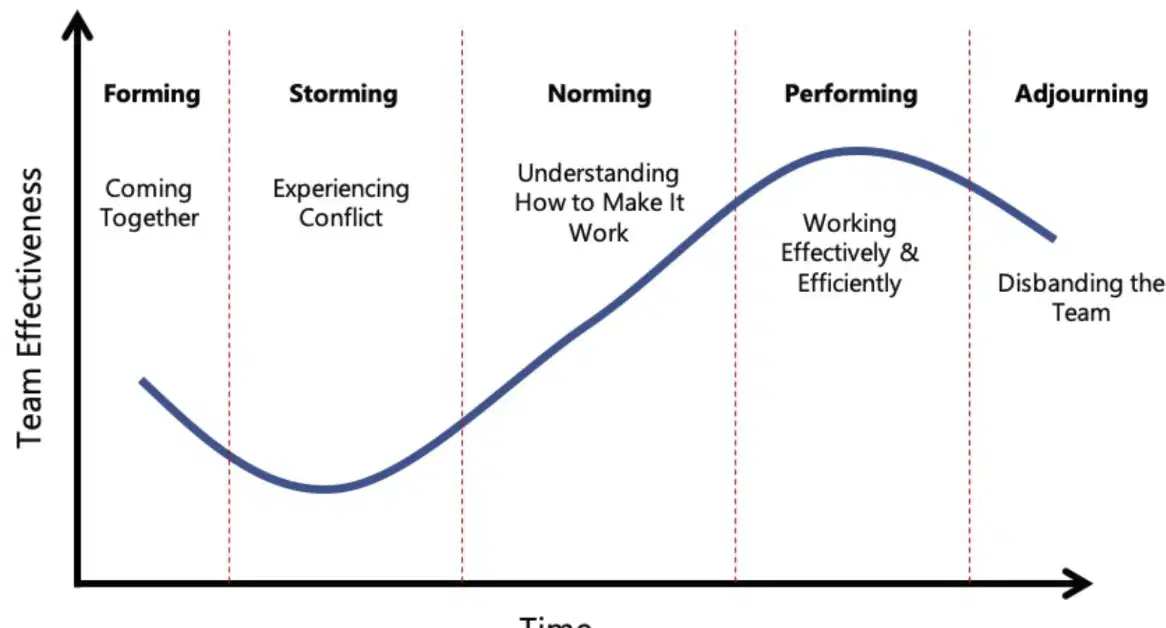
Explain in your own words what happens to the team's efectiveness during the five stages of team development. (See Graph to guide you)
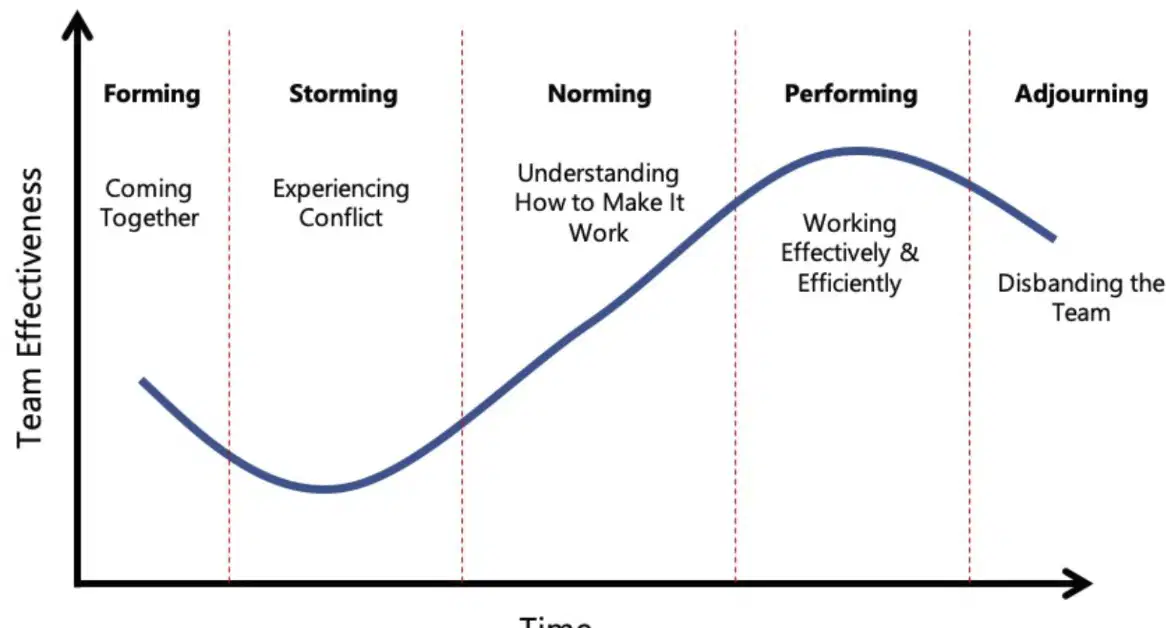
In the team development process, which stage involves understanding how to make it work?
Norming
Forming
Adjourning
Storming
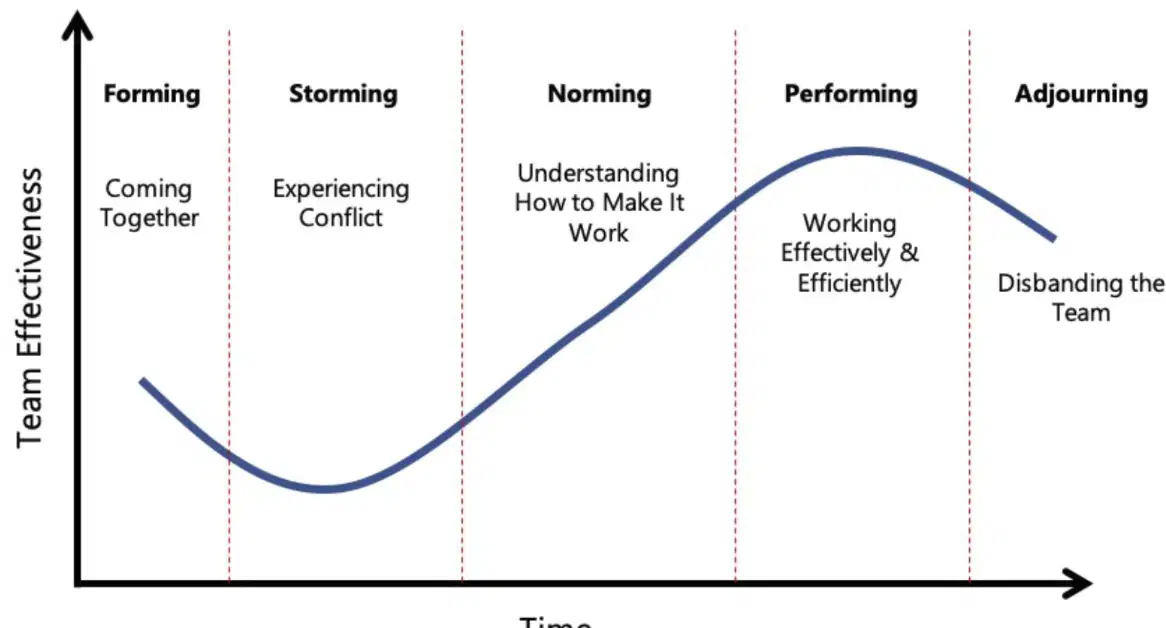
Which stage of team development is characterized by working effectively and efficiently?
Performing
Forming
Storming
Norming
What is the final stage of team development where the team disbands?
Norming
Performing
Adjourning
Storming
What is the first stage of group development according to the diagram?
Storming
Norming
Forming
Performing
Which stage of group development involves conflict and competition among team members?
Norming
Storming
Performing
Adjourning
In which stage of group development do team members start to work effectively towards their goals?
Performing
Forming
Storming
Norming

