
 Worksheets
Unit 2: The Atom Practice Test
Total questions: 50
Worksheet time: 38mins


The electron cloud model is made up of mostly....
electron cloud
empty space
neutrons
protons
Vertical columns of elements (families) on the periodic table with similar properties
period
row
groups
quadrants
What is the name of group number 1?
halogens
noble gases
alkali metals
alkaline earth metals
What is the name of group number 2?
transition metals
halogens
metaloids
alkaline earth metals
where are the metaloids found
far left, vertical
stair step/diagonal
far right horizontal
at the bottom
What group number are the halogens found?
18 (8A)
1
2
17 (7A)
Periodic law states that the elements are arranged according to their atomic ________ so that elements with similar chemical properties are in the same ________ and properties repeat periodically.
numbers, rows
masses, rows
masses, column
numbers, column
A row on the Periodic Table of Elements
family
period
row
isotope
Metals (select all that apply)
are found on the right side of the periodic table.
are found on the left side of the periodic table.
are good conductors of heat and electricity.
are brittle.
are malleable and ductile.
Nonmetals (select all that apply)
are found on the right side of the periodic table.
are found on the left side of the periodic table.
are good conductors of heat and electricity.
are brittle.
can be solid, liquids, or gases at room temperature.
Which element is found in group 2, period 6?
Oxygen (O)
Barium (Ba)
Selenium (Se)
Carbon (C)
Which halogen is found in period 4?
Krypton (Kr)
Xenon (Xe)
Bromine (Br)
Iodine (I)
Elements that have the same number of energy levels are said to be in the same ______.
group
period
family
classification
Use your periodic table to find which element has 5 protons.
Lithium
Calcium
Boron
Neon
Isotopes of an element have a different number of...
Protons
Neutrons
Electrons
Mass
Potassium-39 has how many neutrons?
19
18
20
21
76 protons and 114 neutrons
Osmium-114
Osmium-76
Osmium-190
Osmium-190.23

Using the picture, you can determine that Carbon-13 has ____ neutrons.
13
6
12
7
What groups are the most reactive metals?
2 and 3
1 and 18
1 and 2
16 and 17
What groups are the most reactive non metals?
1 and 2
16 and 17
2 and 17
1 and 16
Why are halogens so reactive?
They want to get rid of their only valance electron
They only need one more electron
They are non reactive, they have a full shell


According to the diagram, which list represents elements that share the most similar chemical properties?
O, Se, and Kr
Se, Cl, and Ne
S, Cl, and Ar
Ne, Ar, and Kr

Which element is the least reactive?
Tin (Sn) because it only has 4 valence electrons.
Gallium (Ga) because it only has 3 valence electrons.
Chlorine (Cl) because it only has 7 valence electrons.
Neon (Ne) because it only has 8 valence electrons.
If X is the symbol for an element, which of the following two symbols represent isotopes of the same element?
I. 7735X II. 7733X III. 8137X IV. 8135 X
I and II
III and IV
I and IV
I and III
The attraction between these holds the nucleus together.
protons
electrons
quarks
neutrons
The weighted atomic mass of all the different isotopes of an element.
atomic number
average atomic mass
Mass number
Ion

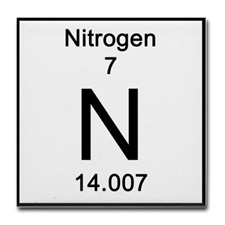
Which element is this?
Nickel
Neon
Sodium
Nitrogen

How many valence electrons?
2
3
4
5
According to the Plum Pudding Model, what is the structure of an atom?
Negatively charged sphere with positively charged electrons embedded in it.
Positively charged sphere with negatively charged electrons embedded in it
Positively charged sphere with positively charged electrons embedded in it.
Negatively charged sphere with negatively charged protons embedded in it.

