
NEW
Font size
 Worksheets
Develop Strategies to Consume a Variety of Foods and Beverages
Total questions: 75
Worksheet time: 38mins
What is one purpose of adding food additives to foods?
to keep a food safe for a longer period of time
to make food spoil faster
to remove all nutrients from food
to make food taste worse
to reduce the color of food
What is one purpose of adding food additives to foods?
to boost its nutrient content
to reduce the cost of food
to make food harder to digest
to remove all flavors from food
to decrease the shelf life of food
What is one purpose of adding food additives to foods?
to improve its taste, texture, or appearance
to reduce the nutritional value of food
to make food spoil faster
to increase the cost of food production
to remove all flavors from food
Food labels provide information about the ingredients and nutritional value of foods. Among other things, the food label lists the ________ of the food product.
name
price
barcode
expiration date
Food labels provide information about the ingredients and nutritional value of foods. Among other things, the food label lists the amount of ________ in the package.
food
plastic
color
barcode
Food labels provide information about the ingredients and nutritional value of foods. Fill in the blank: Among other things, the food label lists the name and address of the company that ________, packages, or distributes the product.
makes
sells
buys
cooks
Food labels provide information about the ingredients and nutritional value of foods. Among other things, the food label lists the ________ in the food.
ingredients
colors
cooking time
brand name
Food labels provide information about the ingredients and nutritional value of foods. Fill in the blank: Among other things, the food label lists the Nutrition Facts panel, which provides information about the ________ found in the food.
nutrients
colors
packaging
brand names
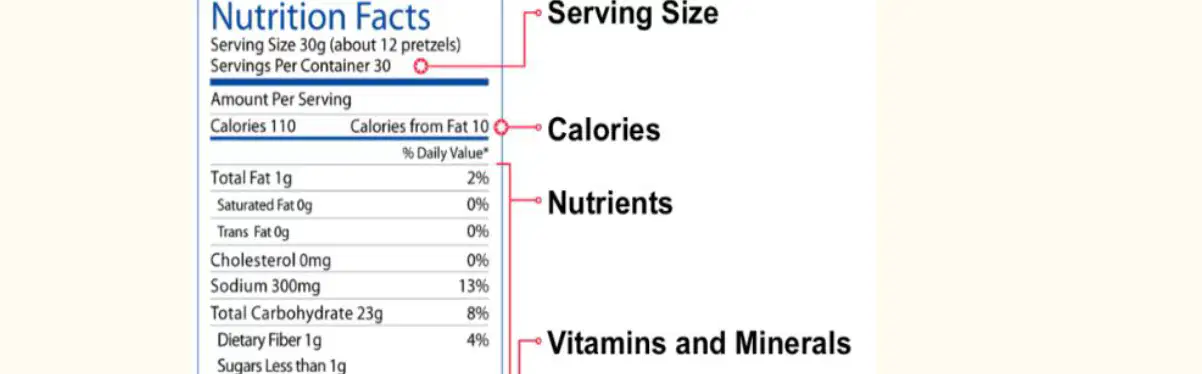
What is the serving size listed on the Nutrition Facts label?
30g (about 12 pretzels)
15g (about 6 pretzels)
50g (about 20 pretzels)
100g (about 40 pretzels)
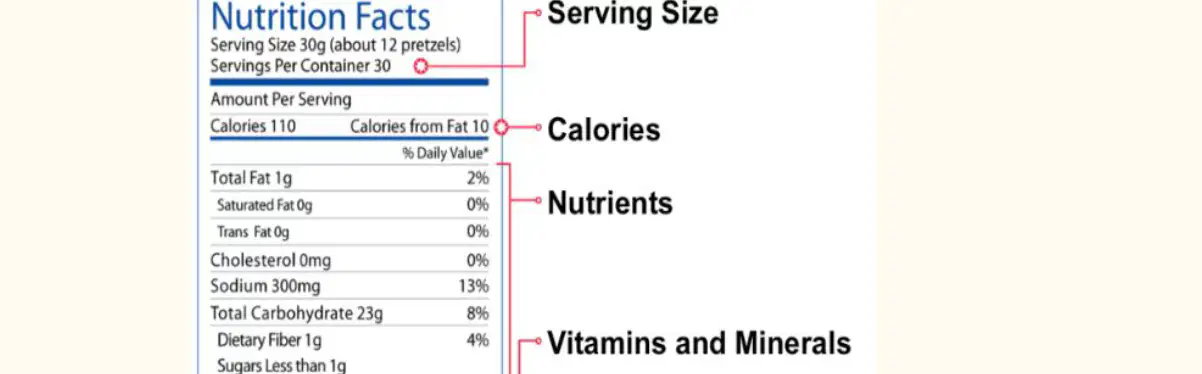
How many calories are in one serving according to the Nutrition Facts label?
110
80
150
200
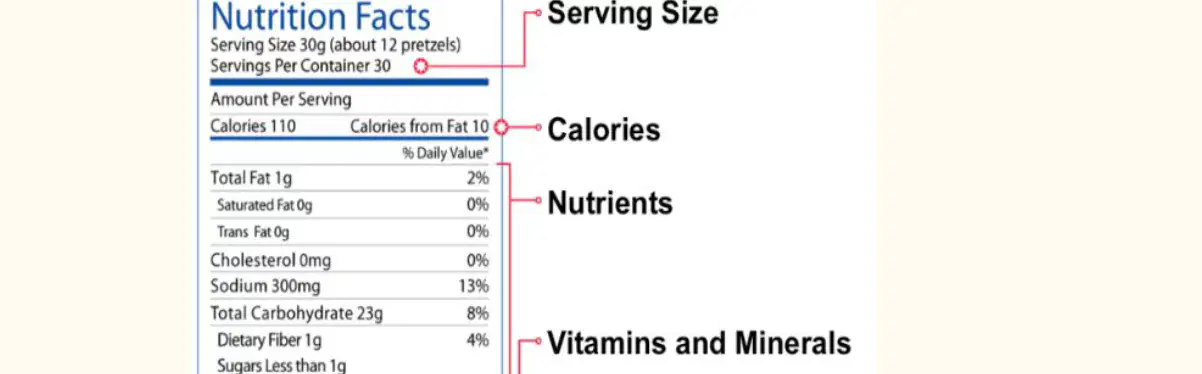
Which nutrient has the highest percent daily value per serving on this Nutrition Facts label?
Sodium (13%)
Total Fat (8%)
Cholesterol (5%)
Dietary Fiber (4%)
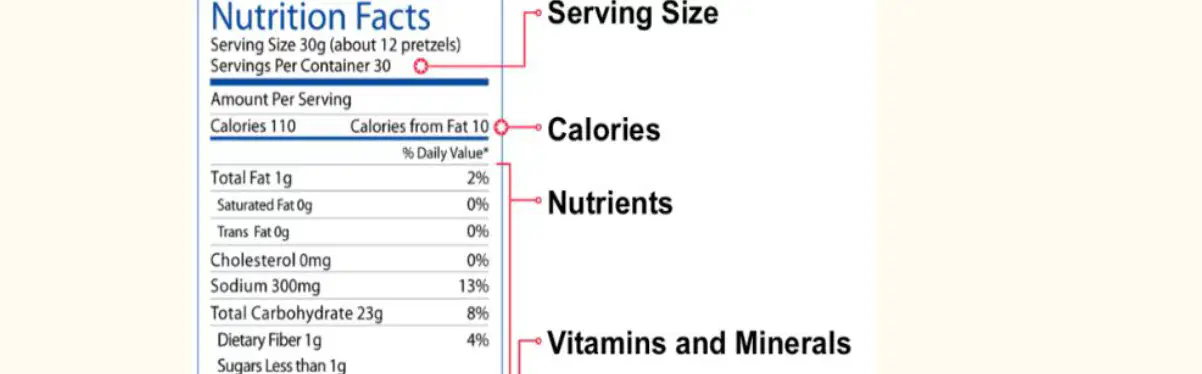
According to the Nutrition Facts label, what is the amount of protein per serving?
3g
0g
6g
12g
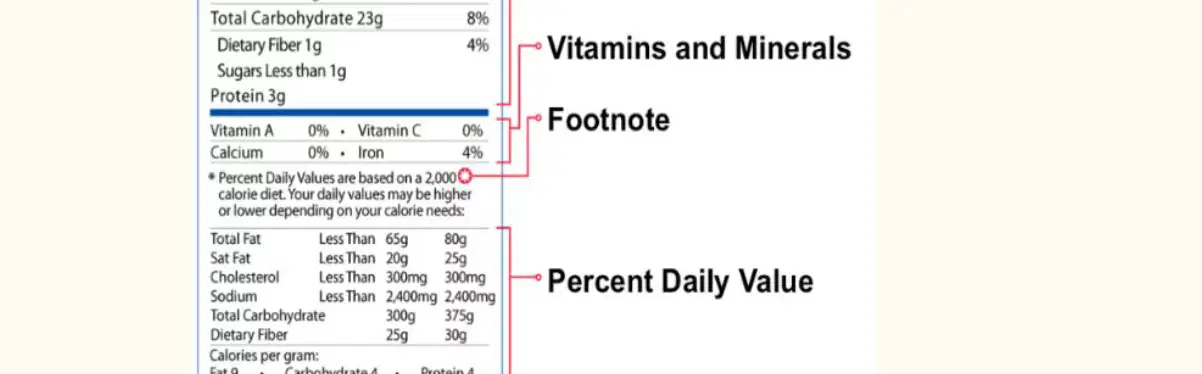
Which of the following is NOT listed as a vitamin or mineral on this Nutrition Facts label?
Vitamin A
Vitamin C
Calcium
Vitamin D
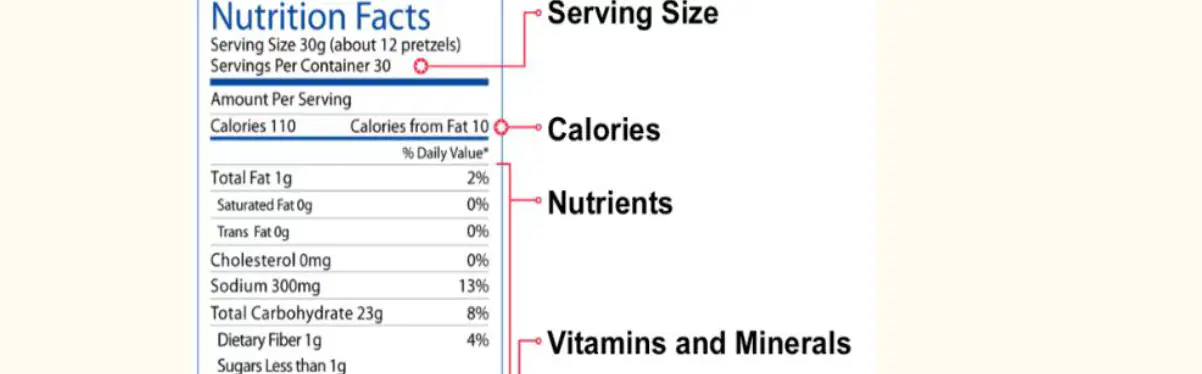
The Nutrition Facts label shows that there is 0mg of cholesterol per serving.
True
False
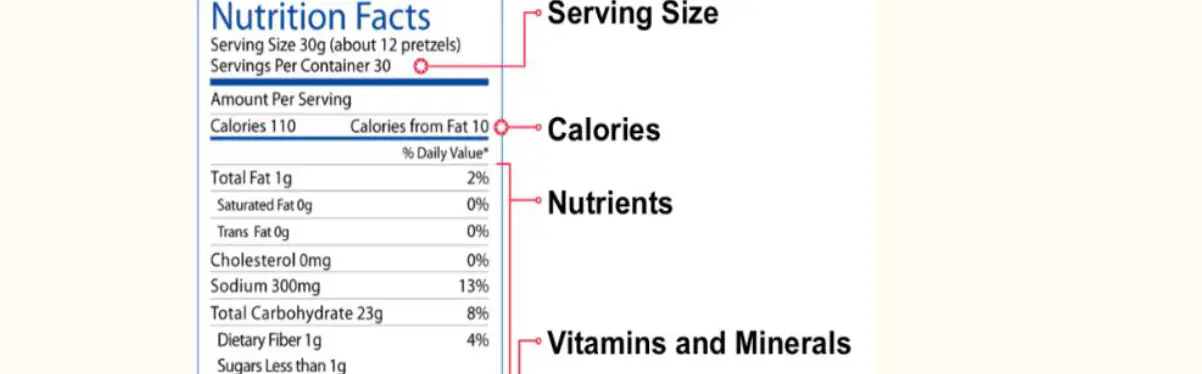
What is the total carbohydrate content per serving according to the Nutrition Facts label?
23g
10g
35g
50g
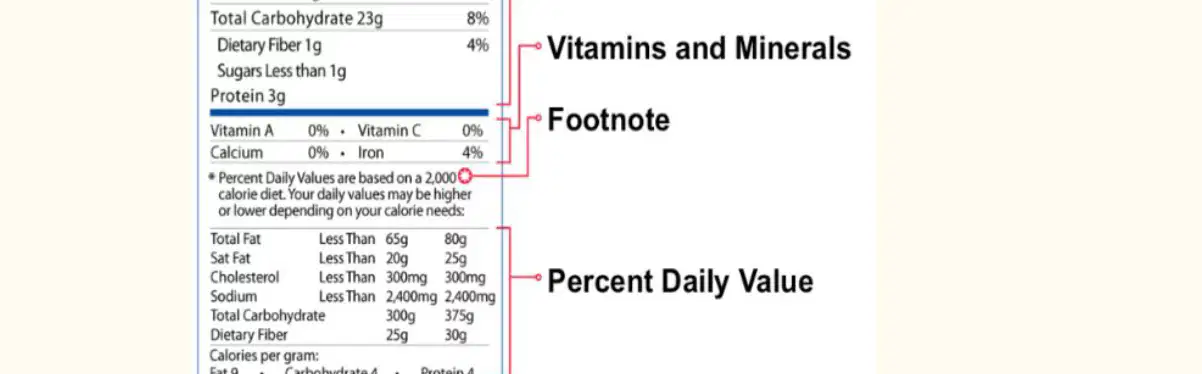
Which section of the Nutrition Facts label provides information about the recommended daily intake for nutrients?
Serving Size
Calories
Percent Daily Value
Footnote
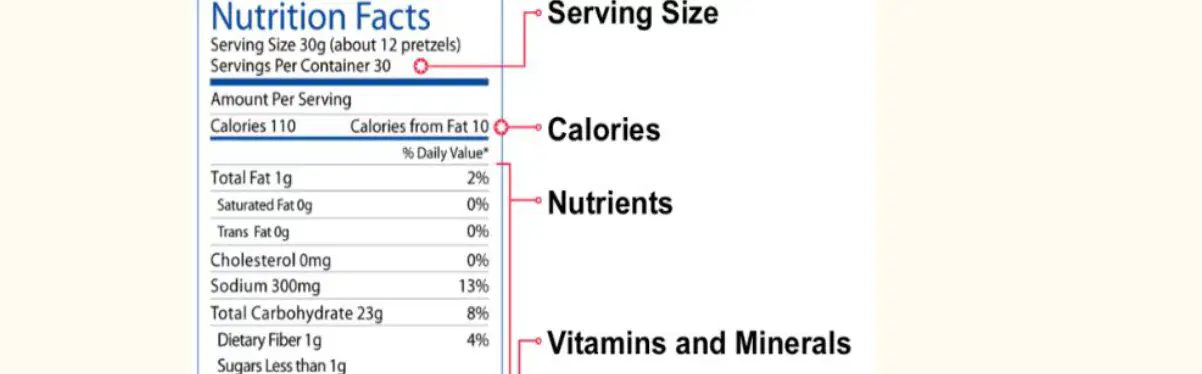
How much sodium is in one serving according to the Nutrition Facts label?
300mg
100mg
500mg
50mg
Federal law gives uniform definitions for the following terms that make claims about nutritional value. Fill in the blank: 'Free' means it contains none, or an insignificant amount, of a given component.
Contains none, or an insignificant amount, of a given component.
Contains a moderate amount of a given component.
Contains a high amount of a given component.
Contains only natural sources of a given component.
Federal law gives uniform definitions for the following terms that make claims about nutritional value. Fill in the blank: 'Low' means it.
Can be eaten regularly without exceeding your daily limits for fat, saturated fat, cholesterol, sodium or calories.
Contains no calories or nutrients at all.
Must be consumed only occasionally to avoid health risks.
Is only allowed in foods that are organic.
Federal law gives uniform definitions for the following terms that make claims about nutritional value. Fill in the blank: 'Light' means it must contain __.
Must contain one-third fewer calories, one-half the fat, or one-half the sodium or the original version.
At least 10% more of the daily value of a nutrient than the original version.
No more than 5 grams of sugar per serving.
At least 25% less cholesterol than the original version.
What does the nutritional claim 'Reduced' mean?
The food contains 25% fewer calories, or 25% less of a given nutrient, than the original.
The food contains no added sugars or fats.
The food contains twice the amount of nutrients as the original.
The food contains only natural ingredients.
What does the nutritional claim 'High' mean?
Provides at least 20% of the daily value for a vitamin, mineral, protein, or fiber.
Contains less than 5% of the daily value for a nutrient.
Is a source of at least 5 grams of fat per serving.
Contains no added sugars.
What does the nutritional claim 'Good Source of' mean?
Provides 10% to 19% of the daily value for a vitamin, mineral, protein, or fiber.
Provides 50% or more of the daily value for a vitamin, mineral, protein, or fiber.
Contains no added sugars or fats.
Provides less than 5% of the daily value for a vitamin, mineral, protein, or fiber.
What does the nutritional claim 'Healthy' mean?
Must be low in fat and saturated fat; cholesterol, and sodium; and provide at least 10% of the daily value for vitamin A, vitamin C, iron, calcium, protein, or fiber.
Contains only organic ingredients and no artificial flavors.
Must be high in sugar and carbohydrates to provide energy.
Can be used for any food that is low in calories, regardless of other nutrients.
Foods labeled as organic are produced without the use of certain ________ chemicals. Fill in the blank.
agricultural
musical
mechanical
electrical
Foods labeled as organic cannot contain ________ modified ingredients. Fill in the blank.
genetically
artificially
chemically
mechanically
Foods labeled as organic cannot be subjected to certain types of ________.
radiation
freezing
pasteurization
fermentation
What is the meaning of 'Sell by dates'?
The last day on which a store should sell a product.
The day the product was manufactured.
The date by which the product must be consumed.
The date when the product will expire.
What is the meaning of 'Use by or expiration dates'? Fill in the blank: 'Use by or expiration dates' means _________.
The last day on which a product’s quality can be guaranteed.
The first day a product can be sold in stores.
The date when a product is manufactured.
The day a product must be opened.
What is the meaning of 'Freshness dates'? Fill in the blank: 'Freshness dates' means _________.
The last date on which a product is considered fresh.
The date when a product was manufactured.
The date when a product should be opened.
The date when a product is shipped.
What is the meaning of 'Pack dates'? Fill in the blank: 'Pack dates' means _________.
The day on which a food was processed or packaged.
The date by which food must be consumed.
The date when food was first discovered.
The day when food is delivered to stores.
Handling food carefully can help you avoid _______ and other hazards. (Fill in the blank)
foodborne illnesses
traffic accidents
sunburns
broken bones
About how many Americans become ill as a result of food poisoning each year?
7 million
76 million
760 million
1 million
Food can contain pathogens, or disease-causing organisms, which can produce poisons that cause illness.
True
False
How Foodborne Illness Occurs: ______ and viruses cause most cases of foodborne illness.
Bacteria
Fungi
Parasites
Chemicals
How Foodborne Illness Occurs: Some pathogens are naturally present in ______ animals.
healthy
wild
domesticated
sick
How Foodborne Illness Occurs: Food can become contaminated if washed with water that contains traces of ______ or animal wastes.
human
vegetable
mineral
plastic
How Foodborne Illness Occurs: Infected humans who handle food can spread ______.
pathogens
vitamins
minerals
enzymes
If the following symptom is present, should you consult a doctor? A fever higher than 101.5 degrees F.
True
False
If the following symptom is present, should you consult a doctor? Prolonged vomiting or diarrhea.
True
False
If the following symptom is present, should you consult a doctor? Blood in the stool.
True
False
If the following symptom is present, should you consult a doctor? Signs of dehydration, including a decrease in urination, dry mouth and throat, and feeling dizzy when standing.
True
False
What is pasteurization?
Treating a substance with heat to kill or slow the growth of pathogens
Freezing food to preserve it
Adding chemicals to food
Drying food in the sun
Pasteurization of milk and juices helps prevent which type of infection?
Salmonella
E. coli
Influenza
Strep throat
According to The Dietary Guidelines, what is one of the four basic steps in keeping food safe?
Clean
Boil
Freeze
Season
According to The Dietary Guidelines, what is one of the four basic steps in keeping food safe?
Separate
Overcook
Freeze at room temperature
Ignore expiration dates
According to The Dietary Guidelines, what is one of the four basic steps in keeping food safe?
Cook
Freeze
Ferment
Season
According to The Dietary Guidelines, what is one of the four basic steps in keeping food safe?
Chill
Boil
Season
Ferment
What is the first step in preventing foodborne illnesses according to the information on keeping food safe to eat?
Cooking food thoroughly
Washing hands, produce, utensils, and surfaces carefully
Storing food at the right temperature
Using preservatives
To avoid cross-contamination, you should keep foods separate, thoroughly wash produce, always use clean utensils, cutting boards, plates, and platters, and wash your hands frequently.
True
False
Cross-contamination is the spreading of ______ from one food to another.
pathogen
vitamin
flavor
color
According to the information in 'Keeping Food Safe to Eat', which foods are most likely to carry pathogens?
Fruits and vegetables
Raw meat, poultry, seafood, and eggs
Bread and pasta
Dairy products
According to 'Keeping Food Safe to Eat', to avoid cross-contamination, you should separate raw meat, poultry, seafood, and eggs from other foods and always use clean ________, plates, and platters.
cutting boards
aprons
measuring cups
mixing bowls
According to 'Keeping Food Safe to Eat', using the same cutting board for raw meat and vegetables is safe as long as you wash your hands.
True
False
Keeping Food Safe to Eat: To determine whether meat, poultry, and egg dishes are cooked thoroughly, use a food ________ to measure the internal temperature of the food.
thermometer
scale
timer
spoon
Keeping Food Safe to Eat - Chill: Refrigeration slows the growth of ________ bacteria. (Fill in the blank)
harmful
beneficial
neutral
inactive
What should you do with meat, poultry, and other perishable foods as soon as you bring them home from the store?
Leave them on the counter
Refrigerate or freeze them
Cook them immediately
Throw them away
Keeping Food Safe to Eat - Chill: Where can you thaw frozen foods?
In the refrigerator
In a microwave
Under cold running water
All of the above
You should discard any food that has been sitting out at room temperature for 2 hours or longer.
True
False
What is a food allergy? Fill in the blank: A food allergy is a condition in which the body's _______ system reacts to substances in some foods.
immune
digestive
respiratory
circulatory
What is a food intolerance? Food intolerance is a negative reaction to food that doesn’t involve the _______ system.
immune
digestive
respiratory
circulatory
Which is more common?
Food allergy
Food intolerance
Food sensitivities include both food allergies and food intolerances.
True
False
Which of the following is a mild food allergy symptom?
Anaphylaxis
Skin irritations
Heart attack
Broken bone
Which of the following is a life-threatening food allergy symptom?
Nausea
Vomiting
Anaphylaxis
Itching
Which of the following is NOT a type of skin irritation caused by mild food allergies?
Rashes
Hives
Itching
Swelling of the throat
Fill in the blank: Mild food allergy symptoms can include gastrointestinal issues such as _______, vomiting, and diarrhea.
nausea
rash
cough
headache
Anaphylaxis is a mild food allergy symptom.
True
False
During anaphylaxis as a food allergy symptom, what happens?
The airways narrow and blood pressure drops rapidly.
The skin becomes dry and flaky.
The body temperature decreases significantly.
The heart rate slows down dramatically.
Which of the following is NOT a gastrointestinal symptom of a mild food allergy?
Nausea
Vomiting
Diarrhea
Hives
Rashes, hives, and itching are all examples of skin irritations caused by mild food allergies.
True
False
Fill in the blank: One of the most common food allergens is _________.
Milk
Carrot
Rice
Beef
One of the most common food allergens is _________.
Eggs
Rice
Carrots
Beef
One of the most common food allergens is _________
Peanuts
Carrots
Rice
Chicken
Fill in the blank: One of the most common food allergens is _________.
Tree Nuts
Rice
Beef
Carrots

