
 Worksheets
OCE 2001 Chapter 9 Practice
Total questions: 161
Worksheet time: 1hrs 21mins
What are tides?
The rhythmic rise and fall of sea level.
The movement of tectonic plates.
The flow of rivers into the ocean.
The evaporation of water from the sea.
What causes tides on Earth?
Gravitational attraction of the Sun and Moon to Earth
Wind blowing across the ocean surface.
Volcanic eruptions under the sea.
Changes in atmospheric pressure.
Who explained the relationship of tides using gravitational laws?
Albert Einstein
Isaac Newton
Galileo Galilei
Johannes Kepler
Which of the following statements about tides is correct?
Tides occur only once a year
Tides occur daily
Tides are caused by wind only
Tides were first discovered in the 20th century
How did early sailors contribute to our understanding of tides?
They ignored the phenomenon
They recognized the occurrence of tides
They believed tides were caused by fish
They thought tides were a myth
Explain how Isaac Newton’s gravitational laws are related to the phenomenon of tides.
Newton’s laws describe how the gravitational pull of the moon and sun causes the periodic rise and fall of ocean sea levels, resulting in tides.
Newton’s laws explain how wind creates waves in the ocean.
Newton’s laws describe the movement of tectonic plates.
Newton’s laws are unrelated to ocean phenomena.
Match each description to what it refers to in the Earth-Moon system.
The common center of mass or balance point between the two bodies
Barycenter
The point where the Moon is closest to Earth
Perigee
The center of the Sun
Solar core
The highest point of the tides
High tide
Why is the barycenter between the Moon and Earth located beneath Earth's surface?
Because Earth has a much greater mass than the Moon
Because the Moon is closer to the Sun
Because the barycenter is always at the center of the larger object
Because of Earth's rotation speed
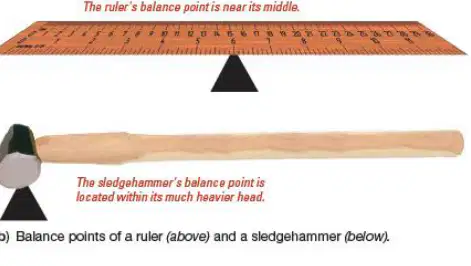
How does the concept of a barycenter explain the balance point of a sledgehammer compared to a ruler?
The balance point of the sledgehammer is closer to its heavier head, just as the barycenter is closer to the more massive Earth.
The balance point of the sledgehammer is always at its center, regardless of mass distribution.
The balance point of the ruler is always at one end.
The barycenter is always outside the more massive object.
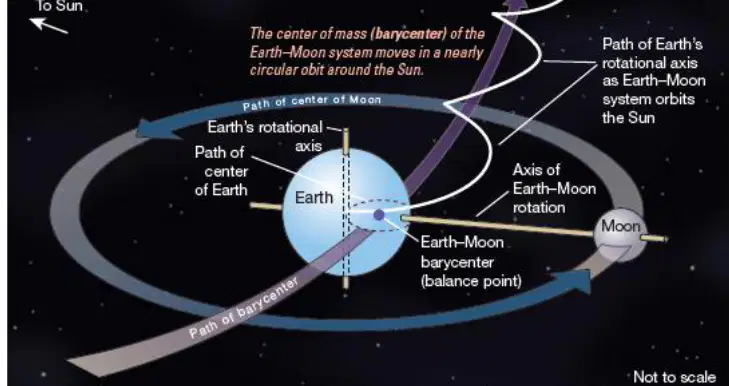
What is the barycenter in the context of the Earth-Moon system?
The center of mass of the Earth-Moon system
The center of the Earth
The center of the Moon
The axis of Earth's rotation
Why does the barycenter of the Earth-Moon system not coincide with the center of the Earth?
Because the Moon is much lighter than the Earth
Because the Earth and Moon have equal mass
Because the Moon's mass causes the balance point to shift away from Earth's center
Because the Sun's gravity pulls the barycenter away
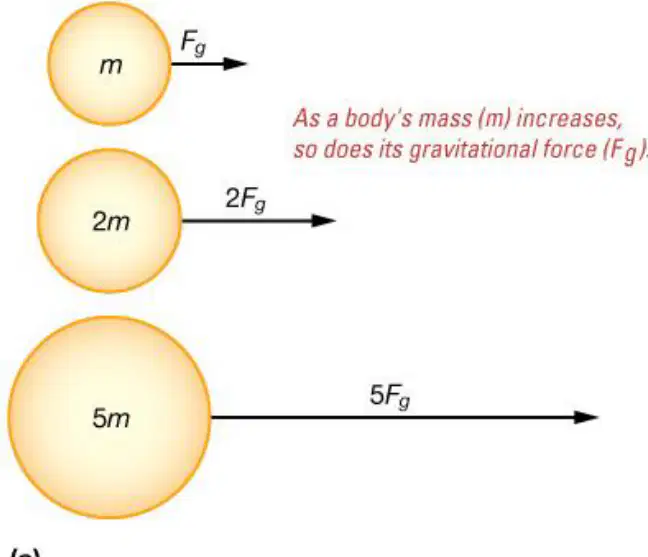
According to Newton’s Law of Universal Gravitation, what happens to the gravitational force as the mass of an object increases?
The gravitational force decreases.
The gravitational force remains the same.
The gravitational force increases.
The gravitational force disappears.
Which law states that every object with mass in the universe is attracted to every other object?
Newton’s Law of Universal Gravitation
Newton’s First Law of Motion
Law of Conservation of Energy
Hooke’s Law
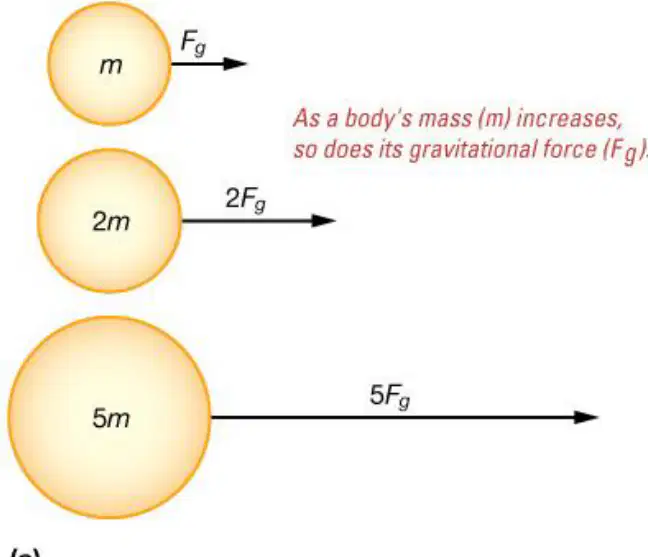
If the mass of an object is doubled, its gravitational force (a) according to the diagram.
Explain why every object with mass in the universe is attracted to every other object, based on Newton’s Law of Universal Gravitation.
Because mass creates a force that attracts other masses.
Because objects repel each other.
Because only large objects attract each other.
Because gravity only acts on planets.
According to the law of universal gravitation, what happens to the gravitational force between two objects if the mass of one object is doubled?
The force is halved.
The force remains the same.
The force is doubled.
The force is quadrupled.
Gravitational force between two objects is best described as being (a) with the distance between them.
What is the correct formula for the gravitational force between two masses, m₁ and m₂, separated by a distance r?
Fg = Gm₁m₂r²
Fg = Gm₁m₂/r²
Fg = Gm₁/m₂r²
Fg = Gm₁m₂/r
If the distance between two objects is tripled, how does the gravitational force between them change?
It becomes one-third as strong.
It becomes one-ninth as strong.
It becomes three times as strong.
It remains the same.
A student claims that increasing the mass of both objects will increase the gravitational force between them. Use the gravitational force formula to justify whether this claim is correct.
The claim is incorrect because mass does not affect gravitational force.
The claim is correct because gravitational force is proportional to the product of the masses.
The claim is incorrect because gravitational force is only affected by distance.
The claim is correct only if the distance is also increased.
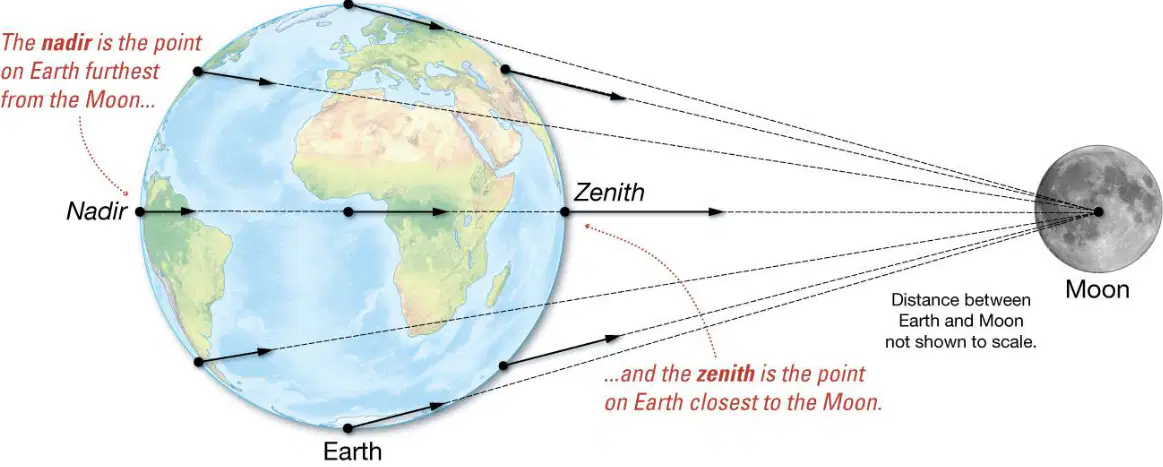
Match each location on Earth with the correct description related to the gravitational force from the Moon.
At the zenith
Location where the gravitational force from the Moon is the greatest
At the nadir
Location on Earth furthest from the Moon
At the equator
Location halfway between the zenith and nadir, along Earth's surface
At the poles
Location at the northernmost or southernmost point on Earth
What is the definition of the nadir in relation to the Moon's gravitational force on Earth?
The point on Earth closest to the Moon
The point on Earth furthest from the Moon and opposite the zenith
The point on Earth with the highest temperature
The point on Earth directly under the Sun
Why is the gravitational force from the Moon least at the nadir?
Because it is closest to the Moon
Because it is furthest from the Moon and opposite the zenith
Because it is at the equator
Because it is at the North Pole
If you were to plan an experiment to measure the variation in the Moon's gravitational force on different points of the Earth, which two points would you choose to maximize the difference in force?
Zenith and nadir
North Pole and South Pole
Equator and a random point
Any two points on the equator
What is the primary characteristic of a centripetal force?
It is a center-seeking force.
It is a force that moves objects away from the center.
It is a force that only acts on stationary objects.
It is a force that increases with distance from the center.
Which of the following best describes the role of centripetal force in planetary motion?
It keeps planets in orbit via gravitational attraction.
It causes planets to spin on their axes.
It pushes planets away from the sun.
It slows down the rotation of planets.
How does centripetal force affect the relationship between the Earth and the Moon?
It tethers Earth and Moon to each other.
It causes the Moon to move away from Earth.
It has no effect on the Earth-Moon system.
It only affects the Earth's rotation.
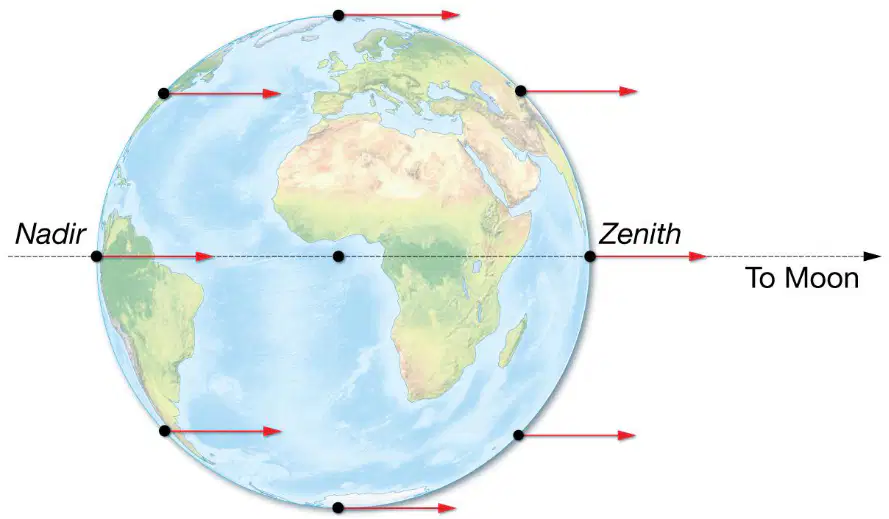
Based on the diagram, what is the direction of the centripetal force acting on a point at the Earth's surface facing the Moon?
Toward the Moon
Away from the Moon
Tangent to the Earth's surface
Perpendicular to the Moon's direction
(a) is necessary for keeping planets in orbit, as shown by evidence from gravitational attraction.
What is the mathematical difference between gravitational and centripetal forces called?
Resultant force
Frictional force
Normal force
Tension force
How is the magnitude of the resultant force between gravitational and centripetal forces described in the material?
Relatively large
Relatively small
Zero
Infinite
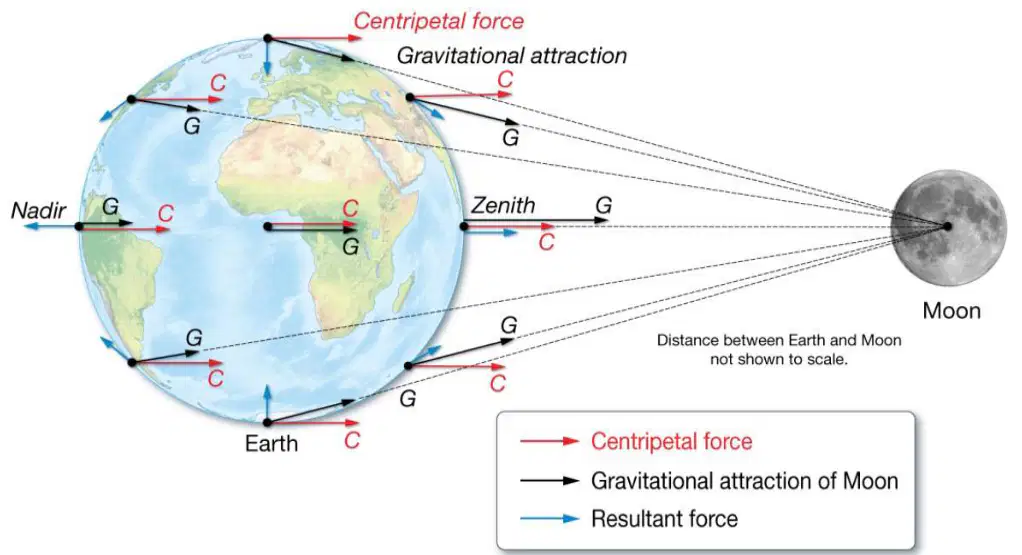
Based on the diagram, which force is represented by the red arrows?
Centripetal force
Gravitational attraction
Resultant force
Magnetic force
Why is the resultant force between gravitational and centripetal forces important in the context of the Earth-Moon system?
It explains the tidal effects on Earth.
It determines the color of the Moon.
It causes the Earth's rotation to stop.
It increases the Earth's gravity.
A significant characteristic of the resultant force involved in tide generation is that it has a (a) .
Match the following descriptions with the correct type of bulge or phenomenon.
Bulges of water caused by the Sun's gravity only.
Solar tidal bulges
Bulges of water resulting from force pushing water into two simultaneous bulges, one toward the Moon and one away from the Moon.
Lunar bulges
Bulges of land caused by earthquakes.
Seismic land bulges
Bulges of water that only occur at the equator.
Equatorial water bulges
Two simultaneous bulges of water form on Earth due to the Moon because (a) .
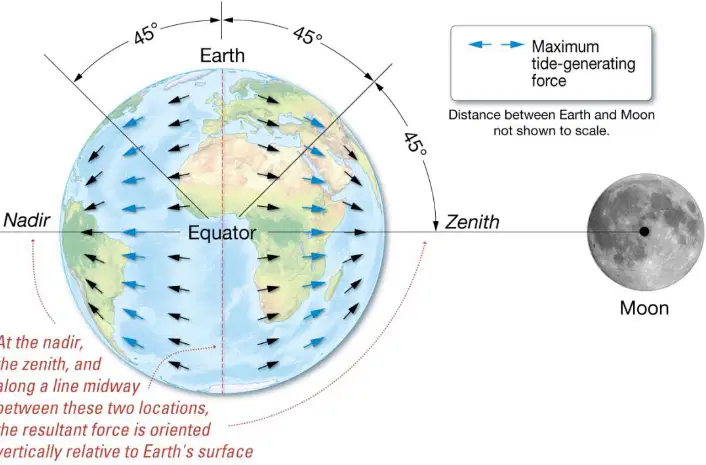
What does the diagram illustrate about the tide-generating force?
The force is strongest at the equator and weakest at the poles.
The force creates two bulges of water, one facing the Moon and one on the opposite side.
The force only affects the side of Earth facing the Moon.
The force is vertical everywhere on Earth.
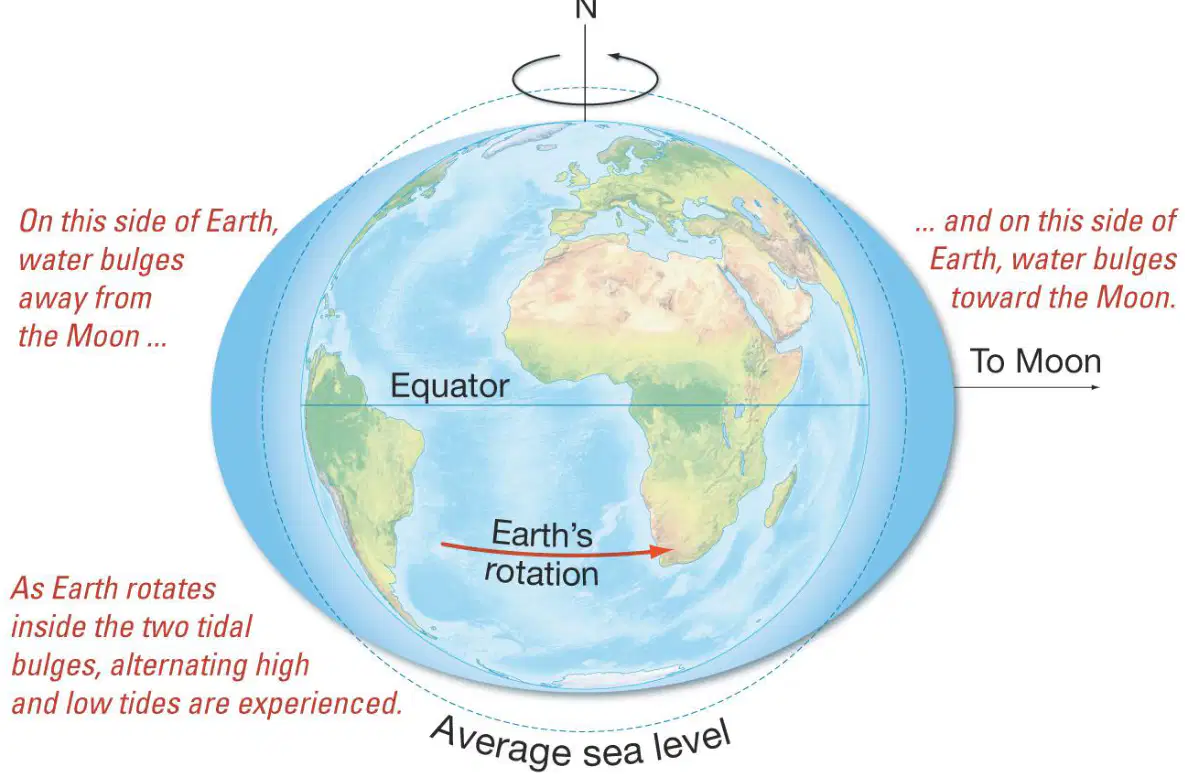
Match each phenomenon with its correct cause related to tides and Earth's water bulges.
The gravitational pull of the Sun
Causes smaller tidal bulges compared to the Moon
The gravitational pull of the Moon
Causes the main tidal bulges on Earth
The rotation of the Moon
Does not significantly affect Earth's tides
The tilt of Earth's axis
Responsible for the seasons, not tides
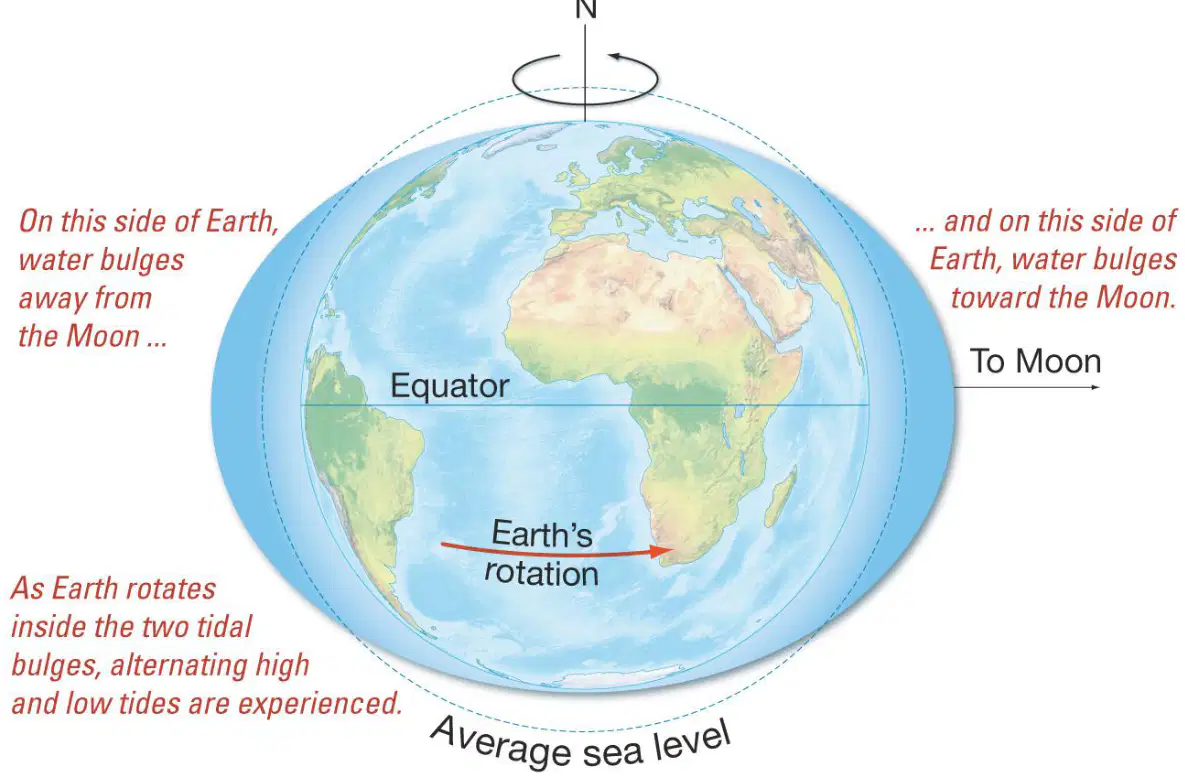
As the Earth rotates inside the two tidal bulges, what phenomenon is experienced at different locations on Earth?
Alternating high and low tides
Constant sea level
Only high tides
Only low tides
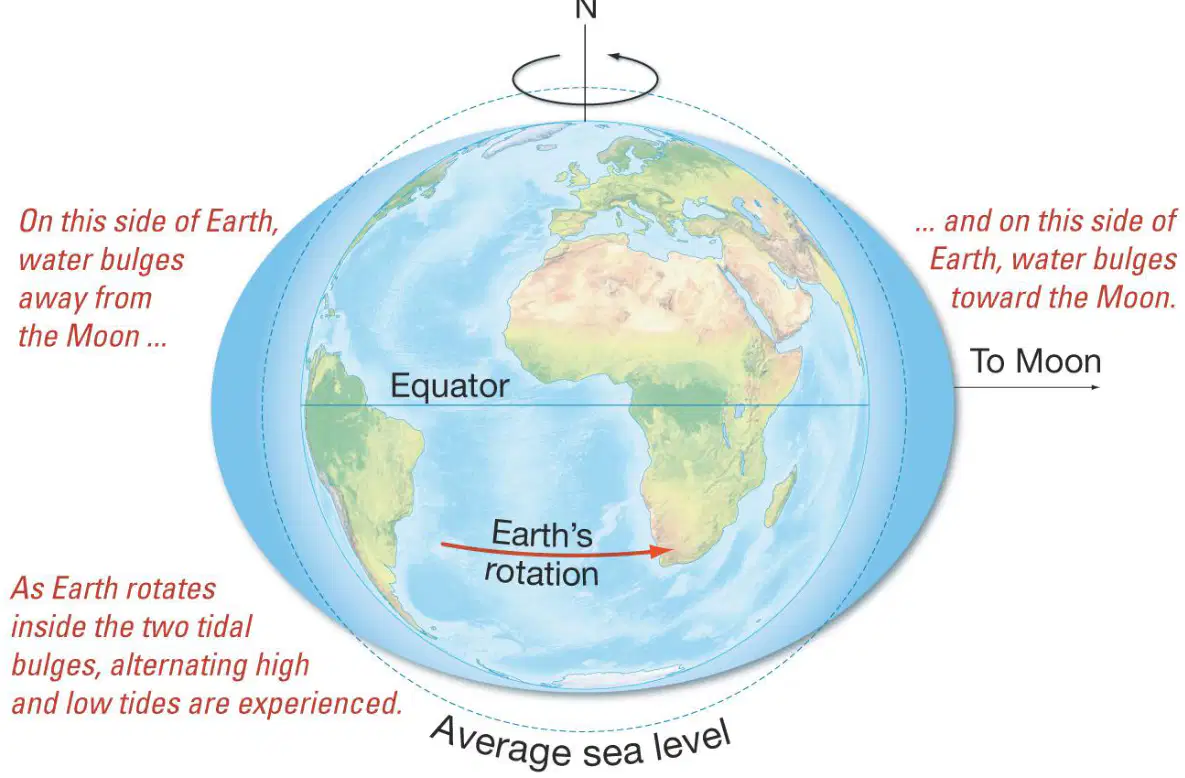
Which direction does the water bulge on the side of Earth facing away from the Moon?
Toward the Moon
Away from the Moon
Toward the Sun
Toward the equator

Explain how Earth's rotation affects the experience of tides at a given location.
Earth's rotation causes each location to pass through both tidal bulges, resulting in alternating high and low tides.
Earth's rotation prevents any tidal changes from occurring.
Earth's rotation causes only one high tide per day at each location.
Earth's rotation has no effect on tides.
What is the definition of the tidal period?
Time between high tides
Time between low tides
Time between sunrise and sunset
Time between two new moons
How long is a lunar day?
24 hours
12 hours, 25 minutes
24 hours, 50 minutes
23 hours, 56 minutes
Which of the following best describes a solar day?
24 hours, 50 minutes
12 hours, 25 minutes
24 hours
23 hours, 56 minutes
If high tides are 12 hours and 25 minutes apart, how many high tides would you expect in a 24-hour period?
1
2
3
4
Which of the following statements best describes solar bulges?
They are similar to lunar bulges but less than half the size.
They are larger than lunar bulges.
They are the same size as lunar bulges.
They do not affect Earth's tides.
Why does the Moon exert a greater gravitational force on Earth compared to the Sun?
The Moon is closer to Earth than the Sun.
The Moon is larger than the Sun.
The Sun is closer to Earth than the Moon.
The Sun has less mass than the Moon.
Based on the information provided, which object has the largest diameter?
Moon
Earth
Sun
Mars
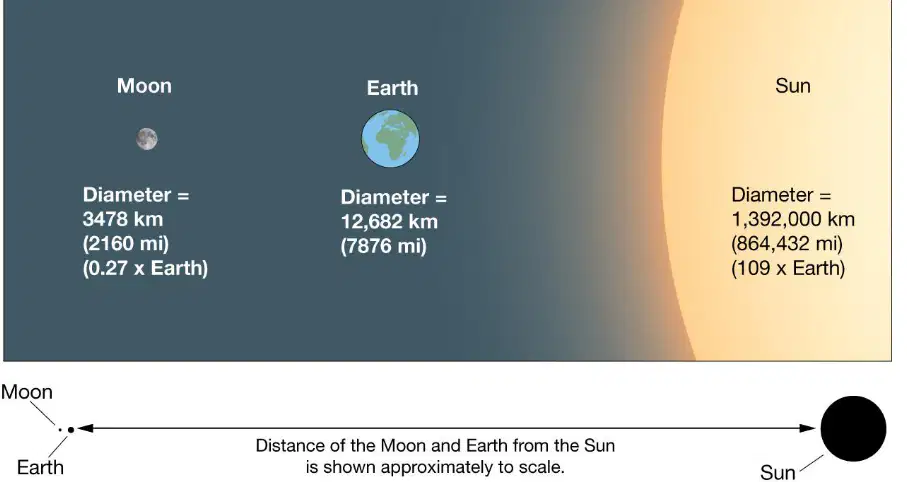
Which of the following best explains why solar bulges are less than half the size of lunar bulges?
The Sun is much farther from Earth than the Moon, so its gravitational effect is weaker.
The Sun is smaller than the Moon.
The Sun is closer to Earth than the Moon.
The Moon has no effect on Earth's tides.
What is a flood tide?
Water moves toward shore
Water moves away from shore
Water remains stationary
Water evaporates from the shore
Which of the following best describes an ebb tide?
Water moves away from shore
Water moves toward shore
Water rises rapidly
Water freezes near the shore
Match each pair of celestial bodies with the tidal bulges that are fixed relative to their positions.
The Sun and Moon
Tidal bulges on Earth caused by these two bodies' gravitational pull.
The Earth and Mars
No significant tidal bulges on Earth are fixed relative to these two bodies.
The Sun and Jupiter
Tidal bulges on Earth are not fixed relative to these two bodies.
The Moon and Venus
Tidal bulges on Earth are not fixed relative to these two bodies.
How does Earth's rotation affect tidal bulges?
It moves different geographic locations into bulges
It causes bulges to disappear
It prevents bulges from forming
It reverses the direction of bulges
Explain how the positions of the Sun and Moon influence the occurrence of tidal bulges on Earth. (DoK Level 3)
The tidal bulges remain fixed relative to the Sun’s and Moon’s positions, and as Earth rotates, different geographic locations move into these bulges, causing the rise and fall of tides.
The tidal bulges move randomly around the Earth, unrelated to the Sun and Moon.
The Sun and Moon have no effect on tidal bulges.
Tidal bulges only occur during solar eclipses.
Match the following tidal terms with their correct definitions.
Tidal range
The difference between high and low tides
Syzygy
The alignment of the Earth, Moon, and Sun in a straight line
Quadrature
The position when the Moon is at a right angle to the Earth-Sun line
Spring tide
The tide with the greatest difference between high and low water
(a) best describes "syzygy".
During which phase is the Moon said to be in quadrature?
New moon
Full moon
First or third quarter phase
Crescent phase
Which type of tide occurs during new or full moons and is characterized by the greatest tidal range?
Neap tides
Spring tides
Low tides
High tides
The term used to describe the alignment of the Sun, Moon, and Earth during spring tides is called (a) .
During which lunar phase do neap tides occur?
New moon
Full moon
Quarter moons
Crescent moons
What is the tidal range like during neap tides compared to spring tides?
Greatest
Least
The same
Unpredictable
Explain why the tidal range is greatest during spring tides and least during neap tides, using the alignment of the Sun, Moon, and Earth as evidence.
During spring tides, the Sun, Moon, and Earth are aligned, causing their gravitational forces to combine and create larger tidal bulges. During neap tides, the Sun and Moon are at right angles, partially canceling each other's effects and resulting in smaller tidal bulges.
During spring tides, the Sun and Moon are at right angles, reducing the tidal range. During neap tides, they are aligned, increasing the tidal range.
The tidal range is always the same regardless of the alignment.
The tidal range depends only on the distance between the Earth and the Moon.
Which phase of the moon occurs when the moon is positioned between the Earth and the Sun and cannot be seen from Earth?
New Moon
Full Moon
Quarter Moon
Crescent Moon
During which moon phase are the Moon and Sun on opposite sides of the Earth?
New Moon
Full Moon
Quarter Moon
Gibbous Moon
During the Quarter Moon phase, the moon looks (a) .
Explain how the positions of the Earth, Moon, and Sun differ during the New Moon and Full Moon phases.
In the New Moon, the Moon is between Earth and Sun; in the Full Moon, the Moon and Sun are on opposite sides of Earth.
In the New Moon, the Moon and Sun are on opposite sides of Earth; in the Full Moon, the Moon is between Earth and Sun.
In both phases, the Moon is between Earth and Sun.
In both phases, the Moon and Sun are on the same side of Earth.
Which Moon phase describes the Moon moving from new to first quarter?
Waxing crescent
Waning gibbous
Waning crescent
Waxing gibbous
The correct sequence for the Moon phases as it moves from full to new moon is (a) .
Which phase occurs when the Moon is moving from the first quarter to full?
Waxing gibbous
Waning crescent
Waning gibbous
Waxing crescent
Explain the difference between waxing and waning phases of the Moon using the information provided.
Waxing phases occur as the Moon moves toward full, while waning phases occur as it moves toward new.
Waxing phases occur after the full moon, while waning phases occur before the new moon.
Waxing phases are only visible during the day, while waning phases are only visible at night.
Waxing phases are shorter than waning phases.
What is the term for the angular distance of the Moon or Sun above or below Earth’s equator?
Declination
Inclination
Latitude
Longitude
What is the angular distance from the Sun to Earth, north or south of the equator?
28.5 degrees
23.5 degrees
15 degrees
45 degrees
How does the declination of the Moon to Earth compare to that of the Sun to Earth?
The Moon’s declination is less than the Sun’s
The Moon’s declination is equal to the Sun’s
The Moon’s declination is greater than the Sun’s
The Moon’s declination is not measurable
Explain how the shifting of lunar and solar bulges from the equator affects tides on Earth.
It causes equal tides everywhere
It results in unequal tides
It eliminates tides completely
It only affects tides at the poles
If the declination of the Moon is 28.5 degrees north or south of the equator, what effect might this have on the distribution of tides compared to if the declination were 0 degrees?
Tides would be more equal at 28.5 degrees
Tides would be less affected by the Moon
Tides would be more unequal at 28.5 degrees
There would be no tides at all
Match each point in Earth's orbit with the corresponding description of tidal range.
Aphelion (July)
Point where the tidal range is smallest due to Earth's farthest distance from the Sun
Perihelion (January)
Point where the tidal range is greatest due to Earth's closest distance to the Sun
Equinox (March)
Point in Earth's orbit when day and night are of equal length
Solstice (December)
Point in Earth's orbit when either the longest or shortest day of the year occurs
What is the shape of Earth's orbit around the Sun?
Circular
Elliptical
Parabolic
Rectangular
At which position of the Moon around Earth is the tidal range greatest?
Apogee
Perigee
Equator
Zenith
The duration of the perigee–apogee cycle of the Moon is (a) .
Which of the following best describes proxigean tides?
Tides that occur during a lunar eclipse
Exceptionally high tides caused by spring tide and perigee alignment
Tides that occur only at apogee
Exceptionally low tides during neap tide
How often do proxigean tides typically occur?
Every month
Every 27.5 days
Every 1.5 years or so
Every 10 years
Match the following lunar day scenarios with the correct number of high and low tides according to idealized tide prediction.
One high tide/one low tide
Unusual tidal pattern with only one high and one low tide per lunar day
Two high tides/two low tides
Typical semidiurnal tide pattern per lunar day
Three high tides/three low tides
Rare tidal pattern with three high and three low tides per lunar day
Four high tides/four low tides
Extremely rare tidal pattern with four high and four low tides per lunar day
According to idealized tide prediction, what is the time interval between a high tide and the next low tide?
Three lunar hours
Four lunar hours
Six lunar hours
Twelve lunar hours
If a high tide occurs at 12:00 lunar time, at what lunar time would you expect the next low tide to occur based on idealized tide prediction?
3:00
6:00
9:00
12:00
Which of the following factors modifies tidal bulges on Earth?
The presence of continents and friction with the seafloor
The color of the ocean water
The temperature of the atmosphere
The amount of rainfall
The speed of tides as shallow-water waves is determined by (a) .
Why can't idealized tidal bulges form on Earth?
They cannot keep up with Earth's rotation
The Moon is too far away
The Sun's gravity is too weak
The ocean is too salty
Explain how continents and friction with the seafloor affect the formation of tidal bulges.
They modify the shape and movement of tidal bulges, preventing idealized bulges from forming.
They increase the temperature of the ocean, causing more evaporation.
They make the tides move faster than the Earth's rotation.
They have no effect on tidal bulges.
Given that tides are shallow-water waves, how would increasing the depth of the ocean affect the speed of tidal waves?
The speed of tidal waves would increase.
The speed of tidal waves would decrease.
The speed of tidal waves would remain the same.
The speed of tidal waves would become unpredictable.

This diagram shows three models that represent the gravitational force, F, between objects.
Which model is displaying the most gravitational force of attraction?
Model 1
Model 2
Model 3


At 9:30 a.m., the type of tide that will occur is (a) .
The bulge of water on the side of the Earth closest to the moon produces (a) .

During the moon phase shown in the image Earth will experience a -
Spring Tide
Neap Tide

During the moon phase shown in the image, Earth will experience a (a) .

During the moon phases shown in the image Earth will experience a -
Spring Tide
Neap Tide

During the moon phase shown in the image Earth will experience a -
Spring Tide
Neap Tide

During the moon phases shown in the image Earth will experience a -
Spring Tide
Neap Tide
During which moon phases will Earth experience the strongest, or greatest difference between high and low tides?
First Quarter and Full Moon
First Quarter and Last Quarter
New Moon and Full Moon
New Moon and Last Quarter
During which moon phases will Earth experience the weakest, or least difference between high and low tides?
First Quarter and Full Moon
First Quarter and Last Quarter
New Moon and Full Moon
New Moon and Last Quarter
Neap tides occur when the Earth, Sun and Moon are
At a 90 degree angle
In a straight line
Spring tides occur when the Earth, Sun and Moon are (a)

What is a high tide?
Sea pulled TOWARD the moon where Earth is CLOSEST to the moon
Sea pulled AWAY from the moon where Earth is FARTHEST to the moon
Sea pulled AWAY from the moon where Earth is CLOSEST to the moon
You visited the beach at 12 pm (lunchtime) and it is low tide. If you return 6 hours later, what tide will you see?
high
low
none
spring
_______are daily changes in ocean water.
Waters
Tides
Colors
Earths
The moon is mainly responsible for the tides on Earth because it is _________ _________.
much closer
far away
behind the sun

This is the (a) phase of the Moon.


This is the (a) phase of the Moon.


The lunar phase visible when the moon is in this position is (a) .

Match the following moon phases with their positions in the diagram.
A
New Moon
B
First Quarter
C
Full Moon
D
Last Quarter
Spring tides have the largest tidal ranges because...
the earth, moon, and sun are aligned for greater gravitational force.
the moon has the strongest gravitational force.
the sun has the most gravitational force.
none of the above
During neap tides, the gravitational effects of the sun and moon ______________ together.
do not add
are added
increase
don't change
Neap tides happen at _________ and _________ phases of the moon.
first quarter and new moon
last quarter and full moon
waxing and waning
1st quarter and 3rd quarter
During a neap tide, the sun, moon, and earth are at a ___________ angle.
360 degree
23.5 degree
45 degree
90 degree


What type of tide would this arrangement of earth-moon-sun create?


Name the phase of the moon for letter h.
Waning Gibbous
Waxing Gibbous
Waning Crescent
Waxing Crescent

This image is showing us a.....
solar eclipse
lunar eclipse
phases of the moon
earth eclipse

This model is showing us a...
lunar eclipse
solar eclipse
phases of the moon
earth eclipse
Why does a spring tide create much higher tides than normal tidal ranges?
Because the moon and sun are combining their gravitational strength
Because the moon is in its spring position, causing it to create more force
Because it happens during springtime when the water is the lightest
Because this is when the moon grows in size and goes super saiyan

If one of two objects increases its mass, it (a) the gravitational pull between the two objects.
If one of two objects decreases its mass, it _________ the gravitational pull between the two objects
increases
decreases
has no effect on
eliminates
If two objects increase their distance, it _________ the gravitational pull between the two objects
increases
decreases
has no effect on
eliminates
If two objects decreases their distance, it _________ the gravitational pull between the two objects
increases
decreases
has no effect on
eliminates
Gravity on moon is less than the gravity on earth because
a. moon's mass is less
b. moon's mass is more
c. moon's mass is equal to Earth
d. moon has no mass
A __________ determines the length of a day on a planet, and a __________ determines the length of a year.
rotation; revolution
revolution; rotation
turn; spin
spin; turn
If the distance between the Earth and the Moon is increased, select the answer that best predicts what will happen to the Moon's orbit.
The moon's orbit will increase in length.
The moon's orbit will decrease in length.
If the size of the Earth is increased, select the most likely effect on the Moon's orbit.
The moon's orbit will decrease in length.
The moon's orbit will increase in length.
1. Antarctica experiences six months of complete darkness during winter. What is the best explanation of this occurrence?
Earth’s tilt
Sun’s distance from Earth
Earth's rotation
not here
1. What would happen if earth's rotation speed were to increase?
The year would be shorter
The day would be shorter
The year would be longer
The day would be longer

Which location has the greatest number of hours of daylight?
A
B
C
D
E
1. Which diagram shows how the Earth’s axis is tilted when it is summer in the Southern Hemisphere?


1. Based on the picture, people living in the Northern hemisphere are generally experiencing_____
Fewer hours of daylight and warmer temperatures
Fewer hours of daylight and cooler temperatures
More hours of daylight and warmer temperatures
More hours of daylight and cooler temperatures

In the diagram, Earth’s southern hemisphere in position 1 is experiencing___
Spring
Fall
Summer
Winter

3.5 The table and graph below show the height of the water in a location in Charleston, South Carolina for a one week period during January of 2004. Based on the data shown, what do you predict will be the pattern for the tides on January 8, 2004?
A. the highest tide will be during the evening
B. the highest tide will be during mid-morning
C. the highest tide will be during the afternoon
D. the highest tide will be during the early morning
What factors affect gravitational force?
mass, distance
speed, distance
momentum, mass
Every object with mass is gravitationally attracted to each other object with mass in the entire universe.
True
False
Gravity on moon is less than the gravity on earth because (a)

