
 Worksheets
GRADE 12 - CHEMICAL REACTIONS (1st Term Compilation)
Total questions: 100
Worksheet time: 2hrs 40mins
What is a chemical reaction?
The process by which one or more substances change to produce one or more different substances.
The process of mixing substances without any change.
The process of heating substances to increase temperature.
The process of dissolving substances in water.
Which law must a chemical equation obey? Choose the correct answer.
Law of Conservation of Energy
Law of Conservation of Mass
Law of Gravity
Law of Thermodynamics
Fill in the blank: (g) stands for ________, (l) stands for ________, (s) stands for ________, (aq) stands for ________. Fill in each blank with the correct physical state.
(g) stands for gas, (l) stands for liquid, (s) stands for solid, (aq) stands for aqueous (dissolved in water).
(g) stands for solid, (l) stands for gas, (s) stands for liquid, (aq) stands for aqueous (dissolved in water).
(g) stands for liquid, (l) stands for solid, (s) stands for gas, (aq) stands for aqueous (dissolved in water).
(g) stands for aqueous (dissolved in water), (l) stands for gas, (s) stands for solid, (aq) stands for liquid.
Which of the following is NOT evidence of a chemical change?
Change in energy (light, heat, sound)
Change in color
Change in odor
Change in shape
In the compound 2H2S, how many atoms of hydrogen and sulfur are present?
2 hydrogen, 2 sulfur
4 hydrogen, 2 sulfur
2 hydrogen, 4 sulfur
4 hydrogen, 4 sulfur
Subscripts in a chemical formula may be changed to balance an equation.
True
False
Parentheses in a chemical formula indicate groups of atoms. For example, in Ba(OH)2, how many atoms of Ba, O, and H are present? Fill in the blanks: Ba = __, O = __, H = __.
Ba = 1, O = 2, H = 2
Ba = 2, O = 2, H = 2
Ba = 1, O = 1, H = 2
Ba = 1, O = 2, H = 1
What must be true for a chemical equation to be considered balanced?
The number of each type of atom must be equal on both sides of the equation.
The total number of molecules must be the same on both sides of the equation.
The equation must contain only elements, not compounds.
The coefficients must all be even numbers.
Which of the following is an example of a balanced chemical equation?
4NH3 + 5O2 → 4NO + 6H2O
NH3 + O2 → NO + H2O
2NH3 + 3O2 → 2NO + 3H2O
4NH3 + 4O2 → 4NO + 6H2O
List one tip for balancing chemical equations.
Leave hydrogen and oxygen for last.
Balance oxygen first before other elements.
Ignore coefficients when balancing.
Start with the simplest element.
Chemical energy is the energy stored in the ______ of a substance.
bonds
atoms
molecules
elements
A reaction is ______ if more energy is released than absorbed, and ______ if more energy is absorbed than released.
exothermic, endothermic
endothermic, exothermic
isothermal, adiabatic
adiabatic, isothermal
Which of the following is an example of an exothermic reaction?
Endothermic – 6CO2 + 6H2O + Energy → C6H12O6 + 6O2
Exothermic – CH4 + 2O2 → CO2 + 2H2O + Energy
What does reaction rate measure?
Reaction rate measures how fast reactants are converted to products.
Reaction rate measures the color change in a reaction.
Reaction rate measures the amount of heat produced.
Reaction rate measures the volume of the container.
Increasing temperature increases molecular energy, collisions, and reaction speed.
True
False
What is activation energy?
The energy required to initiate a reaction
The energy released during a reaction
The energy required to break a bond
The energy required to form a product
Which of the following is NOT a way to increase the rate of a chemical reaction?
Increasing concentration
Increasing surface area
Decreasing pressure (for gases)
Adding a catalyst
Fill in the blank: Catalysts speed up reactions by ________ the activation energy.
lowering
increasing
maintaining
ignoring
The Latin word 'acidus' means ________.
sour
sweet
bitter
salty
Which of the following substances is an example of an acid?
Lemon
Soap
Baking soda
Salt
In the reaction NH3 + H2O → NH4+ + OH-, which substance acts as a base?
NH3
H2O
NH4+
OH-
Concentrated acids are corrosive and can damage metals, skin, and clothing.
True
False
Which of the following substances accept hydrogen ions (H+) or protons and have a bitter taste and slippery feel?
Acids
Bases
Salts
Sugars
Litmus turns ______ in acidic conditions.
red
blue
green
yellow
What is the pH range for acidic solutions?
pH less than 7
pH equal to 7
pH greater than 7
pH between 7 and 14
Neutral substances are those that are neither acidic nor alkaline. Which of the following is a neutral substance?
Sodium chloride
Hydrochloric acid
Oven cleaner
Drain cleaner
The formula for naming acids includes which of the following?
Hydro- and base name of nonmetal and -ic + acid
Base name of metal and -ous + acid
Hydro- and base name of metal and -ate + acid
Base name of nonmetal and -ic + base
If the anion of an acid ends in 'ate', the name of the acid ends in ______.
ic acid
ous acid
ate acid
hydric acid
Amphoteric substances can act as either acid or base depending on the reaction.
True
False
Which of the following is an example of a water neutralization reaction?
HCl + NaOH → NaCl + H2O
NaCl + H2O → HCl + NaOH
HCl + KOH → KCl + H2O
Both A and C
Any ionic compound formed from acid–base reaction is called a ______.
Salt
Acid
Base
Solvent
What is the chemical formula for table salt?
KCl
NaCl
CaCl2
NaCN
Which compound is used as a salt substitute?
NaCl
KCl
NaCN
CaCl2
Sodium fluoride (NaF) is used to prevent ______ in toothpaste.
tooth decay
bad breath
gum swelling
tooth sensitivity
Organic chemistry is the branch of chemistry that studies compounds mainly made of ______ and ______.
carbon (C) and hydrogen (H)
oxygen (O) and nitrogen (N)
sulfur (S) and phosphorus (P)
calcium (Ca) and magnesium (Mg)
Which elements are often combined with carbon and hydrogen in organic compounds?
Oxygen, nitrogen, sulfur, phosphorus, halogens
Sodium, potassium, calcium
Iron, copper, zinc
Gold, silver, platinum
Organic compounds generally have higher melting and boiling points compared to inorganic compounds.
True
False
Which type of structural formula shows all of the atoms and the bonds connected to each atom?
Expanded structural formula
Condensed structural formula
Skeletal structural formula
Empirical formula
Hydrocarbons are organic compounds that consist of only ______ and ______.
carbon and hydrogen
carbon and oxygen
hydrogen and nitrogen
carbon and sulfur
Methane is the ______ hydrocarbon.
simplest
largest
heaviest
most complex
Which model shows the relative size and shape of all the atoms?
Ball-and-stick model
Space-filling model
Expanded structural formula
Condensed structural formula
What is the ending used for the names of alkanes?
-ane
-ene
-yne
-one
Which Greek prefix is used for an alkane with seven carbon atoms?
pent
hex
hept
oct
Alkanes are hydrocarbons in which the carbon atoms are connected only by single bonds.
True
False
What does the subscript in a condensed structural formula indicate?
The number of hydrogen atoms bonded to each carbon atom.
The type of bond between carbon atoms.
The total number of carbon atoms in the molecule.
The position of double bonds in the structure.
What is a line-angle formula in organic chemistry?
A zigzag line in which carbon atoms are represented as the ends of each line and as corners.
A formula that uses only letters to represent atoms.
A three-dimensional ball-and-stick model of a molecule.
A formula that shows all hydrogen atoms explicitly.
When two compounds have the same molecular formula but different arrangements of atoms, what are they called?
Structural isomers
Isotopes
Allotropes
Enantiomers
How is it named?
By replacing the -ane ending of the corresponding alkane name with -yl.
By adding the prefix 'iso-' to the alkane name.
By replacing the -ane ending with -ene.
By adding the suffix '-one' to the alkane name.
What does the octet rule refer to? Fill in the blank: The octet rule refers to the tendency of atoms to prefer to have ______ electrons in the valence shell.
eight
six
ten
four
Which of the following statements is true about unsaturated hydrocarbons?
They contain only single bonds between carbon atoms.
They contain a multiple bond—either double or triple—between carbon atoms.
They are always aromatic compounds.
They contain more than eight electrons in the valence shell.
Fill in the blank: Alkene contains at least one ______ bond between carbons. The simplest alkene is ethene, C2H4.
double
single
triple
ionic
Write the structure for the following compound: 1-chloro-3-hexyne
Cl-CH2-CH2-C≡C-CH2-CH3
Cl-CH2-C≡C-CH2-CH2-CH3
CH≡C-CH2-CH2-CH2-Cl
Cl-CH2-CH2-CH2-C≡C-CH3
Write the structure for the following compound: 1-Chloro-2-butyne
Cl-CH2-C≡C-CH3
CH3-CH2-C≡C-Cl
Cl-CH2-CH2-C≡CH
CH3-C≡C-CH2-Cl
Write the structure for the following compound: 1-propyne
CH≡C-CH3
CH2=CH-CH3
CH3-CH2-CH3
CH3-C≡C-CH3
Write the structure for the following compound: 1-Methyl-2-pentyne
CH3-CH2-C≡C-CH3
CH3-C≡C-CH2-CH3
CH3-CH2-CH2-C≡C-CH3
CH3-C≡C-CH2-CH2-CH3
Write the structure for the following compound: 1-Chloro-4-heptyne
Cl-CH2-CH2-CH2-C≡C-CH2-CH3
Cl-CH2-C≡C-CH2-CH2-CH2-CH3
CH≡C-CH2-CH2-CH2-CH2-Cl
Cl-CH2-CH2-CH2-CH2-C≡C-CH3
Write the structure for the following compound: 3-Bromo-5-octyne
CH≡C-CH2-CHBr-CH2-CH2-CH3
CH≡C-CHBr-CH2-CH2-CH2-CH3
CH≡C-CH2-CH2-CHBr-CH2-CH3
CH≡C-CH2-CH2-CH2-CHBr-CH3
Write the structure for the following compound: 1-Flouro-6-nonyne
F-CH2-CH2-CH2-CH2-CH2-C≡C-CH2-CH3
F-CH2-CH2-CH2-CH2-C≡C-CH2-CH2-CH3
F-CH2-CH2-CH2-C≡C-CH2-CH2-CH2-CH3
F-CH2-CH2-CH2-CH2-CH2-CH2-C≡C-CH3
Write the structure for the following compound: 2-Bromo-7-decyne
CH≡C-CHBr-CH2-CH2-CH2-CH2-CH2-CH3
CHBr-CH2-CH2-CH2-CH2-CH2-CH2-CH≡C-CH3
CH≡C-CH2-CHBr-CH2-CH2-CH2-CH2-CH3
CH2Br-CH2-CH2-CH2-CH2-CH2-CH≡C-CH3
What is the main purpose of the IUPAC naming system?
To make chemical names shorter
To provide a standard way to name compounds worldwide.
To name only organic compounds
To classify compounds based on color what answer
What is the primary purpose of a catalyst in a chemical reaction?
To increase the concentration of reactants
To change the products of the reaction
To lower the activation energy required for the reaction
To increase the temperature of the reaction
Which of the following statements about acids is true?
All acids are strong and corrosive.
Acids can donate protons (H+) in a reaction.
Acids have a pH greater than 7.
Acids do not conduct electricity in solution.
What is the term for the energy required to start a chemical reaction?
Activation energy
Thermal energy
Potential energy
Kinetic energy
_CF4 + _Br2 -- _CBr4 + _F2

Balanced this equation:
Sb2S3 + O2 ---> Sb + SO2
It is balanced.
Sb2S3 + O2 ---> 2Sb + SO2
Sb2S3 + 3O2 ---> 2Sb + 3SO2
3Sb2S3 + 3O2 ---> 2Sb + SO2
Balance this equation:
HgO ---> 2Hg + O2
It is balanced.
2HgO ---> 2Hg + O2
2HgO ---> Hg + O2
HgO ---> Hg + 2O2
Balance this equation:
H2 + Cl2 ---> HCl
It is balanced.
H2 + Cl2 ---> 2HCl
3H2 + Cl2 ---> 6HCl
H2 + 3Cl2 ---> 6HCl
In the equation, 2Mg + O2 ---> 2MgO, which are the reactants?
Mg and O
Mg and MgO
MgO
O and MgO
Which of the following equations are correctly balanced?
12CO2 + H2O ---> C6H12O6 + O2
CO2 + H2O ---> 3C6H12O6 + O2
CO2 + 9H2O ---> C6H12O6 + O2
6CO2 + 6H2O ---> C6H12O6 + 6O2
Is the following reaction balanced?
2CH3OH + 3O2 ---> 2CO2 + 4H2O
YES
NO
Is the following equation balanced?
NaHCO3 ---> Na2CO3 + H2O + CO2
YES
NO
Is the following equation balanced?
4Fe + 3O2 ---> 2Fe2O3
YES
NO
Is the following equation balanced?
2C2H2 + 5O2 ---> 4CO2 + 2H2O
YES
NO
How many elements are in C6H12O6?
1
2
3
4
Is the following equation balanced?
Al + O2 ---> 2Al2O3
YES
NO
Which of the following hydrocarbons contains at least one double bond?
Alkanes
Alkenes
Alkynes
Which of the following hydrocarbons contains at least one triple bond?
Alkanes
Alkenes
Alkynes
Why can carbon combine with itself to make substances that have very different properties? (ex. graphite and diamond).
Because of carbon's 4 valence electrons it can form a variety of bonds with other carbons.
Because carbon is polar it can combine in a variety of ways.
Because carbon will either give or take 4 electrons so it can form various substances
Because carbon forms cations it combines in various ways.

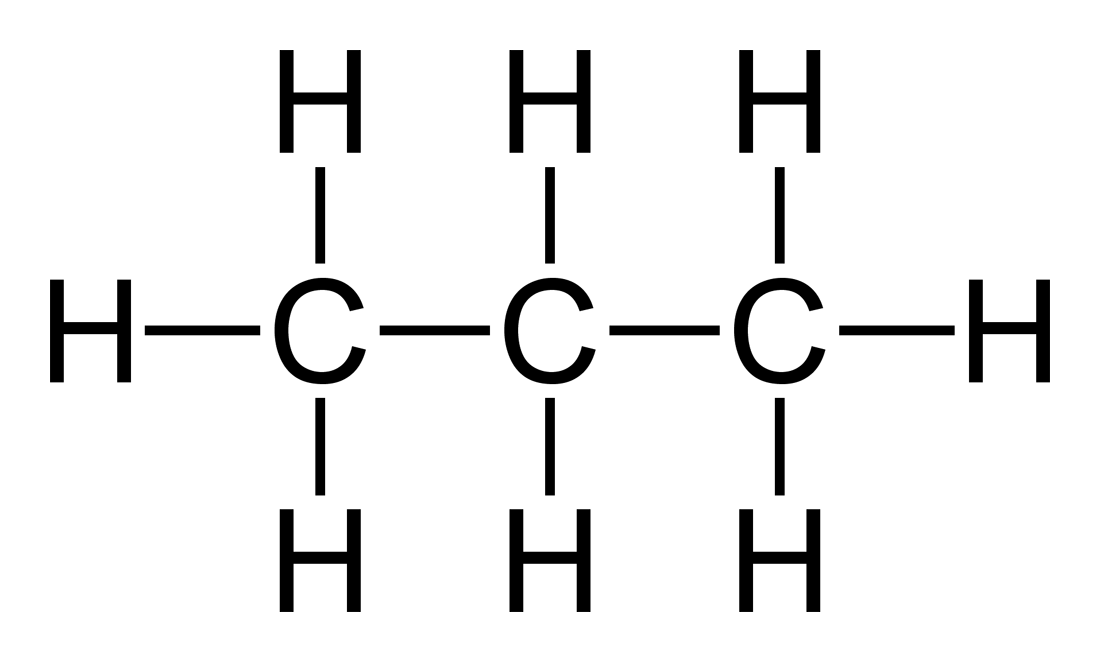
What type of hydrocarbon is shown above?
Alkane
Alkene
Alkyne
None of the above


What chemical is this? (C5H10)
Pentene
Pentane
Hexane
Heptene

What is the name of the organic molecule in the picture?
hexane
heptane
heptene
heptyne
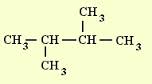
Which of the following compounds is the correct molecular formula of pentane ?
C5H12
CH4
C6H14
CH3CH2CH2CH2CH2CH3

Name the structure shown in the image:
Oct-1-yne
Oct-6-yne
Octane
Oct-1-ene

Name the structure shown in the image:
But-1-ene
But-4-yne
But-2-yne
But-1-yne

Name the structure shown in the image:
Hex-2-ene
Hex-3-ene
Hexane
Hen-1-ene
What is the correct structure for 2 - butene?


CH3CH2CH2CH=CHCH2CH3. What is the IUPAC name for the compound?
2-Butene
3-Heptene
2-Methyl-2-Pentene
What is the chemical formula of an alkane that has 1 carbon atom?
C1H2
C1H3
C1H4
C1H6
How many Hydrogen atoms are needed in an alkyne that has 2 carbon atoms?
2
4
6
8

