
 Worksheets
Integumentary System
Total questions: 40
Worksheet time: 15mins
Which layer of the integument is avascular and consists of stratified squamous tissue?
Epidermis
Dermis
Subcutaneous (Hypodermis)
Cutaneous Membrane
What type of tissue is found in the dermis layer of the integument?
Stratified squamous tissue
Dense irregular and areolar tissue
Adipose tissue
Simple cuboidal tissue
Which layer of the integument anchors the skin to underlying organs, is used for energy storage, and contains adipose tissue, blood vessels, and nerves?
Epidermis
Dermis
Subcutaneous (Hypodermis)
Cutaneous Membrane
Which of the following is a function of the integumentary system related to temperature regulation?
Producing Vitamin D
Preventing desiccation
Releasing sweat to cool the body
Protecting against microbial damage
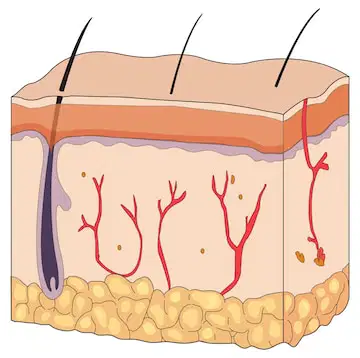
What is the outermost layer of the skin called?
Dermis
Epidermis
Hypodermis
Adipose tissue

Which layer of the skin contains the papillary and reticular layers?
Epidermis
Hypodermis
Dermis
Adipose tissue
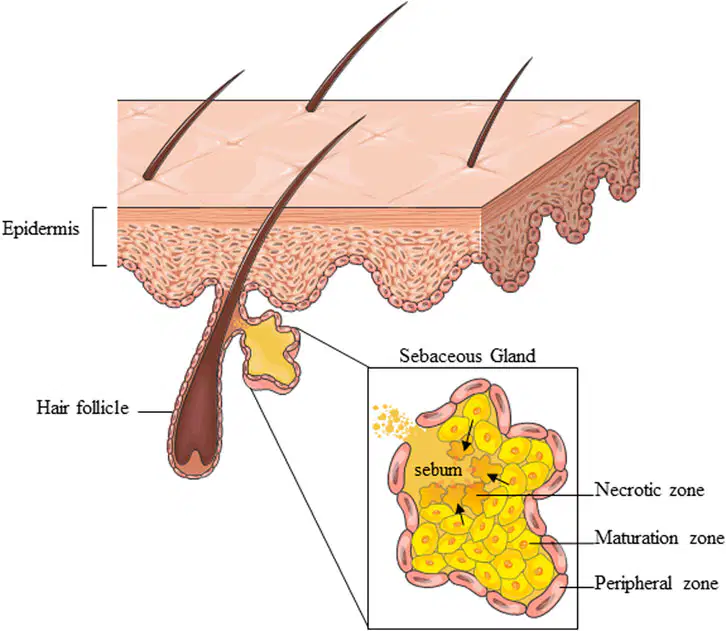
What is the function of the sebaceous (oil) gland in the skin?
Produces sweat to regulate body temperature
Produces oil to lubricate the skin and hair
Detects sensory stimuli
Stores fat for insulation
Which structure is responsible for the production of sweat in the skin?
Sebaceous gland
Eccrine gland
Hair follicle
Adipose tissue

Which structure contracts when cold and is responsible for raising the hair to create 'goosebumps'?
Arrector pili muscle
Hair Follicle
Sebaceous gland
Dermal papillae
What is the primary protein produced by most cells in the epidermis that makes the skin tough?
Collagen
Keratin
Elastin
Melanin
What does the term "avascular" mean in the context of the epidermis?
It has no nerve supply.
It has no blood vessels.
It has no keratinocytes.
It has no melanin.
What is the correct order of the layers of the epidermis from superficial to deep?
Stratum basale, Stratum spinosum, Stratum granulosum, Stratum lucidum, Stratum corneum
Stratum corneum, Stratum lucidum, Stratum granulosum, Stratum spinosum, Stratum basale
Stratum spinosum, Stratum corneum, Stratum basale, Stratum granulosum, Stratum lucidum
Stratum lucidum, Stratum corneum, Stratum basale, Stratum spinosum, Stratum granulosum
Which layer of the epidermis contains actively dividing stem cells?
Stratum corneum
Stratum lucidum
Stratum basale
Stratum granulosum
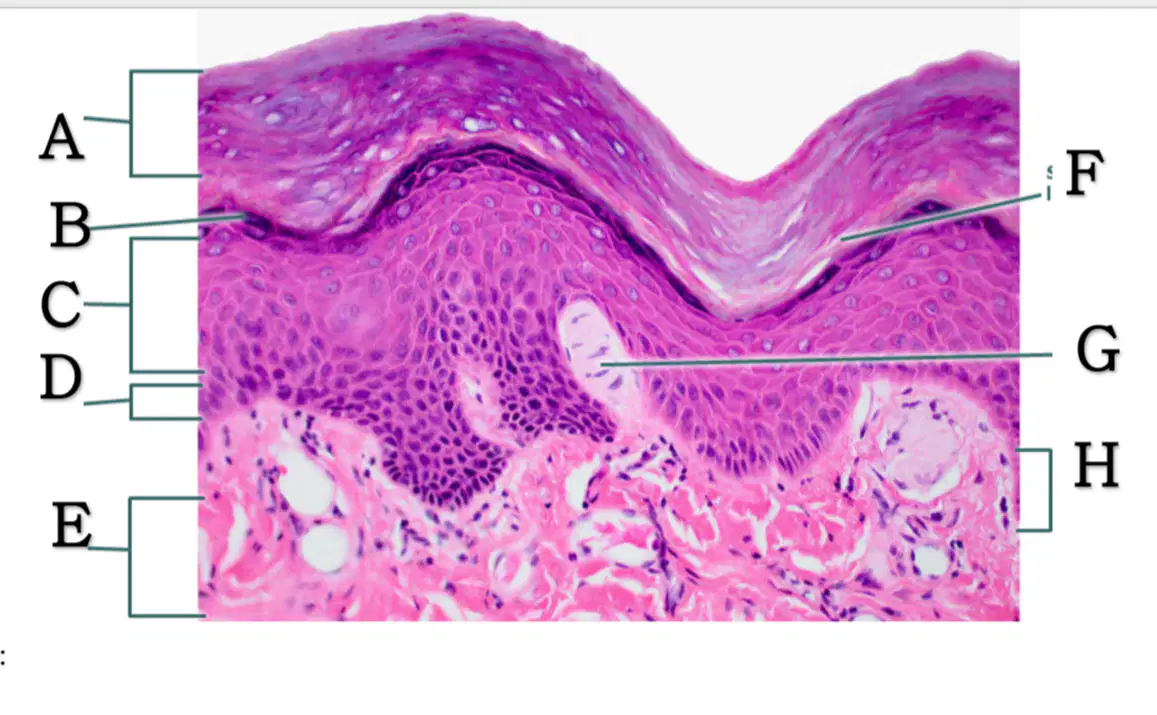
Which layer of the epidermis is Letter A indicating? (the outermost layer composed of dead, flattened cells)
Stratum basale
Stratum spinosum
Stratum corneum
Stratum granulosum
Which layer of the epidermis is indicated by letter F? (found only in the thick skin of the palms and soles of the feet)
Stratum basale
Stratum spinosum
Stratum lucidum
Stratum granulosum
Which layer of the epidermis is indicated by letter B? (contains a lot of keratin)
Stratum corneum
Stratum granulosum
Stratum basale
Stratum spinosum
Which layer of the epidermis is indicated by letter C? (abundant, spiny looking keratinocytes)
Stratum corneum
Stratum granulosum
Stratum lucidum
Stratum spinosum
Which type of cells in the stratum spinosum are involved in immune defense?
Keratinocytes
Langerhans cells
Melanocytes
Fibroblasts
Which layer of the epidermis is indicated by letter D? (the deepest, contains melanocytes)
Stratum corneum
Stratum lucidum
Stratum granulosum
Stratum basale
What is the primary function of melanocytes in the Stratum Basale?
To provide touch sensation
To produce skin pigment
To divide continuously
To form the dermis
Which of the following is a function of Merkel cells in the Stratum Basale?
Continuous cell division
Production of skin pigment
Touch sensation
Formation of keratin
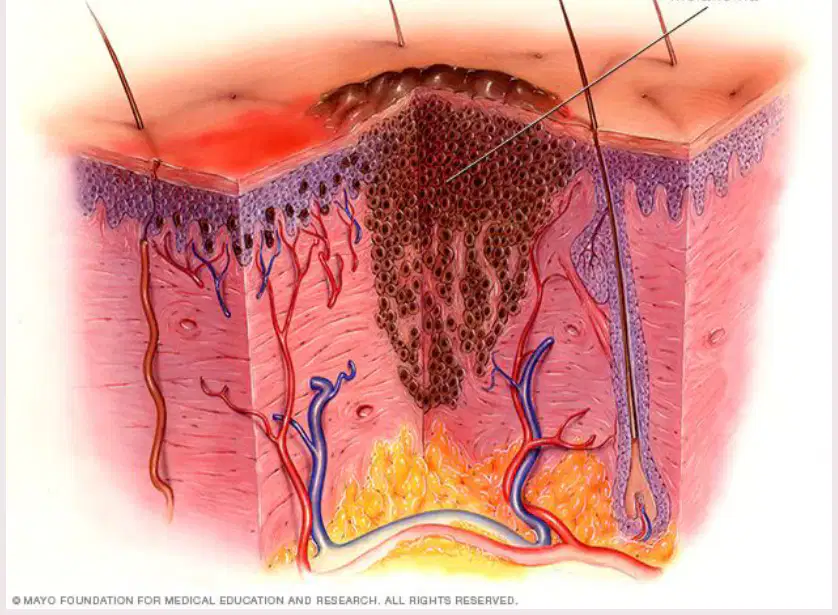
What is one of the potential risks of DNA mutation caused by UV light exposure as depicted here?
Increased skin hydration
Development of melanoma or other cancers
Reduction in skin pigmentation
Enhanced immune response
Which layer of the dermis is responsible for fingerprints?
Reticular layer
Epidermis
Papillary layer
Subcutaneous layer
Which of the following is true about Pacinian corpuscles?
They are used for light touch and located in the papillary layer of the dermis.
They are responsible for detecting pain.
They are used for deep touch and found in the reticular layer of the dermis.
They produce sweat.
Letter H indicates which layer of the dermis?
Reticular
Papillary
Stratum Basale
Meissners Corpuscle
What happens to blood flow in the skin when you are cold?
Vessels dilate and blood flow increases to the skin to maintain warmth.
Vessels constrict and blood is bypassed from the skin to keep internal organs warmer.
Blood flow remains constant regardless of temperature.
Blood vessels in the skin expand to trap heat.
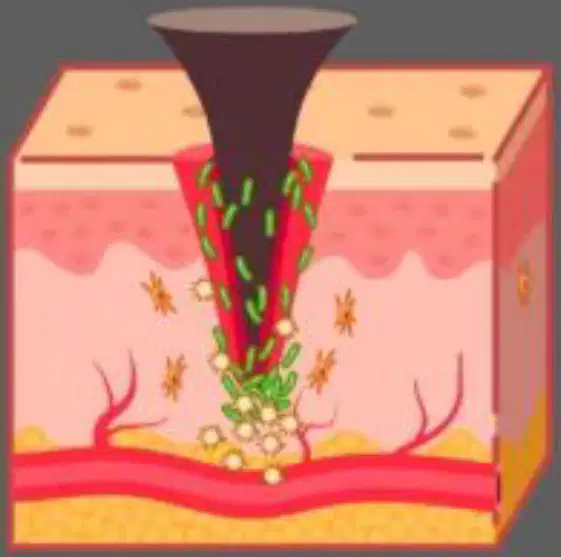
What is the primary function of vasoconstriction during the hemostasis phase of wound healing?
To increase blood flow to the wound
To tighten blood vessels and reduce blood loss
To release histamine and cause swelling
To remove debris and bacteria from the wound
What is the role of mast cells (inflammatory WBC) during the inflammation phase of wound healing?
To release histamine, causing vessels to dilate and increase swelling
To form a clot and stop bleeding
To remove debris and bacteria from the wound
To tighten blood vessels and reduce blood loss
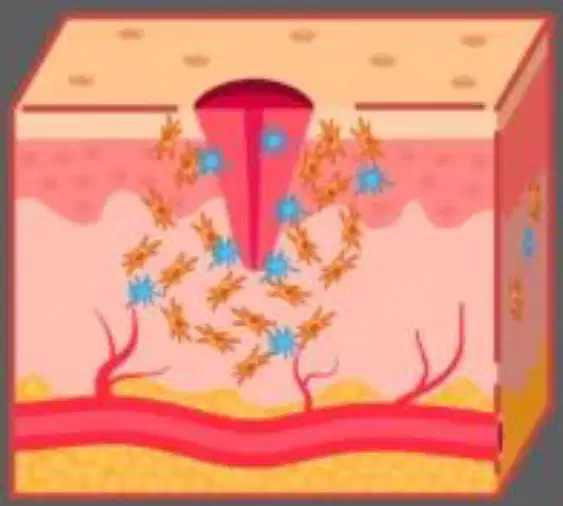
What is the primary role of fibroblasts during the proliferation phase of wound healing?
To form new blood vessels
To lay down collagen fibers
To migrate epithelial cells across the wound
To protect the wound with a scab
During the remodeling (maturation) phase of wound healing, what happens to collagen?
It forms new blood vessels
It reorganizes to increase tensile strength
It migrates across the wound to close it
It becomes less flexible and forms scar tissue
Which of the following occurs during the remodeling (maturation) phase of wound healing?
Fibroblasts lay down collagen fibers
Epithelial cells migrate across the wound
Scar tissue forms
New blood vessels form through angiogenesis
Which type of sweat gland is abundant in the palms of hands and soles of feet and is used for thermoregulation?
Eccrine/Merocrine
Apocrine
Sebaceous
Subcutaneous
What is a key characteristic of apocrine sweat glands?
They are abundant in the palms of hands and soles of feet.
They produce sweat that contains fatty acids and proteins.
They are primarily used for thermoregulation.
They are active from birth.
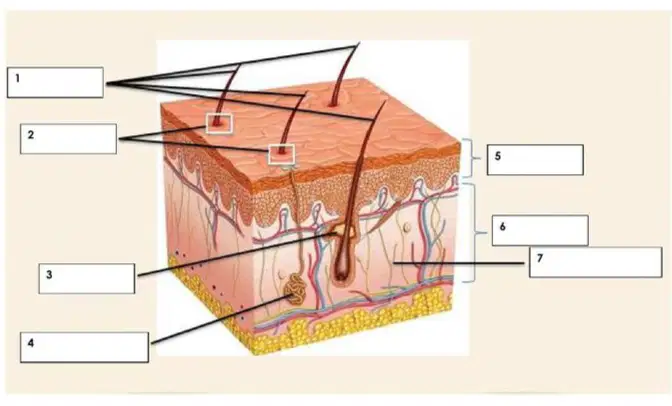
Which type of gland is #4 pointing to?
Eccrine/merocrine sweat gland
Apocrine sweat gland
Sebaceous/Holocrine gland
Which type of gland is #3 pointing to?
Eccrine/merocrine sweat gland
Apocrine sweat gland
Sebaceous/Holocrine gland
What condition is caused by high levels of bilirubin in the body?
Jaundice
Rosacea
Anemia
Vitiligo
Which pigment gives a rosy appearance to light-skinned individuals?
Melanin
Hemoglobin
Bilirubin
Carotene
A DNA mutation causes some patches of skin to be lighter than others. What pathology does this describe?
Albinism
Melanoma
Vitiligo
Cyanosis
A DNA mutation causes skin to be extremely pale and eyes to be red due to a lack of melanin. What pathology does this describe?
Albinism
Melanoma
Vitiligo
Cyanosis
Melissa has been to tanning bed frequently. She has a lesion with irregular borders and different colors and is getting bigger.
Melanoma
psoriasis
dermatitis
scabes

