
 Worksheets
Q2 ELS
Total questions: 50
Worksheet time: 25mins
Genes are passed from one generation to the next generation through.
Evolution
Regulation
Form and Function
Reproduction and Inheritance
Among the given examples describes the unifying form and structure.
Cellular basis of life
Light as source of energy
Bats have wings specialized for flying
Living things arise from pre-existing cells
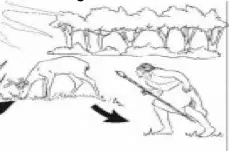
Describe the image illustrated.
It shows how organisms respond to its environment.
Organisms are growing and developing.
There is a transfer of energy among living organisms.
They are evolving.
Living organisms cannot live alone, they are interacting with the abiotic factors for sustainability of life. Which among the organisms is considered as the abiotic?
Bacteria
Plant
Light
Man
Chameleons shift colors wherever they go. They are able to turn any colors or combine colors depending on where the environment is. What trait is being described?
Adaptation
Interaction
Inheritance
Reproduction
The diversity of life arises by change leading to the present biodiversity that we see.
Evolution
Adaptation
Inheritance
Reproduction
The field of science is changing the lives of all organisms through technology and research.
Adaptation
Biology and Society
Energy and Life
Inheritance
All organisms alive today have descended from simple cellular creatures billions of years ago. Biologists were able to identify and preserved some of the characteristics of that earliest organisms.
Function and structure are interdependent
Cell theory as a description of living systems.
Emergent properties arise from the organization of life.
Unity of living systems is explained by evolutionary conservation.
A term used to describe morphologically and genetically similar individuals
Clone
Identical
Similar
Vegetative
A certain organism was cut and divides into two, leaving one piece headless and the other tailless. After some time, each piece grows the missing body parts. What does it show?
Irregular fission
Binary fusion
Transverse fission
Longitudinal fission
Reproduction in animals that involves production of new living organism by combining two gametes from different organism, one male producing motile gamete that must fused with the egg cell from female organism.
Asexual
Sexual
Both A and B
None of A and B
The largest cell in the female body waiting for a motile gamete to be fused with.
Egg
Morula
Sperm
Zygote
The following is/are involved in sexual reproduction
Egg cell
Sperm cell
Tissue
Both A and B
It is characterized as having male and female reproductive tissue in one organism.
Hermaphroditism
Heterogamy
Bisexual
Isogamy
Which is TRUE about sexual reproduction
Gametes has diploid cells.
Occur with only one parent involve.
Produce genetically different offspring as compared to parents.
Involves less time as compared to asexual reproduction process.
A new organism develops from an outgrowth or bud due to cell division at one particular site.
Budding
Fragmentation
Longitudinal fission
Parthenogenesis
Where the body breaks into two or more parts and capable of becoming complete individual. In animals, usually followed by regeneration where the missing parts are produced.
Budding
Fragmentation
Sporulation
Parthenogenesis
I. Aphids can reproduce sexually when condition is stable and favorable during springs
II. Aphids can reproduce asexually when condition is stable and favorable during springs
Statement I is correct
Statement II is correct
Statement I and II are both correct
Statement I and II are both incorrect
I. Sexual reproduction involves the union of gametes, and it does not change the number of chromosomes present.
II. Asexual reproduction involves the union of gametes, and it does not change the number of chromosomes present.
Statement I is correct
Statement II is correct
Statement I and II are both correct
Statement I and II are both incorrect
It is a process in which animals with desired characteristics are mated to produce offspring with those desired traits.
Cloning
Hybridization
Inbreeding
Selective breeding
It is a process of creating an organism that has an exact genetic copy of another.
Artificial selection
Cloning
Gene splicing
Selective breeding
A technique in artificial selection that involves crossing two genetically different organisms to produce offspring with desirable traits from both parents.
Cloning
Hybridization
Inbreeding
Selective breeding
It is a process where a DNA is cut out from one organism and put into another organism.
Cloning
Gel electrophoresis
Gene splicing
Selective breeding
I. Genetically modified plants have created resistance to harmful agents, enhanced product yield, and shown increased adaptability for better survival.
II. Recombinant DNA technology has applications in various area like medicine focusing on the discoveries of medicine to cure and improve human health and nutrition
Statement I is correct
Statement II is correct
Statement I and II are both correct
Statement I and II are both incorrect
I. Genetically modified organisms (GMO) are products of recombinant DNA technology
II. Translated organisms are other term for genetically modified organisms
Statement I is correct
Statement II is correct
Statement I and II are both correct
Statement I and II are both incorrect
The urinary system gets rid of.
Cartilage
Nutrients
Oxygen
Waste
A system delivers oxygen and nutrients to every cell in the body.
Circulatory
Integumentary
Muscular
Respiratory
It can you infer about carbon dioxide from the function of the respiratory system?
It helps you breathe
It is more common than oxygen
It is harmful to your body
It is not found in the body
The circulatory system and the nervous system both:
Deliver blood to vital organs
Extend throughout the body
Sends electrical signals to the brain
Guard the body against infections
The main function of your stomach
To hold food
To mix food with digestive juices
To absorb food into the blood stream
To hold waste materials
Which body system is responsible for taking in oxygen and getting rid of carbon dioxide?
Digestive system
Excretory system
Integumentary system
Respiratory system
The system of the body that is responsible for movement and helps in the contraction and relaxation of body parts.
Circulatory system
Digestive system
Muscular system
Respiratory system
During the final stages of human gestation, receptors for the hormone oxytocin increase on the smooth muscle cells of the uterus. The release of the oxytocin during labor stimulates the smooth muscle tissue in the wall of the uterus. The vigorous contraction of the uterine smooth muscle helps push the baby through the birth canal so that delivery can occur. This process involves the interaction of which organ system?
A. Endocrine and Reproductive only
B. Endocrine and Muscular only
C. Endocrine, Muscular and Reproductive
D. Endocrine, Reproductive and Excretory
Kidneys are part of the excretory system. They purify the blood and send it back to the rest of the body. Which system is mainly responsible for the transport of plasma to the kidneys?
Circulatory system
Respiratory system
Nervous system
Muscular system
What two body systems are most useful in getting nutrients from the food that you eat?
Muscular and Endocrine systems
Nervous and Digestive system
Nervous and Circulatory System
Circulatory and Digestive System
What two systems work together to provide body cells with a constant supply of oxygen while removing carbon dioxide waste?
Circulatory and respiratory systems
Muscular and circulatory systems
Nervous and circulatory systems
Nervous and immune systems
The human digestive system is approximately 900 cm long. Food is moved through the digestive tract primarily by:
Bile produce by the pancreas
Hydrochloric acid by the stomach
Muscular contractions
The enzyme amylase and pepsin
The digestive system is to absorbing nutrients as the circulatory system is to
Removing nutrient
Attracting nutrients
Distributing nutrients
Fighting infections
How do circulatory system and immune system work together to respond to an injury?
Increase blood flow carries white blood cells to the site of the injury
Increase blood flow kills healthy cells which prevents infection at the site of the injury
Increase blood flow allows for an increase in the exchange of carbon dioxide and oxygen at the site of the injury
Increase blood flow removes infected cells from the body at the site of the injury
Which body systems must directly interact for vertebrate organism to exchange gasses?
A. Circulatory and Respiratory
B. Endocrine and Respiratory
C. Immune and Endocrine
D. Skeletal and Circulatory
A deer hears a predator approaching and begins to run for safety. The deer has primarily engaged what body system to escape?
Muscular, Reproductive, and Circulatory System
Muscular, Digestive, and Immune system
Nervous, Respiratory, and Muscular system
Respiratory, Endocrine and Excretory System
Which two systems alert the young bird to the danger and help produce the vomit it uses as a defense?
Excretory and Immune
Muscular and Digestive
Nervous and Digestive
Urinary and Muscular
Refers to a change over time
Evolution
Gradualism
Migration
Mutation
Each living species has descended, with changes, from other species over time and as a result species today look different from their ancestors
Theory of Descent with Modification
Theory of Modification
Theory of Natural Selection
Theory of Survival
Explains the difference in survival of individual and reproduce in a particular environment
Evolution
Gene flow
Gradualism
Natural Selection
Takes place when population decreases due to various environmental factors such as fires, earthquakes and floods
Bottleneck Effect
Founder Effect
Genetic Flow
Natural Selection
According to his theory of evolution, organisms change during their lifetime to survive then pass these changes to their offspring
Carolus Linnaeus
Charles Darwin
Jean Baptiste de Lamarck
Thomas Malthus
His theory involves natural selection
Carolus Linnaeus
Charles Darwin
Jean Baptiste de Lamarck
Thomas Malthus
What influence the carrying capacity is maximum number of organisms that an ecosystem can support What influence that carrying capacity?
I. Limiting factor
II. Biotic potential
III. Biotic factor
IV. Abiotic factor
V. Environmental resistance
VI. Predation
VII. Competition
I and II
III and IV
II and V
VI and VII
It is the connection between biotic potential and environmental resistance.
Biotic potential increases the population whereas environmental resistance confines its growth.
Biotic potential increases the population while environmental resistance decreases its growth.
Biotic potential and environmental resistance are the two factors that increase the population growth.
Biotic potential and environmental resistance are the two factors that limit the population explosion.

