
Font size
 Worksheets
Big Idea 14 & 16
Total questions: 98
Worksheet time: 49mins
Identify the organs in the human body and describe their functions.
Skin, brain, heart, lungs, stomach, liver, intestines, pancreas, muscles, skeleton, reproductive organs, kidneys, bladder, sensory organs.
Skin, leaves, roots, stem, flowers, fruits, seeds, bark, xylem, phloem, chloroplasts, petals, sepals, stomata, guard cells.
CPU, monitor, keyboard, mouse, printer, scanner, speakers, motherboard, RAM, hard disk, power supply, graphics card, USB ports, fan, battery.
Wheels, engine, doors, windows, seats, steering wheel, brakes, headlights, mirrors, exhaust, trunk, dashboard, gear, fuel tank, horn.
Describe structures in plants and their roles in food production, support, water and nutrient transport, and reproduction.
Structures in plants include roots, stems, leaves, flowers, and seeds. Roots absorb water and nutrients, stems support the plant and transport water/nutrients, leaves produce food through photosynthesis, flowers are involved in reproduction, and seeds allow for reproduction and dispersal.
Structures in plants include only leaves and flowers. Leaves absorb water and nutrients, and flowers produce food through photosynthesis.
Structures in plants include roots and stems only. Roots are responsible for reproduction, and stems produce food through photosynthesis.
Structures in plants include seeds and stems only. Seeds absorb water and nutrients, and stems are involved in reproduction.
How do plants respond to stimuli such as heat, light, and gravity?
Plant stems grow toward light and their roots grow downward in response to gravity.
Plant stems grow away from light and their roots grow upward against gravity.
Plant leaves change color in response to gravity and heat.
Plant roots grow toward light and stems grow downward in response to gravity.
Identify processes of sexual reproduction in flowering plants, including pollination, fertilization (seed production), seed dispersal, and germination.
Pollination, fertilization, seed dispersal, and germination are processes of sexual reproduction in flowering plants.
Photosynthesis, transpiration, respiration, and germination are processes of sexual reproduction in flowering plants.
Pollination, photosynthesis, seed dispersal, and respiration are processes of sexual reproduction in flowering plants.
Fertilization, transpiration, seed dispersal, and photosynthesis are processes of sexual reproduction in flowering plants.
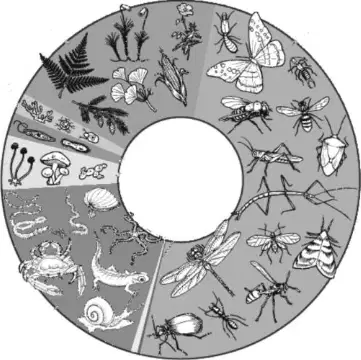
Classify animals into major groups: mammals, birds, reptiles, amphibians, fish, arthropods, vertebrates, and invertebrates. Which animals have live births and which lay eggs?
Mammals have live births. Birds, reptiles, amphibians, and fish lay eggs. Arthropods, vertebrates, and invertebrates can lay eggs or have live births depending on the species.
All animals have live births except birds, which lay eggs.
Only mammals and birds have live births; all others lay eggs.
Reptiles and amphibians have live births, while mammals, birds, and fish lay eggs.
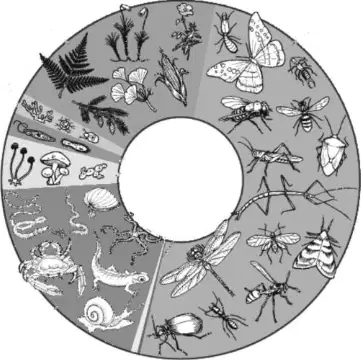
Classify flowering and nonflowering plants into major groups such as those that produce seeds, or those like ferns and mosses that produce spores, according to their physical characteristics.
Flowering plants produce seeds. Nonflowering plants like ferns and mosses produce spores.
Flowering plants produce spores. Nonflowering plants like ferns and mosses produce seeds.
Both flowering and nonflowering plants produce only seeds.
Both flowering and nonflowering plants produce only spores.
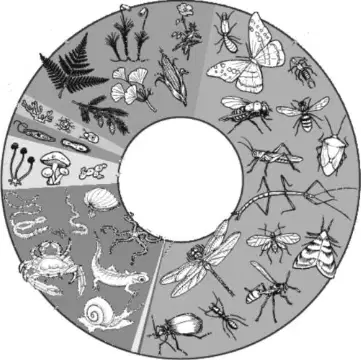
Compare and contrast the major stages in the life cycles of Florida plants and animals, such as those that undergo incomplete and complete metamorphosis, and flowering and nonflowering seed-bearing plants.
Animals with complete metamorphosis have stages: egg, larva, pupa, adult. Incomplete metamorphosis: egg, nymph, adult. Flowering plants: seed, germination, growth, flowering, seed production. Nonflowering plants: spore, germination, growth, spore production.
Animals with complete metamorphosis have stages: egg, nymph, adult. Incomplete metamorphosis: egg, larva, pupa, adult. Flowering plants: seed, growth, flowering, seed production. Nonflowering plants: seed, germination, growth, seed production.
Animals with complete metamorphosis have stages: egg, larva, adult. Incomplete metamorphosis: egg, pupa, adult. Flowering plants: spore, germination, growth, flowering, seed production. Nonflowering plants: seed, growth, flowering, seed production.
Animals with complete metamorphosis have stages: egg, larva, pupa, adult. Incomplete metamorphosis: egg, larva, adult. Flowering plants: seed, germination, growth, seed production. Nonflowering plants: spore, growth, flowering, seed production.
What is the meaning of the word 'organ'?
An organ is a body part that does a job to help the body survive.
An organ is a type of musical instrument only.
An organ is a kind of plant found in the desert.
An organ is a type of clothing worn in winter.
What is the meaning of the word 'skin'?
Skin is the outer covering of the body that protects internal organs and helps regulate temperature.
Skin is a type of muscle found in the heart.
Skin is a bone that supports the body structure.
Skin is a fluid that circulates in the veins.
What is the meaning of the word 'brain'?
The brain is the organ that controls thoughts, memory, and other functions of the body.
The brain is a type of muscle found in the arms.
The brain is a bone that protects the heart.
The brain is a liquid that circulates in the veins.
What is the meaning of the word 'heart'?
The heart is the organ that pumps blood throughout the body.
The heart is a type of tree found in rainforests.
The heart is a musical instrument used in orchestras.
The heart is a type of rock found in mountains.
What is the meaning of the word 'lungs'?
The lungs are organs that help you breathe by taking in oxygen and removing carbon dioxide.
Lungs are bones that support the body structure.
Lungs are muscles that help you move your arms and legs.
Lungs are glands that produce hormones for digestion.
What is the meaning of the word 'stomach'?
The stomach is the organ that helps digest food.
The stomach is a type of plant found in deserts.
The stomach is a musical instrument.
The stomach is a kind of weather phenomenon.
What is the meaning of the word 'sensory organs'?
Sensory organs are organs that help you sense the world around you, such as eyes, ears, nose, tongue, and skin.
Sensory organs are organs that help in digestion of food.
Sensory organs are organs that help in movement of the body.
Sensory organs are organs that produce hormones in the body.
What is the meaning of the word 'liver'?
The liver is the organ that helps remove waste and process nutrients in the body.
The liver is a type of plant found in rainforests.
The liver is a musical instrument used in orchestras.
The liver is a type of rock formation found in mountains.
What is the meaning of the word 'small intestine'?
The small intestine is the organ where most digestion and absorption of food takes place.
The small intestine is a bone in the human body.
The small intestine is a type of muscle found in the heart.
The small intestine is a gland that produces hormones.
What is the meaning of the word 'large intestine'?
The large intestine is the organ that absorbs water and forms waste for removal from the body.
The large intestine is a muscle that pumps blood throughout the body.
The large intestine is a gland that produces hormones for growth.
The large intestine is a bone that supports the body's structure.
What is the meaning of the word 'pancreas'?
The pancreas is the organ that helps with digestion and controls blood sugar.
The pancreas is a bone in the human leg.
The pancreas is a type of plant found in rainforests.
The pancreas is a muscle in the human arm.
What is the meaning of the word 'muscles'?
Muscles are tissues that help the body move.
Muscles are bones in the body.
Muscles are organs that produce hormones.
Muscles are fluids that circulate in the body.
What is the meaning of the word 'bladder'?
The bladder is the organ that stores urine before it leaves the body.
The bladder is a bone in the human leg.
The bladder is a type of muscle found in the arm.
The bladder is a gland that produces saliva.
What is the meaning of the word 'bones'?
Bones are hard structures that support and protect the body.
Bones are soft tissues that cover the muscles.
Bones are liquids found in the body.
Bones are organs that help in breathing.
What is the meaning of the word 'reproductive organs'?
Reproductive organs are organs that help produce offspring.
Reproductive organs are organs that help in digestion.
Reproductive organs are organs that help in respiration.
Reproductive organs are organs that help in circulation.
What is the meaning of the word 'kidneys'?
The kidneys are organs that filter waste from the blood and produce urine.
Kidneys are bones that support the body structure.
Kidneys are glands that produce hormones for growth.
Kidneys are muscles that help in movement.
Which student made the best prediction about the largest organ in the human body?
Jacob
Dema
Vivian
Cally
What is an organ?
An organ is a body part that does a job to help the body survive.
An organ is a type of musical instrument.
An organ is a kind of plant leaf.
An organ is a type of clothing.
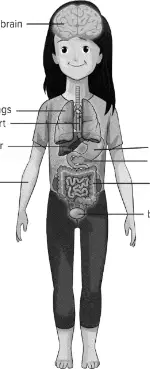
Investigate: Look at the diagram. Label the following organs on the human body: brain, heart, lungs, skin, stomach, intestines, pancreas, bladder, kidneys.
Brain: head; Heart: chest; Lungs: chest; Skin: covers the body; Stomach: abdomen; Intestines: abdomen; Pancreas: abdomen; Bladder: pelvis; Kidneys: lower back.
Brain: chest; Heart: head; Lungs: abdomen; Skin: pelvis; Stomach: chest; Intestines: head; Pancreas: lower back; Bladder: abdomen; Kidneys: chest.
Brain: abdomen; Heart: lower back; Lungs: pelvis; Skin: chest; Stomach: head; Intestines: chest; Pancreas: chest; Bladder: head; Kidneys: abdomen.
Brain: pelvis; Heart: abdomen; Lungs: lower back; Skin: abdomen; Stomach: pelvis; Intestines: lower back; Pancreas: head; Bladder: chest; Kidneys: chest.
What could happen if an organ did not function or work properly?
The body may not work properly or could become sick.
The organ would become stronger.
The body would function better than before.
Nothing would happen to the body.
If toxins build up in the blood, a living organism can develop a variety of diseases. Which human organ removes toxins from the blood?
bladder
intestines
liver
stomach
Vocabulary: Fill in the blank with the correct organ name. 1. ________ helps you think and control your body.
brain
stomach
liver
kidney
Vocabulary: Fill in the blank with the correct organ name. 2. ________ pumps blood throughout your body.
heart
liver
kidney
lung
Vocabulary: Fill in the blank with the correct organ name. 3. ________ allows you to breathe and get oxygen.
lungs
heart
liver
kidney
Vocabulary: Fill in the blank with the correct organ name. 4. ________ stores and removes waste from your body.
bladder
liver
stomach
lung
Vocabulary: Fill in the blank with the correct organ name. 5. ________ helps digest food and absorb nutrients.
small intestine
lung
heart
kidney
Vocabulary: Fill in the blank with the correct organ name. 6. ________ breaks down food and mixes it with digestive juices.
stomach
lungs
heart
kidney
Vocabulary: Fill in the blank with the correct organ name. 7. ________ removes toxins from the blood.
liver
heart
lung
kidney
Vocabulary: Fill in the blank with the correct organ name. 8. ________ helps move your body.
muscles
lungs
stomach
kidneys
Vocabulary: Fill in the blank with the correct organ name. 9. ________ supports and protects your body.
bones
lungs
liver
stomach
Vocabulary: Fill in the blank with the correct organ name. 10. ________ helps you sense the world around you.
sensory organs
lungs
liver
stomach
Vocabulary: Fill in the blank with the correct organ name. 11. ________ helps create new life.
reproductive organs
digestive organs
respiratory organs
excretory organs
Vocabulary: Fill in the blank with the correct organ name.
12. ________ helps control sugar levels in the body.
pancreas
liver
kidney
stomach
Vocabulary: Fill in the blank with the correct organ name. 13. ________ absorbs water and forms solid waste.
large intestine
stomach
esophagus
pancreas
Engage: Observing the ice skater, identify which organs are needed to perform the jump.
Muscles, bones, and lungs
Stomach and liver
Kidneys and bladder
Eyes and ears
Organs that can get a football player cut from a team if they are injured include:
Heart, brain, and spinal cord
Liver, stomach, and intestines
Kidneys, bladder, and pancreas
Lungs, gallbladder, and appendix
Exit Ticket: Organs in the human body carry out different functions. Which human organ breaks down food so that it can be used by the human body?
bladder
heart
kidneys
stomach
What is the meaning of 'stem' in the context of plants?
The stem is the part of the plant that provides support, connects other plant parts, and allows water, nutrients, and food to travel through it.
The stem is the part of the plant that absorbs water and minerals from the soil.
The stem is the part of the plant that produces seeds and fruits.
The stem is the part of the plant that captures sunlight for photosynthesis.
What is the meaning of 'leaf' in the context of plants?
The leaf is the part of the plant that produces food for the plant and sends food down the stem to the rest of the plant.
The leaf is the part of the plant that absorbs water from the soil.
The leaf is the part of the plant that anchors it to the ground.
The leaf is the part of the plant that stores seeds.
What is the meaning of 'root' in the context of plants?
The root is the part of the plant that takes in water and nutrients and anchors the plant in the soil.
The root is the part of the plant that produces flowers and fruits.
The root is the part of the plant that makes food through photosynthesis.
The root is the part of the plant that supports the leaves above ground.
What is the meaning of 'flower' in the context of plants?
The flower contains the plant's reproductive parts and has unique structures that work together to produce seeds.
The flower is the part of the plant that absorbs water and nutrients from the soil.
The flower is the main source of food for the plant, storing energy in the form of starch.
The flower is the structure that anchors the plant to the ground and provides support.
What is the meaning of 'water' in the context of plants?
Water is absorbed by the roots and travels through the stem to other parts of the plant.
Water is produced by the leaves during photosynthesis.
Water is only found in the flowers of the plant.
Water is not important for plant growth.
What is the meaning of 'nutrients' in the context of plants?
Nutrients are absorbed by the roots from the soil and are necessary for the plant's growth and survival.
Nutrients are the sunlight that plants use to make food.
Nutrients are the water that evaporates from plant leaves.
Nutrients are the gases released by plants during photosynthesis.
What is the meaning of 'energy' in the context of plants?
Energy is produced in the leaves through photosynthesis, using sunlight, water, and carbon dioxide.
Energy is the heat absorbed by roots from the soil.
Energy is the sound produced by plants during growth.
Energy is the movement of water through the stem only.
What is the meaning of 'fruit' in the context of plants?
Fruit is the part of the plant that contains seeds and is produced by the flower after pollination.
Fruit is the root of the plant that absorbs water and minerals.
Fruit is the leaf of the plant that performs photosynthesis.
Fruit is the stem of the plant that supports the branches.
Who is correct about how plants get their food?
Gabrielle, because plants get their food from the soil through their roots.
Lois, because plants get their food from pollen spread by bees.
Jada, because plants make their own food in their leaves.
Both Gabrielle and Lois, because plants get food from soil and pollen.
According to the text, what are the main structures of flowering plants?
Most plants have roots, stems, leaves, and flowers.
Most plants have only roots and stems.
Most plants have only leaves and fruits.
Most plants have only flowers and seeds.
The structures important for a plant to make and use food are:
leaves, stems, and roots
flowers, fruits, and seeds
bark, thorns, and sap
petals, pollen, and nectar
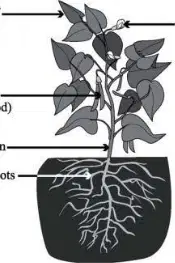
Plants produce their own food. In which part of the plant is most of its food produced?
leaf
fruit
stem
root
What do you notice?
There is no specific information provided to notice.
The image contains a bar graph.
The question is about a historical event.
The question asks for a mathematical calculation.
What is an example of something you might wonder about a plant?
Why is the plant moving?
How tall is the plant?
What color is the plant?
Where is the plant from?
According to the text, what are two environmental factors that plants respond to?
Plants respond to gravity and sunlight.
Plants respond to sound and taste.
Plants respond to water and fire.
Plants respond to wind and metal.
What is the meaning of the word 'heat' as used in science vocabulary?
Heat is a form of energy that causes things to become warm or hot.
Heat is a type of solid material found in rocks.
Heat is a kind of plant that grows in warm climates.
Heat is a tool used to measure temperature.
What is the meaning of the word 'light' as used in science vocabulary?
Light is a form of energy that makes it possible to see and helps plants make food.
Light is a type of heavy metal found in the earth.
Light is a kind of plant that grows in the dark.
Light is a type of sound wave that travels through water.
What is the meaning of the word 'gravity' as used in science vocabulary?
Gravity is the force that pulls objects toward the center of the Earth.
Gravity is the process of plants making food from sunlight.
Gravity is the measure of how hot or cold something is.
Gravity is the ability of an object to conduct electricity.
What is the meaning of the word 'behavior' as used in science vocabulary?
Behavior is the way an organism acts or responds to its environment.
Behavior is the physical structure of an organism.
Behavior is the process of photosynthesis in plants.
Behavior is the chemical composition of a substance.
Stimuli: gravity Draw your observations: ________
Plant stems grow upwards and plant roots grow downward.
Plant stems grow downward and roots grow upward.
Plant leaves turn blue in sunlight.
Plant roots grow sideways only.
Stimuli: heat Draw your observations: ________
Images should have sunlight (warm weather) and plants growing.
Images should have snow and people wearing coats.
Images should show rain and umbrellas.
Images should have dark clouds and lightning.
Stimuli: light Draw your observations: ________
Images should have a plant that is growing towards a light source.
Images should have a plant that is growing away from a light source.
Images should have a plant that is not affected by the light source.
Images should have a plant that is wilting under the light source.
Take a look at the plant below. What will happen if the plant is left on its side to continue to grow?
The plant will start to grow upward, bending towards the light.
The plant will stop growing completely.
The plant will grow roots from its leaves.
The plant will dry out and die immediately.
How does gravity affect the roots of a growing bean seed plant?
The roots will grow upward.
The roots will grow downward.
The roots will not grow.
The roots will first grow upward, then downward.
The flowers are similar and different in certain ways. Select the correct statement based on the reading passage.
The flowers have both similarities and differences as described in the passage.
The flowers are exactly the same in every way.
The flowers have no similarities at all.
The flowers are only different in color.
A flowering plant grows by which of the following processes?
It starts from a seed, grows roots and shoots, develops leaves, flowers, and produces seeds.
It is formed directly as a mature plant from the soil.
It grows only under water without any seeds.
It grows by splitting into two mature plants immediately.
Fill in the blank: The process by which pollen is transferred from one plant to another is called ________.
pollination
germination
fertilization
transpiration
Fill in the blank: The male flower part that produces pollen is called the ________.
stamen
pistil
sepal
petal
Fill in the blank: The process of pollen and egg meeting to create a new fertilized cell is called ________.
fertilization
photosynthesis
germination
pollination
Fill in the blank: The part of the flower that catches pollen and moves it to the ovary is called the ________.
pistil
stamen
petal
sepal
Fill in the blank: The part of the flower that protects the seed and is often meant to attract animals is called the ________.
fruit
petal
stem
leaf
Fill in the blank: The process by which seeds are spread to new places is called ________.
seed dispersal
germination
photosynthesis
pollination
Fill in the blank: The process by which a seed grows into a new plant is called ________.
germination
photosynthesis
pollination
transpiration
Fill in the blank: The part of the flower that contains the egg and develops into a fruit is called the ________.
ovary
stamen
petal
anther
Fill in the blank: The colorful part of the flower that attracts pollinators is called the ________.
petal
stem
root
sepal
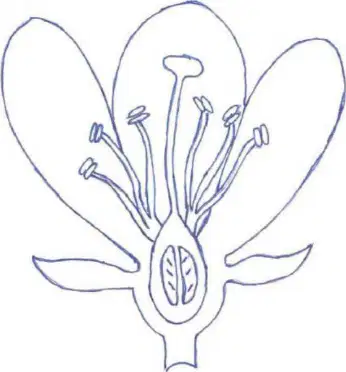
Label the parts of the flower shown in the diagram.
Stamen, pistil, petal, ovary, and anther are labeled as shown in the diagram.
Leaf, root, stem, seed, and fruit are labeled as shown in the diagram.
Sepal, filament, style, stigma, and root are labeled as shown in the diagram.
Petal, leaf, stem, root, and seed are labeled as shown in the diagram.
Structure: petals How many? ______ Function: ______ Fill in the blanks with the correct number and function for petals.
6; Protect the reproductive organs and attract pollinators.
4; Store food and water.
5; Absorb sunlight for photosynthesis.
3; Anchor the plant in the soil.
Structure: sepals How many? ______ Function: ______ Fill in the blanks with the correct number and function for sepals.
3-6; Enclose and protect the flower before it blooms.
1-2; Attract pollinators to the flower.
7-10; Produce seeds for the plant.
4-8; Support the stem of the flower.
Structure: stamen How many? ______ Function: ______ Fill in the blanks with the correct number and function for stamen.
6; Male reproductive organs that produce pollen.
4; Female reproductive organs that produce ovules.
5; Supports the petals and attracts pollinators.
3; Protects the flower bud before it opens.
Structure: pistil How many? ______ Function: ______ Fill in the blanks with the correct number and function for pistil.
1; Female reproductive organ, consisting of the stigma, style, and ovary.
2; Male reproductive organ, consisting of the anther and filament.
3; Part of the leaf responsible for photosynthesis.
4; Structure that transports water and minerals from roots to leaves.
Structure: ovary How many? ______ Function: ______ Fill in the blanks with the correct number and function for ovary.
1; Contains the ovules, where fertilization occurs.
2; Produces pollen grains for fertilization.
3; Supports the flower and transports nutrients.
4; Protects the developing seed after fertilization.
Structure: anthers How many? ______ Function: ______ Fill in the blanks with the correct number and function for anthers.
6 (on stamen); Release pollen for fertilization.
4 (on pistil); Absorb sunlight for photosynthesis.
2 (on petal); Attract pollinators with scent.
8 (on sepal); Protect the flower bud.
Flowering plants use their various structures to ensure they can make new plants and continue their life cycle by:
producing seeds through pollination and fertilization
absorbing nutrients only through leaves
releasing spores into the air
growing roots above the soil
Southern Magnolias can be found all over Florida. They produce a creamy white flower that turns into a fruit with red berries. What is the purpose of the fruit?
The fruit contains leaves that will allow the plant to photosynthesize.
The fruit contains seeds that will allow the plant to reproduce.
The fruit contains seeds that will allow the plant to absorb water.
The fruit contains roots that will allow the plant to support itself.
Who do you agree with about whether all plants must have flowers, and why?
Eli, because all plants make seeds through flowers.
Sara, because some plants have seeds that grow in cones, not flowers.
Jake, because some plants reproduce with spores and some have seeds in cones.
Eli, because flowers are the only way plants reproduce.
Conifers are like flowering plants because:
both produce seeds.
both have broad leaves.
both have flowers.
both are deciduous.
What does the word 'classify' mean in the context of plant reproduction?
To arrange or organize plants into groups based on their characteristics.
To water plants regularly to help them grow.
To remove dead leaves from plants.
To plant seeds in the soil.
What does the word 'flowering' mean in the context of plant reproduction?
Plants that produce flowers as part of their reproductive cycle.
Plants that grow only in water.
Plants that do not produce seeds.
Plants that reproduce through spores.
What does the word 'nonflowering' mean in the context of plant reproduction?
Plants that do not produce flowers, such as ferns, mosses, and conifers.
Plants that produce only colorful flowers.
Plants that reproduce only through seeds.
Plants that require insects for pollination.
What does the word 'cones' mean in the context of plant reproduction?
Structures produced by conifers to protect and disperse seeds.
Roots that absorb water and nutrients from the soil.
Leaves that perform photosynthesis.
Flowers that attract pollinators.
What does the word 'spores' mean in the context of plant reproduction?
Tiny reproductive cells used by plants like ferns and mosses to reproduce.
Large seeds produced by flowering plants.
Roots that help plants absorb water.
Leaves that capture sunlight for photosynthesis.
What does the word 'seeds' mean in the context of plant reproduction?
Structures produced by flowering plants and conifers that can grow into new plants.
Parts of a plant that absorb water and nutrients from the soil.
Leaves that help the plant make food through photosynthesis.
Stems that support the plant and transport nutrients.
What does the word 'life cycle' mean in the context of plant reproduction?
The series of stages a plant goes through from seed to adult plant and back to seed.
The process by which plants make their own food using sunlight.
The way plants respond to changes in their environment.
The method plants use to attract pollinators.
Name two types of plants that reproduce with spores.
Ferns and mosses reproduce with spores.
Roses and tulips reproduce with spores.
Pine trees and oak trees reproduce with spores.
Cacti and succulents reproduce with spores.

