
 Worksheets
MS Clinical - MS Integ
Total questions: 20
Worksheet time: 35mins

Which mole do you think is malignant melanoma? (see photo, right or left?)
right
left
Which of the following reduces your risk of developing melanoma?
Using tanning beds
Using sunscreen
Getting sunburned
Not wearing hats or protective clothing

Highly contagious bacterial infection that produces honey-yellow crusted lesions
impetigo
eczema
folliculitis
tinea
A burning log falls on a patient’s legs and feet and destroys two layers of the skin, including some
blood vessels. Which of the following types of burns does the patient have?
First-degree
Second-degree
Third-degree
Fourth-degree
A person suffered burns to their entire right arm and half their right leg that display red, black colors with the entire dermis damaged. Which statement is correct about their condition?
Critical they have 3rd degree burns on 27 % of their body.
Not critical they have 2nd degree burns on 22.5% of their body.
Critical they have 3rd degree burns on 18 % of their body.
Not critical they have 2nd degree burns on 18% of their body.
What is the first step in managing a burn?
Cool the burn area with water
Apply a sterile sheet to cover the burn
Remove any clothing that is still smoldering
Administer fluids to prevent dehydration
As the nurse providing care to a patient who experienced a full-thickness electrical burn you know to monitor the patient’s urine for:
Hemoglobin and myoglobin
Free iron and white blood cells
Protein and red blood cells
Potassium and Urea
Which stage of decubitus ulcer is characterized by tissue damage extending beneath the skin?
Stage One
Stage Two
Stage Three
Stage Four
What stage pressure ulcer impacts muscle, tendon, ligaments, and bone?
stage 1
stage 2
stage 3
stage 4
Circle the location on the body where the majority of pressure injuries form.
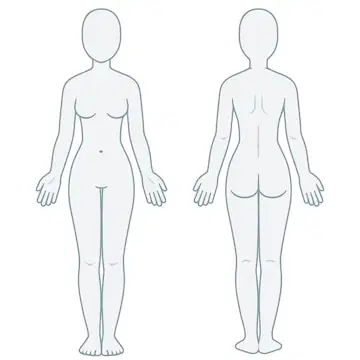
What is the very fragile, pink tissue that forms during proliferation?
granulated tissue
fibrosis tissue
regenerated tissue
scab
What is the main goal of the inflammation and debridement phase of wound healing?
To increase wound strength at the fastest rate
To control hemorrhage
To remove dead tissue and bacteria from the wound
To increase blood flow and bring transudates into the wound
What is the main goal of the first step in treating wounds?
To cover the wound with a bandage
To evaluate the surrounding tissue for further damage
To remove the hair around the wound
To sedate or anesthetize the patient
What is an example of an occlusive material?
ace bandage
vet wrap
saran wrap
clay
A pressure ulcer with partial-thickness loss of dermis, that may appear as a red blister is which stage?
Stage II
Stage IV
Stage I
Stage III
A nurse is caring for a patient with a wound. Which assessment data will be most important for the nurse to gather with regard to wound healing?
Hemoglobin/Hematocrit
Muscular strength
Sleep
Sensation

