
 Worksheets
First and Second Six Weeks Review
Total questions: 82
Worksheet time: 2hrs 6mins
Which of the following is NOT one of the four regions of Texas?
Great Plains
Central Plains
Coastal Plains
Rocky Mountains
Which region of Texas is known for being dry and hot, having deserts and mountains, and is the least populated region?
Mountains & Basins
Great Plains
Coastal Plains
North Central Plains
Which Texas region includes Amarillo and Lubbock and is characterized by canyons, plains, and cold winters with warm summers?
Great Plains
Coastal Plains
Mountains & Basins
North Central Plains
Which region of Texas is ideal for farming and ranching, has rolling hills, and is known for tornadoes?
North Central Plains
Coastal Plains
Mountains & Basins
Great Plains
Which Texas region is the most populated and includes cities like Houston, Dallas, San Antonio, and Austin?
Coastal Plains
Great Plains
Mountains & Basins
North Central Plains
Which city is located in the Mountains & Basins region of Texas?
El Paso
Fort Worth
Houston
Amarillo
What are the main economic activities in both the Mountains & Basins and Great Plains regions?
Agriculture and oil
Shipping and lumber
Fishing and tourism
Technology and finance
Which region of Texas is described as having many rivers, forests, and slopes down to the Gulf of Mexico?
Coastal Plains
Great Plains
Mountains & Basins
North Central Plains
Which Texas region is located in Northeast Texas and includes the city of Fort Worth?
North Central Plains
Coastal Plains
Mountains & Basins
Great Plains
Which Native American group is part of the Puebloan Culture in Texas?
Tiguas
Wichitas
Comanche
Atakapa
Which Native American group is associated with the Gulf Culture in Texas?
Karankawa
Kiowa
Tonkawas
Wichitas
Which Native American group is part of the Southeastern Culture in Texas?
Wichitas
Jumanos
Apaches
Concho
In what year did Columbus set sail seeking a westward water trade route to Asia and "discover" America?
1492
1519
1685
1540
Who created the first written document about Texas?
Cabeza de Vaca
La Salle
Columbus
Pineda
What significant achievement is Pineda known for in 1519?
Creating the first map of Texas
Building Fort St. Louis
Discovering America
Searching for gold and seeing the Grand Canyon
Which explorer built Fort St. Louis in Texas in 1685?
La Salle
Cabeza de Vaca
Coronado
Pineda
What did Coronado search for during his exploration from 1540 to 1542?
Gold and the Grand Canyon
Spices in Asia
A water route to Asia
The first map of Texas
Which of the following was a social motivation for European exploration?
Spread Christianity
Search for gold
Competition between monarchies
Cheaper trade routes
What economic motivation drove European explorers to seek new trade routes?
Fame for the explorer
Cheaper and faster trade routes
Spread Christianity
National pride
Which of the following is a political motivation for European exploration?
Foreign goods: spices, silks, jewels
The Crusades and Reconquista
Competition between monarchies
Protect and expand Christianity
Why did many European countries feel the need to protect and expand Christianity during the era of exploration?
Because of rumors of gold in the "New World"
Due to the growing expansion of Islam during the Holy Wars
To increase national pride
To find cheaper trade routes
Which of the following was NOT an economic motivation for European exploration?
Foreign goods: spices, silks, jewels
Cheaper and faster trade routes
Spread Christianity
Rumors of gold in the "New World"
How did claiming and colonizing new land benefit European countries politically?
It increased the number of citizens and tax revenue
It spread Christianity
It provided access to foreign goods
It made trade routes cheaper
What was the Columbian Exchange?
The exchange of plants, animals, population, diseases, and ideas between the “New World” and the “Old World”
The trade of gold and silver between Europe and Asia
The migration of Native Americans to Europe
The building of forts in Texas by the French
Which disease killed millions of Native Americans?
Smallpox
Malaria
Influenza
Chickenpox
What was one effect of La Salle (French) building a fort in Texas?
Spain decides to colonize Texas
France leaves North America
England takes over Texas
Native Americans build their own forts
In what year was San Antonio de Valero established?
1718
1818
1618
1918
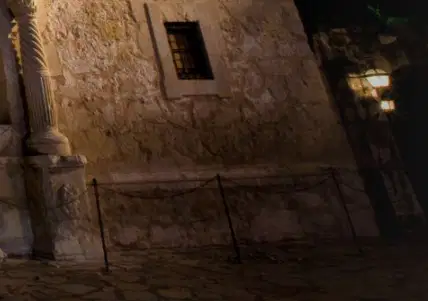
What is the name of the historic building shown in the image?
San Antonio de Valero
Mission San Juan
Mission Concepción
Mission Espada

Which region has the MOST rivers
Coastal Plains
North Central Plains
Great Plains
Mountains and Basins

In what region(s) is the Red River
Coastal Plains
North Central Plains
Great Plains
Mountains and Basins

In which region(s) is the Rio Grande River
Coastal Plains
North Central Plains
Great Plains
Mountains and Basins
In what region is the Sabine River
Coastal Plains
North Central Plains
Great Plains
Mountains and Basins

The elevation of the North Central Plains region MOST closely matches which neighboring state?
New Mexico
Oklahoma
Arkansas
Louisiana
Which major Texas city was founded by Spanish colonists in 1718?
El Paso
Laredo
San Antonio
Corpus Christi

Region that has cities of Lubbock and Amarillo .
Great Plains
North Central Plains
Mountains and Basins

The images are all ___________ important to Texans.
culturally
somewhat
geographically
How many Texas Regions are there?
2
3
4
5
Which region has the Guadalupe Peak?
Mountains & Basins
Great Plains
North Central Plains
Coastal Plains

Which region of Texas is the largest and most populated?
Coastal Plains
North Central Plains
Mountains and Basins
Great Plains

Which region on the map is shown in red?
Mountains and Basins
Great Plains
Central Plains
Coastal Plains

Which region on the map is identified in green?
Central Plains
Great Plains
Coastal Plains
Mountains and Basins

Which region is shown in orange?
Great Plains
Coastal Plains
Central Plains
Mountains and Basins

Which region is shown in red?
Great Plains
Central Plains
Mountains and Basins
Coastal Plains
What region has the cities of Houston, San Antonio, Dallas, Austin, and Corpus Christi?
Mountains and Basins
High Plains
Coastal Plains
Central Plains
What region in Texas borders the Gulf of Mexico?
Mountains and Basins
Coastal Plains
Central Plains
Great Plains
Which of the following was a reason for European exploration?
to spread religion
to spread democracy
to create a utopia
to create free-enterprise
What is Cibola?
the first Spanish colony in the New World
the rumored city of gold
a navigational tool
a native American term meaning "friends"
What is significant about the year 1519?
it was the year Cabeza de Vaca wrote about Texas
it was the year that the city of Cibola was discovered
it was the year that Pineda drew the first map of Texas
It was the year the Alamo was established

How did Cabeza de Vaca land in Texas?
he used Pineda's map
he shipwrecked in Galveston
another Spanish explorer showed him where to go
his Native American slaves helped him
Why is Cabeza de Vaca important?
he drew a map of Texas
he was the first to write about Texas
he was the first to find gold in Texas
he was the first to establish a mission in Texas
Why did Spanish exploration slow down in the 1500's?
they were too afraid of attacks by Natives
They already explored all of the land
They did not find any profitable land
They did not find the rumored cities of gold
What was French explorer La Salle's primary goal?
to take over all of Spanish territory
to establish a colony at the mouth of the Mississippi River
to establish a colony in Texas
to map Texas for France
What was Spain's primary method of colonizing?
by creating small towns
by creating ranches
by establishing presidios
by creating missions
How did the Spanish missions impact Native Americans?
the missions tried to convert the different Indian tribes to Christianity
the missions drove all of the Indians away
the mission were forts to fight the Indians
the missions were established so the Spanish could learn more about the Indians
What is significant about the year 1718?
Mission San Antonio de Valero (Alamo) was established
El Paso was founded
Mexico won independence from Spain
Pineda mapped Texas
Why were most Spanish missions unsuccessful?
Indians had their own cultures and did not want to convert
Spanish missionaries were not determined enough
Indians were already Christian
All of the Indians ran away
The purpose of missions was to spread what?
Money to poor Indians
The Jewish Religion
The Christian Religion
Diseases
What is a presidio?
A Spanish castle
A military fort
A place to spread religion
A French settlement
The first mission built in Texas was what?
(Hint: It sounds like another Texas city)
La Bahia
San Antonio
Corpus Christi
Corpus Christi de la Ysleta
Why was Spain worried when France built Ft. St. Louis?
France was a close ally
They were worried about losing land to the French
France had more money than Spain
Spain was worried about an alliance with England and France
What was the name of the first mission built in East Texas in 1690?
Corpus Christi de la Ysleta
San Antonio
San Francisco de los Tejas
Nacogdoches
Why did the missions fail in East Texas the first time?
It was too hot
Not enough water in East Texas
Attacks from the French
Lack of supplies because of the distance from Mexico City
Because the distance was too far between Mexico City and East Texas, what did Spain do differently the second time they built missions?
Grew more food in East Texas
Built a mission at the halfway point
Made an alliance with the Comanche
Asked France to take over East Texas

What famous mission was opened in 1718? (Original Name)
San Francisco de los Tejas
Nacogdoches
San Jose
San Antonio de Valero
To protect a new mission built in 1718, what presidio was opened near by?
San Antonio de Bexar
Los Adaes
Nacogdoches
San Saba
What comical event caused East Texas missions to fail a second time?
The attack on San Saba
The French building Natchitoches
The Chicken War
La Salle building Ft. St. Louis
When the missions in East Texas failed a third time, to what city were they relocated?
Dallas
Houston
San Antonio
El Paso
How did a day usually begin and end if you lived on a mission?
With school
With religious teachings
With meals
With work in the fields
How were Indians treated on missions?
Very well, they loved being there
As equals to the priests
They were treated poorly, and many did not want to be there
As equals to the soldiers
What jobs did soldiers have on presidios?
They protected the natives and priests
Protected Spanish travelers
Performed construction
Encouraged natives to leave the missions
Label the map with the correct regions of Texas.
North Central Texas
Great Plains
Mountains and Basins
Coastal Plains
Which era of Texas History is shown and described here?
-
* Friars spread their religion and culture to local natives
* Native Americans lived in missions and practiced the Catholic religion
* Soldiers lived in presidios and protected the settlements
Natural Texas and Its People
Age of Contact
Spanish Colonial Era
Mexican National Era
Use the map to label the Puebloan Culture groups.
Use the map to label the Gulf Coast Culture Native Americans.
Many soldiers moved _____ to where they served in presidios, helping the growth of Texas cities?
Their Families
Their jobs
Their money
Their problems

Spanish explorers came to the New World for all of the following reasons except
God
Gold
Glory
Escape religious persecution

What was Spain's reaction to LaSalle's expedition in the New World and what is modern day Texas?
Spain had no reaction, they were still not interested in modern day Texas
The Spanish recruited him as a conquistador
Spain declared war on France
Spain panicked and began to have a renewed interest by establishing settlements in modern day Texas


Which TWO [2] of these events happened in the year 1519?
a French fort was built in Spanish territory [on the coast of Texas]
the establishment of San Antonio, including a mission and a presidio
the Texas coast was mapped and claimed for Spain
Mexico won its independence from Spain and formed its own country
the first mainland Spanish was established in present-day Mexico
Many names of cities in Texas, such as El Paso and San Antonio, reflect the language of —
England
France
Portugal
Spain
Who was the first European to explore Palo Duro Canyon?
Cabeza de Vaca
Francisco Coronado
René Robert Cavelier
Juan N. Seguín

