
NEW
Font size
 Worksheets
Skeletal Disorders
Total questions: 31
Worksheet time: 16mins
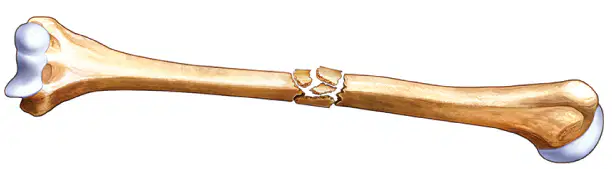
What is a comminuted fracture?
A bone that has splintered or has been crushed
A bone that is bent but not broken
A bone that is broken into two pieces only
A bone that is dislocated from its joint
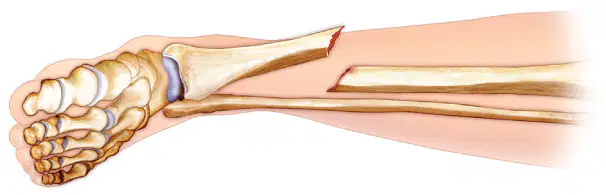
Which of the following best describes a compound fracture?
A broken bone with an open wound leading to the site of the fracture, or bone that protrudes through the skin
A bone that is cracked but not displaced
A bone that is broken into three or more pieces
A bone that is twisted but not broken
A patient arrives with a bone protruding through the skin after an accident. What type of fracture is this most likely to be?
Compound fracture
Greenstick fracture
Simple fracture
Spiral fracture
If a bone is found to be splintered into several pieces after a trauma, which term best describes this condition?
Comminuted fracture
Compound fracture
Stress fracture
Hairline fracture
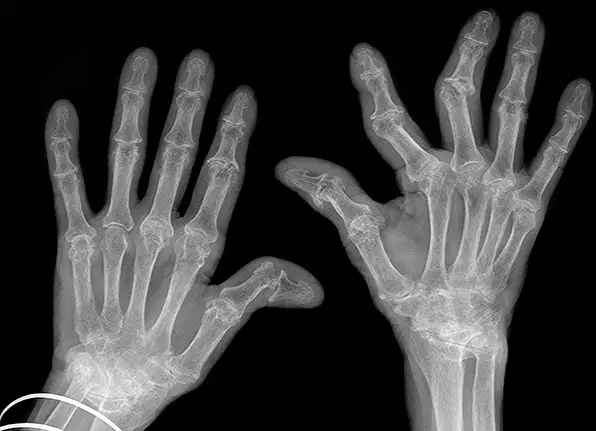
A person is diagnosed with a chronic, systemic disease that causes joint inflammation and pain. Which of the following conditions do they most likely have?
Rheumatoid arthritis
Osteoporosis
Rickets
Scoliosis
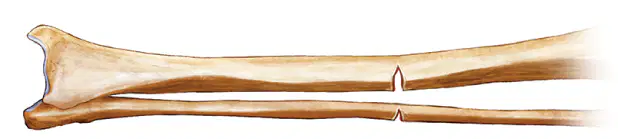
Which type of fracture is described as an incomplete fracture where the bone is bent and partially broken?
Greenstick fracture
Longitudinal fracture
Oblique fracture
Pathologic fracture
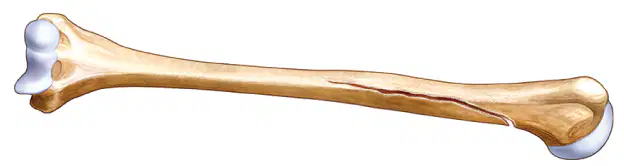
A fracture that runs parallel to the long axis of the bone is called:
Oblique fracture
Pathologic fracture
Longitudinal fracture
Greenstick fracture
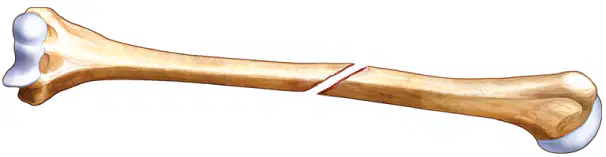
Which fracture is characterized by a break across the bone at an angle?
Greenstick fracture
Oblique fracture
Pathologic fracture
Longitudinal fracture
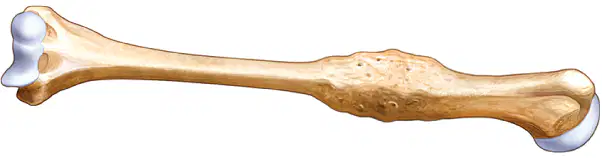
A pathologic fracture is best described as:
A fracture resulting from pressure on weakened bone
A break across the bone at an angle
An incomplete fracture; the bone is bent and partially broken
A fracture that runs parallel to the long axis of the bone
If a patient has a bone that is bent and partially broken, which type of fracture do they most likely have?
Pathologic fracture
Greenstick fracture
Oblique fracture
Longitudinal fracture
How does an oblique fracture differ from a longitudinal fracture?
Oblique fractures run parallel to the bone, while longitudinal fractures run at an angle.
Oblique fractures are incomplete, while longitudinal fractures are complete.
Oblique fractures break across the bone at an angle, while longitudinal fractures run parallel to the long axis of the bone.
Oblique fractures result from weakened bone, while longitudinal fractures result from bending.
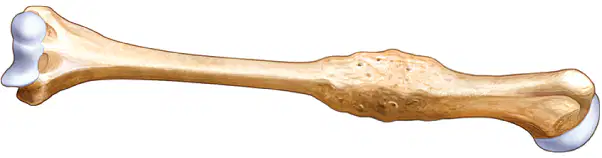
A patient with osteoporosis suffers a fracture after minimal pressure is applied to their bone. What type of fracture is this most likely to be?
Greenstick fracture
Oblique fracture
Pathologic fracture
Longitudinal fracture

Which type of fracture is described as a broken bone that does not penetrate the skin?
Simple fracture
Spiral fracture
Transverse fracture
Herniated disk
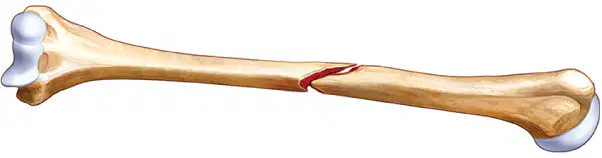
A fracture in which the bone has been twisted apart is called:
Transverse fracture
Herniated disk
Spiral fracture
Simple fracture
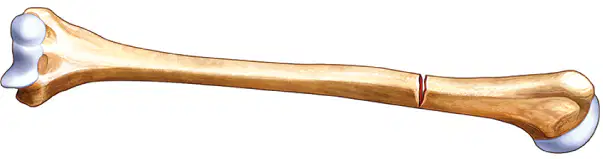
What is the definition of a transverse fracture?
A fracture that runs straight across the bone, at a right angle to the long axis
A fracture in which the bone has been twisted apart
A broken bone that does not penetrate the skin
Intervertebral disk that has slipped or ruptured
If a patient has a bone fracture that does not break the skin, which type of fracture do they have?
Spiral fracture
Simple fracture
Transverse fracture
Herniated disk
Compare and contrast a spiral fracture and a transverse fracture in terms of how the bone breaks.
Spiral fracture is caused by twisting; transverse fracture runs straight across at a right angle.
Both are caused by twisting.
Both run straight across the bone.
Spiral fracture runs straight across; transverse fracture is caused by twisting.
What is the medical term for inflammation of the bone and bone marrow?
Osteomyelitis
Kyphosis
Spina bifida
Arthritis
What is kyphosis?
Abnormal, outward curvature of the thoracic spine; humpback
Inflammation of the bone and bone marrow
Split spine with membrane protrusion
Abnormal inward curvature of the lumbar spine
Which term describes an abnormal, forward curvature of the lumbar spine?
Lordosis
Scoliosis
Talipes
Kyphosis
What is the medical term for an abnormal, lateral curvature of the spine?
Scoliosis
Lordosis
Talipes
Osteoporosis
Compare lordosis and scoliosis in terms of the direction of spinal curvature. How do they differ?
Lordosis is a forward curvature of the lumbar spine, while scoliosis is a lateral curvature of the spine.
Lordosis is a lateral curvature of the spine, while scoliosis is a forward curvature of the lumbar spine.
Both lordosis and scoliosis are forward curvatures of the lumbar spine.
Both lordosis and scoliosis are lateral curvatures of the spine.
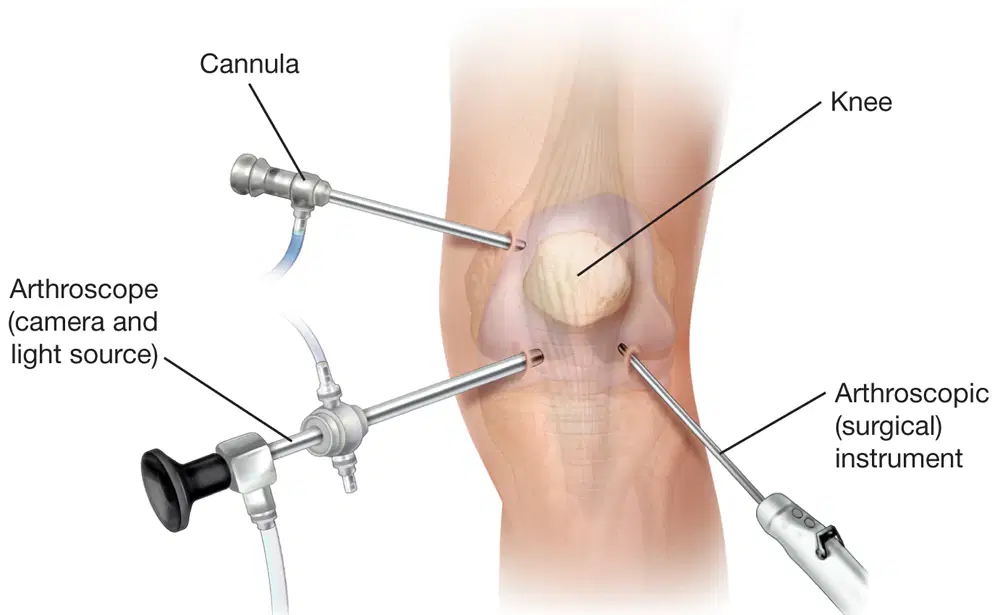
Which diagnostic test involves the visual examination of a joint using a scope?
Arthroscopy
Bone density test
Lumbar puncture
MRI scan
What is the primary purpose of a bone density test?
To examine joints with a scope
To determine loss of, or changes in, bone density
To aspirate spinal fluid
To measure blood pressure
Which procedure is also known as a spinal tap and involves needle aspiration of spinal canal fluid in the lumbar area?
Arthroscopy
Bone density test
Lumbar puncture
Electrocardiogram
What is computerized tomography?
A process in which a computer analyzes radiographic images of a specific section of the body from multiple angles to identify bone injury or disease
Surgical puncture of the joint space with a needle to remove accumulated fluid
Surgical fusion of joints between vertebrae
A method for measuring blood pressure
Which procedure involves the surgical puncture of the joint space with a needle to remove accumulated fluid?
Arthrocentesis
Computerized tomography
Spondylosyndesis
Arthroscopy
What is the main purpose of spondylosyndesis?
Surgical fusion of joints (ankylosis) between vertebrae
Removal of accumulated fluid from joints
Computer analysis of radiographic images
Repair of broken bones
A patient has a suspected bone injury and needs detailed imaging from multiple angles. Which procedure is most appropriate?
Computerized tomography
Arthrocentesis
Spondylosyndesis
Magnetic resonance imaging
If a doctor needs to remove fluid from a swollen knee joint, which procedure would they most likely perform?
Arthrocentesis
Spondylosyndesis
Computerized tomography
Osteotomy
Which procedure is used to treat severe spinal joint problems by fusing vertebrae together?
Spondylosyndesis
Arthrocentesis
Computerized tomography
Arthroplasty

