wayground logo

Free Printable Worksheets

Font size

S
M
L
XL
Worksheets

Unit 4 Molecules & Compounds Review

Total questions: 55

Worksheet time: 2hrs 46mins

Name
Class
Date
1.
What is the charge on a chloride ion?
a)
-1
b)
1
c)
+2
d)
+1
2.
What is the charge on a Hydrogen ion?
a)
+1
b)
1
c)
2
3.
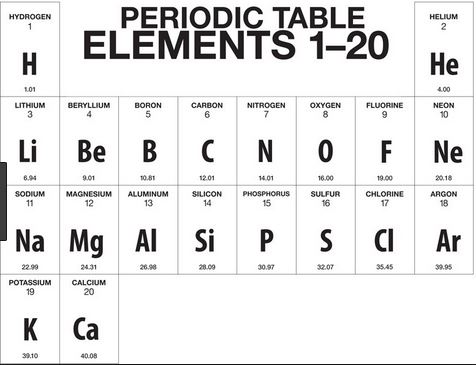
How many valence electrons does calcium have?
a)
2
b)
4
c)
6
d)
7
4.
In the chemical formula for an ionic compound, which item is written first?
a)
positive ion
b)
negative ion
c)
subscript
d)
the female
5.
Ionic bonds form between metals and ____.
a)
metalloids
b)
metals
c)
nonmetals
6.
How do covalent bonds form?
a)
Donating & receiving valence e- between atoms.
b)
Opposite slight charges attract each other between compounds.
c)
Scientists are still not sure how they form.
d)
Sharing valence e- between atoms.
7.
What two types of atoms make a covalent bond?
a)
2 Nonmetals
b)
1 Nonmetal and 1 Metal
c)
2 Metals
d)
2 Noble Gases
8.
In a covalent bond, one or more electrons are? 
a)
shared 
b)
lost 
c)
gained 
d)
transferred 
9.

If an atom has no charge, which of the following must be true?

a)

It has more neutrons than protons or electrons.

b)

There are only neutrons inside the atom.

c)

Its number of protons is equal to its number of electrons.

d)

The neutrons in the atom outnumber the electrons and protons.

10.
Ionic compounds are formed when one or more valence electrons are transferred from _____
a)
a nonmetal atom to a metal atom
b)
a nonmetal atom to a nonmetal atom
c)
a metal atom to a nonmetal atom
d)
a metal atom to a metal atom
11.

What kind of bond will form between Hydrogen and Oxygen?

a)

ionic

b)

covalent

c)

metallic

d)

no bond

12.

Why don't noble gases form bonds?

a)

Noble gases do form bonds

b)

They all have a full octet

c)

They only bond with each other

13.

What kind of bond will Potassium form with Sulfur?

a)

ionic

b)

covalent

c)

metallic

d)

no bond

14.

How many atoms are in this molecule? C6H12O6

a)

6

b)

12

c)

18

d)

24

15.

How many protons and electrons does a carbon atom have?

a)

6 protons, 6 electrons

b)

6 protons, 4 electrons

c)

4 protons, 6 electrons

d)

Not enough information

16.
Which of the following is the correct Lewis dot structure for the molecule fluorine (F2)?
a)
A
b)
B
c)
C
d)
D
17.

What is the correct Lewis Dot Structure for ammonia NH3

a)
b)
c)
d)
18.

Which of the following elements are an exception to the octet rule and require less than 8 valence electrons?

a)

H

b)

Li

c)

Be

d)

B

e)

C

19.

How many valence electrons does Phosphorus Have?

a)

1 Valence electron

b)

2 Valence electron

c)

3 Valence electron

d)

4 Valence electron

e)

5 Valence electron

20.
 A lone pair is defined as
a)
A pair of bonding electrons
b)
One non-bonding electron
c)
A pair of non-bonding electrons
d)
A pair of electrons on the central atom
21.
What is the correct formula for this molecule?
a)
Si4F
b)
SiF4
c)
SiF
d)
Si4F4
22.
Magnesium ion would take a charge of
a)
1+
b)
2+
c)
3+
d)
0
23.
NaCl
a)
Ionic Bond
b)
Covalent Bond
c)
Both bonds
d)
Neither bond
24.
H2O
a)
Ionic Bond
b)
Covalent Bond
c)
Both bonds
d)
Neither bond
25.

Choose the correct Lewis dot structure for Fluorine.

a)
b)
c)
d)
26.

Choose the correct Lewis dot structure for Neon.

a)

E

b)

F

c)

G

d)

H

27.
Which of the following is the correct Lewis structure for the compound PBr3?
a)
structure A
b)
structure B
c)
structure C
d)
structure D
28.
What is the correct structure for BF3?
a)
Option A.
b)
Option B. 
c)
Option C.
d)
Option D.
29.
What is the VSEPR theory used to predict?
a)
Bond Strength
b)
Polarity
c)
Molecular Shape
d)
Electronegativity
30.
According to VSEPR, molecules adjust their shapes to keep which of the following as far away as possible?
a)
Pairs of valence electrons
b)
Inner shell electrons
c)
Mobile Electrons
d)
Electrons closest to the nucleus
31.
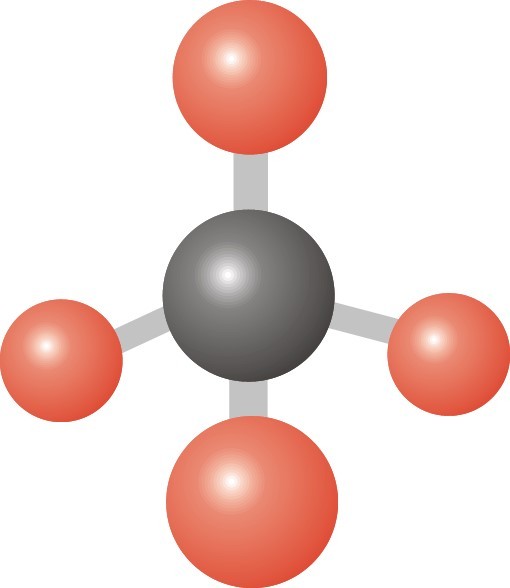
What is the measure of a tetrahedral bond angle?
a)
90 Degrees
b)
109.5 Degrees
c)
120 Degrees
d)
180 Degrees
32.
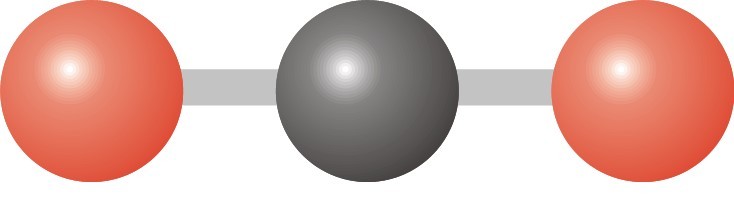
Which molecule would have this shape?
a)
BF3
b)
CH4
c)
PCl5
d)
CO2
33.
Which of the following molecular shapes would have a bond angle of 180 Degrees?
a)
Bent
b)
Trigonal Planar
c)
Tetrahedral
d)
Linear
34.
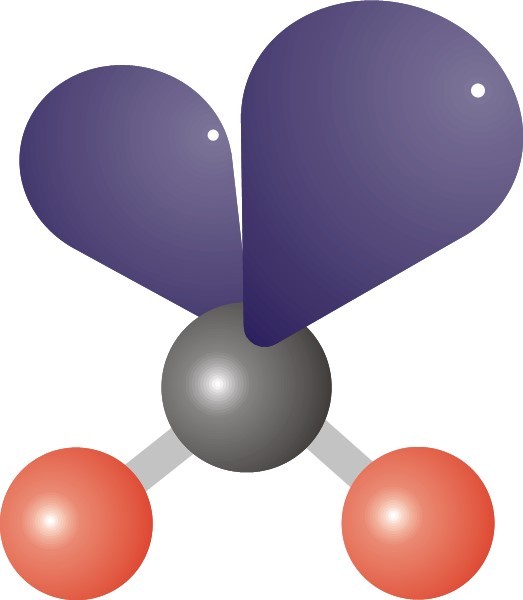
What molecule could this be? 
a)
BF3
b)
CH4
c)
H2O
d)
CO2
35.
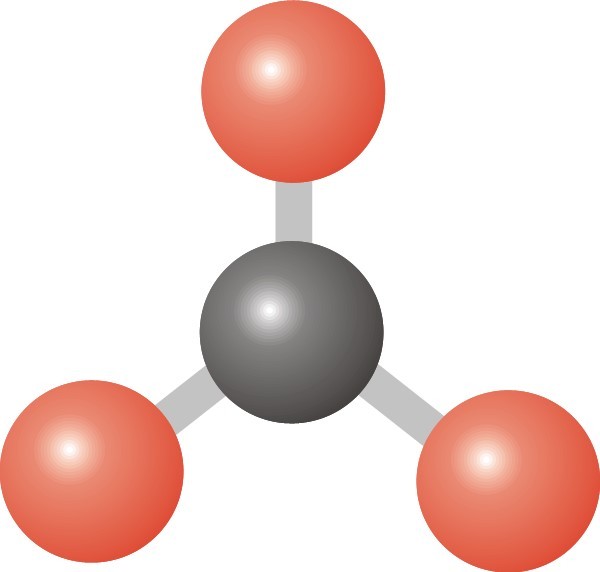
The bond angle for a trigonal planar molecule is 
a)
90 Degrees
b)
109.5 Degrees
c)
120 Degrees
d)
180 Degrees
36.

What is the bond angle for a trigonal pyramidal molecule?

a)

90

b)

107

c)

109.5

d)

120

37.
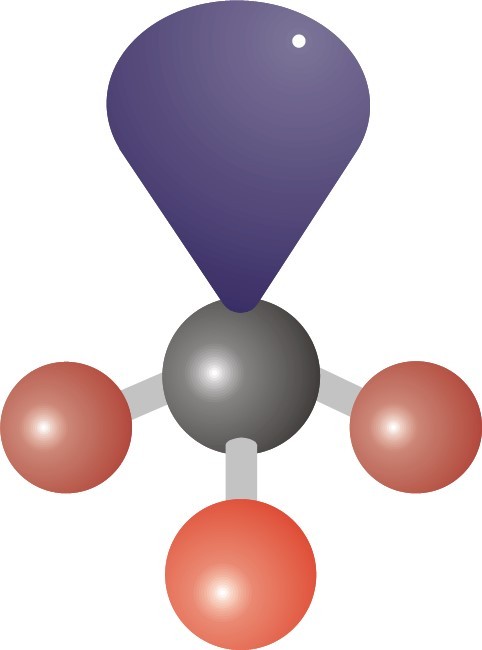
Who could this molecule be?
a)
CH4
b)
CO2
c)
PCl5
d)
BF3
38.
Who could this be? 
a)
CO2
b)
NH3
c)
H2S
d)
CH4
39.
Who could this be?
a)
H2O
b)
NH3
c)
CO2
d)
CH4
40.

What shape would PH3 have?

a)

Trigonal Planar

b)

Trigonal pyramidal

c)

Bent

d)

Linear

41.
What is the shape of H2O?
a)
linear
b)
tetrahedral
c)
bent
d)
trigonal pyramidal
42.

Potassium and Sulfur create...

a)

KS

b)

KS2

c)

K2S

d)

K2S2

43.

How do potassium and nitrogen bond together?

a)
KN
b)
KN3
c)
K3N3
d)
K3N
44.
How do the following two elements bond together?
Al3+  O2-         
a)
AlO
b)
Al2O3
c)
Al3O6
d)
Al3O2
45.

Write the formula for barium + nitrogen

a)

Ba2N3

b)

Ba3N2

c)

BaN

d)

BaN3

46.

Which of the following is an ionic compound:

a)

CH4

b)

I2

c)

LiBr2

d)

CO

47.

Li and P create...

a)
Li3P
b)
LiP3
c)
LiP
d)
Li2P
48.

Mg and O will bond to make...

a)

Mg2O3

b)

MgO2

c)

MgO

d)

Mg2O

49.

Mg and Cl create...

a)
Mg2Cl
b)
MgCl2
c)
Mg2Cl2
d)
MgCl
50.

Ca and N create...

a)
Ca2N3
b)
Ca3N2
c)
CaN3
d)
Ca2N
51.

Al and P create...

a)

Al3P

b)

AlP3

c)

AlP

d)

Al2P

52.

Which of the following represents the correct products for the reaction below (use the back side of your periodic table for polyatomic ion charges):

Na3PO4(aq) + AgNO3(aq) →

a)

AgPO4(s) + H2O(l)

b)

AgPO4(aq) + Na3NO3(aq)

c)

Ag3PO4(s) + NaNO3(aq)

d)

no reaction

53.

Which of the following represents the correct products for the reaction below (use the back side of your periodic table for polyatomic ion charges):

H3PO4(aq) + KOH(aq) →

a)

K3PO4(aq) + H2O(l)

b)

K3PO4(s) + H2O(l)

c)

KPO4(aqs) + H3NO3(aq)

d)

no reaction

54.

Which of the following represents the correct products for the reaction below (use the back side of your periodic table for polyatomic ion charges):

Na3PO4(aq) + LiCl(aq) →

a)

Li3PO4(s) + NaCl(aq)

b)

LiPO4(s) + Na3Cl(aq)

c)

Li3PO4(aq) + NaCl(s)

d)

no reaction

55.
What is the bond angle for this molecule?
a)
109.5
b)
120
c)
107
d)
90