
 Worksheets
Atomic strcture, Periodic table and Isotopes
Total questions: 29
Worksheet time: 48mins
What 2 particles are located in the Nucleus
(a)
Subatomic particles with a negative charge
Electrons
Neutrons
Protons
Quarks

The smallest particle of an element.
Element
Molecule
Atom

What is the atomic number?
35
18
17
52

How many protons and electrons does this element have?
35
18
17
52


What are valence electrons?
Electrons in the innermost energy level of an atom
Electrons in the nucleus of an atom
Electrons in the middle energy levels of an atom
Electrons in the outermost energy level of an atom
How many valence electrons does an atom of oxygen have?
8
4
2
6
What are energy shells?
Regions around an atom's nucleus where neutrons are most likely to be found
Regions around an atom's nucleus where protons are most likely to be found
Regions around an atom's nucleus where quarks are most likely to be found
Regions around an atom's nucleus where electrons are most likely to be found
What is the maximum number of electrons that can be present in the first energy shell?
2
8
6
4
How many energy shells does an atom of sodium have?
7
3
5
1
Elements in group 0/8 are called ___.
Alkali metals
Alkaline Earth metals
Halogens
Noble gases
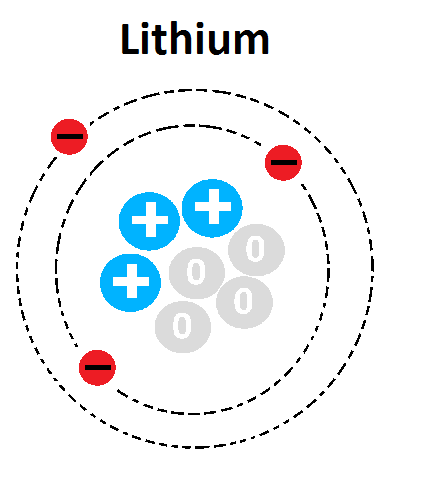
What is the mass number of this atom?
1
3
4
7
Which of the following are found on the left side of the zig zag line on the periodic table?
Non-metals
metalloids
metals
compounds
_________________________ are the rows on the periodic table while _______________________ are the columns.
periods/ groups(families)
groups(families)/periods
metals/non-metals
non-metals/metals
Which group are the halogens found in?
1
2
7
8
Which group are the alkali metals found in?
1
2
7
8
Which group are the alkaline earth metals found in?
1
2
7
8

What element is this?
Hydrogen
Helium
Lithium
Carbon

