
 Worksheets
S.1 CHEMISTRY TERM 3 2025
Total questions: 96
Worksheet time: 2hrs 30mins
________________ are reversible and have some of the properties of their substance change
Physical changes
Chemical changes
Reactants
Products
_______________ are irreversible and have one or more new substances formed
Physical changes
Chemical changes
Reactants
Products
The signs of a chemical change are
Temperature change
Gas is produced
Colour change
Precipitate
All of the above
A precipitate is
When a gas is produced (usually also producing bubbles)
The smallest particle of an element
A solid formed from two solutions
A metal which is malleable
Sodium + water -----> Sodium hydroxide +hydrogen
The product/s are
Sodium
Sodium + water
Sodium hydroxide
Sodium hydroxide + hydrogen
Iron + oxygen ----> Iron oxide
The reactant/s are
Iron
Iron + oxygen
Iron oxide
Iron + oxygen ---> Iron oxide
Which of the following is an example of a wanted chemical reaction?
Cesium reacted with water
Digestion
Acid rain
Chemical weapons
Which of the following is not an example of a physical change?
Sour milk
Dissolving sugar and water
Chopping wood
Boiling water
Which of the following is a chemical change?
Shredding paper
Breaking a glass
Baking a cake
Melting an ice cube
Which of the following is not an example of a chemical change?
Melting of butter
Burning a piece of paper
Rusting of iron
Fireworks
What are the two characteristics of matter?
has mass and length
has elements and mixtures
length and width
mass and takes up space
Which of the following do you think is s pure substance?
Gold
Al
kool-aid
milk
Which of these substances can be a compound?
CO2
C
O2
Ar
What is a pure substance that cannot be broken down chemically into simpler substances?
mixture
element
compound
formula
An Element is made up of how many types of atoms?
12
36
58
1
Choose the option that cannot be a chemical symbol.
a
H
O
Cl
What is the result of a CHEMICAL change?
mixture
element
compound
pure substance
Which is NOT a compound?
CO2
H2O
S
SiO2

This diagram represents a model of
an element
a compound
an atom
a mixture

Of the four boxes shown, which ones represent a model of elements only?
A and C
A, C and D
B and D
B and C

Which one of the following diagrams represents a mixture of an element and a compound?
C
B
A
D

This is an image of a(n)...
Element
Compound
Mixture

This is an image of a(n)...
Element
Compound
Mixture

This is an image of a(n)...
Element
Compound
Mixture

This is an image of a(n)...
Element
Compound
Mixture

This is an image of a(n)...
Element
Compound
Mixture
A pure substance that consists of only ONE type of atom.
Elements
Compounds
Mixtures
A pure substance that consists of TWO or MORE different kinds of atoms chemically combined.
Elements
Compounds
Mixtures
A substance made up of a random physical combination of elements and/or compounds.
Elements
Compounds
Mixtures
Which substance is EASIER to separate because it is only a physical combination?
Compounds
Mixtures
Which substance is HARDER to separate because it is a chemical combination?
Compounds
Mixtures
What is our topic?
Frational Distillation
Fractional Distilation
Fraction Distillation
Fractional Distillation
What is fractional distillation?
A dangerous experiment
Something
A chemical experiment
A biological experiment
What is the most important feature in fractional distillation?
The two component part must have different boiling point
The two component part must have similar boiling point
The two component part must have same boiling point
When you heat up the chemical compound, they will both evaporate at the same time.
True
Maybe
I don’t know
False
Why do we need to create a open space between the condenser and the beaker with distillate?
To prevent low pressure to form
To prevent the pure water not dropping into the beaker
To prevent high pressure to form
To prevent a fire accident happen
What will you get after fractional distillation? (Can select two or more answers)
Condensed water
Hot water
Non-pure water
Pure water
Can we drink the water after fractional distillation?
No
Yes
Maybe
...
What change of states are included in fractional distillation? (Can select two or more answers)
Melting
Evaporation
Condensation
Freezing
Gasoline and many other chemicals are produced from____ using fractional distillation.
Oil
Crude Oil
Crude Water
Dirty Water
What makes the solution easy to separate?
Difference of boiling point more than 25 degrees
Difference of boiling point exactly 25 degrees
The boiling point is different
Difference of boiling point less than 25 degrees
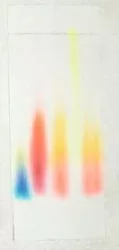
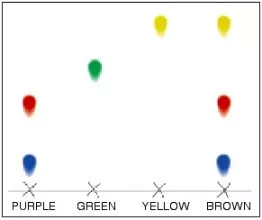
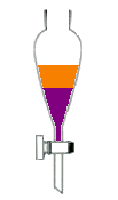


A mixture is the combination of two or more substances that can be easily separated.
True or False?
Filtration is a common method of separating an insoluble solid from a liquid.
True or False?

In filtration, what is the part that remains in the filter paper called?

Evaporation is good for separating a mixture (solution) of a soluble solid and a solvent.
True or False?


What is the difference between evaporation and distillation?
Fractional distillation takes less time than the simple distillation.
True or False?

How would you separate iron filings mixed with sand?
Which of the following can be considered causes of air pollution?
i) Climate change
ii) Greenhouse gas emission
iii) Heavy vehicles movement
only (i) and (ii)
(i), (ii) and (ii)
only (i) and (iii)
only (ii) and (iii)
Carbon-monoxide is produced during the process of ________combustion
complete
incomplete
partial
"Air contains ____% of carbon dioxide and is normally not considered as a pollutant" Fill
0.06%
8.24%
0.43%
0.03%
An organic compound that contains carbon, chlorine & fluorine
suspended
particulate matter
Chlorofluorocarbon
sulphur dioxide
Lead
Why is the ozone layer important to all human beings ?
It protects the earth from the sun's ultra-violet rays
It protects the sun form the earths's ultra-violet rays
Both of them
None of them
Suspended particulate matter are the main source of
Smog
Haze
Fog
I am mostly released from the thermal power plants, petroleum industries and oil factories. What am I ?
Suspended Particulate Matter
Lead
Carbon Monoxide
Sulpher Dioxide
Agricultural activities are the largest causes of air pollution. True or False ?
True
False
Any substances in the air that causes harm to living beings and the environment is called as _____
Air Pollutants
Water Pollutants
Some agricultural practices also cause air pollution. True or false
True
False
Which of the following can be considered causes of air pollution?
i) Climate change
ii) Greenhouse gas emission
iii) Heavy vehicles movement
only (i) and (ii)
(i), (ii) and (ii)
only (i) and (iii)
only (ii) and (iii)
Carbon-monoxide is produced during the process of ________combustion
complete
incomplete
partial
"Air contains ____% of carbon dioxide and is normally not considered as a pollutant" Fill
0.06%
8.24%
0.43%
0.03%
An organic compound that contains carbon, chlorine & fluorine
suspended
particulate matter
Chlorofluorocarbon
sulphur dioxide
Lead
Why is the ozone layer important to all human beings ?
It protects the earth from the sun's ultra-violet rays
It protects the sun form the earths's ultra-violet rays
Both of them
None of them
Suspended particulate matter are the main source of
Smog
Haze
Fog
I am mostly released from the thermal power plants, petroleum industries and oil factories. What am I ?
Suspended Particulate Matter
Lead
Carbon Monoxide
Sulpher Dioxide
Agricultural activities are the largest causes of air pollution. True or False ?
True
False
Any substances in the air that causes harm to living beings and the environment is called as _____
Air Pollutants
Water Pollutants
Some agricultural practices also cause air pollution. True or false
True
False
What is the process of plants taking in carbon dioxide and releasing oxygen called?
Respiration
Produce
Photosynthesis
Breathing
A gas produced by animals during respiration that plants use for photosynthesis.
Oxygen
Toots
Carbon dioxide
Water vapor
Plants and animals are interdependent of each other.
True
False
________________ could increase the amount of oxygen in the air.
Building more houses
Burning more oil
Paving more streets
Planting more trees


