
 Worksheets
MOZAIK CBT JUNI
Total questions: 90
Worksheet time: 45mins
Which one of the following is the LEAST appropriate indication for placement of ICP monitor in TBI?
GCS 3-8 with abnormal CT scan
GCS 3-8 with normal CT scan age >40 years and SBP <90 mmHg
Postoperative period after removal of acute subdural hematoma
GCS of 3-8 and diffuse injury type III (Marshall CT classification)
Diffuse injury type II (Marshall CT classification)
A 76 year old female presents today with progressive, severe low back pain. She has a history of osteoarthritis, type 2 diabetes, osteoporosis, hypertension, COPD, and osteoporotic compression fractures. Her last osteoporotic compression fracture was 2 years ago. She has been on alendronate since her last fracture. Pain is described as dull and achy, nine out of 10 in severity, without radiation pain. Her walking is limited due to her back pain. She denies any numbness or tingling into her lower extremities, or bowel or bladder incontinence at this time. On physical exam, there is point tenderness over her lower lumbar spine at the L4-L5 vertebral levels. Muscle strength examination of lower extremities is difficult to perform due to pain. However, plantar flexion and dorsiflexion muscle strength is 5/5 bilaterally, and lower extremity sensation is otherwise intact. Deep tendon reflexes for the L4, S1, are 2/4 bilaterally. Special tests cannot be performed to pain. Pain is elicited immediately upon the patient lying on her back. Kyphoplasty is being considered for the patient.
Metastatic vertebral fracture
Complete vertebral body collapse
Vertebral body fracture with a posterior cortical breach
Osteoporotic compression fracture
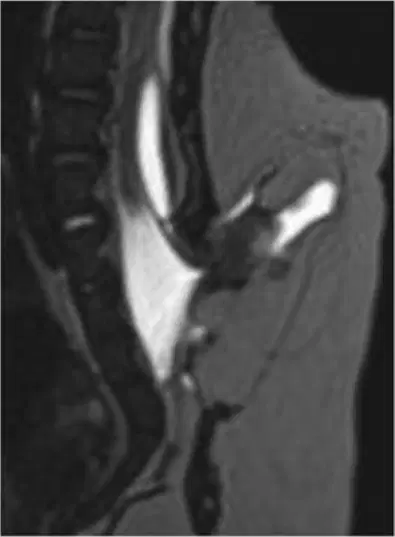
A sagittal T2-weighted image of a patient with a tethered cord is shown in this image. What is a characteristic of the pathology represented here?
Reduced risk following folic acid supplementation
Associated with Chiari 2 malformations
Secondary to premature disjunction of the neural ectoderm
Most cases are familial
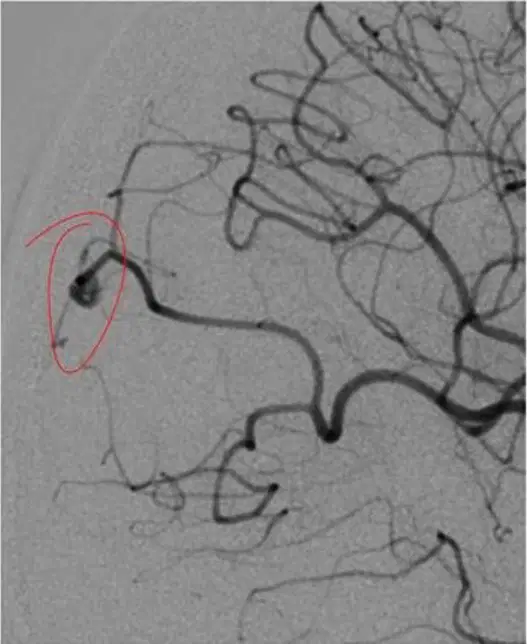
A frontal view digital subtraction angiogram following a right carotid artery injection is shown in this image. What is the likely etiology of the lesion demonstrated?
Atherosclerosis
Immune vasculitis
Congenital
endocarditis
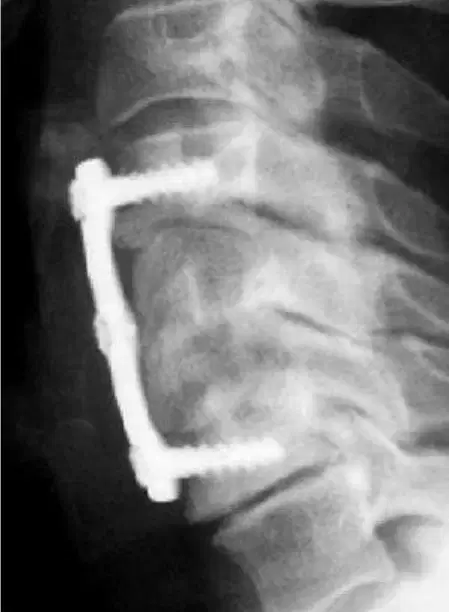
The ventral cervical plate pictured below spans three vertebral levels, and reveals a pseudoarthrosis. It consists of two screw at each end that are rigidly affixed to the plate. Which of the following biomechanical properties best describe the type of fixation pictured in the radiograph that lead to the pseudoarthrosis?
A. Constrained cantilever beam
B. Constrained three-point bending
C. Constrained
D. Semi-constrained cantilever beam
E. Semi-constrained four point bending
Prognosa GBM dari paling baik ke paling buruk
IDH Mutant Gr 3 > IDH Mutant Gr 4 > IDH Wildtype Gr 3 > IDH Wildtype Gr 4
IDH Mutant Gr 3 > IDH Wildtype Gr 3 > IDH Mutant Gr 4 > IDH Wildtype Gr 4
IDH Wildtype Gr 3 > IDH Mutant Gr 4 > IDH Mutant Gr 3 > IDH Mutant Gr 4
IDH Wildtype Gr 3 > IDH Wildtype Gr 4 > IDH Mutant Gr 3 > IDH Mutant Gr 4
IDH Mutant Gr 3 > IDH Mutant Gr 4 > IDH Wildtype Gr 3 > IDH Wildtype Gr 4
A 64 year old Northern Indian man with past medical history of diabetes mellitus and heterozygous MTHFR gene mutation was brought by his son to the emergency department for fever, eye discharge on the right side, painful eye movement on the right side for three days. The patient also reported a headache and vision changes on the right side for two weeks which are unusual for him. He takes only metformin mg BID and insulin shots with meals. There is no significant family history. Blood pressure 110/65 mmHg, heart rate 105 bpm, and temperature 38.5 C. he is alert and oriented to person and place but not time, chemosis, periorbital edema and proptosis on the right eye and mild drooping of the right eyelid. There was poor effort during strength exam. The rest of the exam is unremarkable. WBC, ESR, CRP, and D-dimer are mildly elevated. CT head is unremarkable. Lumbar puncture is done with no WBCs but mildly elevated protein of 120 mg/dL. Brain MRI shows an isointense lesion in the right cavernous sinus close to cranial nerve III with a decreased caliber of the intracavernous internal carotid artery on T1 and hypointense mass on T2. the lesion was well enhanced on T1 contrast. MR angiography shows a cavernous sinus mass and occlusion of the intracavernous carotid artery on the right side.
Carotid-cavernous fistula
Cavernous sinus tumors
Cavernous sinus thrombosis
Carotid-cavernous aneurysm
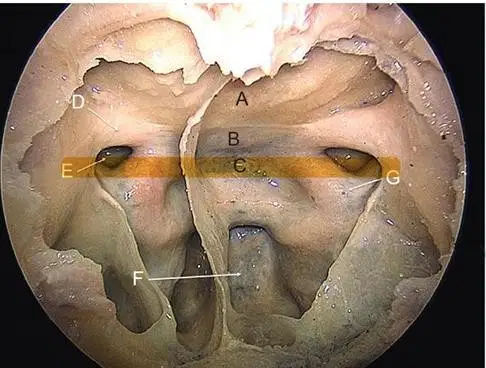
Endoscopic view from within sphenoid sinus. Which one of the following labels identifies the Opticocarotid recess?
A
B
C
D
E
The husband of a 73 year old female calls emergency medical services (EMS) after noticing slurred speech and right-sided weakness in his wife. EMS personnel evaluates the patient and suspects a possible large vessel occlusion stroke using the Los Angeles Motor Scale. The patient’s last know normal was 30 minutes ago. According to the American Heart Association and American Stroke Association ‘Severity-Based Stroke Triage Algorithm for EMS’, to which of the following facilities should the patient be transported?
The closest acute stroke-ready hospital 45 minutes away
The closest primary stroke center 55 minutes away
The closest comprehensive stroke center 60 minutes away
The closest hospital regardless of stroke center certification
A 91 year old female becomes acutely unresponsive in her assisted living care facility. She is taken to the hospital for a stroke workup and found to have a right frontal intraparenchymal hemorrhage with intraventricular extension. The estimated blood volume of the hemorrhage is 65 mL. She takes warfarin for non valvular atrial fibrillation and has an INR of 2.1. She has reflux disease, and stress incontinence. On initial exam, her eyes do not open to painful stimuli, she moans and withdrawals to noxious stimuli in the right arm and has extensor posturing in the left arm with an extension of bilateral legs.
26%
72%
97%
100%
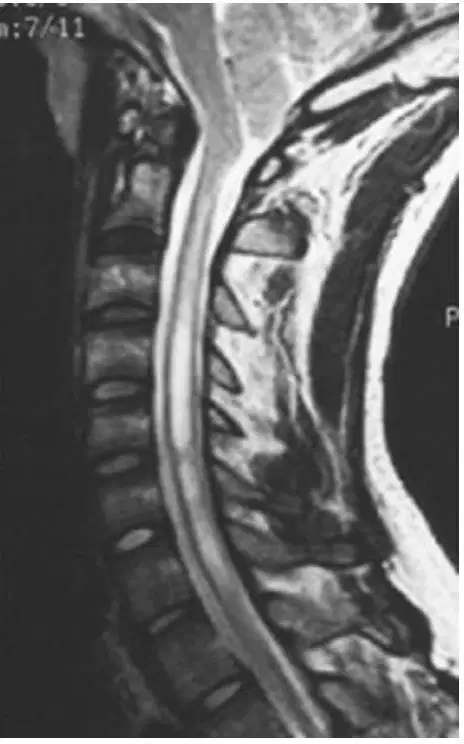
You plan to perform a foramen magnum decompression on the patient shown below. Which one of the following investigations may be helpful?
CSF Flow Study
CT Cisternography
CT Cervical Angiogram
Flexion/extension-rays
Nerve conduction studies
A 17 year old boy is brought to the emergency room following a motor vehicle collision with multiple fatalities. He is alert, awake, and oriented. He denies neck pain, has no midline tenderness, and does not have any other injuries. The neurologic exam is unremarkable. He has not used alcohol or drugs. What is the minimum radiographic study needed to clear the cervical spine?
Radiographs are not indicated
Upright lateral and AP X-rays
Flexion-extension X-rays
Lateral and AP X-rays with CT imaging of areas that are suspicious or not easily seen on plain films
Thin-cut axial CT scan from the occiput to T1 with sagittal and coronal reconstructions
Neurophysiological monitoring during translabrynthine resection of a vestibular schwannoma with minimal extension into the cerebellopontine angle includes which of the following?
BAER and IX, X, XI nerve
SSEP and VII nerve
BAER and VII nerve
BAER and SSEP
BAER yang menghilang gelombang apa yang tidak
menimbulkan defisit secara klinis?
II
III
IV
V
VI
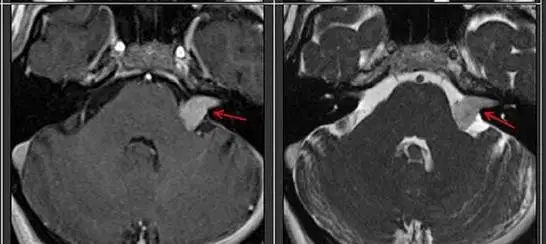
MRI kasus Vestibular schwannoma, grading Koos berapa?
I
II
III
IV
V
Perusahaan trial obat, dalam populasi kecil terpilih, fase
apa? (clinical trial fase I)
Efficacy
Efficiency
Safety
Initiation
Reporting
Trial implantation boleh jadi permanen kalau
perbaikannya berapa persen?
25%
50%
75%
100%
Tumor metastasis yang paling radiosensitive adalah
Breast Cancer
Adenocarcinoma
Small Lung Cell Carcinoma
Melanoma Maligna
Renal cell carcinoma
What type of metastatic brain tumor generally is
considered radiosensitive to whole brain radiation therapy?
Thyroid
Renal
Melanoma
Breast
Sarcoma
A 68 year old male with a history of prostate cancer presented with new-onset back pain. X-ray of the spine showed a mass in the bilateral T12 pedicles and vertebral body. He has a normal neurological examination. What is the appropriate next step in the management of this patient condition?
Pain medication and send home with follow up the primary care
provider
Metastatic workup and spine surgery consultation
Biopsy of the T12 vertebral body mass
Surgical intervention to stabilize the spine
A 65 year old male patient undergoes craniotomy and clipping of an anterior communicating artery aneurysm. He was fully conscious and oriented on postoperative day 1. But the next day onwards, he starts refusing food, prefers to sleep throughout the day, and is not responding nicely to questions asked. A magnetic resonance imaging scan of the brain is ordered. An infarct in which of the following regions is the most likely cause of his behavioral problem?
Anterior cingulate cortex
Medial premotor area
Supplementary motor area
Bilateral frontal lobes
Lateral SCIT, saat dibuka tampak lobus cerebellum apa?
Quadrangular
Gracile
Biventral
Vermis
Semilunar
Tumor di posterior ventrikel 3, akan sulit dicapai jika
menggunakan approach?
Interforniceal approach
Suprachoroidal approach
Subchoroidal transforniceal approach
Transforaminal approach
A 28 year old left handed female who is 14 weeks pregnants presented to the emergency department with worsening headache, vomiting and drowsiness. CT head scan showed a large right frontal tumor with significant edema. After 48 h of dexamethasone her headache has improved but she still has a mild left-sided arm weakness. Which one of the following would be most appropriate?
Permit gestational advancement to second trimester
Craniotomy and tumor resection followed by chemoradiotherapy
Cesarean section followed by neurosurgery
Iatrogenic termination followed by neurosurgery
Radiotherapy alone until fetal maturity established
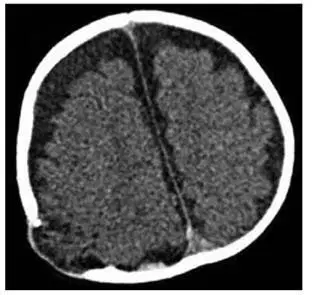
An 8 month old female child who previously fell from a changing table. She presented on referral form her pediatrician for evaluation of a left frontoparietal mass. Which on of the following management strategies is most appropriate?
Cranioplasty
Conservative management
Dural repair
Duraplasty and autologous cranioplasty
Head bandage
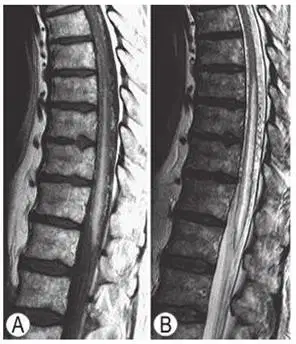
A 55 year old male presents with progressive gait disturbance and impotence. Coronal Magnetic resonance angiogram and angiograms are shown in the lumbar spine. There is no evidence of hemorrhage. VHL screen is negative. Which one of the following diagnoses is most likely?
Aneurysm of artery of Adamkiwicz
Cavernoma
Hemangioblastoma
Type I dural AVF
Type II intermedullary glomus AVM
An 82 year old woman presents to the neurosurgery clinic with typical trigeminal neuralgia. She has substantial medical comorbidities and would like to avoid surgery. The patient opts for stereotactic radiosurgery. What factor would predict a favorable outcome?
Absence of atypical pain
Using a radiation dose lower than 60 Gy
Prior successful surgical microvascular decompression
Decreased sensation in the affected nerve prior to treatment
Trigeminal neuralgia related to multiple sclerosis
What is the most common location for dural
arteriovenous fistulae to drain?
Superior sagittal sinus
Junction of the transverse and sigmoid sinus
Cavernous sinus
Inferior petrosal sinus
Junction of the sigmoid sinus and jugular vein
During an endonasal transsphenoidal approach, what structure limits the working space and maneuverability of the instruments?
Inferior turbinate
Middle turbinate
Septum turbinate
Anterior nasal septum
How much of the superior sagittal sinus can be sacrificed without a high risk of inducing venous infractions?
Anterior two thirds
No more than one third of any portion
Anterior one third
Entire sinus as long as the cortical bridging veins are left intact
none of the sinus but all of the cortical bridging veins can be sacrificed without risk of venous infarctions
A patient presents with a blunt cerebrovascular injury after a motor vehicle collision. The patient has no intracranial hemorrhage. CT angiogram reveals an internal carotid artery luminal irregularity with < 25% stenosis. What is the next step in the management of this patient?
No acute intervention; repeat imaging in 4 to 6 weeks
Initiate a heparin drip if there are no contraindications
Perform endovascular stenting
Perform a ligation/occlusion of carotid artery
Initiate antiplatelet therapy if there are no contraindications
A patient presents with subarachnoid hemomrrhage due to a ruptured aneurysm. What is the approximate risk of re-rupture over the next 14 days if the aneurysm is not treated?
1-2%
5-10%
15-20%
50%
75%
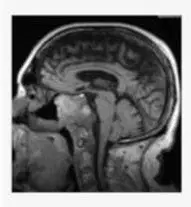
A 58 year old right handed male presents with bifrontal headaches and a partial left opthalmoplegia. MRI results are shown. Biopsy revealed this tumor to be a chordoma. An extensive subtotal skull-based resection was performed. Which is the best choice for adjuvant therapy regimen?
Proton beam radiotherapy
Brachytherapy
Stereotactic radiosurgery
Conventional fractionated radiotherapy
Procarbazine, CCNU, and Vincristine (PCV), chemotherapy
Parkinsonian tremor can be diminished by high frequency stimulation of
Globus pallidus externa
Subcaudate white matter
ViM thalamus
Cingulate bundle
Dorsomedial thalamus
Pasien perempuan, mata terdeviasi ke medial, tidak bisa ke lateral. Kalau berjalan kepala harus miring kekanan. Pertanyaan : lokasi MRI dimana yang tidak perlu dievaluasi?
Anterior pons
SOF
Cavernous sinus
Lateral medullary
Medial medullary
Sebuah studi di suatu RS pada 30.000 orang pasien mengambil data dari tahun 2001 – 2008, didapatkan data. Metode penelitiannya adalah?
Cross-sectional
Retrospective cohort
Prospective cohort
Observational
Pasien wanita post tindakan fusi L4-S1 10 minggu lalu datang dengan keluhan nyeri punggung. 1 minggu pasca operasi keluhan nyeri post fusi membaik 85%. Pemeriksaan apa yang perlu dilakukan pada pasien?
MRI T2 dengan/tanpa kontras
EMG
Myelografi
CT
N VII terdorong oleh schwannoma vestibular ke arah?
Anterosuperior
Posterosuperior
Anteroinferior
Posteroinferior
Gambar MRI non kontras dan kontras potongan sagittal dan coronal. Tampak lesi di sella, ditanya mendorong pituitary ke arah mana?
Anterolateral kanan
Posterolateral kanan
INferolateral kanan
Superolateral kanan
Superolateral kiri
Gambar sama dengan no 39, yang ditanya struktur yang ditunjuk panah
Stalk
Optic nerve
Chiasma
Artery
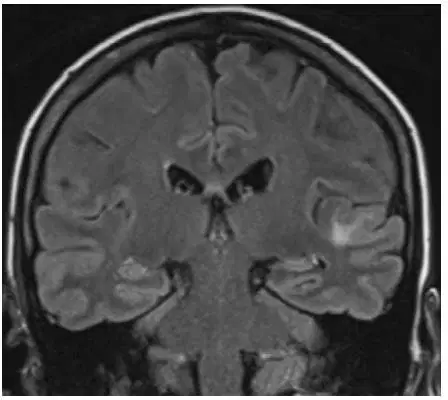
A 45 year old woman with intractable structural epilepsy who had experienced partial compex and secondarily generalize seizures form the age of 8 years. Coronal FLAIR MRI is shown. Which one of the following is most likely?
Abscess
Focal cortical dysplasia
Lissencephaly
Mesial temporal sclerosis
Tuberous sclerosis
In the STASCIS trial (early versus delayed decompression for traumatic cervical spinal cord injury), 30% of patients were lost to follow-up at 6 months. Although this is typical for a trauma study, what type of bias could this represent?
Selection bias
Recall bias
Confounding bias
Observer bias
Ascertainment bias
A 17 year old female with a history of intravenous drug abuse presents with fever, back pain, and inability to ambulate. She has been experiencing back pain for the past 3 days. She reports that the weakness has been progressively worsening for the past 6 hours, and she is now unable to walk. On exam, the patient has reduced sensation on her umbilicus and 2/5 strength in her lower extremities bilaterally. Her temperature is 101 F (38.3 C), her respiratory rate is 17/min, and her pulse is 89 bpm. An MRI is obtained, and a contrast-enhancing lesion is note at T10-L1, which confirmed the diagnosis. Which of the following is the next best step in the management of this patient?
Intravenous antibiotics
Drainage of the abscess the next day
Immediate incision and drainage and spinal decompression
Lumbar puncture
A 53 year old male had a left acoustic neuroma resected 5 months ago and has had severe, throbbing left-sided headaches that began the week of the resection. He rarely had headaches before surgery. His headaches are without associated symptoms and are not positional. The only relief he gets is from opioid analgesics. What is the next best step in management?
Psychiatric referral
Physical examination
Change to a different opioid analgesic
MRI of the brain with contrast
A 21 year old man presents with a brachial plexus avulsion type injury. What is the recommended treatment option?
Periodic electromyography/nerve conduction studies starting 3 to 12 weeks following the injury with consideration of surgical neurotization at 3 to 6 months if there is no improvement
Periodic electromyography/nerve conduction studies starting 3 to 12 weeks following the injury with consideration of surgical neurolysis at 3 to 6 months if there is no improvement
Periodic electromyography/nerve conduction studies starting 3 to 12 weeks following the injury with consideration of a spinal cord stimulator if pain remains after 3 to 6 months
Exploration and surgical repair within 3 days
Exploration at 2 to 3 weeks
According to the Food and Drug Administration (FDA), vagal nerve stimulation is indicated for use in partial-onset seizures refractory to medical therapy in patients of what age?
Any age
Older than 6 years
Older than 8 years
Older than 12 years
Older than 18 years
Which one of the following statements regarding fluorescein sodium is LEAST accurate?
It emits light in the 600-700 nm range
It is preferentially taken up by neoplastic cells
It relies on breakdown of the blood-brain barrier
It can guide where laser scanning confocal microscope should be
focused
It can assess patency of EC-IC bypass and at risk vessels during
aneuryms surgery
Which one of the following statements regarding history of spine trauma is LEAST accurate?
In young children aged 0-9 years, the predominant cause of injury is falls and automobile-versus-pedestrian accidents (>75%)
In children aged 10-14 years motor vehicle accidents (40%) are the major cause of lumbar fractures, and falls and automobile-versus- pedestrian accidents are less prevalent
In children 15-17 years of age, motor vehicle and motorcycle accidents become the leading cause of spine injuries (>70%), and there is also an increase in sports-related spine trauma
SCI should be suspected if the child reports transient neurological
symptoms at the time of injury even if they are now resolved
Children with down’s syndrome are at higher risk of cervical injuries
as it is associated with congenital fusion of cervical vertebrae
Which one of the following is not a normal variant seen in
the pediatric cervical spine?
Pseudosubluxation of C2 on C3
Localized kyphosis in mid-cervical area
Overriding C1 over tip of odontoid peg in extension
Persistence of basilar odontoid synchondrosis
Anterior wedging of vertebral bodies
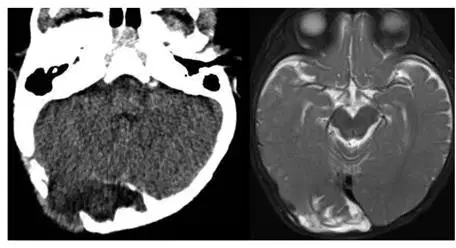
Axial noncontrast CT and T2-weighted MRI are shown in these images. What is the likely diagnosis?
Langerhans cell histiocytosis
Epidermoid
Abscess
Leptomeningeal cyst
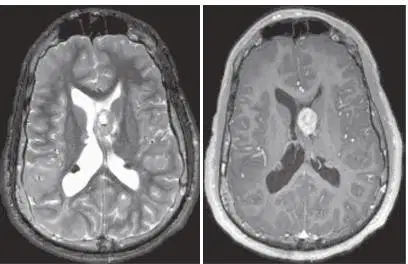
Which one of the following condition is most likely?
NF-1
NF-2
Tuberous sclerosis
Li-Fraumeni syndrome
Cowden syndrome
What cistern contains the anterior choroidal artery, posterior cerebral artery, medial posterior choroidal artery, and basal vein of Rosenthal?
Ambient
Quadrigeminal
Interpeduncular
Carotid
Crural
A 42 year old male presents with a 5 year history of Parkinson disease (PD) with severe motor fluctuations. What would be his expected benefit from deep brain stimulation?
DBS will provide improvement in freezing of gait, a motor symptom
frequently associated with Parkinson disease
DBS will result in reduction in progression of the natural history of
Parkinson disease.
DBS will eliminate the need for Parkinson medications.
DBS will provide no benefit, because he has not had the disease long
enough
DBS will provide improvement in motor symptoms comparable to the effects of Levodopa medication, with less motor fluctuations and without the medication induced dyskinesia
Which form of systemic cancer therapy is associated with an increased risk of radiation necrosis after stereotactic radiosurgery for cerebral metastases?
Cytotoxic chemotherapy (e.g. DNA synthesis / Mitosis inhibitors)
Systemic immunotherapy (e.g. PD-1 inhibitors)
Glucocorticoid therapy
Angiogenesis inhibitors (e.g. Anti-VEGF antibody)
Tumor Targeted Chemotherapy (e.g. EGFR or ALK antagonists)
During surgery, additional exposure is needed to access the upper petroclival region for tumor resection. Which maneuver may assist the surgeon in accomplishing this task?
Further drilling of Glasscock's triangle
Additional exposure through Kawase's quadrilateral
Further drilling of the arcuate eminence
Identifying Trautmann's triangle and exposing medially to this landmark
Modify the approach by utilizing a presigmoid corridor
What are the borders of Kawase's triangle?
V2, V3, and a line from the foramen rotundum and foramen ovale
GSPN, arcuate eminence, inferior petrosal sinus, V2
GSPN, arcuate eminence, superior petrosal sinus, V3
Foramen spinosus, arcuate eminence, superior petrosal sinus, V3
Arcuate eminence, inferior petrosal sinus, V2, V3
Following surgical resection of glioblastoma, standard therapy includes radiotherapy with concomitant temozolimide. What is the standard radiation dose given over 30 fractions?
40 Gy
20 Gy
60 Gy
50 Gy
30 Gy
Which one of the following is most accurate regarding placement of thoracic pedicle screws?
Varies widely depending on level
Straight-head screw trajectory is parallel to the facet joint
Anatomic screw trajectory is along the long axis of the pedicle
Entry point is where the transverse process joins the superior
articular process just medial to the pars interarticularis
The pars interarticularis is the LEAST useful landmark
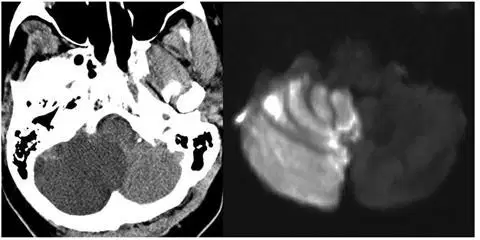
A 74 year old woman presents to the emergency room complaining of vertigo and nausea increasing in severity over the past several hours. CT and MRI studies were performed, and representative image are shown here. This lesion likely represents a(n):
Primary neoplasm
Acute infarction
Metastatic disease
Arachnoid cyst
Epidermoid cyst
What imaging feature favors a pilocytic astrocytoma over a hemangioblastoma?
High relative cerebral blood volumes
Presence of small vascular flow voids
Enhancing nodule abutting the pia
Enhancement of the cyst wall
What is a contraindication for posterior cervical foraminotomy as a treatment for cervical radiculopathy due to disc herniation?
Degenerative changes at other levels
Ipsilateral vocal cord palsy
Kyphotic neck deformity
Associated osteophyte formation
Central disc hernation
A 19-year-old man presents following a motor vehicle collision complaining of lower extremity weakness. He is found to have a thoracic spine Chance fracture. He has full strength in his upper extremities. He has sensation in his lower extremities and perineum, and his motor strength in his lower extremities ranges from 4-/5 to 4/5. What is his American Spinal Injury Association (ASIA) impairment scale score?
A
B
C
D
E
During resection of a WHO grade II insular glioma, what white matter language tracts run through the tumor and under the insula?
Inferior fronto-occipital fasciculus and superior longitudinal fasciculus-temporal parietal portion
Arcuate fasciculus and medial longitudinal fasciculus
Uncinate fasciculus and inferior fronto-occipital fasciculus
Uncinate fasciculus and arcuate fasciculus
Superior longitudinal fasciculus III and arcuate fasciculus
Pasien perempuan 52 tahun dengan keluhan sakit kepala, dan hemiparesis sejak 4 jam yang lalu. CT scan dilakukan 2 jam pasca onset . Penatalaksaan pada pasien tersebut?
Evakuasi hematoma
Kraniektomi dekompresi
Hiperventilasi
Observasi dan pengaturan tekanan darah
Pemberian steroid
After being struck in the head, a 12 year old boy presents with a scalp laceration over a palpable skull deformity. A CT scan is obtained (Figure 1). His GCS 14. What is the most appropriate management for this injury?
Venticulostomy for IP management
Bedside irrigation, debridement, and wound closure
Bedside wound closure and IV antibiotics
Allow wound to heal by secondary intention
Surgical exploration, fracture elevation, and debridement
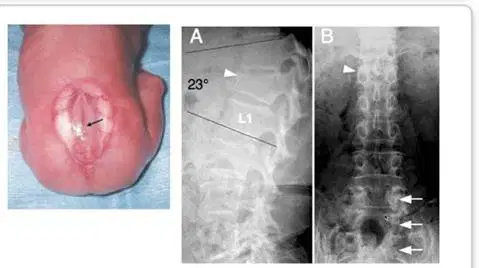
Pasien anak laki-laki, lahir secara pervaginam, didapatkan klinis seperti pada gambar. Bagaimana kemungkinan ambulasi pasien?
Ambulasi independent
Berdiri tidak bisa ambulasi
Bukan salah satu diatas
Ambulasi dengan ortose atau alat bantu berjalan
Ambulasi dengan kursi roda
When undertaking a trans-callosal approach for resection of a colloid cyst of the third ventricle, which of the following structures is the most useful landmark?
Body of the thalamus
Septum pellucidum
Head of the caudate nucleus
Septal vein
Thalamostriate vein
If the tumor demonstrated in this MRI is a functioning
tumor, what is the most likely hormone being produced:
Prolactin
ACTH
LH/FSH
GH
ADH
A 30-year-old woman presents for her 1 month follow up after bilateral optic nerve sheath fenestration for malignant pseudotumor cerebri syndrome. Her incisions are healing well, and her orbital edema is resolving, and her eye movements are full. However, her visual fields appear to be worsening despite the apparent improvement of her optic nerve edema clinically and by optical coherence tomography. She continues on 500 mg of PO acetazolamide twice a day but continues to have headaches with pulsatile tinnitus. What is the most likely cause of her symptoms despite the improvement of her edema?
Residual orbital edema that can be observed for now
Development of orbital pseudomeningoceles requiring re-fenestration of the nerves to relieve pressure
Continued intracranial pressure elevation causing optic nerve compression and axonal loss producing optic atrophy
Functional vision loss from stress related her recent diagnosis and surgery
A 25 year old male is brought to the emergency department after a motor vehicle crash. His blood pressure is low, requiring pressors. His Glasgow Coma Scale score is 5. A ventriculostomy is inserted and his intracranial pressure is found to be 35 mmHg. What is the most appropriate immediate treatment for lowering his ICP?
Hyperventilation
CSF drainage
Calcium channel blocker
Mannitol
Barbiturate coma
Postoperatively, the patient has decreased lacrimation on the ipsilateral side. What is the most likely etiology of this problem?
Lesser petrosal nerve injury
Greater petrosal nerve injury
Geniculate ganglion injury
Chorda tympani injury
Injury of Jacobson's nerve
MRI sequence specific for IDH-mutant 1p/19q non-
codeleted gliomas (diffuse astrocytomas).
T2/T1 Mismatch
T2/Flair mismatch
T2/ADC
T2/DWI mismatch
T2/T1 contrast
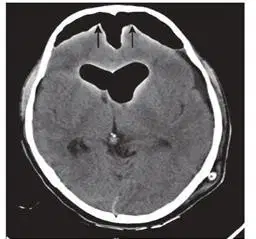
A 27 year old present to ED after an assault. His GCS is 15/15 but he has evidence of facial fractures involving the frontal sinus and evidence of some CSF rhinorrhea. He is admitted for observation and initial conservative management of CSF leak. On D3 post injury, he developed three episodes of vomiting and become drowsy. On examination he was obtuned and lethargic, but arousable. His BP was 140/90 mmHg, heart rate 59/min, and respiratory rate 20/min and maintained a saturation of 92% on room air. Examination revealed a dilated right pupil whereas the rest of neurological and systemic examination was normal. CT head was repeated (shown). Which one of the following is most appropriate acute management?
High flow oxygen
Burr hole decompression
Cranialization of the frontal sinus
Decompressive craniectomy
Mini craniotomy
A 76-year-old female is undergoing microsurgical clipping of anterior communicating artery (ACOM) aneurysm. Intraoperatively, there is an inadvertent injury to the recurrent artery of Huebner (RAH). However, other perforators are well preserved. The postoperative CT image, however, shows hypodensities involving the caudate head, anterior limb of the internal capsule as well as putamen. What is the most likely cause of the radiological findings?
Diffuse vasospasm
Seizure
Rete communication of RAH with other lenticulostriate vessels from ACA and MCA
Injury to parent ACA vessel
Gambaran MRI fibrous dysplasia os frontal udh operasi. Tumbuh lagi. Tatalaksananya, kecuali
Observation
Re-surgery
Radioterapi
Kemoterapi
Imunoterapi
Pemberian antibiotik intratekal gentamycin untuk
ventrikulitis appropriate jika?
Hasil kultur masih positif
Tidak diperlukan
Selalu diperlukan
7 hari masih positif
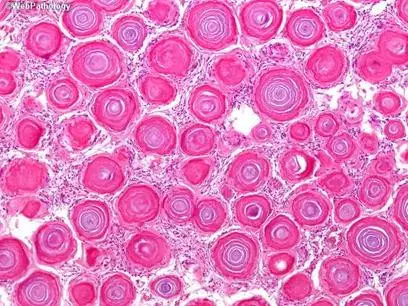
Disajikan gambar PA tanpa keterangan klinis
WHO Gr I
WHO Gr I-II
WHO Gr II-III
WHO Gr III-IV
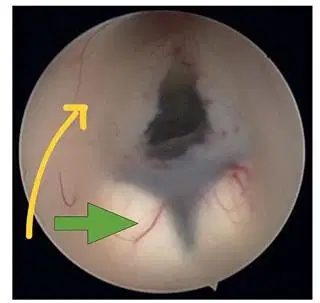
(Gambar intraoperasi ETV, tampak lamina terminalis
sudah jebol). Struktur yang ditunjuk panah kuning?
Hipothalamus
Mammilary body
Thalamus
Head of caudate nucleus
CT Scan SAH, ditanya grading Fischer (SAH agak tebal, tidak ada IVH)
1
2
3
4
5
Gambar DSA AP/LAT (sepertinya CCF TAPI TIDAK KHAS) Gambaran klinis yang mungkin terjadi pada pasien dengan gambar DSA diatas adalah
Abducens nerve palsy
Hemiparesis sinistra
Loss of consciousness
(lupa apa lagi)
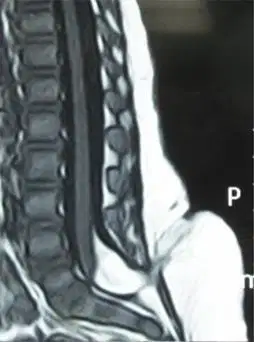
Gambar MRI potongan sagittal. Tatalaksana pada pasien?
Laminektomi removal tumor
Untethering
(lupa)
(lupa)
Pasien dilakukan injeksi di spinal, lalu tonik klonik keempat extremitas. Apakah yang terjadi?
Anesthetic agent enters LCS/intravascular
Ischemia
(lupa)
(lupa)
Dibawah ini benar mengenai Shaken-Baby-Syndrome, kecuali
Retinal hemorrhage menandakan kelainan intracranial
Persentasi shaken baby syndrome pada anak usia (lupa)
SDH pada shaken baby syndrome memiliki prognosis lebih baik daripada kasus SDH traumatika
SDH pada shaken baby syndrome memiliki prognosis lebih buruk daripada kasus SDH traumatika
Seorang ibu post trauma, mengeluh nyeri lengan, absence of radial pulse saat dia nengok. Diagnosis?
Brachial plexitis
Radiculopathy
TOS
(lupa)
AVM dikasih DSA, drainage kemana?
SSS
SSS dan Trolard
SSS dan inferior sagittal sinus
(lupa)
Gambar MRI dan MRA Choroid plexus papiloma,
darimana sumber vaskularisasinya?
Anterior choroidal
Recurrent artery of Heubner
Medial Posterior choroidal
Lateral Posterior choroidal
Numbness digiti I and II, tinnel test (+) in forearm, forearm pain. Diagnosis?
Carpal tunnel syndrome
Tarsal tunnel syndrome
De Quervain Tenosinovitis
Pronator teres syndrome
Intrathecal morfin boleh diberikan pada pasien dengan harapan hidup lebih dari ... bulan atau minimal ... bulan
6 bulan - 12 bulan
12 bulan - 24 bulan
9 bulan - 12 bulan
3 bulan - 1 bulan
Foto gambaran tension pneumocephalus, apa tindakan yang salah?
Pasang EVD untuk air suction
Decompressive Craniectomy
Pasang EVD untukk CSF
(lupa)
Nyeri pada anterolateral thigh, beberapa soal kasus yang pilihan opsinya ada
Piriformis syndrome
Sciatica
Meralgia paresthetica
(lupa)

