
 Worksheets
Introduction to Protozoa
Total questions: 81
Worksheet time: 41mins
Which statement best defines protozoa as described in the material?
Multicellular parasites found only in blood
Single-celled organisms that inhabit a wide variety of habitats
Viruses that infect red blood cells exclusively
Fungi that reproduce only sexually
Approximately how many protozoa are known, and what proportion are parasitic according to the material?
About 6,500 species; most are parasitic
About 65,000 species; only a small part are parasitic
About 650,000 species; none are parasitic
About 65,000 species; all are parasitic
Match each term to its correct description about parasitic protozoa.
Sarcomastigophora
One of the three primary phyla of parasitic protozoa
Apicomplexa
One of the three primary phyla of parasitic protozoa
Ciliophora
One of the three primary phyla of parasitic protozoa
Hemoprotozoa typically infect which site, and what vector commonly transmits them between animals?
Intestinal tract; mosquitoes
Red blood cells; ticks
Liver tissue; fleas
Skin epithelium; mites
According to the material, which statements about protozoan biology are correct? Choose the best answer.
They always have complex life cycles and reproduce only sexually.
Their life cycles can be simple or complex, and reproduction may be asexual or sexual.
They never infect fecal material and only inhabit blood.
They are multicellular organisms with only asexual reproduction.
Which process is listed as a type of asexual reproduction in protozoa?
Syngamy
Conjugation
Binary fission
Meiosis
Match each reproduction category with its associated processes.
Asexual reproduction
Binary fission, schizogony, budding
Sexual reproduction
Syngamy, conjugation
Trophozoite
Vegetative form: stage of feeding, movement, and reproduction
In protozoa, the trophozoite stage is best described as which of the following?
Dormant cyst form specialized for survival outside the host
Vegetative form characterized by feeding, movement, and reproduction
A specialized sexual stage used only for identification and not reproduction
Embryonic form prior to any cellular activity
Which statement about sexual stages in protozoa aligns with the material?
Sexual stages are absent in protozoa
Sexual stages include syngamy and conjugation and can aid identification
Sexual stages only occur during trophozoite feeding
Sexual stages are identical to schizogony
Which locomotor organelle in protozoa is described as a long whiplike structure?
Cilia
Flagella
Pseudopodia
Undulatory ridges
Cilia in protozoa are best characterized as:
Temporary extensions and retractions of the body wall
Short flagella arranged in rows or tufts
Small snakelike waves in the cell membrane moving posteriorly
A dormant protective stage
Match each locomotor structure with its description.
Pseudopodia
Temporary extensions and retractions of the body wall
Undulatory ridges
Small snakelike waves that form in the cell membrane and move posteriorly
Flagella
Long whiplike structure
Why are locomotor organelles useful in protozoan studies?
They determine the cyst’s pH tolerance.
They are used to help identify the type of protozoa.
They reveal oxygen tension in the environment.
They indicate overcrowding conditions.
Which statement about the trophozoite stage is accurate?
It is the primary infective form transmitted between hosts.
It is often too fragile to survive transfer to a new host and usually is not infective.
It resists desiccation due to a thick wall.
It forms under low pH and overcrowding.
Transmission of many protozoa to a new host occurs primarily in which stage?
Trophozoite
Zygote
Cyst
Gamete
Select the best explanation for how the cyst stage enhances survival.
It increases metabolic rate to generate heat.
Metabolic functions are suspended, which prevents desiccation.
It produces longer flagella for swimming away from danger.
It elevates oxygen tension inside the cell.
Under which conditions is a protozoan most likely to form a cyst?
Abundant nutrients and neutral pH
High oxygen tension and plentiful water
Lack of nutrients, low oxygen tension, lack of water, low pH, and accumulations of waste or overcrowding
Presence of numerous cilia and flagella
Within Phylum Sarcomastigophora, which statement best distinguishes amoebas from flagellates?
Amoebas move via pseudopods, while flagellates have one or more flagella in the trophozoite stage.
Amoebas are always parasitic, while flagellates are never parasitic.
Flagellates have both trophozoite and cyst stages, while amoebas do not.
Amoebas reproduce only sexually, while flagellates reproduce only asexually.
Approximately how many known species in Phylum Sarcomastigophora are parasitic?
230
2,300
23,000
44,000
Match each group within Sarcomastigophora to its characteristic.
Amoebas
Move via pseudopods and have trophozoite and cyst stages
Flagellates
One or more flagella in the trophozoite stage
Phylum total
44,000 known species—2,300 are parasitic
Which life stages are noted for amoebas in Sarcomastigophora?
Only trophozoite
Only cyst
Both trophozoite and cyst
Neither trophozoite nor cyst
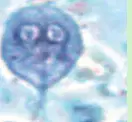
Giardia is best described as which type of organism commonly recovered from the feces of dogs and cats?
Cestode
Flagellated protozoan
Fungus
Gram-positive bacterium
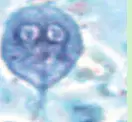
Which statement accurately characterizes the Giardia trophozoite?
Round and nonmotile with a thick wall
Pear shaped, dorsoventrally flattened with four pairs of flagella and two nuclei that resemble a pair of eyes
Oval with a single nucleus and no flagella
Spindle shaped with cilia and three nuclei
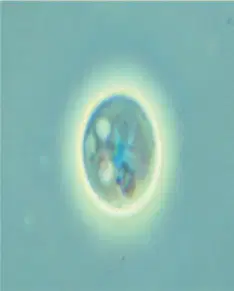
Match each Giardia form to its description.
Trophozoite
Motile feeding stage; pear shaped and dorsoventrally flattened with four pairs of flagella
Cyst
Resistant stage; oval
Trophozoite nuclei
Resemble a pair of eyes
According to the depicted life cycle, what is the correct sequence immediately after Giardia cysts are ingested by a host?
Cysts pass unaltered in feces
Parasite excysts into trophozoite form in intestines
Cysts multiply in the bloodstream
Cysts encyst on skin surfaces
In the Giardia life cycle image, which event leads to environmental contamination and potential transmission?
Trophozoites encyst on fur and hair
Cysts passed in feces enter water or contaminated ground
Transplacental passage of trophozoites
Aerosolization of cysts from respiratory tract
Which diagnostic method is noted as standard for Giardia and specifies a particular flotation medium?
Direct smear with methylene blue
Standard fecal flotation—zinc sulfate
Baermann technique with saturated sugar
Acid-fast staining of sputum
During routine fecal flotation for Giardia, what limitation is highlighted regarding cyst morphology?
Cysts are always perfectly spherical
Cysts are often distorted
Cysts cannot be stained
Cysts fluoresce without reagents
Which statement about detecting motile trophozoites in feces is accurate?
They are commonly found in old preserved samples using hypertonic saline
They are occasionally found in a direct smear of fresh feces with isotonic saline, sometimes using Lugol stain
They are best visualized only after acid-fast staining
They are reliably detected only by culture
Which test modality is commonly used for Giardia detection in feces besides microscopy-based methods?
Serum electrolyte panel
Fecal immunodiagnostic tests
Skin scraping for mites
Urinalysis with sediment exam
Which host species are specifically noted for infection by Trypanosoma cruzi?
Humans and dogs
Cats and cattle
Birds and reptiles
Fish and amphibians
In blood smears, Trypanosoma cruzi is described as which of the following?
Intracellular parasite residing in RBCs
Extracellular organism that swims
Obligate intracellular bacterium
Free-living protozoan that does not move
Match the morphologic term with its description for Trypanosoma cruzi.
Trypomastigote
Swimming stage in blood
Amastigote
Cyst stage found in tissues such as cardiac muscle
Undulating membrane
Lateral wave-like membrane associated with flagellum
What is the relative size of Trypanosoma cruzi compared to red blood cells (RBCs)?
Same length as RBCs
1 to 2 times as long as RBCs
3 to 10 times as long as RBCs
Longer than 20 times RBC length
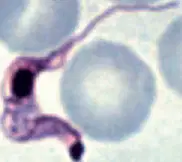
Which shape best characterizes the trypomastigote form of Trypanosoma cruzi shown in the micrograph (curved organism among RBCs)?
Spherical
Banana shaped
Rod-shaped with rigid edges
Filamentous without curvature
Which statement best describes Leishmania?
A bacterium transmitted by ticks
A hemoprotozoan that infects several mammals
A helminth restricted to humans
A virus carried by mosquitoes
Leishmania is transmitted primarily by flies of which genera?
Anopheles and Culex
Glossina and Aedes
Phlebotomus and Lutzomyia
Simulium and Chrysops
Match each form of leishmaniasis to its characteristic or causative species.
Mucocutaneous form
Characterized by skin sores
Visceral form
Affects internal organs such as spleen, liver, and bone marrow
Leishmania braziliensis
Associated with mucocutaneous disease
Leishmania donovani/infantum
Associated with visceral disease
Which internal organs are specifically mentioned as affected in visceral leishmaniasis?
Heart and lungs
Spleen, liver, and bone marrow
Kidneys and pancreas
Stomach and intestines
Which species is linked to mucocutaneous leishmaniasis?
Leishmania donovani
Leishmania infantum
Leishmania braziliensis
Leishmania major
Which description best characterizes trichomonads as presented?
Round organisms with multiple flagella on the ventral surface
Long, slender organisms with a single flagellum attached dorsally forming a sail-like structure
Ciliated parasites that lack flagella and move by gliding
Short, oval organisms with two anterior flagella only
Tritrichomonas foetus primarily inhabits which locations in cattle?
Rumen and reticulum of cows
Prepuce of bulls and the vagina, cervix, and uterus of cows
Small intestine of calves
Liver and gallbladder of bulls
Which clinical outcome is associated with Tritrichomonas foetus infection in cattle?
Ulcerations of the proventriculus
Infertility, spontaneous abortions, and pyometra
Neurologic signs and head tilt
Severe diarrhea and dehydration
What is the recommended diagnostic approach for Tritrichomonas foetus in cattle according to the material?
PCR on whole blood
Histopathology of liver biopsies
Identification of motile trophozoites in the supernatant of washings from vagina or prepuce
Fecal flotation for cysts
Match each trichomonad species to its key host or site, major lesion, transmission, and diagnostic method.
Tritrichomonas foetus—host/site
Reproductive tract of cattle (prepuce of bulls; vagina, cervix, uterus of cows)
Trichomonas gallinae—lesion
Ulcerations of esophagus, crop, and proventriculus
Trichomonas gallinae—transmission
Through drinking water
Trichomonas gallinae—diagnosis
Direct saline smear of crop contents, air dried and stained with Wright stain
In birds such as pigeons and doves, Trichomonas gallinae is typically found in which sample?
Crop washings
Cloacal swab
Liver aspirate
Nasal discharge
Which combination correctly summarizes Trichomonas gallinae features?
Ruminant parasite; causes abortions; diagnosed by reproductive tract washings
Avian parasite; transmitted in drinking water; causes ulcerations of esophagus, crop, and proventriculus; diagnosed by direct saline smear of crop contents stained with Wright stain
Canine intestinal parasite; causes diarrhea; diagnosed by fecal ELISA
Equine respiratory parasite; spread by aerosols; diagnosed by tracheal wash cytology
Which statement best describes how Histomonas meleagridis is transmitted among avian hosts?
Direct contact between adult birds
Ingestion of the ova of the nematode transport host
Airborne droplets from infected flocks
Mosquito bites acting as vectors
Match each term with its correct description related to Histomonas meleagridis.
Histomonas meleagridis
Avian parasite affecting turkeys, chickens, pheasants
Nematode transport host
Carrier whose ova, when ingested by birds, transmit the parasite
Blackhead
Common name for the fatal liver disease in turkeys caused by the parasite
Infectious enterohepatitis
Formal name for the fatal liver disease in turkeys caused by the parasite
Which group of animals is primarily infected by Histomonas meleagridis according to the material?
Ruminants such as cattle and sheep
Companion mammals such as dogs and cats
Avians including turkeys, chickens, and pheasants
Reptiles such as snakes and lizards
In turkeys, Histomonas meleagridis causes a fatal liver disease known by two names. Which pair correctly lists these synonyms?
Marek's disease and Newcastle disease
Blackhead and infectious enterohepatitis
Coccidiosis and histoplasmosis
Avian influenza and fowl cholera
Which statement best describes Entamoeba histolytica according to the material?
A parasite primarily of dogs
A primarily human parasite found in tropical regions
A bacterium affecting swine
A virus common in sheep
Match each animal with the note given in the material about Entamoeba histolytica findings.
Cattle
Found in fecal flotations of healthy individuals
Sheep
Found in fecal flotations
Goats
Found in fecal flotations
In the context provided, what is the general clinical significance of Entamoeba histolytica in the listed domestic animals?
It often causes severe systemic disease
Generally no clinical significance
Always results in neurological symptoms
Requires immediate culling
According to the material, what condition may Entamoeba histolytica cause in dogs?
Respiratory distress
Acute or chronic diarrhea
Kidney failure
Dermatitis
Which statement best characterizes sporozoans within Phylum Apicomplexa?
They include both free-living and parasitic species.
They consist of about 4600 species and all are parasitic.
They are primarily photosynthetic protists.
They have a diploid life cycle throughout.
In Apicomplexa, what is the unique characteristic of their life cycle?
Entire life cycle is diploid except for gametes.
Entire life cycle is haploid except for the zygote.
Alternation between haploid and diploid generations with equal duration.
Only juvenile stages are haploid.
Match each term with its correct description.
Oocyst
Name given to the cyst stage
Sporozoans
Members of Apicomplexa; all are parasitic
Zygote
Only diploid stage in the life cycle
In the context of Apicomplexa, which term specifically refers to the cyst stage?
Trophozoite
Oocyst
Gamont
Merozoite
Which of the following genera are noted for veterinary importance within Apicomplexa? Select the best answer.
Drosophila, Escherichia, Bacillus
Cystoisospora, Toxoplasma, Cryptosporidium
Amoeba, Paramecium, Volvox
Candida, Aspergillus, Penicillium
Which list contains only Apicomplexan genera of veterinary importance mentioned in the material?
Plasmodium, Babesia, Eimeria
Giardia, Trichomonas, Entamoeba
Trypanosoma, Leishmania, Naegleria
Helicobacter, Vibrio, Salmonella
In the Apicomplexa life cycle described, what typically initiates host infection?
Penetration by merozoites through skin
Ingestion of cysts by the host
Inhalation of sporozoites
Direct transmission of gamonts via saliva
Which stage enters the host’s cells after cysts divide?
Gamonts
Sporozoites
Merozoites
Oocysts
Match each life cycle stage with its described action.
Sporozoites
Enter intestinal epithelium and other cells, then asexually reproduce
Merozoites
Infect new host cells and can enter new cells; released when infected cells burst
Gamonts
Form gametes that fuse to create new cysts
Oocysts/cysts
Infective stage passed in feces; ingested by new host
According to the diagram and description, what happens when infected host cells burst?
Gametes are released and immediately fuse
Merozoites are released and infect new cells
Sporozoites exit and invade blood vessels
Oocysts are expelled directly from the skin
Which statement best describes the role of gamonts in the Apicomplexa life cycle?
They are the infective stage found in the environment
They divide to form sporozoites
They form gametes that fuse to create new cysts
They asexually reproduce to become merozoites
In the depicted host range, which animals are shown as hosts for Cystoisospora species?
Dog, cat, pig
Human, cow, chicken
Mouse, rabbit, horse
Goat, sheep, llama
Sequence the following events in the Apicomplexa life cycle by selecting the option that lists them in correct order: A) Cysts are ingested, B) Sporozoites enter host cells, C) Cells burst releasing merozoites, D) Gamonts produce gametes that fuse to form new cysts.
B → A → C → D
A → B → C → D
A → C → B → D
B → C → A → D
Which statement best describes Cystoisospora in small animals?
A helminth that infects the large intestine of livestock
A protozoal parasite of the small intestine of dogs and cats
A bacterial pathogen of the urinary tract in cats
A fungal pathogen causing skin lesions in puppies
In cases of coccidiosis due to Cystoisospora, which clinical sign is most characteristic?
Hematemesis
Loose stool to watery diarrhea
Constipation
Neurologic tremors
Coccidiosis from Cystoisospora is most commonly diagnosed in which patient group?
Adult dogs and cats
Senior dogs only
Puppies and kittens
Wild canids only
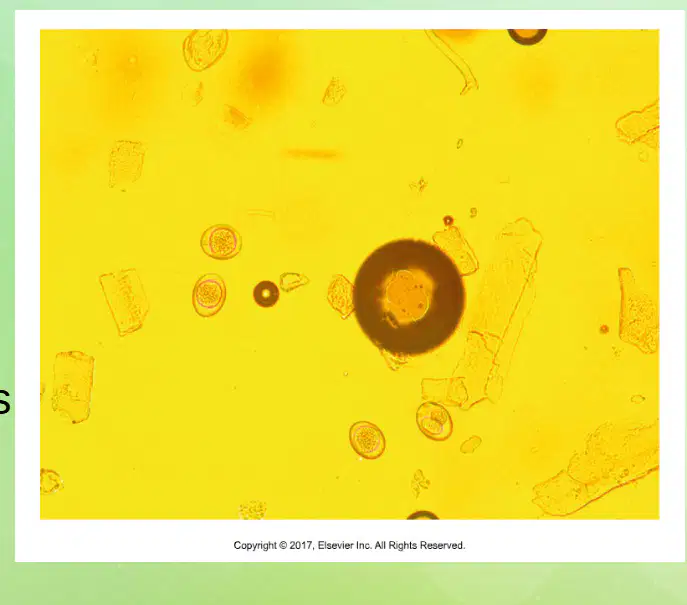
During fecal flotation for suspected Cystoisospora infection, which stage confirms the diagnosis?
Tachyzoite
Cyst
Trophozoite
Oocyst
Match each statement about coccidiosis with the correct completion.
Common patient population
Puppies and kittens
Typical impact on adult animals
Rarely a problem
Diagnostic stage in fecal flotation
Oocyst
Which statement best describes Toxoplasma gondii in relation to its definitive host?
It is a bacterial pathogen of dogs
It is an intestinal coccidian of cats
It is a viral parasite of birds
It is a fungal organism of cattle
For how long do cats typically shed Toxoplasma gondii oocysts over their entire lifespan?
Continuously throughout life
Only for less than 2 weeks
Exactly one month
Only during kittenhood for 6 months
Which diagnostic methods are noted for identifying Toxoplasma gondii in cats?
Urinalysis and culture
Fecal flotation and immunodiagnostic tests
Blood smear and PCR only
Skin scraping and microscopy
Which population is specifically highlighted as being at risk from Toxoplasma exposure via litter boxes?
Healthy adults
Pregnant women
Toddlers
Elderly men
What is the most common route by which humans become infected with Toxoplasma gondii?
Mosquito bites
Drinking untreated water
Consuming undercooked meat
Person-to-person contact
Which statement about treatment for Toxoplasma in cats is accurate?
A single vaccine provides lifelong cure
There is no cure; clinical signs are managed with antibiotics and steroid therapy
Immediate surgery is required
Herbal remedies eliminate the parasite
Match each term to its correct description related to Toxoplasma gondii.
Definitive host
Cats as the intestinal coccidian host
Oocyst shedding duration
Less than 2 weeks over a cat’s life
Primary human infection source
Undercooked meat
According to the material, how does Toxoplasma gondii generally affect healthy humans?
It is highly lethal
It is not harmful to healthy humans
It always causes chronic neurological disease
It invariably leads to hospitalization

