wayground logo

Free Printable Worksheets

Font size

S
M
L
XL
Worksheets

Unit 1 - Age of Exploration Review Game

Total questions: 50

Worksheet time: 24mins

Name
Class
Date
1.
What were the primary motivations for European exploration, often referred to as the '3 G's'?
a)
Goods, Gifts, and Guidance
b)
God, Gold, and Glory
c)
Greed, Governance, and Greatness
d)
Guns, Germs, and Geography
2.
Which continent was Columbus trying to reach, by sailing west?
a)
He wasn't trying to go anywhere
b)
South America
c)
North America
d)
Asia
3.
Did European explorers reach their goal of finding a faster route to Asia?
a)
Yes, they found out that sailing west past North and South America is faster than sailing around Africa.
b)
No, they realized what they had been doing by sailing around Africa was actually the fastest route.
c)
No, they realized that walking the Silk Road was faster.
4.
What was the main purpose of the "Middle Passage" in the transatlantic slave trade?
a)
To transport enslaved Africans from Africa to the Americas.
b)
To transport raw materials from the Americas to Europe.
c)
To transport manufactured goods from Europe to Africa.
d)
To transport enslaved Africans from the Americas to Europe.
5.
What was the primary economic activity that fueled the demand for enslaved Africans in the Americas?
a)
Cotton production
b)
Tobacco production
c)
Sugar production
d)
Gold mining
6.
Describe the conditions enslaved Africans faced during the Middle Passage
4 lines
7.
What modern day country did the Inca live in?
a)
Peru
b)
Mexico
c)
England
8.
What modern day country did the Aztec live in?
a)
Peru
b)
Mexico
c)
England
9.
What was the "invisible warrior" that helped the Spanish conquerors take control of the Aztec and Inca empires?
a)
God
b)
disease
c)
pesticides
10.
How Did Cortés defeat Aztec Empire, in 21 months?
a)
superior weapons, help from Aztec enemies, the invisible warrior
b)
superior weapons, help from Aztec enemies, severe thunder and lightning
c)
the Aztecs let them do it easily
11.
People from what country conquered the Aztec
a)
England
b)
Spain
c)
France
12.
Which of the following traditions was huge part of the Aztec religion?
a)
Fasting
b)
Prayer
c)
Human sacrifice
13.
What was the capital of the Aztec Empire?
a)
Quetzal
b)
London
c)
Paris
d)
Tenochtitlan
14.
Which of the following statements reflects the view of the Spaniards towards Native Americans?
a)
They saw them as equals
b)
They viewed them as barbaric or innocent
c)
They respected their cultures
d)
They sought to learn from them
15.
What was one reason the Aztecs may have hesitated to attack Cortés?
a)
They were afraid of his weapons
b)
They believed he was a god
c)
They were outnumbered
d)
They wanted to negotiate
16.
Name something was UNIQUE or DIFFERENT about the Aztec capital.
4 lines
17.
Why did European nations seek a new sea route to Asia?
a)
To escape religious persecution
b)
To discover new lands
c)
To avoid negative interactions with Silk Road traders
d)
To find faster trade routes
18.
What technological advancement allowed sailors to sail against the wind?
a)
Improved maps
b)
The compass
c)
The astrolabe
d)
The caravel ship
19.
Why did Christopher Columbus initially believe he had reached the East Indies?
a)
Inaccurate maps showing the world as smaller
b)
Direct instructions from the Spanish monarchy
c)
Precise astronomical calculations
d)
Advanced navigation techniques
20.
What was the significance of the Treaty of Tordesillas?
a)
It divided newly discovered lands between Spain and Portugal
b)
It ended the Crusades
c)
It created a global alliance
d)
It established trade routes
21.
Why did Amerigo Vespucci become significant in naming the Americas?
a)
He sailed with Columbus
b)
He published detailed maps of the new continent
c)
He worked directly for the Spanish monarchy
d)
He was the first to map the coastline
22.
What was the Columbian Exchange?
a)
A religious mission
b)
The exchange of goods, ideas, and resources between Old and New Worlds
c)
A trade route between Europe and Asia
d)
A diplomatic agreement
23.
How did disease impact the European conquest of indigenous civilizations?
a)
Europeans were more susceptible to diseases
b)
It had no significant impact
c)
Diseases like smallpox decimated indigenous populations
d)
Diseases only affected European conquistadors
24.
What was the primary purpose of the Encomienda system?
a)
To promote cultural exchange
b)
To essentially enslave Native Americans under Spanish rule
c)
To create diplomatic relations
d)
To provide education to indigenous peoples
25.
What characterized the Castas system in Spanish colonies?
a)
A religious conversion method
b)
A trade regulation system
c)
A system of racial and social hierarchy
d)
An educational framework
26.
What was unique about Ferdinand Magellan's voyage?
a)
He found a direct route to China
b)
He was the first to completely circumnavigate the Earth
c)
He mapped the entire Pacific Ocean
d)
He discovered Australia
27.
What technological innovations enabled European exploration?
a)
Advanced weaponry
b)
Compass, astrolabe, and caravel ships
c)
Steam engines
d)
Gunpowder and cannons
28.
What was the primary economic system of the Triangular Trade?
a)
Barter system
b)
Direct currency exchange
c)
Exchange of raw materials and manufactured goods
d)
Gold standard
29.
How did the Transatlantic Slave Trade begin?
a)
As a cultural exchange program
b)
As a humanitarian mission
c)
As a labor solution for New World plantations
d)
As a punishment system
30.
What characterized slavery in the Americas differently from previous forms of slavery?
a)
It was based on race, hereditary, and viewed people as 'less than'
b)
It was a temporary condition
c)
It was less brutal
d)
It was primarily voluntary
31.
What was Prince Henry 'The Navigator' known for?
a)
Establishing a global trade network
b)
Becoming a conquistador
c)
Funding Portuguese exploration expeditions
d)
Discovering new continents
32.
What was unique about the Inca civilization's social structure?
a)
Farmers could have as many children as they wanted
b)
Everyone was restricted to two children
c)
Royalty was limited to two children
d)
Kings could have multiple wives
33.
What was the primary goal of Catholic missionaries in the New World?
a)
To study indigenous cultures
b)
To create diplomatic relations
c)
To convert indigenous peoples to Catholicism
d)
To establish trade routes
34.
What technological achievement distinguished the Inca civilization?
a)
Advanced metalworking
b)
Complex writing system
c)
Advanced agricultural techniques
d)
Stone construction without mortar that could withstand earthquakes
35.
What was the significance of the Middle Passage?
a)
The worst section of the Triangular Trade with inhumane conditions
b)
A trade route
c)
A diplomatic mission
d)
A scientific expedition
36.
… At Tenochtitlán, the Aztecs perfected an unusual method of farming. They built huge rafts, covered them with earth, and floated them on the lake. On these chinampas, or “floating islands,” they grew enough maize and vegetables to feed their expanding population comfortably. Eventually, roots from the tree rafts attached themselves to the bottom of the shallow lake to become permanent foundations for buildings.… What is suggested by the reading above?
a)
The Aztecs were not an advanced civilization
b)
The Aztecs struggled to adapt to their envifonment
c)
The Aztecs built their capital city on a lake and used the environment to their advantage
37.

BE READY TO EXPLAIN HOW ONE RELATES TO THIS CHAPTER.

a)

Ok Ms. Mullen!!!!! :)

b)

No I don't want a good grade :(

38.

What came from the New World? (select all that apply)

a)

Maize (Corn)

b)

Potatoes

c)

Tomatoes

d)

Turkeys

e)

Cocoa (Chocolate)

39.
What animal, introduced by the Europeans changed life for the Native American Indians?
a)
pigs
b)
chickens
c)
horses
d)
cows
40.
What belief went from the Old to the New World?
a)
Christianity
b)
astronomy
c)
Indian gods
d)
the wheel
41.

Which of the following describes the Columbian Exchange?

a)

The exchange of people, plants, animals, diseases and ideas from Old World to New World and from New World to Old World

b)

The sending of people, plants, animals, diseases and ideas from the Old World to New World only

c)

The sending of people, plants, animals, diseases and ideas from the New World to Old World only

d)

The sending of people, plants, animals, diseases and ideas from South America to North America only

42.
Smallpox, influenza, and measles were Old World diseases introduced to the Native Americans.
a)
True
b)
False
43.

Where did potatoes come from?

a)

New World

b)

Old World

44.

Where did pigs come from

a)

New World

b)

Old World

45.

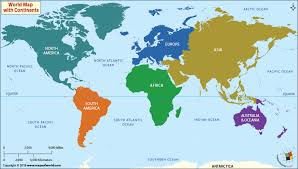
What continents are in the New World?

a)

North America

b)

South America

c)

Europe

d)

Asia

e)

Africa

46.

What continents are in the Old World?

a)

North America

b)

South America

c)

Europe

d)

Asia

e)

Africa

47.

What is being illustrated in the image below?

a)

Triangular Trade

b)

Voyage of Spanish Explorers

c)

States in the New World

48.

What European country began the transatlantic slave trade?

a)

Great Britain

b)

France

c)

Spain

d)

Portugal

49.

Part of triangular trade during which enslaved Africans were transported across the Atlantic Ocean to America.

a)

Middle passage

b)

Cash crops

c)

First leg

d)

Journey to the center of the earth

50.

What country speaks Portuguese today because of the Treaty of Tordesillas?

a)

Mexico

b)

Brazil

c)

Peru

d)

Columbia