
 Worksheets
Chemistry I Chapter 5 Review
Total questions: 45
Worksheet time: 23mins
Name
Class
Date
1.
An s orbital is in the shape of a dumbbell.
a)
True
b)
False
2.
As the amount of energy carried by a wave decreases, its wavelength increases.
a)
True
b)
False
3.
There are a total of 5 different types of d-orbitals.
a)
True
b)
False
4.
Ten electrons can exist in a p-orbital.
a)
True
b)
False
5.
The photoelectric effect describes the emission of electrons from a metal’s surface when light at a specific frequency shines on it.
a)
True
b)
False
6.
The Heisenberg uncertainty principle states that it is impossible to detect the position of an electron or velocity of an electron.
a)
True
b)
False
7.
Although the precise location of an electron cannot be determined, it is possible to determine the probability that an electron will occupy a certain region around the nucleus
a)
True
b)
False
8.
An element can be identified by the characteristic bright-line atomic emission spectrum it can produce.
a)
True
b)
False
9.
[Kr]5s2 4d10 5p5 is the correct electron configuration for the element Bromine.
a)
True
b)
False
10.
Valence refers to the total number of electrons that exist in the orbitals that occupy the outermost energy level of an atom.
a)
True
b)
False
11.
The maximum number of allowed valence electrons in any atom is 8.
a)
True
b)
False
12.
Which is the correct number of valence electrons in the element Gallium (Ga)?
a)
13
b)
31
c)
1
d)
3
13.
Which is the correct number of valence electrons in the element Sulfur (S)?
a)
16
b)
6
c)
2
d)
4
14.
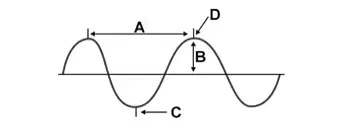
Which label identifies the amplitude of the wave shown?
a)
A
b)
B
c)
C
d)
D
15.
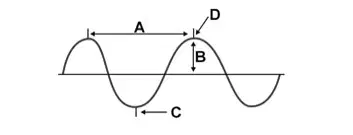
Which label identifies the wavelength of the wave shown?
a)
A
b)
B
c)
C
d)
D
16.
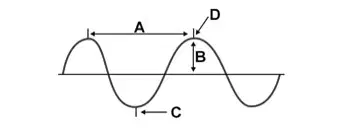
Which label identifies the trough of the wave shown?
a)
A
b)
B
c)
C
d)
D
17.
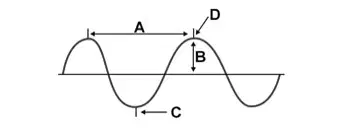
Which label identifies the crest of the wave shown?
a)
A
b)
B
c)
C
d)
D
18.
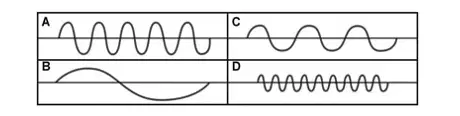
Which diagram shows a wave with the highest frequency?
a)
A
b)
B
c)
C
d)
D
19.
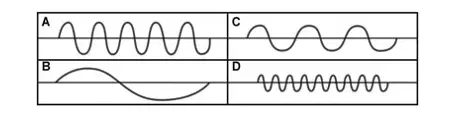
Which diagram shows a wave with the longest wavelength?
a)
A
b)
B
c)
C
d)
D
20.
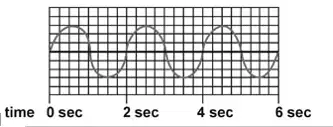
Which is the frequency of the wave shown?
a)
2 Hz
b)
0.5 Hz
c)
2 sec
d)
3 h
21.
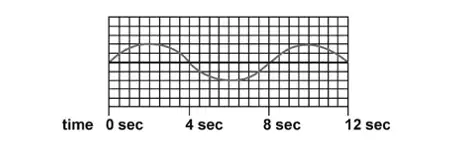
Which is the frequency of the wave shown?
a)
8 sec
b)
0.125 Hz
c)
4 sec
d)
0.5 Hz
22.
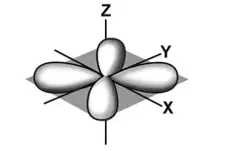
Which type of orbital is shown?
a)
s
b)
p
c)
d
d)
f
23.
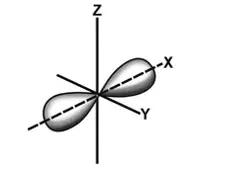
Which type of orbital is shown?
a)
s
b)
p
c)
d
d)
f
24.
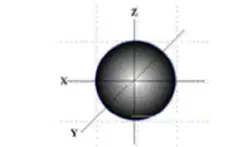
Which type of orbital is shown?
a)
s
b)
p
c)
d
d)
f
25.
Which element has the electron configuration 1s2 2s2 2p6 3s2 3p6 4s2 3d4?
a)
Titanium (Ti)
b)
Chromium (Cr)
c)
Sulfur (S)
d)
Selenium (Se)
26.
Which is the correct electron configuration for the element Molybdenum (Mo)?
a)
1s2 2s2 2p6 3s2 3p6 4s2 3d4
b)
1s2 2s2 2p6 3s2 3p6 4s2 3d10 4p6 5s6
c)
1s2 2s2 2p6 3s2 3p6 4s2 4d10 4p6 5s2 5d4
d)
1s2 2s2 2p6 3s2 3p6 4s2 3d10 4p6 5s2 4d4
27.
Which of these elements has 5 valence electrons?
a)
Boron (B)
b)
Rubidium (Rb)
c)
Vanadium (V)
d)
Arsenic (As)
28.
Which of these elements has 1 valence electron?
a)
Boron (B)
b)
Rubidium (Rb)
c)
Vanadium (V)
d)
Arsenic (As)
29.
Which of these elements has 3 valence electrons?
a)
Boron (B)
b)
Rubidium (Rb)
c)
Vanadium (V)
d)
Arsenic (As)
30.
Which is the correct electron dot structure for the element Fluorine (F)?
a)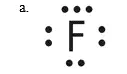
Option 1
b)
Option 2
c)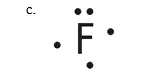
Option 3
d)
Option 4
31.
Use Plank’s constant, 6.626 X 10^-34, to solve the following: What is the amount of energy carried by a photon that has a frequency of 5.71 X 10^14 Hz?
a)
525 nm
b)
3.78 X 10^-19 J
c)
1.14 X 10^-8 J
d)
8.62 X 10^47 J/s
32.
What is the frequency of a light wave with a wavelength of 680 nm?
a)
2.04 X 10^9 Hz
b)
2.04 s
c)
2.27 X 10^-15 Hz
d)
4.41 X 10^14 Hz
33.
A photon is emitted from an atom with an energy of 4.25 X 10^-19 J. What is the wavelength of the photon?
a)
4.68 X 10^2 nm
b)
2.73 X 10^-4 m
c)
1.28 X 10^-10 m
d)
6.42 X 10^14 m
34.
How many valence electrons are present in silicon?
a)
One
b)
Two
c)
Four
d)
Six
35.
How many valence electrons are present in Francium?
a)
One
b)
Two
c)
Four
d)
Six
36.
How many valence electrons are present in Lead?
a)
One
b)
Seven
c)
Four
d)
Six
37.
When a potassium compound is placed in a flame, energy is released and a violet color is produced. This energy release is due to__________________________.
a)
the release of gamma rays from the nucleus
b)
the return of excited electrons to lower energy levels
c)
the movement of electrons to higher energy levels
d)
the absorption of photons by electrons
38.
What is the electron configuration for oxygen?
a)
1s2 2s2
b)
1s2 2s2 2p4
c)
1s2 2s2 2p6
d)
1s2 2s2 2p6 3s2
39.
What is the electron configuration for Neon?
a)
1s2 2s2
b)
1s2 2s2 2p4
c)
1s2 2s2 2p6
d)
1s2 2s2 2p6 3s2
40.
What is the electron configuration for Magnesium?
a)
1s2 2s2
b)
1s2 2s2 2p4
c)
1s2 2s2 2p6
d)
1s2 2s2 2p6 3s2
41.
Which of these orbital diagrams represents a chlorine atom in the ground state?
a)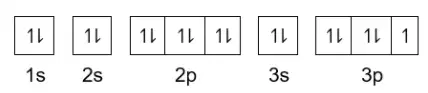
a
b)
b
c)
c
d)
d
42.
The minimum amount of energy that can be gained or lost by an atom is known as a ____________________.
a)
Quantum
b)
Increases
c)
Decreases
d)
Hund's Rule
e)
Electron Configuration
43.
The ____________________ principle states that a maximum of two electrons may occupy a single atomic orbital, but only if the electrons have opposite spins.
a)
Pauli's Exclusion Principle
b)
Increases
c)
Decreases
d)
Hund's Rule
e)
Electron Configuration
44.
The arrangement of electrons in an atom is called the ____________________ of an atom.
a)
Electron Configuration
b)
Increases
c)
Decreases
d)
Hund's Rule
e)
Light
45.
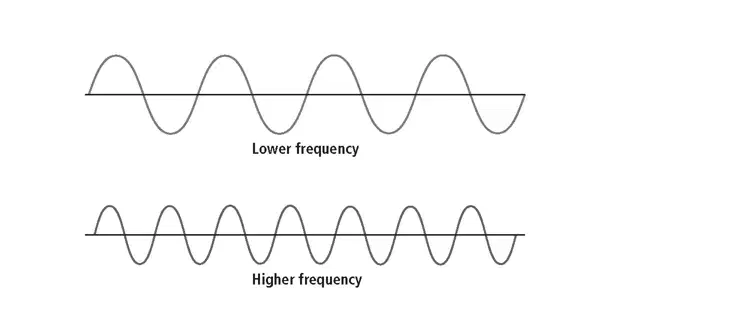
Look at the illustration of the two waves. As the frequency of a wave decreases, the wavelength of the wave ____________________.
a)
Increases
b)
Decreases
c)
Hund's Rule
d)
Electron Configuration
e)
Light
100 %

