
 Worksheets
Types of Bones and Bone Tissue
Total questions: 80
Worksheet time: 59mins








Match the following NAMES to the Letters of each bone
A
Cranium
B
Vertebra
C
Humerus
D
Carpals
E
Metacarpals
Drage and dro each label to its correct part of the bone.
marrow
periosteum
epiphysis
hyaline cartilage
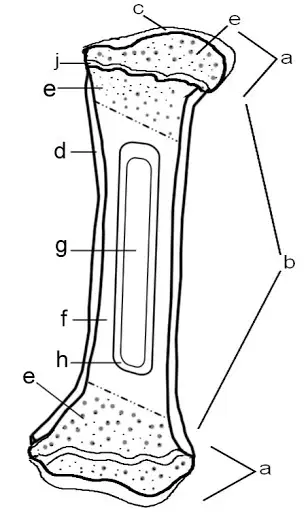
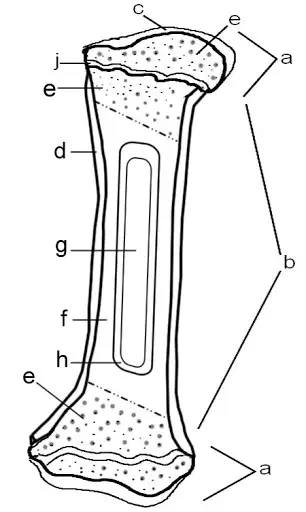
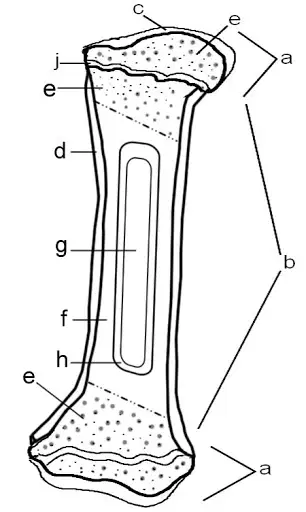
Label the adult long bone!
epiphyseal line
medullary cavity
proximal epiphysis
articular cartilage
distal epiphysis
spongy bone
compact bone
yellow bone marrow
endosteum
periosteum

#9 in the diagram is: (a)
Mark the correct position of the diaphysis and one of the epiphysis

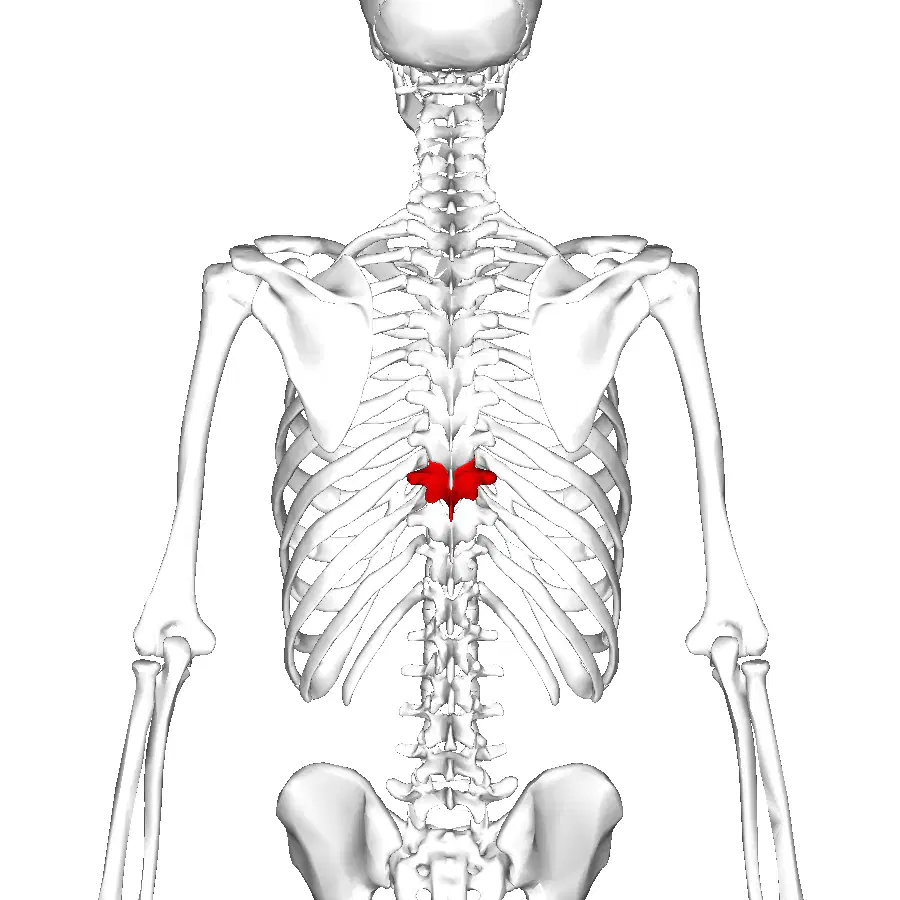
Match the images of bones to their bone shape.

short bones

long bones

flat bones

irregular bones

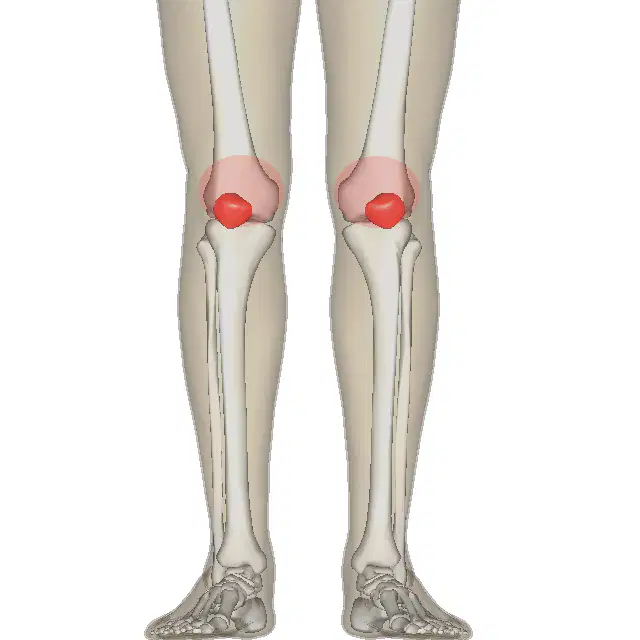
sesamoid bones
#7 in the diagram is: (a)

Match the following
A
Haversian canal
B
Osteocyte
C
Canaliculi
D
Osteon
Identify the area that consists of compact bone

Volkmann's canal
F
Haversian canal
G
lacunae
H
lamellae
I
Where fats and triglycerides are stored
Match the following NAMES to the letters of each bone indicated in the diagram
A
Cranium
B
Vertebrae
C
Humerus
D
Carpals
E
Metacarpals
Which label points to Sharpey's fibers?
Which number is pointing to a lacuna?
Label the bones in the human body!
Part of the bone where red blood cells are produced.
The carpals could be classified as
Maxilla
Ulna
Bones that have complex/weird shapes are called...
Flat bones
Irregular bones
Sesamoid bones
Long bones
Maxilla
Ulna

What is the name of the Sesamoid bone in the knee?
Papilla
Patella
Palate
Paries
What is the main function of a Sesamoid bone?
To protect your internal organs.
To protect tendons and joints, and improve their movement.
To provide strength and structure.
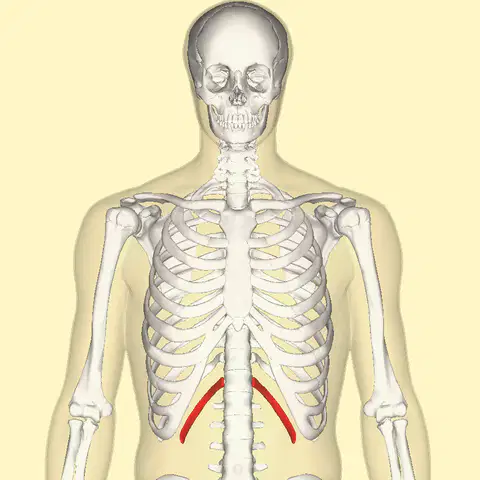
Which of these are flat bones?
Radius
Phalanges
Sternum
Coccyx
What is the main function of short bones?
To provide muscle attachment
To protect vital organs.
To provide structural support and stability.
To provide better movement.
What is the main function of long bones?
To elongate the body.
Provide strength and mobility.
To balance your hormones.
To give you bigger muscles.
What is the main function of long bones?
Protection
Shape
Support
Movement
Fibrous, superficial covering that protects diaphysis
Periosteum
Red Bone Marrow
Medullary Cavity
Compact Bone
Epiphyseal plate
Bones are comprised of which of the following tissues? Check all that apply.
blood
nervous tissue
dense connective tissue
Which of the following are true about bones (click all that apply).
Bones are 'alive'.
considered non living tissue
Bones provide attachment points for muscles
Bones store inorganic salts.

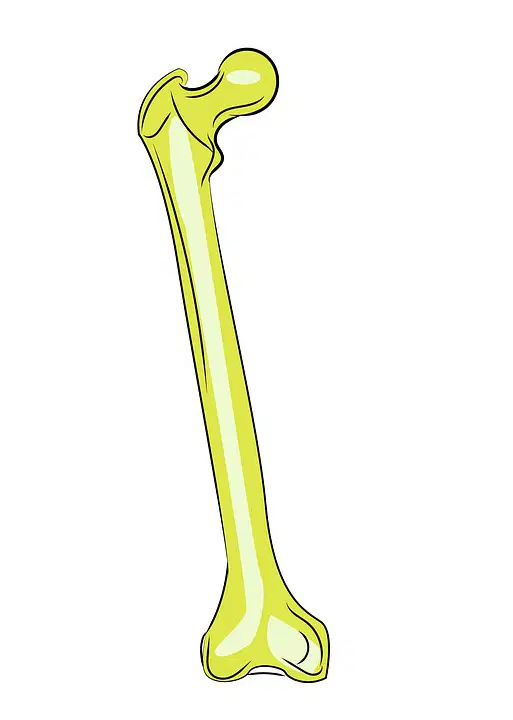
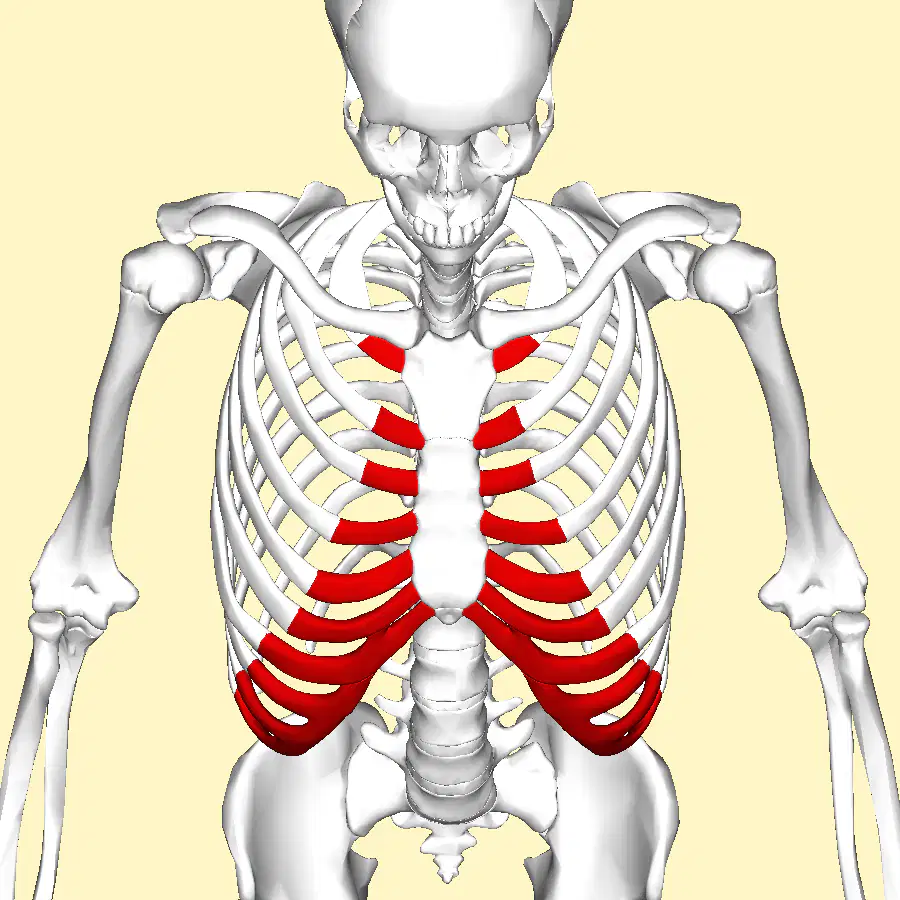
The bones shown in red are the femur, which is a long bone. Which of the following are true of long bones? Click all that apply.
Long and Narrow
Have expanded ends
Cube like in shape
Includes sesamoid bones
Are plate like with broad surfaces
Bones of the cranium (area surrounding the brain) are classified as...
flat bones because they have expanded ends.
flat bones because they are platelike with broad surfaces.
short bones because they are cubelike and embedded in tendons.
long bones they have expanded ends.

Which term refers to the expanded end of a long bone?
trabeculae
metaphysis
diaphysis
epiphysis

#4 in the diagram is identifying the
metaphysis
epiphysis
dipahysis
trabeculae
Articular cartilage can be found...
on the diaphysis of long bones.
on the epiphysis of long bones.
in cancellous bone.
only in flat bones.
Which of the following are true of the periosteum? Check all that apply.
It lines spaces and cavities within the bone.
It is attached to the bone.
It is continuous with ligaments and tendons that might be attached to the bone.
It is a dense connective tissue that encloses a bone

Which of the following are true of trabeculae?
make up spongy bone
bone marrow is located in the gaps it provides.
it is only located in long bones
it helps reduce the weight of the bone
A mature bone cell is known as an...
oestoblast
ostritch
osteocyte
osteotomy
Cells that build bone are the.....
osteoclasts
osteoblasts
osteocytes
osteometrics
Osteoclasts are....
stem cells that give rise to osteoblasts.
cells that are formed from stem cells and go on to mature into bone cells.
cells that break down bone.
fully matured bone cells.
In adult bones, which cavity contains yellow marrow and fat?
orbital
medullary
spinal
matrix
Which part of the bone stores fat?
yellow bone marrow
red bone marrow
spongy bone
compact bone
Where are red blood cells produced?
compact bone
red bone marrow
spongy bone
yellow bone marrow
What is the name of the outer membrane that surrounds bones?
compact bone
periosteum
spongy bone
bone marrow
An example of short bone.
carpals
vertebrae
skull
patella
Osteoblasts are...
cells that create bone
cells that break down old cells in the medullary cavity
formation of osseous tissue from fibrous tissue
mature bone cells
The term for cartilage becoming bone is
osteoblast
osteoclast
ossification
degeneration
What part of bone is less dense and has trabeculae?
Compact
Marrow
Spongy
Cuboidal
What is the tissue called that covers the surface of the epiphysis and prevents friction?
Articular Cartilage
Medullary Cavity
Diaphysis
Epiphysis
Soft connective tissue found in the spaces in bones
Trabeculae
Osteon
Osteocyte
Marrow
True or False. Bone structure reflects its function.
True
False
This bone has irregular interconnecting spaces between bony plates.
Spongy bone
Compact Bone
Irregular Bone
Wish Bone
Which of the following is NOT an example of a long bone?
forearm bone
wrist bone
femur
thigh bone

