
NEW
Font size
 Worksheets
Types of Diabetes Mellitus
Total questions: 80
Worksheet time: 40mins
Which statement best characterizes Type 1 Diabetes according to the material?
Inability to produce insulin
Impaired utilization of produced insulin only
Occurs only during pregnancy
Excessive production of insulin
A patient has adequate beta-cell function but their tissues do not effectively respond to insulin. Which diabetes type does this most closely describe?
Type 1 Diabetes
Type 2 Diabetes
Gestational Diabetes (GDM)
No form of diabetes
Which scenario aligns with Gestational Diabetes (GDM) as defined here?
Hyperglycemia due to inability to produce insulin in adolescence
Insufficient insulin production in older adulthood
Impaired utilization of insulin produced outside pregnancy
Diabetes that occurs during pregnancy
According to the flowchart, which statement best characterizes Type 1 diabetes (IDDM)?
Insufficient insulin production in adults over 40; ketoacidosis not common
Autoimmune disorder with no insulin produced, most often before age 15
Mature onset with same characteristics as Type 2 and strong family history
Gestational diabetes that goes away after pregnancy
Which feature is listed under gestational diabetes?
Often familial and lifelong
May have a big baby
Rapid onset with bed wetting
Eye problems and slow onset
In the assessment section, the "3-P's" common to Type 1 and Type 2 include which set?
Polyphagia, polydipsia, polyuria, fatigue, increased UTIs
Polydipsia, pallor, paresthesia, pneumonia
Polyuria, polydipsia, photophobia, pyrexia
Polyphagia, proteinuria, pruritus, palpitations
Which distinguishing assessment feature is listed for Type 1 versus Type 2?
Type 1: slow onset; Type 2: rapid onset
Type 1: decreased weight, thirst, bed wetting, rapid onset; Type 2: decreased weight, eye problems, slow onset
Type 1: eye problems; Type 2: bed wetting
Type 1: increased weight; Type 2: rapid onset
Which diagnostic criterion is stated for confirming diabetes according to the flowchart?
FBG > 100 mg/dl confirmed on the same day
Casual glucose > 150 mg/dl without symptoms
FBG > 126 mg/dl confirmed by repeat testing on another day
Glucose tolerance test < 200 mg/dl
Which complication is specifically associated with poorly controlled Type 1 diabetes in the flowchart?
Hyperosmolar hyperglycemia non-ketonic coma
Electrolyte imbalance
Diabetic ketoacidosis
Lipodystrophy
Which treatment and lifestyle combination is indicated to reduce insulin need in the flowchart?
Oral hypoglycemics and reduced exercise
Diet only
Insulin plus increased exercise
Insulin withdrawal and bed rest
Which classic symptom of Type 1 Diabetes is defined as increased urination?
Polydipsia
Polyphagia
Polyuria
Hypoglycemia
A patient presents with rapid onset of weight loss, fatigue, and increased frequency of infections. Which underlying condition is most consistent with these signs and requires insulin for management?
Type 2 Diabetes Mellitus
Type 1 Diabetes Mellitus
Metabolic Syndrome
Hyperthyroidism
Which triad correctly matches each term with its associated increase in Type 1 Diabetes?
Polyuria—↑ thirst; Polydipsia—↑ hunger; Polyphagia—↑ urination
Polyuria—↑ urination; Polydipsia—↑ thirst; Polyphagia—↑ hunger
Polyuria—↓ urination; Polydipsia—↑ hunger; Polyphagia—↑ thirst
Polyuria—↑ thirst; Polydipsia—↑ urination; Polyphagia—↓ hunger
Considering typical presentation patterns, which age range has peak incidence for Type 1 Diabetes according to the instructional material?
0 to 5 years
5 to 10 years
10 to 15 years
15 to 20 years
A patient presents with frequent urination and excessive thirst. Which pair of symptoms best matches common Type 2 Diabetes manifestations?
Polyuria and polydipsia
Bradycardia and hypotension
Hematuria and jaundice
Photophobia and tinnitus
Which risk factor combination most increases the likelihood of Type 2 Diabetes according to the material?
Active lifestyle and low BMI
Familial tendency and obesity
Adolescence and high HDL cholesterol
Frequent aerobic exercise and low FBS
Fasting blood sugar (FBS) consistent with Type 2 Diabetes is best indicated by which value?
90 mg/dl
110 mg/dl
126 mg/dl or higher
Less than 80 mg/dl
According to the diagnostic criteria, which fasting plasma glucose value supports a diagnosis of diabetes and should be confirmed by repeat testing?
99 mg/dL or below
100–126 mg/dL
Greater than 126 mg/dL
70–99 mg/dL

A random blood glucose measurement of which value, in a patient with classic symptoms of diabetes mellitus, meets diagnostic criteria?
100 mg/dL
140 mg/dL
>200 mg/dL
126 mg/dL
What Hemoglobin A1C percentage is used to diagnose diabetes based on long-term glycemic control over the previous 2–3 months?
Below 5.7%
5.7–6.4%
6.5% or above
>7.5%
In an Oral Glucose Tolerance Test (OGTT) using 75 g oral glucose, which 2-hour blood glucose result indicates diabetes?
99 mg/dL or below
140–199 mg/dL
200 mg/dL or above
>126 mg/dL
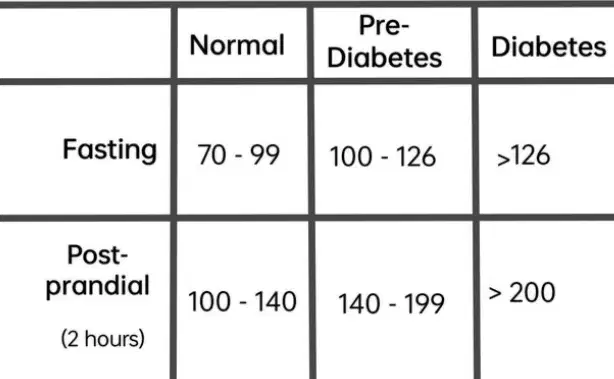
Which range represents normal fasting blood glucose according to the visual guide?
70–99 mg/dL
100–126 mg/dL
>126 mg/dL
140–199 mg/dL
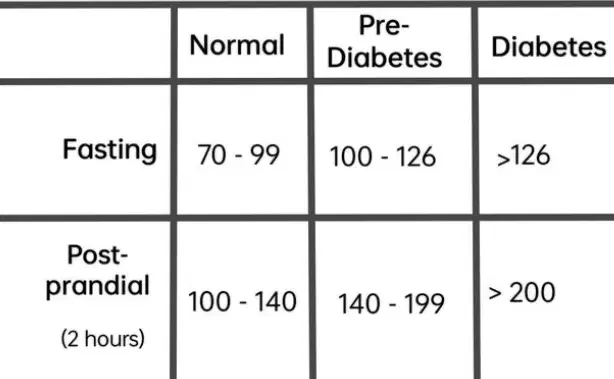
A patient’s 2-hour post-prandial glucose is 160 mg/dL. Based on the guide, how should this result be classified?
Normal
Pre-diabetes
Diabetes
Unclassifiable
A fasting blood sugar of 110 mg/dL most closely aligns with which category on the traffic-light infographic?
Normal (99 mg/dL or below)
Pre-diabetes (100–125 mg/dL)
Diabetes (126 mg/dL or above)
Indeterminate

Which pairing correctly matches the test with its diabetes threshold shown in the materials?
Random blood glucose — 140 mg/dL or above
Fasting plasma glucose — greater than 126 mg/dL
A1C — 5.7% or above
OGTT (2 hours) — 140 mg/dL or below
Which of the following is a primary goal of diabetes treatment highlighted in the material?
Rapid weight loss
Prevent complications
Eliminate the need for monitoring
Increase glucose levels
Which combination best represents core management strategies for diabetes according to the material?
Nutrition therapy, drug therapy, self-monitoring, exercise
Surgery, hypnosis, herbal supplements, meditation
Fasting, high-sugar diet, bed rest, dehydration
Radiation therapy, chemotherapy, massage, aromatherapy
A patient’s glucose meter consistently shows elevated readings. Based on the listed goals and methods, which integrated plan most directly aligns with treatment priorities?
Maintain normal glucose levels through nutrition therapy, appropriate drug therapy (e.g., insulin), self-monitoring, and regular exercise
Focus on preventing symptoms only by reducing physical activity
Increase carbohydrate intake to boost energy while stopping medications
Discontinue self-monitoring to reduce stress and rely solely on annual checkups
According to the diagram, what is the primary role of insulin in cellular glucose handling?
It breaks down glucose inside the cell
It is the key that unlocks the glucose channel
It stores glucose in the liver
It converts glucose to glycogen at the cell surface
Which sequence best describes the steps shown for glucose entry into a cell?
Glucose binds the receptor, channel opens, insulin enters the cell
Insulin binds the insulin receptor, glucose channel opens, glucose enters the cell
Insulin enters the cell, receptor closes, glucose accumulates outside
Channel is always open, glucose passively enters without insulin
What structure directly interacts with insulin to initiate opening of the glucose channel?
Glucose transporter inside the nucleus
Insulin receptor on the cell surface
Mitochondrial membrane
Extracellular matrix
Which insulin type is characterized by an onset of 10–30 minutes, a peak at 30 minutes to 3 hours, and a duration of 3–5 hours?
Rapid-acting insulin
Short-acting insulin
Intermediate-acting insulin
Long-acting insulin
Inhaled insulin
Regular insulin (Humulin R, Novolin R) falls under which category based on an onset of 30 minutes–1 hour, peak of 2–5 hours, and duration of 5–8 hours?
Rapid-acting
Short-acting
Intermediate-acting
Long-acting
Ultra-long-acting
NPH insulin (Humulin N, Novolin N) has a duration of 12–18 hours. What is its typical peak activity window?
30 minutes–3 hours
2–5 hours
4–12 hours
Less defined or no pronounced peak
60 minutes
Which long-acting insulin profile is described as having an onset of 0.8–4 hours, less defined or no pronounced peak, and duration of 16–24 hours?
Lispro (Humalog)
Aspart (NovoLog)
Detemir (Levemir)
Afrezza
NPH
Inhaled insulin (Afrezza) has a peak at approximately 60 minutes. What is its onset range?
10–30 minutes
30 minutes–1 hour
1.5–4 hours
0.8–4 hours
12–15 minutes
Which insulin category is best matched to covering postprandial spikes due to its rapid onset and short duration?
Intermediate-acting insulin
Long-acting insulin
Short-acting insulin
Rapid-acting insulin
Inhaled insulin
A patient needs basal coverage with minimal peak to reduce nocturnal hypoglycemia. Which insulin profile fits best?
Rapid-acting: onset 10–30 min; peak 30 min–3 hr; duration 3–5 hr
Short-acting: onset 30 min–1 hr; peak 2–5 hr; duration 5–8 hr
Intermediate-acting: onset 1.5–4 hr; peak 4–12 hr; duration 12–18 hr
Long-acting: onset 0.8–4 hr; less defined peak; duration 16–24 hr
Inhaled: onset 12–15 min; peak 60 min; duration 2.5–3 hr
Which option correctly pairs insulin type with a 12–18 hour duration?
Rapid-acting
Short-acting
Intermediate-acting
Long-acting
Inhaled
Compare short-acting versus rapid-acting insulin: which has a later onset and longer duration?
Rapid-acting has later onset and longer duration
Short-acting has later onset and longer duration
Both have identical onset and duration
Short-acting has earlier onset but longer duration
Rapid-acting has later onset but shorter duration
Which list correctly identifies examples of rapid-acting insulin analogs?
Glargine, detemir, degludec
Lispro, aspart, glulisine
Regular (Humulin R), Novolin R
NPH (Humulin N, Novolin N)
Afrezza
A patient has low blood sugar around 3:00 AM and high blood sugar upon waking. What is the most likely cause?
Dawn Phenomenon
Somogyi Effect
Postprandial hyperglycemia
Insulin resistance only
According to the diagram, which treatment approach is recommended for Dawn Phenomenon?
Decrease evening insulin to prevent hypoglycemia
Increase medication (e.g., increase basal insulin) or adjust timing to improve control
Stop basal insulin and rely on mealtime insulin only
Add glucagon at bedtime
To differentiate Dawn Phenomenon from Somogyi Effect, what middle-of-the-night (around 03:00) blood sugar pattern indicates Somogyi Effect?
High or normal blood sugar
Low blood sugar
Stable blood sugar with no change
Elevated ketone levels
Which adjustment aligns with treating Somogyi Effect?
Increase basal insulin dose
Decrease evening insulin or adjust timing to prevent hypoglycemia
Add rapid-acting insulin at breakfast
Increase carbohydrate intake at lunch
Which statement best describes the role of oral agents in Type 2 Diabetes Mellitus?
They replace insulin entirely by stopping its production
They aid the body in releasing insulin
They primarily treat Type 1 Diabetes Mellitus
They eliminate the need for any combination therapy
Oral agents for Type 2 Diabetes target three primary defects. Which set correctly lists these defects?
Insulin excess, pancreatic inflammation, renal glucose loss
Insulin resistance, decreased insulin production, increased hepatic glucose production
Autoimmune beta-cell destruction, ketone overproduction, electrolyte imbalance
Peripheral neuropathy, retinopathy, nephropathy
Which oral antihyperglycemic agent is identified as the most widely used in this class?
Sulfonylureas
Metformin
Thiazolidinediones
DPP-4 inhibitors
Metformin is noted as the most effective first-line treatment for which condition?
Type I diabetes mellitus
Type II diabetes mellitus
Gestational diabetes
Prediabetes only
Which action of metformin directly helps lower blood glucose levels?
Stimulates pancreatic beta-cell insulin secretion
Reduces hepatic glucose production
Delays gastric emptying
Blocks renal glucose reabsorption
A patient scheduled for a CT scan with IV contrast is taking metformin. What is the correct precaution?
Continue metformin without changes
Stop metformin only after the procedure
Stop metformin 48 hours before and after the procedure with IV contrast
Switch to insulin immediately
Which recommendation minimizes gastrointestinal upset when taking metformin?
Take on an empty stomach
Take with food
Take with grapefruit juice
Crush and take sublingually
Which statement best describes metformin’s effect on insulin?
It replaces insulin in the body
It enhances insulin sensitivity and uptake by cells
It prevents insulin degradation
It increases insulin secretion from the pancreas
Which lifestyle consideration should patients avoid while using metformin?
Excess alcohol consumption
Regular exercise
High-fiber diet
Adequate hydration
Which drug is a sulfonylurea used to increase insulin production by the pancreas?
Metformin
Glimepiride (Amaryl)
Pioglitazone
Sitagliptin
What is a primary action of sulfonylureas in managing blood glucose?
Decrease hepatic glucose output
Increase insulin production by the pancreas
Block carbohydrate absorption in the gut
Stimulate glucagon release
Which pair lists common brand names correctly associated with a sulfonylurea?
Glipizide — Glucotrol, Glucotrol XR
Glyburide — Januvia
Glimepiride — Actos
Metformin — Amaryl
Which side effect is most directly linked to the mechanism of sulfonylureas?
Hyponatremia due to diuresis
Hypoglycemia from increased insulin secretion
Hyperkalemia from potassium retention
Lactic acidosis from mitochondrial inhibition
Which clinical sign is most characteristic of Diabetic Ketoacidosis and involves deep, rapid breathing?
Cheyne–Stokes respirations
Biot respirations
Kussmaul respirations
Apneustic respirations
According to the material, DKA typically has an onset over which time frame?
Minutes to 1 hour
4–10 hours
12–24 hours
Several days
A patient with DKA may have breath that smells like which item?
Mint lozenges
Juicy fruit gum
Garlic
Alcohol
Which combination best lists essential treatment needs highlighted for DKA?
Antibiotics, oxygen, bed rest
Hydration, insulin, electrolyte replacement
Beta-blockers, diuretics, anticoagulants
Surgery, steroids, radiation
Which set of findings aligns with DKA according to the diagram?
Bradycardia, hypertension, alkalosis
Tachycardia, hypotension, acidosis
Normal heart rate, normal blood pressure, neutral pH
Bradycardia, hypotension, alkalosis
What blood glucose level threshold is specifically associated with DKA in the diagram?
>100 mg/dL
>180 mg/dL
>240 mg/dL
>400 mg/dL
Which historical factors are linked to the development of DKA as shown?
Excess insulin, renal failure, stroke
Lack of insulin, GI upset, febrile illness
High-fat diet, dehydration, asthma
Allergy, trauma, hypoglycemia
According to the diagram, hypoglycemia in adults is defined as a blood glucose level below which threshold?
90 mg/dL
80 mg/dL
70 mg/dL
60 mg/dL
Which of the following is a common early symptom of hypoglycemia?
Chest pain
Hunger
Rash
Constipation
For a person with diabetes, which cause listed in the diagram most directly leads to hypoglycemia?
Too little insulin
Too much insulin
Eating more than usual
Sedentary behavior
Which step is first in the 15-15 rule for managing hypoglycemia?
Wait 15 minutes
Eat/drink 15 grams of fast-acting carbs
Test blood glucose
Inject glucagon
Which item is depicted as a source of fast-acting carbohydrates in the 15-15 rule?
Whole-grain bread
Diet soda
Candy bar or sugary drink
High-protein shake
After following the 15-15 rule, when should you repeat the cycle according to the diagram?
If blood sugar remains above 90 mg/dL
If blood sugar remains below 70 mg/dL
Only if symptoms persist for 24 hours
Never repeat the cycle
When administering a glucagon injection during severe hypoglycemia, what angle and site are recommended in the diagram?
45° into the upper arm
90° into the thigh or buttock
30° into the abdomen
90° into the forearm
Which situation without diabetes is listed as a cause of hypoglycemia in the diagram?
High-fiber diet
Alcohol use
Vitamin deficiency
High altitude
Which statement best describes how alcohol affects glucose production by the liver?
Alcohol stimulates glucose production, raising blood sugar
Alcohol has no effect on hepatic glucose production
Alcohol inhibits glucose production, and greater consumption increases the inhibition
Alcohol only inhibits glucose production in non-diabetics
A patient with diabetes plans to drink several alcoholic beverages at a party. Based on the information provided, what is the primary risk to anticipate and plan to prevent?
Hyperglycemia due to increased hepatic glucose output
Severe hypoglycemia, which can occur in both Type 1 and Type 2 diabetics
Dehydration leading to insulin resistance
Electrolyte imbalance causing ketoacidosis
Which preventive action is specifically recommended annually for patients with Diabetes Mellitus to protect vision?
Annual physical exam
Annual eye exam
Monofilament test
Kidney function lab work
During the annual physical for a patient with Diabetes Mellitus, which test is used to assess foot sensation and screen for neuropathy?
Doppler ultrasound
Monofilament test
X-ray
Electrocardiogram
Which item is advised for patients with Diabetes Mellitus to wear to communicate their condition in emergencies?
Compression socks
Alert bracelet
Fitness tracker
Medical mask
Which combination correctly lists components of the annual physical for Diabetes Mellitus care?
Vision screening, dental cleaning, allergy test
Kidney function lab work, urine sample, blood pressure, examine hands/feet, monofilament test
Chest X-ray, spirometry, echocardiogram
Stool test, colonoscopy, genetic testing
What vaccination schedule is recommended for patients with Diabetes Mellitus according to the guidance?
One-time tetanus booster
Monthly COVID-19 vaccination
Yearly influenza vaccination
No vaccinations are recommended

