
 Worksheets
Unit 2: Economics Test Review
Total questions: 55
Worksheet time: 28mins
A ________ economy combines elements of both a market economy & command economy to create a system where private businesses and government both direct the economy.
Do any countries today operate as pure market economies?
In a command economy, who sets the prices for goods and services?
Which country is an example of a command economy?
What level of individual freedom exists in a command economy?
Who owns the resources in a market economy?
Which of the following is an example of a mixed economy?
In a mixed economy, who owns the resources?
Why is government involvement beneficial in a mixed economy?
What are the three fundamental questions all economic systems must answer?
Can you open your own restaurant in a command economy?
A country where the government provides healthcare and education, but most businesses are privately owned, is an example of:
What does GDP stand for?
What is the unemployment rate?
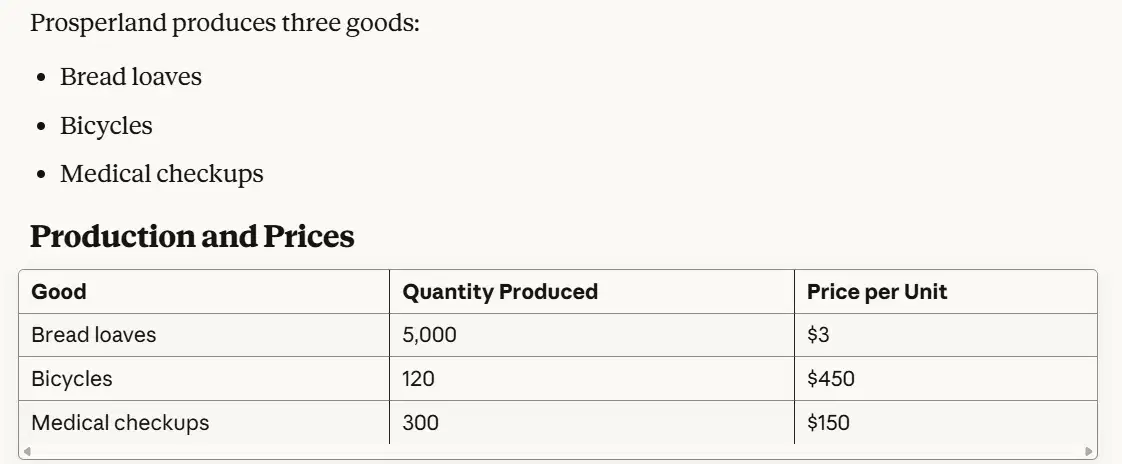
Given the production amounts and price per unit, calculate Prosperland's GDP from last Year.
According to the Law of Demand, what happens to quantity demanded when prices increase?
A coffee shop increases the price of lattes from $5 to $8. What will happen to the quantity demanded for lattes?
What is demand?
If consumers' incomes increase significantly, what happens to demand for most goods?
A new style of shoes becomes extremely popular among teenagers. What happens to demand for these shoes?
If the price of coffee increases significantly, what happens to the demand for tea (a substitute)?
If people stop buying gaming consoles, what happens to the demand for video games?
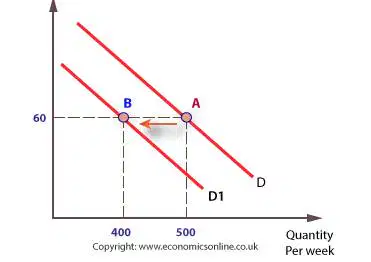
When the demand curve shifts to the left, what does this indicate?
According to the Law of Supply, what happens to quantity supplied when prices increase?
The price of wheat drops from $7 per bushel to $4 per bushel. What happens to quantity supplied?
What is supply?
What is a supply schedule?
New technology allows farmers to harvest crops more efficiently. What happens to the supply of crops?
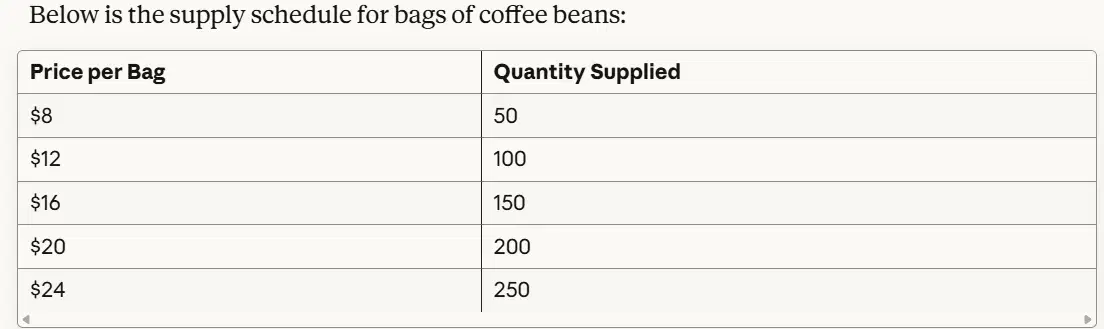
Attached is the supply schedule for bags of coffee beans: Question: If the price increases from $12 to $20, by how much does the quantity supplied increase?
What are the three main supply shifters?
What is economics?
A) The study of how people make money
B) The study of how people/societies allocate scarce resources to satisfy unlimited wants
C) The study of government spending
D) The study of business management
Economics helps us understand:
A) Only how businesses operate
B) Only how governments make decisions
C) How individuals, businesses, and governments make choices about resources
D) Only how to invest in stocks
True or False: Economics only applies to wealthy countries.
True
False
The main focus of economics is:
A) Making as much money as possible
B) Understanding how people make choices when resources are limited
C) Studying only large corporations
D) Learning about the stock market
Which of the following is an economic decision?
A) Choosing between buying lunch or saving money
B) A government deciding how much to spend on education
C) A business choosing what products to make
D) All of the above
What is scarcity?
A) When people don't have enough money
B) The basic economic problem where unlimited wants exceed limited resources
C) When stores run out of products
D) Only a problem for poor people
True or False: Scarcity only affects individuals, not businesses or governments.
True
False
Scarcity exists because:
A) People are greedy
B) There aren't enough jobs
C) Human wants are unlimited but resources are limited
D) The government doesn't print enough money
Which statement about scarcity is correct?
A) Scarcity can be eliminated with better technology
B) Only poor countries experience scarcity
C) Scarcity affects everyone, regardless of wealth
D) Scarcity only applies to natural resources
True or False: Even wealthy people experience scarcity.
True
False
Sarah has $20 and wants to buy a $15 book and a $12 movie ticket, but can't afford both. This is an example of:
A) Time scarcity
B) Money scarcity
C) Stuff scarcity
D) Resource scarcity
Jake has 2 hours before his curfew and wants to hang out with friends, study for a test, and play video games. Jake knows he will not be able to do all three and has to choose. This is an example of:
A) Time scarcity
B) Money scarcity
C) Stuff scarcity
D) Resource scarcity
A store only has 3 PlayStation 5 consoles left, but 10 customers want to buy them. This is an example of:
A) Time scarcity
B) Money scarcity
C) Stuff scarcity
D) Resource scarcity
True or False: Time scarcity means not having enough hours in the day to do everything you want.
True
False
Which type of scarcity occurs when there aren't enough goods available for everyone who wants them?
A) Time scarcity
B) Money scarcity
C) Stuff scarcity
D) Resource scarcity
What is opportunity cost?
A) The price you pay for something
B) The value of the next best alternative you give up when making a choice
C) The cost of making a mistake
D) The amount of money something costs
Maria chooses to study instead of going to a movie. Her opportunity cost is:
A) The time spent studying
B) The enjoyment/experience she would have gotten from the movie
C) The money she saved by not going to the movie
D) The good grades she'll get from studying
True or False: Opportunity cost only involves money.
True
False
A company decides to use its factory to make cars instead of trucks. The opportunity cost is
A) The cost of making cars
B) The profit they could have made from making trucks
C) The factory building
D) The workers' wages
True or False: Every choice has an opportunity cost.
True
False
The four factors of production are:
A) Natural Resources, Labor, Capital Goods, Entrepreneurship
B) Money, Time, People, Resources
C) Supply, Demand, Price, Quantity
D) Goods, Services, Money, Trade
A farmer's wheat field is an example of which factor of production?
A) Natural Resource
B) Labor
C) Capital Goods
D) Entrepreneurship
The workers in a factory represent which factor of production?
A) Natural Resources
B) Labor
C) Capital Goods
D) Entrepreneurship
The machines and equipment used in a bakery are examples of:
A) Natural Resources
B) Labor
C) Capital Goods
D) Entrepreneurship
True or False: Entrepreneurship is the factor of production that combines land, labor, and capital to create goods and services.
True
False

