wayground logo

Free Printable Worksheets

Font size

S
M
L
XL
Worksheets

Periodic Table Test 1

Total questions: 43

Worksheet time: 22mins
Name
Class
Date
1.
An element whose properties are similar to calcium is __________
a)
magnesium Mg
b)
potassium K
c)
bromine Br
d)
Iron Fe
2.
Which element is in the Noble Gas group, period 4?
a)
Ne
b)
Kr
c)
Ar
d)
Cl
3.
How many valence electrons does sodium (Na) have?
a)
2
b)
4
c)
1
d)
6
4.
Which two elements share similar properties?
a)
Oxygen and Sulfur
b)
Oxygen and Nitrogen
c)
Oxygen and Helium
d)
Oxygen and Chlorine
5.
Who created/discovered the Periodic Table?
a)
Albert Einstein
b)
Dmitri Mendeleev
c)
Marie Curie
d)
Benjamin Franklin
6.
These have properties of both metals and non metals
a)
Alkali Metals
b)
Halogens
c)
Metalloids
d)
Transition Metals
7.
A brittle, non-conducting, solid might belong to which of the following groups?
a)
Alkali Metals
b)
Halogens
c)
Metalloids
d)
Transition Metals
8.
Silver (Ag) is a member of which group/family of elements?
a)
Alkali Metals
b)
Halogens
c)
Metalloids
d)
Transition Metals
9.
Which particles of an atom go in the center?
a)
proton and neutron
b)
neutron and electron
c)
electron and proton
d)
nucleus
10.
Which particle(s) go outside the nucleus?
a)
proton
b)
neutron
c)
electron
11.
Sodium (Na) is a highly reactive element. Which characteristic of sodium is responsible for its reactivity?
a)
It has 11 protons.
b)
Its atomic mass is 22.990.
c)
It is a non metal.
d)
It has one valence electrons.
12.
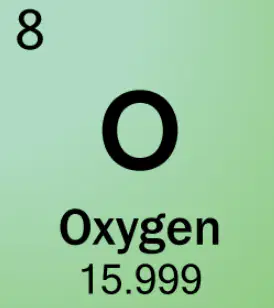
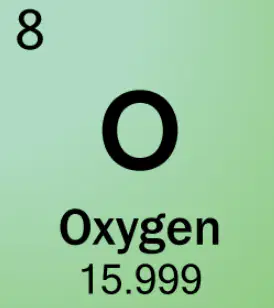
What is the ATOMIC NUMBER of this element?
a)
16
b)
8
c)
0
13.
What is the ATOMIC MASS of this element?
a)
8
b)
16
c)
0
14.
Protons are located in the nucleus of the atom. A proton has
a)
a) No charge
b)
b) A negative charge
c)
c) A positive and a negative charge
d)
d) A positive charge
15.
Neutrons are in the nucleus of the atom. A neutron has
a)
a) A positive charge
b)
b) No charge
c)
c) A negative charge
d)
d) Twice as much positive charge as a proton
16.
Which particle determines the name of the element?
a)
Electron
b)
Protons
c)
Neutron
d)
calgon
17.
The atomic number of an atom is
a)
a) The mass of the atom
b)
b) The number of protons added to the number of neutrons
c)
c) The number of protons
d)
d) Negatively charged
18.
How many protons did you need to add to get to Oxygen?
a)
4
b)
6
c)
8
d)
1
19.
Which two elements would have the same number of energy levels (shells)?
a)
Copper (Cu) and Zinc (Zn)
b)
Nickel (Ni) and Palladium (Pd)
c)
Magnesium (Mg) and Lithium (Li)
20.
What is the number on the element block that tells the number of protons AND determines the identity of the element?
a)
Atomic Mass
b)
Atomic Weight
c)
Atomic Number
21.
Which one of the following elements has the symbol C?
a)
Carbon
b)
Chlorine
c)
Calcium
d)
Copper
22.
Which of the following are two of the most reactive Alkali Metals?
a)
Sodium and Cesium
b)
Cesium and Potassium
c)
Francium and Cesium
d)
Francium and Lithium
23.
What is atomic number of Pb?
a)
80
b)
82
c)
208
24.
Potassium (K) is a member of which group/family of elements?
a)
Alkali Metals
b)
Halogens
c)
Metalloids
d)
Transitional Metals
25.
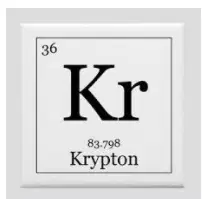
According to the periodic table block below, how many protons does a neutral atom of krypton have?
a)
36
b)
84
c)
48
d)
72
26.
The measure of how a metal reflects light is called
a)
ductility
b)
luster
c)
alloy
d)
malleability
27.
Chlorine (Cl)is a member of which group/family of elements?
a)
Alkali Metals
b)
Halogens
c)
Metalloids
d)
Transition Metals
28.
Which of the following is a characteristic of non metals?
a)
Luster
b)
Brittle
c)
Ductile
d)
Conduct heat/electricity
29.
Determine which atom is being described here: Shiny, has the properties of both metals and nonmetals, and has three valence electrons.
a)
Boron (B)
b)
Germanium (Ge)
c)
Antimony (Sb)
d)
Tin (Sn)
30.
Which two elements are in the same Period?
a)
Lithium and Magnesium
b)
Boron and Carbon
c)
Potassium and Sodium
d)
Zinc and Nitrogen
31.
Which of the following element is considered a non metal?
a)
Lithium (Li)
b)
Sulfur (S)
c)
Potassium (K)
d)
Nickel (Ni)
32.
All the elements in the same period have the same _____________________
a)
Valence Electrons
b)
Energy Shells or Orbitals
c)
Atomic Mass
d)
Atomic Number
33.
Lithium (Li) is a member of which group/family of elements?
a)
Alkali Metals
b)
Halogens
c)
Noble Gases
d)
Transition Metals
34.
All the elements in the same group have the same _____________________
a)
Valence Electrons
b)
Energy Shells or Orbitals
c)
Atomic Mass
d)
Atomic Number
35.

Which of the following elements is a noble gas?

a)

Oxygen

b)

Sulfur

c)

Neon

d)

Magnesium

36.

What is the charge of an electron?

a)

Positive

b)

Negative

c)

No charge

d)

Double positive

37.

Which group on the periodic table contains the most reactive metals?

a)

Halogens

b)

Noble Gases

c)

Alkali Metals

d)

Metalloids

38.

Which of the following elements is a noble gas?

a)

Oxygen (O)

b)

Sodium (Na)

c)

Neon (Ne)

d)

Phosphorus (P)

39.

What is the main characteristic of transition metals?

a)

They are always non-conductive

b)

They are found only in Group 1

c)

They have variable oxidation states

d)

They are gases at room temperature

40.

Which subatomic particle has a negative charge?

a)

Neutron

b)

Nucleus

c)

Proton

d)

Electron

41.

Which of the following elements is classified as a metalloid?

a)

Iron (Fe)

b)

Chlorine (Cl)

c)

Calcium (Ca)

d)

Silicon (Si)

42.

What is the main characteristic of noble gases?

a)

They are good conductors of electricity

b)

They are found in Group 1

c)

They have a full outer electron shell

d)

They are highly reactive

43.

Which subatomic particle is responsible for the chemical behavior of an atom?

a)

Proton

b)

Neutron

c)

Electron

d)

Photon