
 Worksheets
CS13 Progressive Era Summative Review
Total questions: 41
Worksheet time: 21mins
Name
Class
Date
1.
Which of the following is the BEST reason that the Progressives fought for the secret ballot i.e., anonymous voting?
a)
to stop voter intimidation
b)
to lower voter turnout
c)
to allow felons to vote
d)
to end paper hand counts in elections
2.
In the late 1800’s and early 1900’s the Progressive movement primarily targeted
a)
political machines and their bosses
b)
diseases caused by environmental disasters
c)
growing congressional and presidential power
d)
doing away with recall votes and initiatives
3.
The Farmers’ Alliances and the Populist Party were organized movements which were formed in reaction to
a)
the anti-farmer policies of Theodore Roosevelt
b)
the effects of industrialization
c)
the negative impact of hydroelectric dams
d)
the end of the Civil War
4.
Which of the following is something that members of the Progressive movement would dislike the most?
a)
antitrust laws
b)
business monopolies
c)
the initiative
d)
voting in elections
5.
Muckrakers should BEST be associated with
a)
television broadcasting
b)
running for political office
c)
writing in magazines
d)
technological innovations
6.
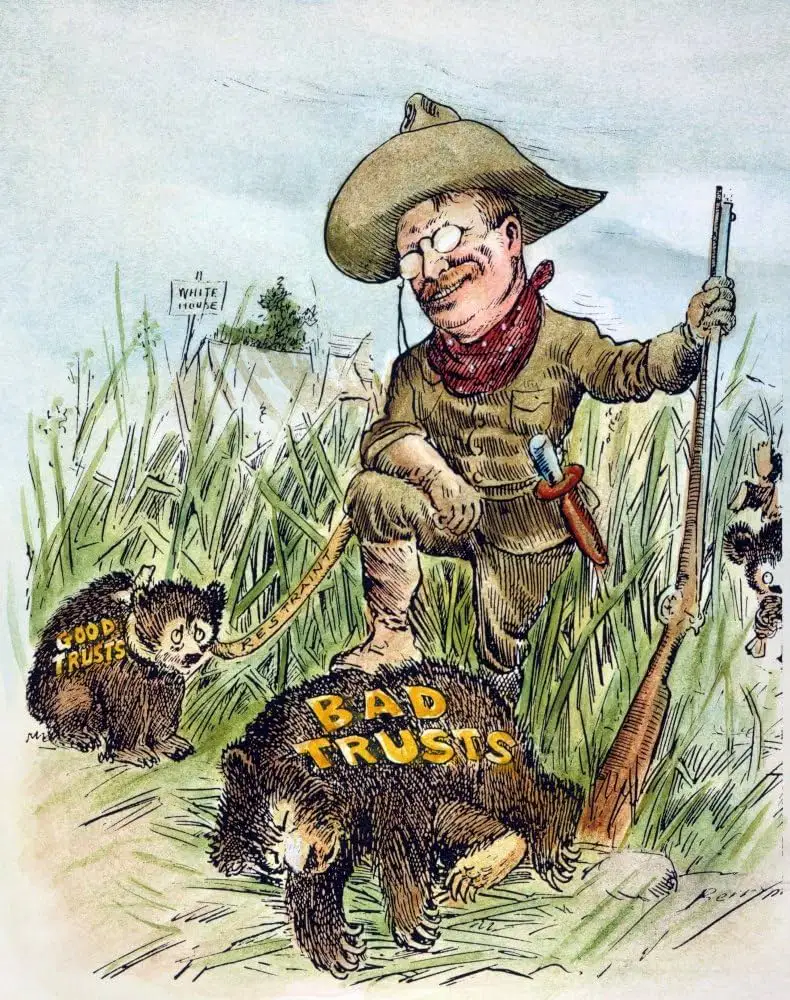
The above political cartoon suggests that President Theodore Roosevelt
a)
was against hunting animals unless you were going to eat them
b)
signed more conservation laws than any other president in history
c)
was successful at regulating monopolies
d)
tried to end investigative journalism by making it illegal
7.
Which of the following is something that members of the Progressive movement would like the most?
a)
overturning antitrust laws
b)
competition among businesses
c)
the 28th Amendment
d)
building a pipeline that brings Great Lakes water to southern farmers
8.
The 1890 U.S. census led some people to conclude that there was no longer a frontier line in the West. Early in the 20th century, President Theodore Roosevelt advocated the conservation of the nation’s natural resources. These events signaled a change in how people perceived
a)
urban areas
b)
wilderness areas
c)
centers of industry and technology
d)
underground sewers
9.
All of the following were Progressive reforms that were meant to address the ills associated with industrial capitalism EXCEPT
a)
anti- trust suits (e.g., Northern Securities Company)
b)
antitrust legislation (Clayton Antitrust Act)
c)
railroad regulation (Hepburn Act)
d)
consumer protection legislation (e.g., Pure Food and Drug Act & Meat Inspection Act)
e)
free trade agreements (e.g., North Atlantic Free Trade Association)
10.
In 1913 the Federal Reserve Act was passed to
a)
control the nation’s money supply and regulate the banking system
b)
regulate railroad rates
c)
help clean up the environment
d)
protect Washington D.C. from pollution and overpopulation
11.
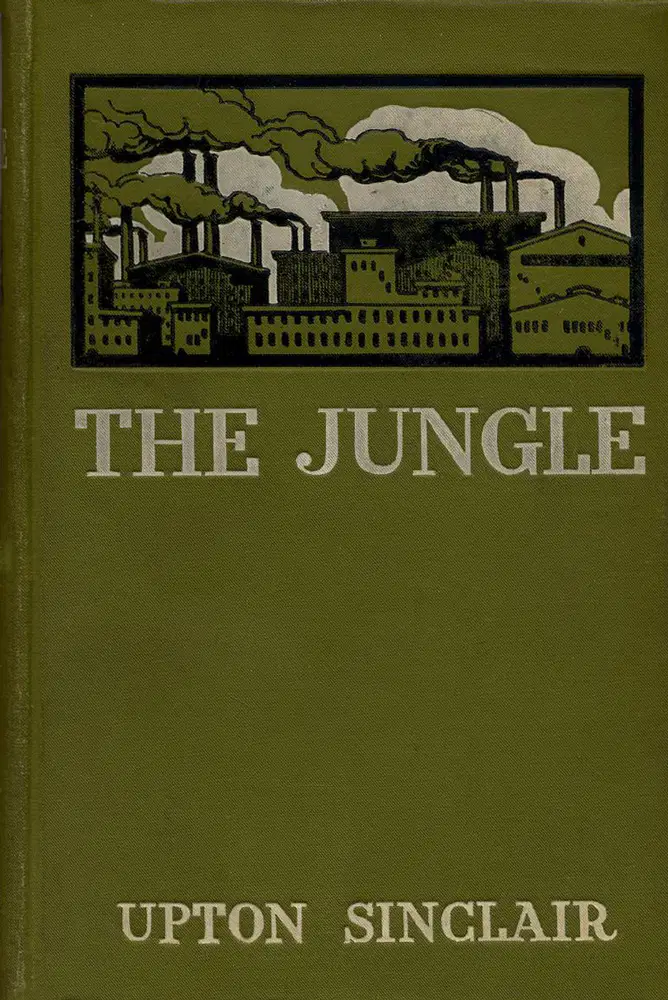
The book pictured above was written in order to
a)
expose unsanitary conditions in meat packing plants
b)
show the successes of Theodore Roosevelt’s presidency
c)
support the U.S. takeover of Panama
d)
support the Progressives in their attempt to regulate railroads
12.
As a result of industrialization in the United States in the late 19th and early 20th centuries, progressive reformers sought government regulation of business in order to
a)
restore competition by limiting the power of monopolies and trusts
b)
prevent companies from moving their factories to other countries
c)
control economic cycles of inflation and recession
d)
provide money for public services such as schools and libraries
13.
What was a key reason for the creation of the Federal Reserve System?
a)
to encourage exports
b)
to promote economic stability
c)
to increase tax revenues
d)
to reduce budget deficits
14.
All of the following should be associated with conservation reforms in the late 1800’s and early 1900’s EXCEPT
a)
the U.S. Forest Service
b)
the National Park Service
c)
the passage of the Newlands Act
d)
the passage of the Botanical Gardens Act
15.
During the early 1900’s, the enactment of strong federal legislation to regulate business demonstrated a growing belief that
a)
the government should assume ownership of most businesses
b)
the nation’s well-being depends primarily on agricultural output
c)
the government has a duty to maintain economic competition
d)
people have a right to guaranteed annual income
16.
All of the following should be associated with Progressive reforms that fought political corruption and tried to make the political process more democratic EXCEPT
a)
the initiative
b)
referendum
c)
recall
d)
term limits
17.
Progressivism could BEST be characterized as a movement that
a)
encouraged involvement in international affairs
b)
demanded reforms at all levels of government
c)
tried to introduce a parliamentary system of government
d)
emphasized the needs of farmers only
18.
What action was necessary to change from the indirect to the direct election of United States Senators?
a)
passage of a federal law
b)
ratification of a constitutional amendment
c)
a Supreme Court decision
d)
a national referendum
19.
What do we call organized local governments authorized in state constitutions and statutes (laws), which are established to provide general government for a defined area e.g., cities, boroughs, towns, and villages?
a)
state government
b)
municipal governments
c)
national governments
d)
provinces
20.
How did the addition of primary elections to the election cycle expand democracy in the United States?
a)
it made election cheating and fraud less frequent
b)
it allowed voters more power in the selection of candidates for their party’s nomination
c)
it expanded minority voting in all elections
d)
it expanded the number of members of the House of Representatives which gave all voters more choices
21.
Progressive reforms included the passage of the 16th Amendment which
a)
allowed women’s suffrage
b)
prohibited the manufacture and sale of alcoholic beverages
c)
gave power to Congress to levy an income tax
d)
allowed for the direct election of U.S. Senators by the people
22.
Progressive reforms included the passage of the 17th Amendment which
a)
allowed women’s suffrage
b)
prohibited the manufacture and sale of alcoholic beverages
c)
gave power to Congress to levy an income tax
d)
allowed for the direct election of U.S. Senators by the people
23.
Progressive reforms included the passage of the 18th Amendment which
a)
allowed women’s suffrage
b)
prohibited the manufacture and sale of alcoholic beverages
c)
gave power to Congress to levy an income tax
d)
allowed for the direct election of U.S. Senators by the people
24.
Progressive reforms included the passage of the 19th Amendment which
a)
allowed women’s suffrage
b)
prohibited the manufacture and sale of alcoholic beverages
c)
gave power to Congress to levy an income tax
d)
allowed for the direct election of U.S. Senators by the people
25.
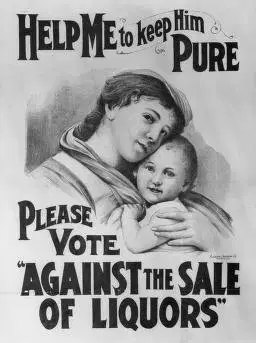
The image above should be associated with Amendment
a)
16
b)
17
c)
18
d)
19
26.
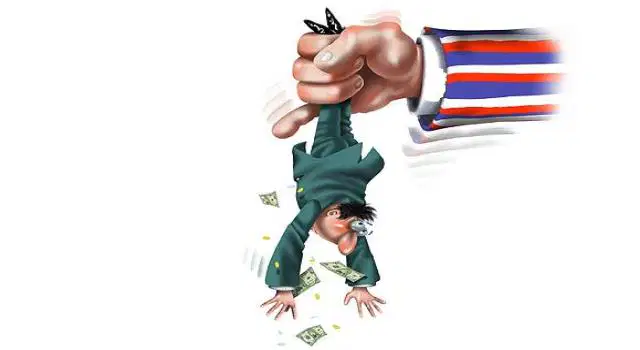
The author of the above political is clearly saying that they are angry with the _____ Amendment.
a)
16th
b)
17th
c)
18th
d)
19th
27.
The history of the Populist and Progressive movements illustrates the
a)
supremacy of agriculture in the economy of the nation
b)
ultimate powerlessness of the middle class
c)
ability of organized groups to influence government policy
d)
success of third parties in electing Presidents
28.
All of the following should be associated with Progressive reforms that fought political corruption and tried to make the political process more democratic EXCEPT
a)
the Electoral College
b)
the secret ballot
c)
primary elections
d)
civil service reform
29.
Which of the following BEST describes the Progressive movement?
a)
extremely unsuccessful in getting the reforms they wanted
b)
unsuccessful in getting the reforms they wanted
c)
successful in getting the reforms they wanted
d)
it never existed, but was a conspiracy begun by nefarious foreign governments
30.
Which of the following is the BEST definition of an initiative?
a)
a process that enables citizens to bypass their state legislature by placing proposed laws and amendments on the ballot
b)
legislation that has passed both Houses of Congress and has been approved by the President
c)
a process used to change the wording or meaning of a motion, bill, Constitution, by a formal procedure
d)
an official count of the number of persons living in a geographic area, such as a city, county, state, or nation
31.
Which of the following is the BEST definition of a legislative referenda?
a)
an action by the Senate approving Presidential nominees for the executive branch, regulatory commissions, and certain other positions
b)
a requirement under law that each state must respect all legal rights that are owed to a person
c)
when a legislature refers changes to a state constitution, bond measures, or tax change to the people for voter approval
d)
the final copy of a bill or joint resolution which has passed both chambers in identical form
32.
Which of the following is the BEST definition of a popular referenda?
a)
a union of states in which each member agrees to give up some of its governmental power in certain areas to a central authority
b)
a device which allows voters to approve or repeal an act of a legislature
c)
a way or practice of controlling the boundaries of district lines to favor the electoral advantage of a political party or faction
d)
the power of an executive authority to disapprove or reject parts of a bill without having to reject the entire bill
33.
In the United States the MAIN purpose of antitrust legislation is to
a)
protect the environment
b)
increase competition in business
c)
encourage the growth of monopolies
d)
strengthen the rights of workers
34.
During the late 1800’s and early 1900’s the passage of antitrust legislation reflected the United States desire to
a)
help big business to become more efficient
b)
encourage increased production of goods
c)
stimulate the growth of modern transportation
d)
eliminate unfair business practices
35.
All of the following contributed to many of the problems in American society in the late 19th and early 20th centuries EXCEPT
a)
industrial capitalism
b)
urbanization
c)
political corruption
d)
global warming
36.
The Farmers’ Alliances and the Populist Party created a reform agenda which contributed to the rise of
a)
the Republican Party
b)
the Democratic Party
c)
Progressivism
d)
the Ku Klux Klan
37.
What was the nickname of the journalists who exposed political corruption, harmful corporate and industrial practices, social injustice, and the hardships of life in urban America?
a)
hacks
b)
scribes
c)
pencil pushers
d)
muckrakers
38.
The MAIN objective of the Progressive movement was
a)
eliminating corruption in government
b)
supporting the Democratic Party
c)
doing investigative journalism
d)
destroying the Ku Klux Klan
39.
One of the long-term goals of the Progressive movement was to expand
a)
direct democracy
b)
regressive taxation
c)
United States imperialism
d)
German nationalism
40.
Why were Progressives calling for civil service reform in the United States at the state and national levels in the late 1800’s and early 1900’s?
a)
they saw the period of time a defeated president would continue to serve after his failed bid for reelection – the “Lame Duck Period” – as excessively long
b)
they saw the period of time a defeated member of congress would continue to serve after their failed bid for reelection – the “Lame Duck Period” – as excessively long
c)
they saw citizens living in Washington D.C. as being disenfranchised
d)
they saw the distribution of government offices -- the "spoils"-- by the winners of elections to their supporters as corrupt and inefficient
41.

The author of the above political cartoon was supporting the
a)
16th Amendment
b)
17th Amendment
c)
18th Amendment
d)
19th Amendment
100 %

