

wayground logo

Free Printable Worksheets

Font size

S
M
L
XL
Worksheets

Properties of Water - Quiz

Total questions: 16

Worksheet time: 1hrs 20mins
Name
Class
Date
1.

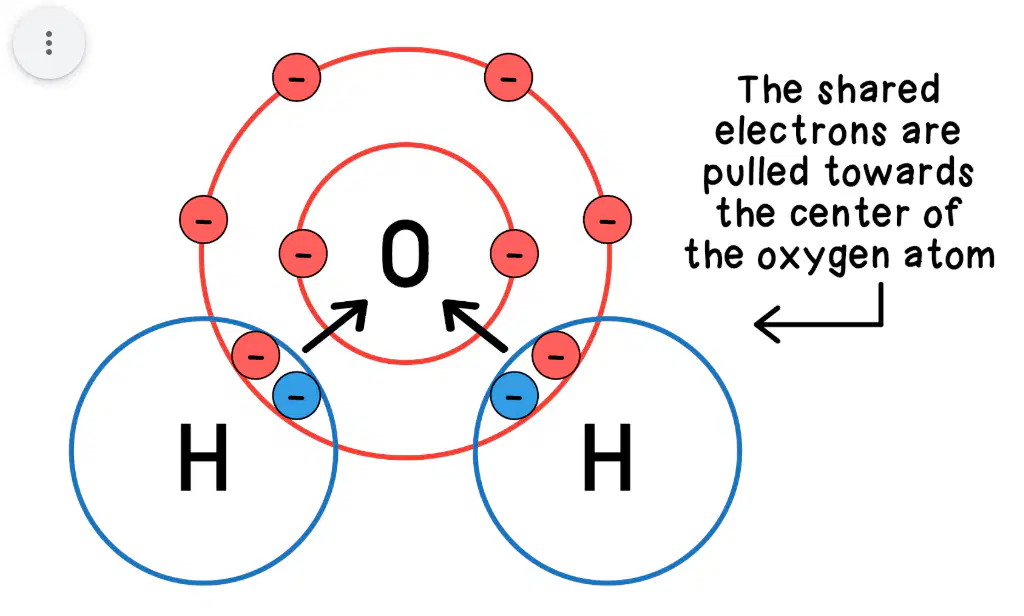
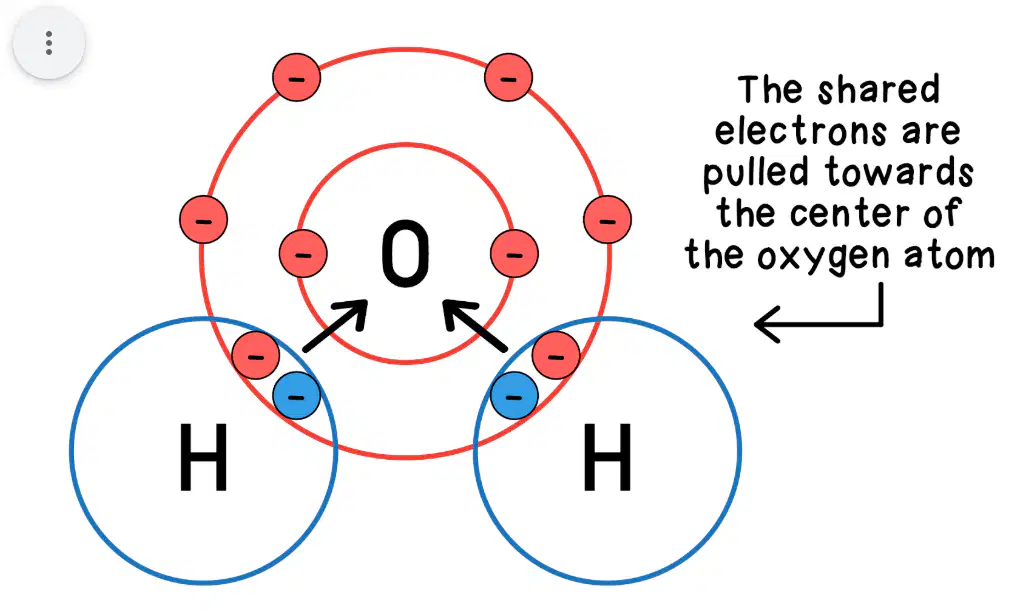
1. Which type of bonding is shown within this water molecule?
a)
Ionic bonding
b)
Covalent bonding
c)
Hydrogen bonding
d)
Metallic bonding
2.
2. The shared electrons are pulled towards the center of the oxygen atom. What is the outcome of this?
a)
The oxygen atom becomes partially negatively charged and the hydrogen atoms become partially positively charged
b)
The oxygen atom becomes partially positively charged and the hydrogen atoms become partially negatively charged
c)
The whole molecule becomes partially negatively charged
d)

The whole molecule becomes partially positively charged

3.
3. Due to the movement of the shared electrons and the resulting charges, we say that water is a "____________" molecule. What is the missing word in this sentence?
a)
Electronegative
b)
Electropositive
c)
Ionic
d)
Polar
e)
Nonpolar
4.

4. The type of attraction, labeled as A and shown as a blue dashed line, is between the water molecules and molecules in the wall of the xylem cell. What is the name for this type of attraction? Give your answer as a single word with no period at the end.

(a)  

5.

5. The type of attraction, labeled as B and shown as a red dashed line, is between water molecules. What is the name for this type of attraction? Give your answer as a single word with no period at the end.

(a)  

6.

6. "Water is very good at dissolving many polar and charged substances. When a liquid can dissolve other substances, it is known as a (a)   ." What is the missing word in this sentence? Give your answer as a single word with no period at the end.

7.
7. Why does ice float on top of liquid water?
a)
Ice is more dense than liquid water so it floats to the top
b)
The water molecules in ice are more closely packed together than they are in liquid water
c)
The bonds between water molecules are weaker in ice than they are in liquid water
d)
Ice has a crystalline structure with more space between the water molecules than in liquid water
8.
8. Which property of water allows some insects to walk on water?
a)
High density
b)
High surface adhesion
c)
High surface tension
d)
High heat capacity
9.

9. "A type of intermolecular bond, known as (a)   bonding, occurs between water molecules. This makes it able to resist external forces." What is the missing word in this sentence? Give your answer as a single word, with no period at the end.
10.
10. The properties of water make it essential for supporting life on Earth. One of its properties helps it to act as a buffer for temperature changes, which stabilizes the environment for creatures that live in water. Which property is this?
a)
High specific heat capacity
b)
Highly malleable
c)
High latent heat of vaporization
d)
Highly conductive
11.
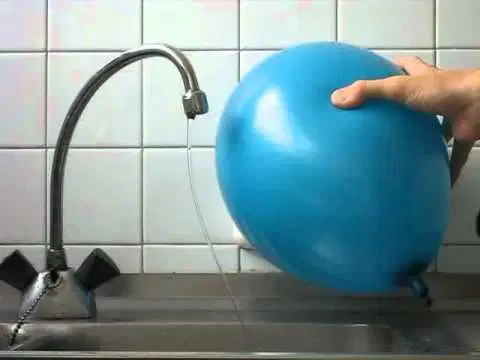
11. Students in Mrs. Wright's class recently completed a lab where they visited 8 different stations and explored water's properties. Using the image below, which of the following explanations best explains what is going on in the image?
a)
The positively charged electrons from static electricity in the balloon are being pulled towards the positively charged water molecules.
b)
The negatively charged electrons from the static electricity the balloon are being pulled towards the negatively charged water molecules.
c)
The negatively charged electrons from the static electricity in the balloon are being attracted to the positively charged water molecules.
d)
Nothing is happening as the water would move that way normally.
12.
12. Which of water's properties is depicted in the picture above?
a)
Cohesion
b)
Adhesion
c)
Polarity
d)
Solvency
13.
13. Which of the following terms below best describes how the ink from the pen is able to travel up the paper in the cup?
a)
Cohesion
b)
Surface Tension
c)
Capillary action
d)
Heat of vaporization
14.
14. Why is water considered the "universal solvent"?
a)
Because it is a polar substance and can dissolve nonpolar substances such as oil.
b)
Because it is a polar substance and can dissolve most other nonpolar substances such as salt.
c)
It gets cold easily.
d)
It can be found everywhere.
15.
14. Students recently conducted a test of three substances to determine which substance would evaporate most quickly at room temperature. Refer to Table 1.1 below to answer the following question: Which substance shown below would have the highest latent heat of vaporization?
a)
Hydrogen Peroxide
b)
Water
c)
Isopropyl Alcohol
d)
Not enough information to answer
16.
15. Refer to the table above, which of the substances shown in the table above, which would be most beneficial to add to cleaning products to help speed up the evaporation rate of the cleaning products?
a)
Hydrogen peroxide
b)
Water
c)
Isopropyl alcohol
